
Modern Slavery Is Increasing Significantly


Latest estimates by the International Labour Organisation (ILO) show that forced labour and forced marriage have increased significantly in the last five years.
10 million more people were in modern slavery in 2021 compared to 2016 global estimates, bringing the total to 50 million worldwide. Women and children remain disproportionately vulnerable.
Although modern slavery is not defined in law, it is used as an umbrella term covering practices such as forced labour, debt bondage, forced marriage, and human trafficking.
Essentially, it refers to situations of exploitation that a person cannot refuse or leave because of threats, violence, coercion, deception, and/or abuse of power.
Modern slavery occurs in almost every country in the world, and cuts across ethnic, cultural and religious lines.
More than half (52 per cent) of all forced labour and a quarter of all forced marriages can be found in upper-middle income or high-income countries.
ILO has adopted a legally binding Protocol designed to strengthen global efforts to eliminate forced labour, which entered into force in November 2016.
Global annual profit from forced labour estimated at US$236 billion
The annual global profit generated from forced labour is estimated at US$236 billion. This amount represents wages effectively stolen from workers, particularly affecting those already struggling to support their families.
For migrant workers, it means less money being sent back home.
Additionally, governments lose tax revenue due to the illegal nature of these profits, which can also foster further exploitation, empower criminal networks, and undermine the rule of law.
The Profits and Poverty report aims to shed light on these illegal gains. It reveals that the profits are alarmingly high and have surged over the past decade, driven by an increase in forced labour and higher profits per victim.

According to the ILO, there were 27.6 million people in forced labour worldwide in 2021. From 2016 to 2021, the number increased by 2.7 million, mostly due to privately imposed forced labour.
No region is exempt from the problem, with Asia and the Pacific having the highest number (15.1 million), followed by Europe and Central Asia (4.1 million), Africa (3.8 million), the Americas (3.6 million) and the Arab States (0.9 million).
However, in terms of prevalence, forced labour is most common in the Arab States (5.3 per thousand), followed by Europe and Central Asia (4.4), the Americas and Asia and the Pacific (both 3.5) and Africa (2.9).
Most forced labour takes place in the private sector, with 86% of cases imposed by private actors – 63% for labour exploitation and 23% for sexual exploitation.
State-imposed forced labour accounts for the remaining 14%. The main sectors affected are industry, services, agriculture and domestic work, which together account for 89% of forced labour cases.
There are also smaller sectors such as forced begging and involvement in illegal activities.
Background
The International Day for the Abolition of Slavery, 2 December, marks the date of the adoption, by the General Assembly, of the United Nations Convention for the Suppression of the Traffic in Persons and of the Exploitation of the Prostitution of Others (resolution 317(IV) of 2 December 1949).
The focus of this day is on eradicating contemporary forms of slavery, such as trafficking in persons, sexual exploitation, the worst forms of child labour, forced marriage, and the forced recruitment of children for use in armed conflict.
Main Forms of Modern Slavery
Slavery has evolved and manifested itself in different ways throughout history. Today some traditional forms of slavery still persist in their earlier forms, while others have been transformed into new ones.
The UN human rights bodies have documented the persistence of old forms of slavery that are embedded in traditional beliefs and customs.
These forms of slavery are the result of long-standing discrimination against the most vulnerable groups in societies, such as those regarded as being of low caste, tribal minorities and indigenous peoples.
Forced labour
Alongside traditional forms of forced labour, such as bonded labour and debt bondage there now exist more contemporary forms of forced labour, such as migrant workers, who have been trafficked for economic exploitation of every kind in the world economy: work in domestic servitude, the construction industry, the food and garment industry, the agricultural sector and in forced prostitution.
Child labour
Globally, one in ten children works. The majority of the child labour that occurs today is for economic exploitation.
That goes against the Convention on the Rights of the Child, which recognizes “the right of the child to be protected from economic exploitation and from performing any work that is likely to be hazardous or to interfere with the child’s education, or to be harmful to the child’s health or physical, mental, spiritual, moral or social development.”
Trafficking
According to the Protocol to Prevent, Suppress and Punish Trafficking in Persons Especially Women and Children, trafficking in persons means the recruitment, transportation, transfer, harbouring or receipt of persons, by means of the threat or use of force or other forms of coercion for the purpose of exploitation.
Exploitation includes prostitution of others or other forms of sexual exploitation, forced labour or services, slavery or practices similar to slavery, servitude or the removal of organs.
The consent of the person trafficked for exploitation is irrelevant and If the trafficked person is a child, it is a crime even without the use of force.
- An estimated 50 million people are in modern slavery, including 28 million in forced labour and 22 million in forced marriage.
- Almost one in eight of all those in forced labour are children. More than half of these children are in commercial sexual exploitation.
- Most cases of forced labour (86 per cent) are found in the private sector.
- Almost four out of five of those in forced commercial sexual exploitation are women or girls.
Source: ILO 2022
Exploring the links between modern slavery and access to documentation

To understand and address the systemic barriers that underpin modern slavery, the United Nations University Centre for Policy Research (UNU-CPR) and The Freedom Fund examine the central role that access to official documentation plays in perpetuating modern slavery.
By exploring the link between lack of official documentation and vulnerability to exploitation, this report highlights the challenges and dangers faced by those on the margins of society.
Resources
International Instruments
- Convention on the Rights of the Child: Optional Protocol on the Sale of Children, Child Prostitution and Child Pornography(2000)
- United Nations Convention against Transnational Organized Crime: Protocol to Prevent, Suppress and Punish Trafficking in Persons, Especially Women and Children (2000)
- Recommendation on Consent to Marriage, Minimum Age for Marriage and Registration of Marriages (1965)
- Convention on Consent to Marriage, Minimum Age for Marriage and Registration of Marriages (1962)
- Supplementary Convention on the Abolition of Slavery, the Slave Trade, and Institutions and Practices Similar to Slavery(1956)
- Protocol amending the Slavery Convention signed at Geneva on 25 September 1926 (1953)
- Convention for the Suppression of the Traffic in Persons and of the Exploitation of the Prostitution of Others (1949)
- Universal Declaration of Human Rights (1948)
- Slavery Convention (1926)
- The core International Human Rights Instruments and their monitoring bodies
International Labour Organization Conventions
- Protocol of 2014 to the Forced Labour Convention (1930)
- Forced Labour Convention (1930)
- Abolition of Forced Labour Convention (1957)
- Minimum Age Convention (1973)
- Worst Forms of Child Labour Convention (1999)
Related websites
- World Day Against Child Labour
- World Day against Trafficking in Persons
- Human rights: Special Rapporteur on Contemporary Forms of Slavery
- Human Rights: Working Group on Contemporary Forms of Slavery
- Human rights: Voluntary Trust Fund on Contemporary Forms of Slavery
- Human rights: Special Rapporteur on Trafficking in Persons, especially Women and Children
- Human rights: Special Rapporteur on the Sale of Children, Child Prostitution and Child Pornography
- ILO: Child Labour
- ILO: Forced labour, human trafficking and slavery
- UNICEF: Child protection
- UNODC: Human Trafficking
- UNODC: Blue Heart Campaign
- UNFPA: Gender-based violence
- UNESCO: The Slave Route
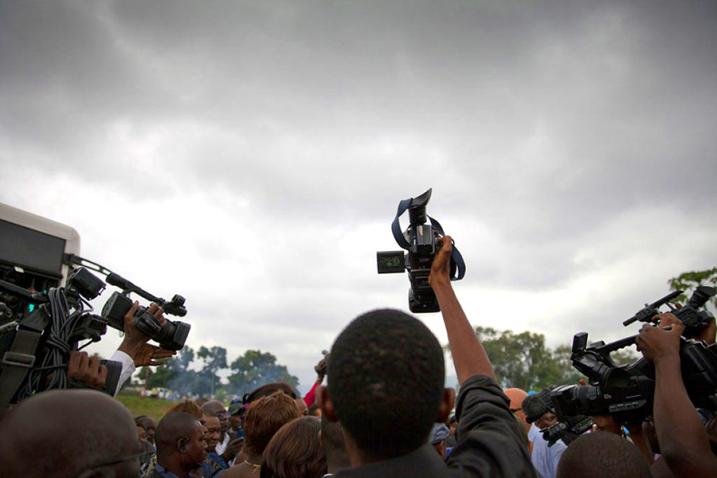
Journalists have a voice that many workers do not. They can shine a light on abusive practices and the denial of fundamental human and labour rights.
This toolkit provides information and advice to media professionals on how to report accurately and effectively on forced labour and fair recruitment. The toolkit includes the Media-friendly glossary on migration.
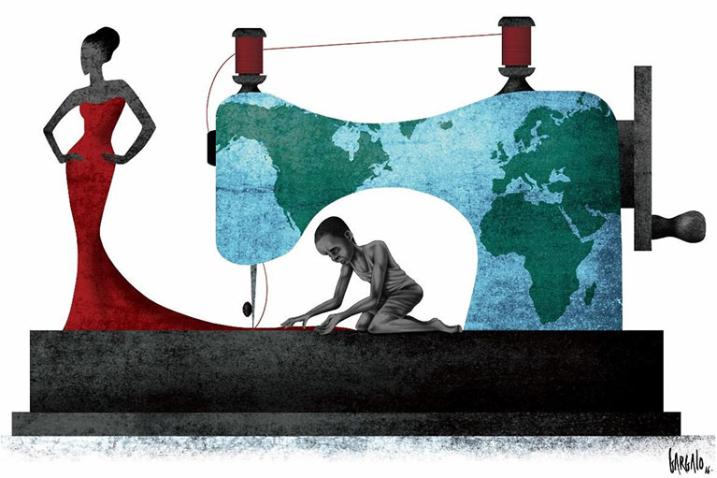
Three cartoonists from Portugal, Turkey and Uzbekistan have won top prizes in an international cartoon competition aimed at raising awareness about modern slavery.
They were chosen by a panel of judges and the general public, out of 460 entries from cartoonists in 65 countries, who responded to the challenge “What if your pencil was a tool against forced labour?” Portuguese cartoonist, Gargalo Vasco was awarded the top prize.
*SOURCE: The United Nations. Go to ORIGINAL: https://www.un.org/en/observances/slavery-abolition-day 2025 Human Wrongs Watch
Source: https://human-wrongs-watch.net/2025/11/30/modern-slavery-is-increasing-significantly/
Anyone can join.
Anyone can contribute.
Anyone can become informed about their world.
"United We Stand" Click Here To Create Your Personal Citizen Journalist Account Today, Be Sure To Invite Your Friends.
Before It’s News® is a community of individuals who report on what’s going on around them, from all around the world. Anyone can join. Anyone can contribute. Anyone can become informed about their world. "United We Stand" Click Here To Create Your Personal Citizen Journalist Account Today, Be Sure To Invite Your Friends.
LION'S MANE PRODUCT
Try Our Lion’s Mane WHOLE MIND Nootropic Blend 60 Capsules
Mushrooms are having a moment. One fabulous fungus in particular, lion’s mane, may help improve memory, depression and anxiety symptoms. They are also an excellent source of nutrients that show promise as a therapy for dementia, and other neurodegenerative diseases. If you’re living with anxiety or depression, you may be curious about all the therapy options out there — including the natural ones.Our Lion’s Mane WHOLE MIND Nootropic Blend has been formulated to utilize the potency of Lion’s mane but also include the benefits of four other Highly Beneficial Mushrooms. Synergistically, they work together to Build your health through improving cognitive function and immunity regardless of your age. Our Nootropic not only improves your Cognitive Function and Activates your Immune System, but it benefits growth of Essential Gut Flora, further enhancing your Vitality.

Our Formula includes: Lion’s Mane Mushrooms which Increase Brain Power through nerve growth, lessen anxiety, reduce depression, and improve concentration. Its an excellent adaptogen, promotes sleep and improves immunity. Shiitake Mushrooms which Fight cancer cells and infectious disease, boost the immune system, promotes brain function, and serves as a source of B vitamins. Maitake Mushrooms which regulate blood sugar levels of diabetics, reduce hypertension and boosts the immune system. Reishi Mushrooms which Fight inflammation, liver disease, fatigue, tumor growth and cancer. They Improve skin disorders and soothes digestive problems, stomach ulcers and leaky gut syndrome. Chaga Mushrooms which have anti-aging effects, boost immune function, improve stamina and athletic performance, even act as a natural aphrodisiac, fighting diabetes and improving liver function. Try Our Lion’s Mane WHOLE MIND Nootropic Blend 60 Capsules Today. Be 100% Satisfied or Receive a Full Money Back Guarantee. Order Yours Today by Following This Link.


| Visits: | 1,760,271,323 |
| Stories: | 8,552,523 |
Whistler Blowers, Insiders

