

Central America: Displaced Face Increasing Abandonment

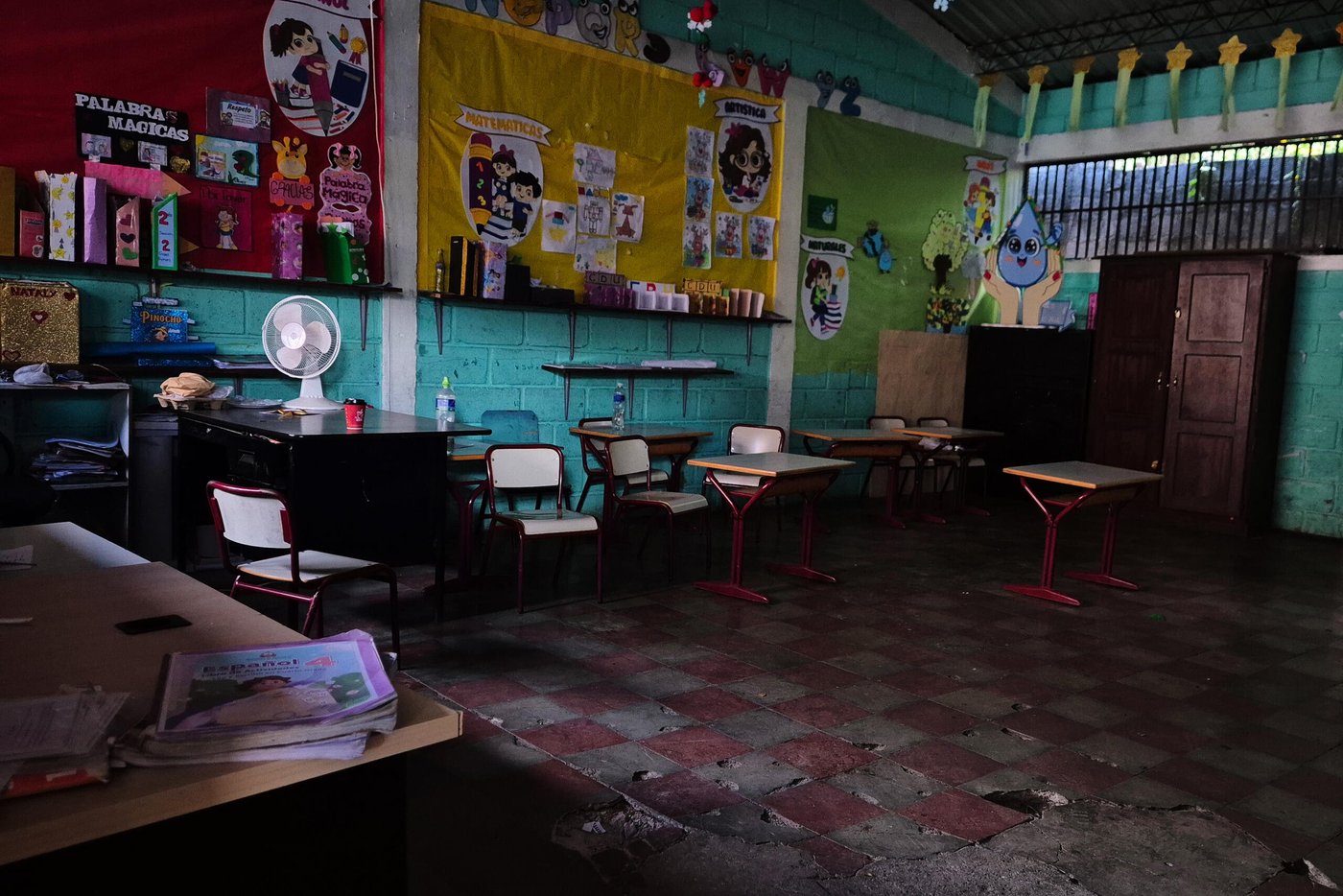
2 December 2025 — Many thousands of displaced and violence-affected people in El Salvador, Guatemala, Honduras, and Mexico have lost access to vital services and protection due to a dramatic scale-back in support by donors which is also reducing the capacity of the humanitarian organisations to provide assistance. It is vital that donors do not turn their backs on this burgeoning humanitarian crisis.
“Families in northern Central America who have been forced to flee their homes and whose lives have been turned upside down by violence have been almost invisible to much of the international community for years…
… Aid cuts now risk erasing them completely from global consciousness. In 2026, we fear the plight of people in need in Central America will worsen as international donors neglect deepens,” said Giorgio Lentini, NRC’s country director for North Central America and Mexico.
“The funding cuts mean many national and international aid organisations are being forced to reduce or even close operations in the region, leaving large gaps in services. This will no doubt mean vulnerable people will go without the support they so desperately need.”
Margarita had a successful business. Then, her daughter was raped. “The truth is, none of us go out. The children don’t go out either,” she says. Margarita’s mother Marina explains the pervasive nature of violence and lawlessness: “Here the law is the law of the strongest, of the one who has money,” she says. “For a poor person there is no law. We live locked up in our neighbourhoods, and the gangs have humiliated us. We can’t speak, we can’t go out. You can’t say anything at all because then they tell you you have 24 hours to leave your house. Don’t trust anyone. I don’t trust anyone.” Photo: Ingrid Prestetun/NRC
Countries in the region make up the majority of the lowest funded humanitarian responses in 2025 – with Honduras being the lowest funded globally with just over 10 per cent of the required funding delivered.
This follows the extremely low levels of funding witnessed in 2023 and 2024, when the United States (US) delivered the majority of humanitarian funding for the region, and many other large donors were absent.
Since aid cuts at the start of the year, funding from the US has now evaporated and other donors including Sweden and Switzerland are also making cuts or even closing their programmes in Central America.
“The lack of support from international donors has forced NRC to take drastic action in the region.
The lack of funding led to the closure of NRC operations in Guatemala in December 2025. There, NRC provided education, protection and legal assistance services for internally displaced persons, migrants and refugees.
At the end of this year, NRC will end all work in Guatemala and will close in El Salvador next year. We have also been forced to drastically scale down and adapt our work in both Honduras and Mexico,” said Lentini.
Across the region, NRC provides protection, legal assistance and emergency education to people who have been forced to flee their homes due to widespread violence.
In 2024, NRC supported more than 80,000 people across the four countries but will be only able to support a fraction of this number in 2026 and beyond.
By the end of 2025 we are forced to reduce our teams and operations by approximately 70 per cent. We are doing all we can to find other avenues of support for people in need of humanitarian assistance.
Across the region, the humanitarian situation remains dire. Ongoing violence continues to force people to flee from their homes – some displaced within their countries, others forced to seek protection abroad.
Meanwhile, disasters and floods are also leaving people in need of urgent support.
On top of these challenges, an increasing number of refugees and migrants are left with no option but to remain in dangerous situations in Honduras, Guatemala, and Mexico, and it is expected that needs will grow next year, just as a lack of funding is crippling the aid response, and safe pathways to access protection are shrinking.
The lack of funding led to the closure of NRC operations in Guatemala in December 2025. There, NRC provided education, protection and legal assistance services for internally displaced persons, migrants and refugees.
In June, the United Nations launched a ‘hyper-prioritised plan’ in response to aid cuts which resulted in the 2.2 million people previously targeted cross Honduras, Guatemala and El Salvador being left out of the plan.
The lack of funding led to the closure of NRC operations in Guatemala in December 2025. There, NRC provided education, protection and legal assistance services for internally displaced persons, migrants and refugees.
They now risk going completely unsupported. In 2026, no country in Central America will have a dedicated humanitarian needs and response plan, risking further escalating the neglect.
“Donors, including development donors and the private sector, must recognise and address the vast needs that are perpetuating across northern Central America and Mexico. It’s vital that they step up so people facing such extreme levels of violence are not abandoned overnight,” added Lentini.
The lack of funding led to the closure of NRC operations in Guatemala in December 2025. There, NRC provided education, protection and legal assistance services for internally displaced persons, migrants and refugees.
Notes:
- As of November, funding for 2025 humanitarian needs and response plans (HNRP) stands at: El Salvador – 21.9%, Honduras – 10.4% (lowest funded globally), Guatemala – 17.7%. Mexico does not have an HNRP (OCHA).
- In 2024 funding for HNRPs stood at: El Salvador – 32.2% (4th lowest globally, 72% of which was US funded), Honduras – 32.1% (3rd lowest globally, 64% of which was US funded), Guatemala –53% (82% of which was US funded) (OCHA).
- In 2023 funding for HNRPs stood at: El Salvador – 31.5% (2nd lowest globally, 75% of which was US funded), Honduras – 17.1% (lowest globally, 67% of which was US funded), Guatemala –32.4% (83% of which was US funded, 4th lowest globally) (OCHA).
- In Mexico, the 2024 National Survey on Victimization and Public Safety Perception (ENVIPE) estimated that more than 248,360 households were forced to leave their homes in 2024 alone to protect themselves from crime (cited in UNHCR).
- In Mexico, the Iberoamerican University estimates that, in 2024, 28,900 people were displaced across 72 [massive violence] events, marking a 129% increase compared to 2023, when 12,623 cases were recorded. This figure is close to the historic peak of 2021, which saw 28,943 displacements. The phenomenon of internal displacement has also expanded geographically: 13 states were affected in 2024, the highest number since 2016 (Iberoamerican University).
- The displacement situation in Mexico brings together people from all over the world (110+ nationalities), fleeing violence, persecution and conflict. More than 78,900 persons in Mexico applied for asylum in 2024 with Hondurans making up at least half of all the asylum claims by 2024 (UNHCR). In 2023, Mexico received a record number of 140,000 asylum claims (UNHCR). Since 2023, Mexico is amongst the top five countries with the highest number of new asylum claims worldwide (UNHCR). Over the past five years, Mexico has received around 500,000 asylum applications, with a recognition rate exceeding 60%. (UNHCR)
- As of 30 September 2025, there are more than 58,800 new asylum claims in Mexico, primarily from Cubans (28,700+), followed by Venezuelans (12,100+) and Haitians (7,000+) (UNHCR). This equals over 215 applications per day.
- In 2024, NRC supported 80,360 migrants and refugees, internally displaced persons and deportees across the four countries.
At the end of 2025 we are forced to reduce our teams and operations by approximately 70%. This includes:
-
- Guatemala: Close NRC’s operations in December 2025
-
- El Salvador: Close protection and legal assistance programmes in December 2025. In 2026, only operations related to our work in the area of education will remain. Close operations at the end of 2026.
-
- Mexico: Scale down presence in January 2026
-
- Honduras: Restructuring and downsizing in early 2026, prioritised activities in San Pedro Sula
America El Salvador Guatemala Honduras Mexico *SOURCE: The Norwegian Refugee Council. Go to ORIGINAL: https://www.nrc.no/news/2025/december/central-america-displaced-face-increasing-abandonment 2025 Human Wrongs Watch
Source: https://human-wrongs-watch.net/2025/12/08/central-america-displaced-face-increasing-abandonment/
Anyone can join.
Anyone can contribute.
Anyone can become informed about their world.
"United We Stand" Click Here To Create Your Personal Citizen Journalist Account Today, Be Sure To Invite Your Friends.
Before It’s News® is a community of individuals who report on what’s going on around them, from all around the world. Anyone can join. Anyone can contribute. Anyone can become informed about their world. "United We Stand" Click Here To Create Your Personal Citizen Journalist Account Today, Be Sure To Invite Your Friends.
LION'S MANE PRODUCT
Try Our Lion’s Mane WHOLE MIND Nootropic Blend 60 Capsules
Mushrooms are having a moment. One fabulous fungus in particular, lion’s mane, may help improve memory, depression and anxiety symptoms. They are also an excellent source of nutrients that show promise as a therapy for dementia, and other neurodegenerative diseases. If you’re living with anxiety or depression, you may be curious about all the therapy options out there — including the natural ones.Our Lion’s Mane WHOLE MIND Nootropic Blend has been formulated to utilize the potency of Lion’s mane but also include the benefits of four other Highly Beneficial Mushrooms. Synergistically, they work together to Build your health through improving cognitive function and immunity regardless of your age. Our Nootropic not only improves your Cognitive Function and Activates your Immune System, but it benefits growth of Essential Gut Flora, further enhancing your Vitality.

Our Formula includes: Lion’s Mane Mushrooms which Increase Brain Power through nerve growth, lessen anxiety, reduce depression, and improve concentration. Its an excellent adaptogen, promotes sleep and improves immunity. Shiitake Mushrooms which Fight cancer cells and infectious disease, boost the immune system, promotes brain function, and serves as a source of B vitamins. Maitake Mushrooms which regulate blood sugar levels of diabetics, reduce hypertension and boosts the immune system. Reishi Mushrooms which Fight inflammation, liver disease, fatigue, tumor growth and cancer. They Improve skin disorders and soothes digestive problems, stomach ulcers and leaky gut syndrome. Chaga Mushrooms which have anti-aging effects, boost immune function, improve stamina and athletic performance, even act as a natural aphrodisiac, fighting diabetes and improving liver function. Try Our Lion’s Mane WHOLE MIND Nootropic Blend 60 Capsules Today. Be 100% Satisfied or Receive a Full Money Back Guarantee. Order Yours Today by Following This Link.


| Visits: | 1,767,139,677 |
| Stories: | 8,563,797 |
Whistler Blowers, Insiders

