
From Chavismo to the Witness Stand: How Hugo Carvajal Became Washington’s Secret Weapon

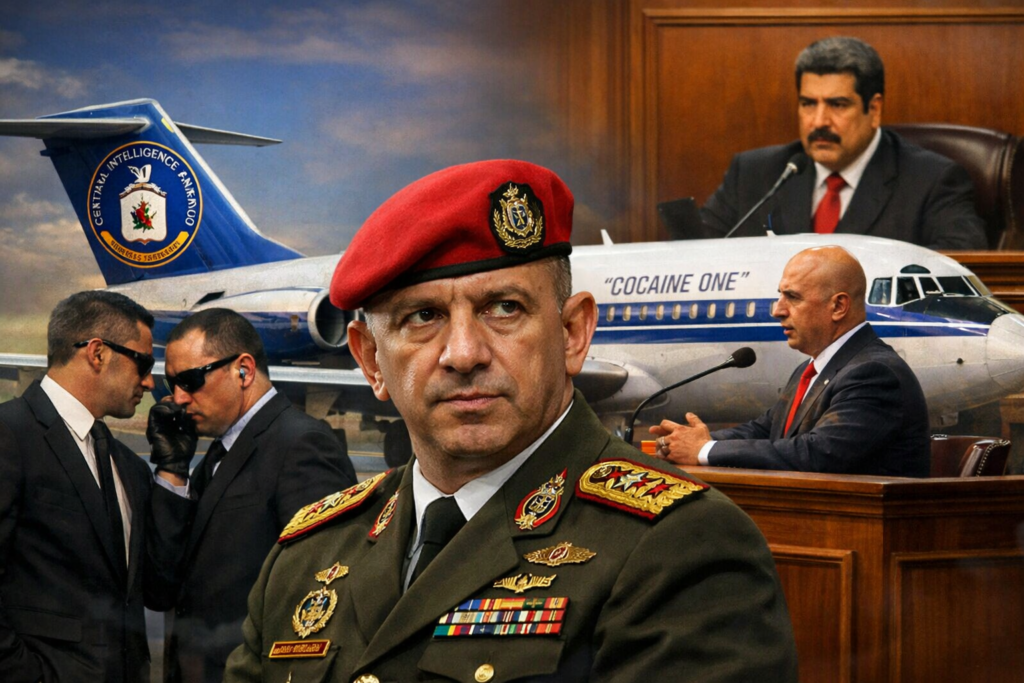
An investigative exposé into Hugo Armando Carvajal Barrios, Venezuela’s former intelligence czar turned U.S. witness, whose hidden links to clandestine drug networks, CIA, secretive flights like “Cocaine One,” and abrupt break with Nicolás Maduro put him at the center of a political and legal maelstrom, raising urgent questions about U.S. intelligence influence and the geopolitical motives driving the prosecution of the Maduros.
Freddie Ponton
21st Century Wire
At the heart of the United States’ stunning operation to kidnap and indict Venezuela’s sitting president, Nicolás Maduro and his wife, lies a figure who has rarely appeared on the front pages of mainstream media, yet whose life story may hold the key to understanding why that sweeping prosecution has unfolded the way it has. Hugo Carvajal, the former head of Venezuela’s military intelligence under Hugo Chávez and later Nicolás Maduro, is poised to become one of the most consequential witnesses in a case that could reshape Western hemispheric politics.
Carvajal’s journey from chavista insider to federal prison in New York, where he pleaded guilty in 2025 to narco‑terrorism, weapons, and cocaine trafficking charges, intersects not only with secretive narcotics networks and individuals like Colombian drug lord Wilber Varela, alias “Jabón”, and shadowy aircraft known as “Cocaine One” but also with accusations of overlapping intelligence objectives between U.S. agencies and Venezuelan actors. As Maduro’s superseding indictment unfolds in the Southern District of New York, and as the deposed Venezuelan leader awaits trial after his dramatic capture, Carvajal’s cooperation, reportedly central to the prosecution’s case, reveals a story far more political than purely judicial.
SEE MORE: Maduro’s Defense Could Expose CIA Drug Operations
From Military Power to Controversial Legacy
This article delves into the hidden chapters of Carvajal’s life: his alleged complicity in massive drug shipments that skirted legal scrutiny, the controversial theories linking his operations to U.S. intelligence interests, and the strategic timing of his public break with the Maduro regime. In doing so, it raises a provocative question: Is Carvajal’s anticipated testimony against Maduro less about justice and more about political leverage in a long‑standing geopolitical contest?
Hugo Carvajal, born in 1960, rose through Venezuela’s military ranks to become Director of Military Intelligence (DIM) in 2004, holding the post until 2011 and returning briefly between 2013 and 2014 during the sensitive transition following Hugo Chávez’s death. In Venezuela, the DIM is currently known as the “Dirección General de Contrainteligencia Militar, DGCIM). He controlled critical intelligence operations, oversaw counter-intelligence units, and coordinated multiple security bodies, effectively shaping the internal architecture of the Chavista state. Carvajal is s currently incarcerated in the United States in a federal prison in New York.
In January 2016, Carvajal further entrenched his political authority by being elected to the Venezuelan National Assembly as a representative for Monagas State. But alongside these formal roles lies a shadowed narrative — one of alleged drug trafficking, narco-terrorism, and arms smuggling linked to the Revolutionary Armed Forces of Colombia (FARC).
U.S. authorities alleged that Carvajal held a managerial role in the so-called Cartel de los Soles, initially portrayed as a hierarchical drug-trafficking organisation. However, the DOJ later dropped claims of its formal existence, redefining it instead as a network of patronage and corruption. This retreat raises critical questions about how U.S. authorities have framed Venezuela’s political elite and whether Carvajal’s cooperation is being used to sustain a narrative that would otherwise lack independent verification.
Cocaine One, the CIA, and Contested Narratives
Much of Carvajal’s story, particularly his alleged links to “Cocaine One”, a DC‑9-15 aircraft reportedly used in a 2006 cocaine shipment to Mexico, has never fully appeared in mainstream reporting. Investigations conducted by outlet La Tabla and Misión Verdad tie the aircraft (N900SA) to U.S. intelligence proxies, suggesting that Carvajal, as head of Military Intelligence, was a central figure in these operations. You can read the report Subject: File No. S7-19-07 From: Tony Ryals, available on the Securities and Exchange Commission (SEC) website, which explains in great detail the ownership and history of this plane.
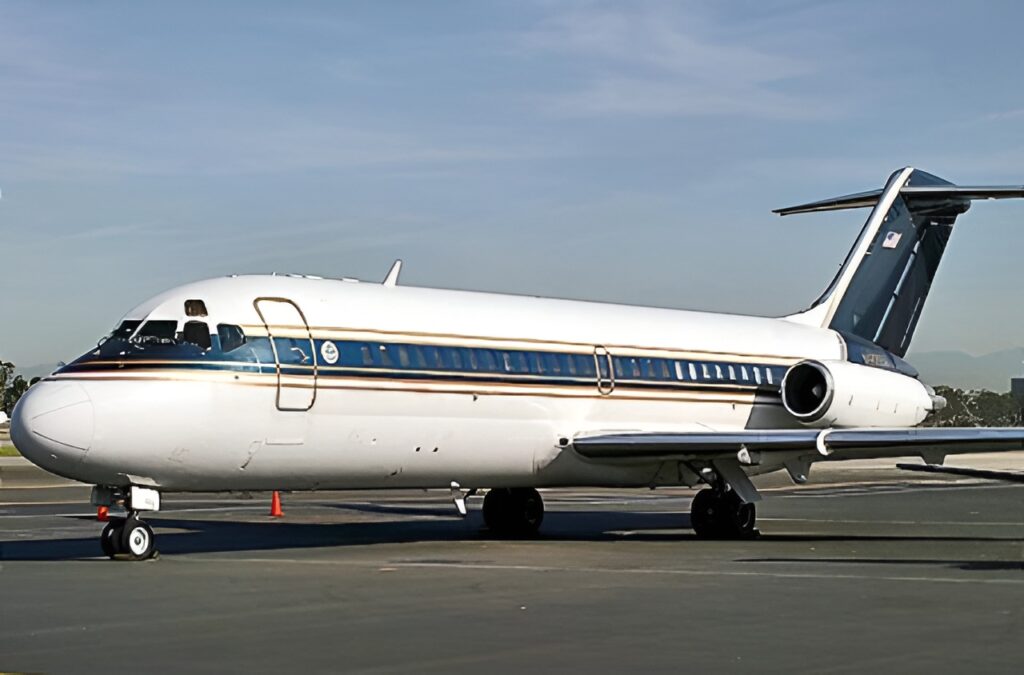
IMAGE: DC9-15, with US registration N900SA, which, according to data collected by journalist Daniel Hopsicker, who has dedicated himself to investigating the links between US intelligence and drug trafficking, can only belong to the CIA.
Another U.S.-registered aircraft, the Gulfstream II (N987SA), also surfaces in investigative accounts, purportedly tied to Carvajal’s trafficking network. While no court documents or mainstream sources confirm CIA operational control, the investigative narrative raises serious questions: Could U.S. intelligence have been aware of or involved in Carvajal’s smuggling operations? Did this relationship pave the way for his later cooperation with prosecutors?
The timing of Carvajal’s 2019 break with Nicolás Maduro and support for Juan Guaidó adds another layer of intrigue. While there is no direct evidence of Guaidó being a CIA operative, the sequence of events raises compelling questions about whether U.S. agencies had long been leveraging insider knowledge, or at least reaping strategic benefits, from Carvajal’s position.
“Carvajal’s reputation collapsed not only because of the drug trafficking accusations, but also because of his support for the US strategy which crystallized in the “Guaidó project,” the legacy of which has been to attack and rob Venezuela from all possible flanks. Although anti-Chavismo might want to pass the blame of Carvajal’s probable crimes on the Bolivarian government, these seem to correspond more to the United States’ anti-Venezuela agenda” Mision Verdad investigation)
This episode underscores the complexity of a story largely hidden from official records: a senior intelligence official whose life intersected with political power, narcotics trafficking, and possible U.S. intelligence operations, yet whose full narrative remains inaccessible to the public.
Arrest, Legal Battles, and the Strategic Puzzle of Cooperation
Carvajal’s entanglement with U.S. law spans more than a decade. Charges first arose in 2011 for conspiracy to import cocaine, resurfaced in 2014, and again in 2019 and 2020. The 2020 SDNY indictment alleged narco-terrorism, cocaine importation, and firearms offenses, painting a portrait of a Venezuelan state embedded with illicit networks. ( see SDNY Court’s records and superseding indictment documents here)
After years on the move, Carvajal was arrested in Spain on September 9, 2021, and extradited to the U.S. on July 19, 2023. On June 25, 2025, he pleaded guilty. Yet the prolonged delay in sentencing — still unresolved as of December 2025 — has drawn attention from legal analysts, who note that such delays often indicate ongoing cooperation with prosecutors in high-value cases.
CBS News legal analyst Irv Miller suggests that Carvajal’s pending sentence points to a “central witness” role against Maduro. Supporting this, his lawyer Robert Feitel stated he could not comment on any aspect of the case because Carvajal “is a potential witness against him,” referencing the former president directly. At 65, Carvajal now occupies a singularly precarious position, balancing personal survival with the potential to influence one of the most politically charged prosecutions in the hemisphere.
The 2019 Break and the Letter to Trump
In February 2019, Carvajal publicly endorsed Juan Guaidó’s claim to Venezuela’s interim presidency, urging the military to withdraw loyalty from Maduro. This unprecedented defection shocked observers, as a man who had once been at the heart of the regime’s intelligence apparatus suddenly broke ranks. The move came amid an aggressive U.S.-led campaign to unseat Maduro, which included Washington’s formal recognition of Guaidó, the approval of $52 millions of dollars in U.S. funding for the Venezuelan opposition through USAID, and a new wave of crippling sanctions targeting the country’s oil sector and financial lifelines. Within this context, Carvajal’s public alignment with Guaidó appeared less like an isolated moral rupture and more like a calculated repositioning within a rapidly hardening geopolitical confrontation between Caracas and Washington.
Analysts of Guaidó’s rise describe him not as a spontaneous Venezuelan opposition figure but as the product of a long-standing U.S. “regime change laboratory,” cultivated through training, funding, and ideological grooming to undermine the Bolivarian project and destabilise Maduro’s government. Washington’s strategic elevation of Guaidó was supported by elite political networks, the National Endowment for Democracy (NED), a known CIA cut-out that functions as the US government’s main arm of promoting regime change, and foreign policy infrastructures aimed at reshaping Venezuela’s political landscape, reflecting Washington’s deeper geopolitical ambitions rather than purely democratic impulses. This context — of a U.S.-backed political vehicle emerging to challenge Caracas — leads us to the obvious question: have U.S. interests effectively created a foreign ‘defector’ designed to be used as a key witness in a case that could help criminally convict an illegally abducted president?
Adding another layer, Carvajal sent a letter to then-President Donald Trump in 2019, framing himself as a key witness to the regime’s inner workings. He claimed that “U.S. diplomats and CIA officers were paid to assist Chávez and Maduro in remaining in power. These Americans acted as spies for Cuba and Venezuela, and some remain active to this day.” Carvajal presented himself as someone with firsthand knowledge of both alleged Venezuelan corruption and foreign influence, effectively positioning his narrative in the public and legal spotlight.
DOCUMENT: Carvajal’s letter in full to President Trump provided to The Dallas Express by attorney Robert Feitel (Source: Dallas Express)
Hugo Armando Carvajal Barrios Letter to Donald Trump
While the claims remain unverified, the letter’s timing, coinciding with U.S. diplomatic pressure and indictments against Venezuelan officials, invites critical questions: Was Carvajal leveraged to build a prosecutorial case, and how much of the narrative about Venezuela’s criminal networks depends on his testimony?
Hugo Carvajal’s anticipated testimony against Nicolás Maduro raises serious conflict-of-interest concerns. Having publicly aligned with U.S.-backed opposition leader Juan Guaidó and potentially benefiting from a deferred sentence or cooperation deal, Carvajal’s statements could be influenced by political and personal incentives. Coupled with his central role in the case and the lack of independent corroboration, and his alleged connection to the CIA, his testimony risks serving U.S. geopolitical objectives as much as judicial truth, blurring the line between law and political strategy.
Implications for U.S.–Venezuela Relations and International Law
Carvajal’s life and legal saga illuminate broader dynamics at play between Venezuela and the United States. The DOJ’s retraction of the “Cartel de los Soles” claim, combined with Carvajal’s likely cooperation, suggests that insider testimony is central to prosecutions that may otherwise lack independent, verifiable evidence. This dynamic raises pressing questions about how terrorism and narco labels are employed to justify intervention, potentially sidestepping international legal frameworks protecting sovereign nations from coercion.
Moreover, Carvajal’s alleged intelligence connections, his involvement with “Cocaine One,” and the timing of his defection to support Guaidó reveal how personal survival, political strategy, and intelligence operations intersect. His story reflects the precarious position of insiders caught between legal accountability, political pressure, and the strategic interests of a global power.
Ultimately, Hugo Carvajal’s narrative is both personal and geopolitical. It exposes a shadowed world where criminal allegations, state power, and intelligence operations intertwine, often outside the gaze of mainstream media and public scrutiny. His journey from trusted intelligence chief to cooperating witness offers a rare lens into the hidden mechanisms of U.S.–Venezuelan relations, the deployment of insider testimony in high-stakes prosecutions, and the limits of official narratives when weighed against clandestine operations and the Central Intelligence Agency’s historical secrets.
READ MORE VENEZUELA NEWS AT: 21st Century Wire VENEZUELA Files
SUPPORT OUR INDEPENDENT MEDIA PLATFORM – BECOME A MEMBER @21WIRE.TV
VISIT OUR TELEGRAM CHANNEL
21st Century Wire is an alternative news agency designed to enlighten, inform and educate readers about world events which are not always covered in the mainstream media.
Source: https://21stcenturywire.com/2026/01/07/from-chavismo-to-the-witness-stand-how-hugo-carvajal-became-washingtons-secret-weapon/
Anyone can join.
Anyone can contribute.
Anyone can become informed about their world.
"United We Stand" Click Here To Create Your Personal Citizen Journalist Account Today, Be Sure To Invite Your Friends.
Before It’s News® is a community of individuals who report on what’s going on around them, from all around the world. Anyone can join. Anyone can contribute. Anyone can become informed about their world. "United We Stand" Click Here To Create Your Personal Citizen Journalist Account Today, Be Sure To Invite Your Friends.
LION'S MANE PRODUCT
Try Our Lion’s Mane WHOLE MIND Nootropic Blend 60 Capsules
Mushrooms are having a moment. One fabulous fungus in particular, lion’s mane, may help improve memory, depression and anxiety symptoms. They are also an excellent source of nutrients that show promise as a therapy for dementia, and other neurodegenerative diseases. If you’re living with anxiety or depression, you may be curious about all the therapy options out there — including the natural ones.Our Lion’s Mane WHOLE MIND Nootropic Blend has been formulated to utilize the potency of Lion’s mane but also include the benefits of four other Highly Beneficial Mushrooms. Synergistically, they work together to Build your health through improving cognitive function and immunity regardless of your age. Our Nootropic not only improves your Cognitive Function and Activates your Immune System, but it benefits growth of Essential Gut Flora, further enhancing your Vitality.

Our Formula includes: Lion’s Mane Mushrooms which Increase Brain Power through nerve growth, lessen anxiety, reduce depression, and improve concentration. Its an excellent adaptogen, promotes sleep and improves immunity. Shiitake Mushrooms which Fight cancer cells and infectious disease, boost the immune system, promotes brain function, and serves as a source of B vitamins. Maitake Mushrooms which regulate blood sugar levels of diabetics, reduce hypertension and boosts the immune system. Reishi Mushrooms which Fight inflammation, liver disease, fatigue, tumor growth and cancer. They Improve skin disorders and soothes digestive problems, stomach ulcers and leaky gut syndrome. Chaga Mushrooms which have anti-aging effects, boost immune function, improve stamina and athletic performance, even act as a natural aphrodisiac, fighting diabetes and improving liver function. Try Our Lion’s Mane WHOLE MIND Nootropic Blend 60 Capsules Today. Be 100% Satisfied or Receive a Full Money Back Guarantee. Order Yours Today by Following This Link.


| Visits: | 1,773,326,550 |
| Stories: | 8,576,730 |
Whistler Blowers, Insiders

