

The Day ‘Free Speech’ Put a Price on an Iranian Academic’s Head


Freddie Ponton
21st Century Wire
The bounty did not come from some anonymous troll buried in the feeds. It came wrapped in the language of “security,” pushed as a paid promotion on Elon Musk’s flagship platform, and aimed squarely at a soft‑spoken Iranian professor whose real crime, in Western eyes, is that he tells the story of Israel/US war on his country, in fluent and unbroken English. A verified X account styling itself as a counter‑terrorism watchdog, Terror Alarm, announced that it was crowdfunding a one‑million‑dollar reward for the capture of Seyed Mohammad Marandi “alive,” and X treated that call not as a red‑line threat but as ad inventory to be sold and amplified.
In the middle of an escalating confrontation with Iran, someone, somewhere in Israel’s security ecosystem wanted to send a message to one of Tehran’s most articulate critics of Western power, and Elon Musk’s supposedly “free speech” platform agreed to deliver it for a fee.
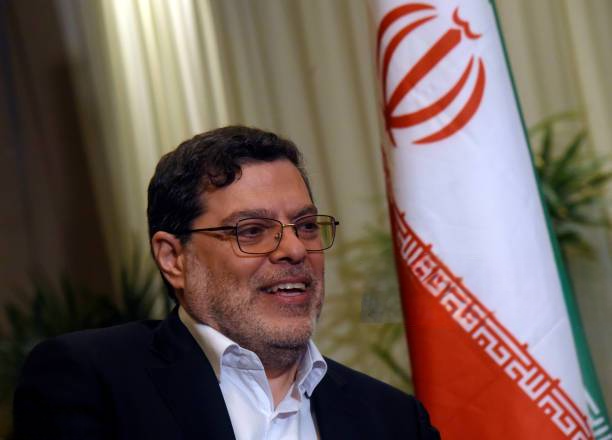
IMAGE: Professor Seyed Mohammad Marandi (Source: Akila Jayawardena/NurPhoto)
Seyed Mohammad Marandi is not a shadowy figure hiding behind encrypted channels but a professor of English literature at the University of Tehran, the son of an Iranian physician who studied and trained in the United States before the revolution, and a man who has spent years moving patiently between Persian and Western media to explain his country to audiences taught to fear it. He came of age in a society under sanctions and siege, lost family and friends to the wars and covert campaigns that Washington and Tel Aviv waged on Iran’s borders, and built his public role not as a general or a spy but as a teacher and translator of narratives, someone who can sit across from a hostile anchor in London or Doha and calmly dismantle the slogans that justify permanent war. To turn a person like that into quarry, to invite the world to hunt him “alive” for a reward, is to send a message not only to one man but to every Iranian, every Arab, every dissident who dares to speak back in the language of empire.
The basic facts are no longer in serious dispute. The Terror Alarm account, long verified on X and openly pro‑Israel, posted a graphic announcing that it was raising one million dollars as a bounty for Marandi’s capture, specifying that he should be taken alive.
We are crowdfunding $1 million for a bounty for the capture of Mohammad Marandi, advisor to Iran’s Supreme Leader and frequent IRGC-aligned propagandist.
We want him alive pic.twitter.com/IR9vOhHEFE
— Terror Alarm (@Terror_Alarm) March 19, 2026
The same creative appears across multiple reposts, displaying the unmistakable paid‑partnership labeling that marks it out as purchased distribution rather than organic chatter. Independent coverage from video commentary on YouTube to Substack essays has documented the ad, the wording, and the timing, including the deluge of user complaints urging X to remove it and the platform’s refusal to act. MintPress reproduced the graphic with the note “Twitter (X) has refused to remove a paid ad advertising a crowdfunding attempt to raise $1 million for the capture of Dr Seyed Mohammad Marandi.” Marandi found himself turned into an open target in the most literal sense: a price on his head, advertised by a “security NGO” in the global public square. Professor Marandi has publicly condemned the bounty as an act of support for terrorism against him and for those targeting him, and his supporters have asked what the reaction would be if a Palestinian or Iranian account placed a similar bounty on a Western or Israeli academic.
Terror Alarm: Anonymous Activists, Very Real Power
To understand what that means, you have to look past the bounty itself and into the organisation that posted it. Terror Alarm did not appear in March 2026 out of nowhere. It describes its own evolution in three stages: an initial “Terror Alarm App” during the heyday of ISIS attacks in Europe, a phase as “Terror Alarm Security” operating as a private security and alerting service from 2016 to 2022, and finally a rebrand into an EU‑registered nonprofit from 2022 onward, as laid out in its own About Terror Alarm document.
Terror Alarm operates as a registered association in Denmark (CVR 44425645), where the Danish Central Business Register lists local businessman René Rønneberg as the association’s official representative. Danish business records show René Rønneberg as a local businessman with director/owner roles since 2004, including in small Copenhagen firms like HOVEDVEJEN 103-105 ApS and a minority stake in the dissolved BEZH Denmark ApS, a company, with many shareholders, with the most important one being Avi Simonsen ( 33-50%), a man born in 1977 in the Islamic Republic of Iran, who applied for naturlaization pursuant Circular Letter No. 9461 of 17 June 2021. It is surprising to say the least that for a man fronting an organisation with international reach, Rønneberg is strikingly low‑profile: beyond dry company‑registry entries, he leaves almost no trace in social media, professional press or conference bios. On paper, Danish authorities treat Terror Alarm as a perfectly ordinary non‑profit association: business directories list its Copenhagen address, CVR number and email, but not a single line about the AI‑driven ‘terror alerts’ and bounty posts that made the brand notorious abroad.
DOCUMENT: Registration for Terror Alarm and Terror Alarm AI (CVR: 44425645) in Denmark – Translated from Danish to English (Source: CVR / VIRK – The Central Business Register of Denmark)
44425645+-+Fuld+visning.da.en
In its official material, it claims to be “independent and self‑funded by activists and journalists who work on the project from several countries around the world,” a deliberately vague formulation that hides the most basic details a genuine civil society organisation would normally provide. There is no named founder, no board, no list of staff. For a project that claims to have “alerted authorities” and helped thwart terror plots in Europe, the total anonymity of the people behind it is not a sign of grassroots modesty; it is a structural choice. In early 2023, Terror Alarm was already marketing itself as a strange hybrid of private intel shop and NGO, proudly stressing that its core team was of Jewish descent on its own March 2023 web page.
DOCUMENT: Terror Alarm and Terror Alarm AI profile (Source: Terroalarm.org)
about
The same literature lays out a grandiose technological vision. Terror Alarm’s current incarnation is built around what it calls the world’s first “‘Strategist’ and ‘anti‑terror’ agentic AI,” packaged as Terror Alarm AI and run through its nonprofit shell. In their own words, this system ingests “all news from all media sources including news websites, blogs, the Deep Web, the Dark Web, Telegram, Reddit, Twitter, Facebook, Instagram, YouTube, newspapers, magazines, TV channels, radio stations,” and, where law and opportunity allow, even “private messages between people.” It boasts of trawling through “leaked or possibly hacked mail and sites,” and, most strikingly, of using data from “intercepted communications obtained by some intelligence services” when that is legally possible. All of this is said to be stored in an ever‑updating “quantum data depository” feeding predictive models that can not only anticipate attacks but create news items and risk assessments on demand.
Their commercial pitches go further. The “Proactive Digital Threat Monitoring” service promises to continuously scan a target’s digital life, assign them a Predictive Radicalisation Score and, once that score crosses a threshold, trigger an “Automated Intervention Protocol” that can include a form of digital lockdown, restrictions on online activity and automated alerts to “trusted contacts.” This is not the language of a human rights NGO. It is the language of a private security firm, and an AI‑driven surveillance and control system that claims both the technical ability and the political right to watch, rate and intervene in people’s lives based on its own opaque models. When such a system decides that a particular Iranian academic is not just a propagandist but a legitimate target for a bounty campaign, it is not an accident of the algorithm, but the outcome of a politicised architecture presented as neutral “risk scoring.”
What thin early commentary on the Marandi affair barely mentions at all is this architecture. It is one thing to say “a pro‑Israel account posted a bounty.” It is another to show that the account in question is the front‑end of a self‑proclaimed “strategist AI” that hoovers up hacked data and intercepted communications, assigns people radicalisation scores and claims the right to intervene in their lives.
An Israeli Pressure Network in the Grey Zone
Around this machinery, the political orientation is not concealed. Terror Alarm’s own materials trumpet its support for Israel, Ukraine, certain US‑aligned micro‑states and separatist causes, presenting this as a kind of civilisational bloc of “the free world.” It describes its NGO arm as open to members from “all NATO member states (except Turkey and the United States) as well as Israel, Taiwan, Kosovo, Kurdistan and Ukraine,” and in a Telegram welcome message, assures new followers that it is “pro‑Israel but not affiliated with the State of Israel.” The denial sits awkwardly beside the reality that its declared mission is to “prevent acts of terror, stop antisemitism, and support Israel, Taiwan, Kosovo, Kurdistan, and Ukraine,” a list that reads less like a neutral security agenda and more like a political map of current Western proxy conflicts. The same outlet that insists it is not tied to Israel’s government also boasts that its AI feeds on “intercepted communications obtained by some intelligence services,” an admission that would be explosive if it came from a Russian‑ or Iranian‑branded project.
Its Telegram channels and news posts are saturated with narratives that mirror Israeli and NATO talking points: alleged plots by Iran‑backed groups against Jews abroad, denunciations of Palestinian resistance as pure terrorism, praise for Western leaders who push a hard line on Tehran. The Canary was not indulging in hyperbole when it described Terror Alarm as an “Israeli pressure group.” Nor were Iranian observers imagining things when they saw an organisation that appears to live at the intersection of Western platform capitalism, Israeli security narratives and outsourced “cognitive warfare.”
That last point has now been put in writing. In August 2025, the Association for Defending Victims of Terrorism, an NGO based in Tehran, sent a formal letter to the administrators of Telegram demanding that the Terror Alarm channel be shut down. The letter does more than complain about bias. It describes Terror Alarm as a “terrorist media outlet” that is “attributed to the Zionist regime’s security organisations, including the Mossad,” and alleges that “Israeli security and military services use this media outlet to broadcast psychological operations.” Coming from a victims‑of‑terrorism association in a country under constant hybrid attack, this is not merely name‑calling. It reflects a pattern Iranian institutions say they have observed in which particular rumours, claims and “leaks” about Iranian officials and operations appear first or most prominently on Terror Alarm’s channels, only to be echoed later by Israeli officials and supportive Western media.
Terror Alarm’s response has not been to engage but to escalate: it has reportedly added the ADVT itself to its own “terrorist” blacklists, using the label as a weapon against critics and confirming that this is a network that appoints itself prosecutor, judge and executioner in the information space.
There is, crucially, no leaked contract with signatures from Mossad chiefs and Terror Alarm’s anonymous directors, no smoking‑gun memo marked “psychological operations front.” From an evidentiary standpoint, what exists instead is a thick stack of circumstantial and adversarial material, combined with Terror Alarm’s own declarations. On the one hand, an Iranian NGO and allied commentators publicise their belief that this is an arm of Israeli psychological warfare. On the other hand, Terror Alarm openly claims to use “intercepted communications obtained by some intelligence services,” promotes itself as a “highly accredited private security firm” with a record of feeding law enforcement actionable information, and spends its days pushing content that sits perfectly inside Israeli state narratives. The gap between those two sides, denial of formal affiliation with the State of Israel in a Telegram welcome message, versus admitted use of intelligence‑service data and alignment with Israeli security goals, is precisely the grey zone where modern information operations prefer to live.
It is in that context that the bounty on Marandi should be read. This was not a drunken post by a fringe activist; it was a polished campaign asset, branded, sponsored and pushed through an AI‑wrapped security apparatus that claims to monitor “threats” for authorities across the NATO bloc and Israel. The target was not an anonymous preacher but one of Iran’s most effective English‑language communicators, a man whose recent interviews have calmly dismantled Western media myths about the closure of the Strait of Hormuz, the nature of the Iranian state and the role of US‑Israeli elites in perpetuating war. When he tells a Western interviewer that for Iranians this war is a fight for survival, while for Western elites it is a fight to preserve the “Epstein class and ethics,” he is not only offering a moral judgment; he is identifying, in his own way, the transnational elite network that benefits from turning people like him into targets. Being told that there is now a million‑dollar price on his head, “alive,” is not some abstract Twitter drama; it is the latest twist in a campaign that reaches from assassination squads on Iranian streets to anonymous “security” feeds on Western platforms.
Law on the Books, Impunity in Practice
X, under Elon Musk’s leadership, chose to treat this as acceptable speech and, more than that, as a revenue source. The company still maintains written rules that ban “clear threats of violence,” that prohibit content inciting or promoting kidnapping and harm, and that supposedly restrict monetisation for violent and hateful entities. Since Musk’s takeover, those rules have been softened and enforcement hollowed out, but on paper, they remain incompatible with a sponsored graphic raising a seven‑figure bounty for the capture of a named civilian.
IMAGE: Elon Musk | X and Grok
Staff did not have to guess at the context. The creative literally names the target, states the amount, and uses the language of a manhunt. When many users flagged the post, when independent journalists began calling attention to it, when NGOs warned that this was incitement masquerading as counter‑terrorism, X’s answer was to leave it up. In the coldest possible terms, the platform converted a kidnapping‑style solicitation into an advertising product and booked the revenue.
Seen through the lens of law rather than corporate PR, the picture becomes even starker. Under US federal criminal statutes, there is already a framework for dealing with exactly this kind of conduct. Soliciting a violent crime is itself a crime: 18 U.S.C. § 373 makes it illegal to “solicit, command, induce, or otherwise endeavour to persuade” another person to commit a “crime of violence,” and kidnapping sits squarely in that category. Kidnapping is directly covered by 18 U.S.C. § 1201, which criminalises the unlawful seizure and carrying away of a person “for ransom or reward,” while 18 U.S.C. § 875 targets interstate and foreign communications that threaten to kidnap or injure someone, or that demand ransom or reward in connection with kidnapping.
A campaign that offers up to one million dollars for the “capture” of a named academic, framed as a serious “security” measure and not as parody, lies uncomfortably close to the heart of those provisions. Whether a US prosecutor will ever treat the Terror Alarm bounty as more than noise is a political decision, not a gap in the text.
For X and Musk, the shield is broader but not infinite. American intermediary protections were never meant to give a free pass to companies that knowingly profit from potentially criminal solicitations. Those protections make it difficult to sue a platform for every dangerous post it hosts, but they do not absolve a company that begins to look less like a passive conduit and more like a co‑distributor. The moment X takes money, labels the graphic as a paid partnership and uses its ad infrastructure to ram that “wanted poster” into timelines far beyond Terror Alarm’s organic audience, it has stepped beyond mere hosting. In a legal culture willing to test the limits, there would at least be an argument that the platform has materially assisted in broadcasting the solicitation, especially where the content may implicate federal offences like those in §§ 373, 875 and 1201.
Outside the United States, the frameworks shift from criminal code sections to human‑rights and platform‑duty regimes. The International Covenant on Civil and Political Rights, which binds most of the states whose citizens use X, guarantees the right to life in Article 6 and prohibits arbitrary arrest and detention in Article 9. The United Nations Security Council Counter‑Terrorism Committee and the Human Rights Council have stressed that counter‑terror measures must respect these rights and must not be turned against journalists, academics and political critics. UN special rapporteurs on extrajudicial, summary or arbitrary executions, on freedom of expression, and on human rights while countering terrorism all have mandates that fit a case where a named academic is transformed into quarry by an intelligence‑adjacent network and a global platform in the name of “security.”
Even within the UN’s own technocratic documents on “countering terrorism online with artificial intelligence”, there are warnings that predictive analytics and automated threat‑scoring can be abused to silence dissent and target minorities under the cloak of neutral “risk management.” Terror Alarm’s proud description of its own “predictive radicalisation scores” and “digital lockdown” capabilities reads like a case study in how far that abuse can go when no one is watching.
The Hague is not going to save Seyed Mohammad Marandi. The International Criminal Court, created by the Rome Statute, is designed to tackle mass atrocities: war crimes, crimes against humanity, and genocide. A single bounty, however chilling and however emblematic of a larger pattern, does not meet that threshold. But the fact that the ICC is not the right forum does not mean there is no international machinery at all. Human‑rights treaty bodies and special procedures can be petitioned. They can put states on record, call out companies by name and connect incidents like the Marandi bounty to a broader pattern of transnational repression and psychological warfare.
At the regional level, the Online Safety Act 2023 in the UK and the EU’s Digital Services Act were sold to the public on precisely the promise that the largest platforms would no longer be allowed to shrug at “online harms” with real‑world consequences. Ofcom, the British communications regulator, has been given powers to enforce duties on platforms to address clearly illegal content, including threats and incitement. The DSA imposes on “very large online platforms” a duty to assess and mitigate systemic risks from illegal content and to take action when notified. A paid campaign that offers money for the capture of a person who may pass through EU or UK jurisdictions is the kind of test case that could expose whether those laws mean anything when the threats align with Western foreign‑policy preferences.
The organisations best placed to turn this from a one‑week scandal into a sustained legal‑political case are the ones that already live in these overlapping spaces. Human‑rights and digital‑rights groups that have fought abusive “terror” designations and discriminatory counter‑extremism programmes; Palestinian and Iranian advocacy networks that have documented online incitement and real‑world targeting; press‑freedom bodies that have seen colleagues raided under the guise of anti‑terror law. The Association for Defending Victims of Terrorism has already moved once, in its letter to Telegram, to name Terror Alarm as a “terrorist media outlet” attributed to” Israeli security organisations, including Mossad.
UN special rapporteurs can be petitioned with full dossiers. European regulators can be challenged on why a platform they oversee accepted money to blast a kidnap‑style bounty into people’s phones. Even within the corporate world, there are cracks: sympathetic technologists and security professionals have begun to publicly question why a “highly accredited” firm that boasts of saving lives from ISIS is now raising money to put an Iranian academic in chains.
Privatised Intelligence and the Value of a Life
For Marandi, and for many Iranians watching from within a country ringed by bases and sanctions, there is no ambiguity. A network that already sees Western states as structurally hostile, that has watched its scientists assassinated, its generals blown apart, its cargo ships sabotaged, and its schoolgirls killed by US tomahawks, now sees a Western tech magnate’s flagship platform carry a bountying campaign against one of its most prominent public intellectuals. That feels less like an algorithmic accident and more like a declaration of who counts as human in the current information order.
For Palestinians in Gaza, for Lebanese civilians under the arc of Israel’s artillery, for anyone in the region whose family has been buried under the rubble paid for by Western aid, it is another data point: the rules about “incitement” and “terrorism” are enforced only downward. The people who order and justify the wars, the people who design the AI that sorts lives into “risks” and “targets” can put a price on a man’s freedom and still call themselves defenders of civilisation and free speech.
There is, finally, a broader story here about how war is waged in the age of privatised intelligence and billionaire‑owned platforms. Terror Alarm sits precisely at that junction. It claims to be a nonprofit, yet it sells services that sound like junior versions of what states do with full‑spectrum surveillance. It claims independence while boasting of its access to “intercepted communications obtained by some intelligence services.” It claims to protect the public from extremism while directing its most aggressive campaigns not at clandestine bombers but at visible critics of Israeli power. Musk’s X, for its part, claims to be a neutral marketplace of ideas, yet it bends its own rules whenever the right kind of violence, the violence aligned with Western policy and Israeli security doctrine, is dressed in the right kind of language.
An article that takes all of this seriously and refuses to look away from the bounty on Marandi would not need to prove that Terror Alarm is literally run from a Mossad office. It would only need to show, as the record now does, that a self‑styled Israeli‑aligned “security” network with intimate ties to intelligence‑grade data flows chose to place a price on an Iranian academic’s head, that many critics and Iranian observers saw as an unmistakable signal from Israel’s security ecosystem, and that Elon Musk’s platform chose to cash the cheque.
The rest is a matter of whether we are willing to admit that “terror” and “security” have become the language through which some lives are made expendable, and others are rendered untouchable, and who exactly benefits from that division.
READ MORE EU NEWS AT: 21st Century Wire EU Files
SUPPORT OUR INDEPENDENT MEDIA PLATFORM – BECOME A MEMBER @21WIRE.TV
VISIT OUR TELEGRAM CHANNEL
21st Century Wire is an alternative news agency designed to enlighten, inform and educate readers about world events which are not always covered in the mainstream media.
Source: https://21stcenturywire.com/2026/03/25/the-day-free-speech-put-a-price-on-an-iranian-academics-head/
Anyone can join.
Anyone can contribute.
Anyone can become informed about their world.
"United We Stand" Click Here To Create Your Personal Citizen Journalist Account Today, Be Sure To Invite Your Friends.
Before It’s News® is a community of individuals who report on what’s going on around them, from all around the world. Anyone can join. Anyone can contribute. Anyone can become informed about their world. "United We Stand" Click Here To Create Your Personal Citizen Journalist Account Today, Be Sure To Invite Your Friends.
LION'S MANE PRODUCT
Try Our Lion’s Mane WHOLE MIND Nootropic Blend 60 Capsules
Mushrooms are having a moment. One fabulous fungus in particular, lion’s mane, may help improve memory, depression and anxiety symptoms. They are also an excellent source of nutrients that show promise as a therapy for dementia, and other neurodegenerative diseases. If you’re living with anxiety or depression, you may be curious about all the therapy options out there — including the natural ones.Our Lion’s Mane WHOLE MIND Nootropic Blend has been formulated to utilize the potency of Lion’s mane but also include the benefits of four other Highly Beneficial Mushrooms. Synergistically, they work together to Build your health through improving cognitive function and immunity regardless of your age. Our Nootropic not only improves your Cognitive Function and Activates your Immune System, but it benefits growth of Essential Gut Flora, further enhancing your Vitality.

Our Formula includes: Lion’s Mane Mushrooms which Increase Brain Power through nerve growth, lessen anxiety, reduce depression, and improve concentration. Its an excellent adaptogen, promotes sleep and improves immunity. Shiitake Mushrooms which Fight cancer cells and infectious disease, boost the immune system, promotes brain function, and serves as a source of B vitamins. Maitake Mushrooms which regulate blood sugar levels of diabetics, reduce hypertension and boosts the immune system. Reishi Mushrooms which Fight inflammation, liver disease, fatigue, tumor growth and cancer. They Improve skin disorders and soothes digestive problems, stomach ulcers and leaky gut syndrome. Chaga Mushrooms which have anti-aging effects, boost immune function, improve stamina and athletic performance, even act as a natural aphrodisiac, fighting diabetes and improving liver function. Try Our Lion’s Mane WHOLE MIND Nootropic Blend 60 Capsules Today. Be 100% Satisfied or Receive a Full Money Back Guarantee. Order Yours Today by Following This Link.


| Visits: | 1,797,229,368 |
| Stories: | 8,622,894 |
Whistler Blowers, Insiders

