

The US Sanctions Empire Runs Into China’s Great Wall

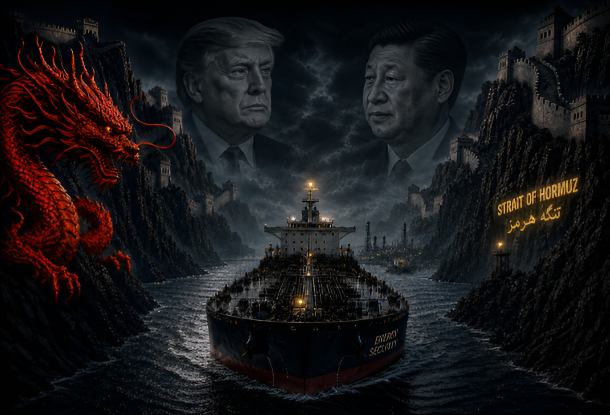
Freddie Ponton
21st Century Wire
On April 23, the U.S. Treasury Department widened its Iran sanctions drive to target Chinese firms allegedly tied to Tehran’s oil trade, raising the stakes in an already volatile confrontation over energy flows and wartime risk. China has now moved beyond condemning U.S. sanctions to formally ordering non-compliance, with China’s Ministry of Commerce (MOFCOM) making its ban effective immediately.
What was once framed as a dispute over a handful of Iranian oil shipments is now emerging as a broader struggle over who sets the legal and financial terms of global energy trade. And with instability still shadowing the Strait of Hormuz, Beijing’s latest move suggests Washington’s sanctions regime is no longer being quietly absorbed inside China
Beijing draws the line on Iran oil sanctions
Washington’s latest sanctions campaign against Chinese refiners was supposed to teach an old lesson in imperial discipline. The United States would decide which oil trades were acceptable, which routes were legitimate, and which foreign firms would pay for refusing to comply.
Beijing’s answer suggests that the lesson is no longer landing as cleanly as it once did. What Washington treated as another sanctions round, China increasingly appears to see as a test of whether the legal, financial, and logistical systems that keep sanctioned trade alive can still be defended under direct American attack.
The significance of that shift is easy to miss if the story is told as a dispute over a few refiners buying discounted Iranian crude. It is something much larger. China is testing whether it can stop treating U.S. extraterritorial coercion as a routine condition of global commerce and start making compliance with that coercion legally dangerous inside China itself.
Washington escalates
The immediate trigger came in late April, when the U.S. Treasury Department widened its Iran sanctions campaign to hit Chinese-linked entities accused of buying, handling, or facilitating Iranian oil. Treasury cast the move as part of an “Economic Fury” campaign aimed at the network sustaining Iran’s oil trade and targeted the exchange houses and shadow-banking channels that turn those sales into usable money.
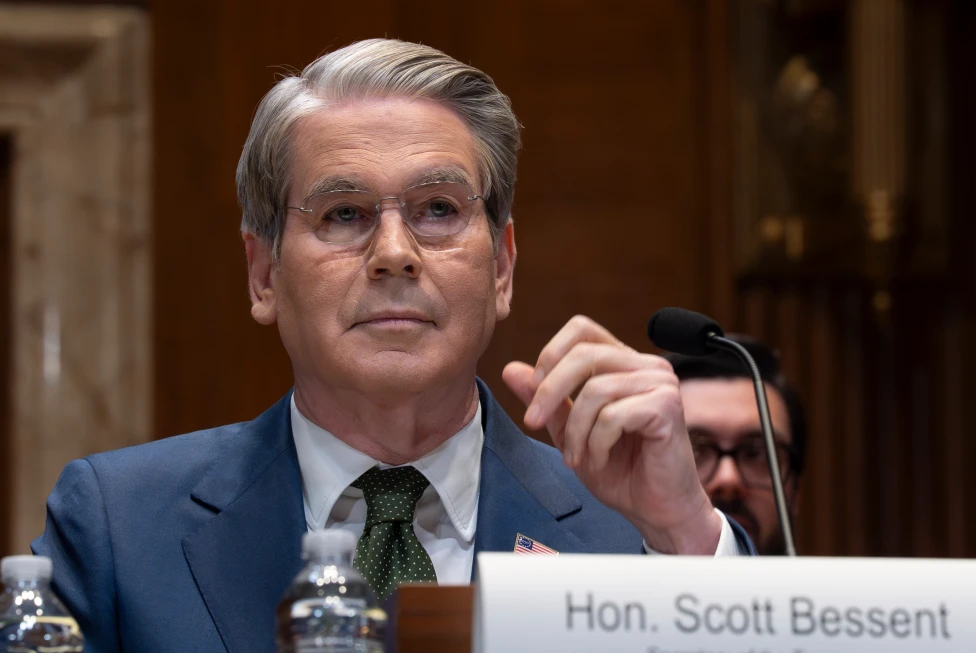
IMAGE: Treasury Secretary Scott Bessent at a Senate Appropriation subcommittee, at the Capitol in Washington, Wednesday, April 22, 2026. (Source: AP Photo/J. Scott Applewhite)
That altered the character of the confrontation, because Washington was no longer going after cargoes alone, but also moving against the circuitry that makes the trade work.
Treasury was unusually direct about that circuitry. Through the Office of Foreign Assets Control (OFAC), it described a system in which Chinese “teapot” refiners remain central to Iran’s oil economy. At the same time, shadow-fleet vessels, intermediaries, and offshore financial channels keep the trade moving.
That is one of the most revealing features of the confrontation. The fight is no longer just over barrels on tankers. It has spread over the monetary plumbing of a sanctions-resistant oil trade taking shape outside the compliance habits of the Western financial system.
The war on Iran turned that pressure into something far more serious than a routine sanctions headline. As the conflict pushed risk through the Gulf, reporting showed growing concern in Beijing over the Strait of Hormuz, Chinese shipping exposure, rising oil and liquefied natural gas costs, and the wider effect of wartime volatility on growth and manufacturing.
China’s Foreign Ministry called the U.S. blockade of Iranian ports dangerous and irresponsible and warned that it would undermine the ceasefire and threaten safe passage through Hormuz. That language made clear that Beijing no longer saw the issue as somebody else’s regional problem. It was already reading it as a threat to trade, energy, and maritime order.
Beijing prepared the ground
China’s move on May 2 did not come out of thin air. By the time MOFCOM Announcement No. 21 of 2026 appeared, Beijing had already spent weeks building the legal shelter under which that order could stand. The real story began in April, when the Chinese state moved on two fronts at once: economic resilience and legal retaliation.
On April 7, China published State Council Order No. 834, the regulations on industrial and supply-chain security, after Premier Li Qiang signed the State Council decree unveiling the regulations on March 31. The official summary said the purpose was to prevent industrial and supply-chain security risks, improve resilience and security, and safeguard economic and social stability as well as national security.
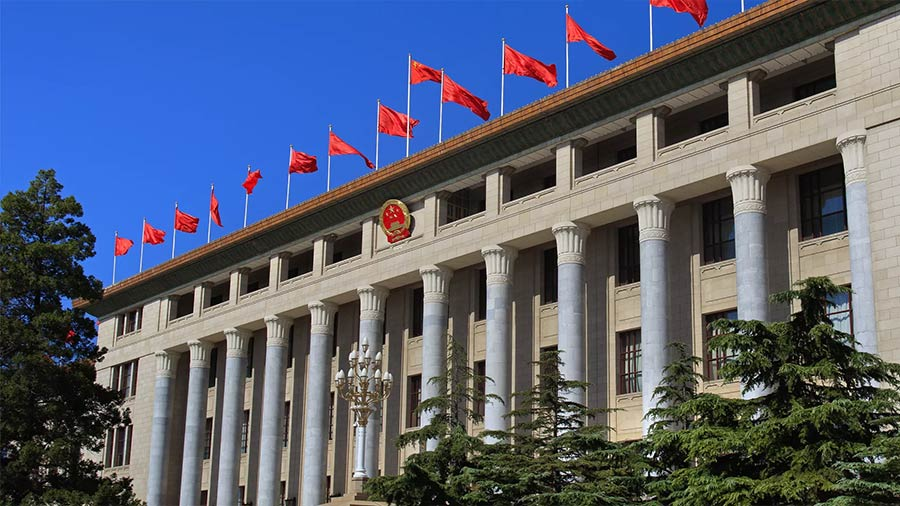
IMAGE: China’s State Council issued two far-reaching regulations: Order No. 834 promulgated the Regulations on Industrial Chain and Supply Chain Security, published and effective March 31, and Order No. 835 promulgated the Regulations of the People’s Republic of China on Countering Foreign Improper Extraterritorial Jurisdiction, published and effective April 7, 2026 (Source: The Green Finance & Development Center)
In plainer terms, Beijing was preparing for an era in which sanctions, shipping disruption, financial pressure, and wartime shocks would no longer be treated as isolated disturbances. They would be treated as systemic threats to the state’s economic rear.
Order No. 834 was built for that world. It created a state mechanism to identify strategic sectors, monitor vulnerabilities, issue warnings, build reserves, and organize emergency production and transport when supply-chain security comes under pressure. It also gave the state room to punish conduct deemed harmful to that security through restrictions touching procurement, bidding, goods and technology trade, services, and cross-border data flows.
China was preparing to absorb outside pressure without allowing ordinary commercial choke points to become national points of failure. Days later came the Regulations on Countering Improper Extraterritorial Jurisdiction by Foreign States. In the official Ministry of Justice explanation, the state said the regulation was designed to safeguard national sovereignty, security, and development interests, protect the lawful rights of Chinese citizens and organizations, and uphold an international order grounded in international law.
Its significance lies in the powers it gives the state. It creates a coordination mechanism for identifying and responding to foreign measures China regards as improper extraterritorial jurisdiction. It allows the state to issue injunctions ordering organizations and individuals not to implement those measures, and it gives harmed Chinese parties a path to sue in domestic courts for cessation of infringement and compensation.
Article 8 of State Council Order No. 835 also added teeth by creating a “Malicious Entity List, targeting foreign organizations and individuals that promote or participate in the implementation of a foreign state’s unlawful extraterritorial jurisdiction measures,” which can bring visa restrictions, asset freezes, transaction bans, and trade and investment limits.
Taken together, Orders 834 and 835 were not technical adjustments buried in a legal gazette; they were also the scaffolding of a more confrontational economic posture. One order hardened the supply-chain backbone, whilst the other built the conflict-of-laws machinery needed to identify foreign coercion, block compliance with it, and punish those who help carry it out.
By the end of April, Beijing had already moved beyond verbal protest. It had prepared the legal ground for a direct clash over who gets to govern trade touching China under wartime pressure.
Why China chose this moment
To understand why Beijing decided to make its move now, we must first appreciate that the issue was no longer confined to a few “teapot” refiners buying discounted Iranian barrels. It had widened into a struggle over Hormuz risk, wartime shipping disruption, inflationary pressure, payment channels, and the broader question of who gets to decide the terms on which China secures energy in a moment of war.
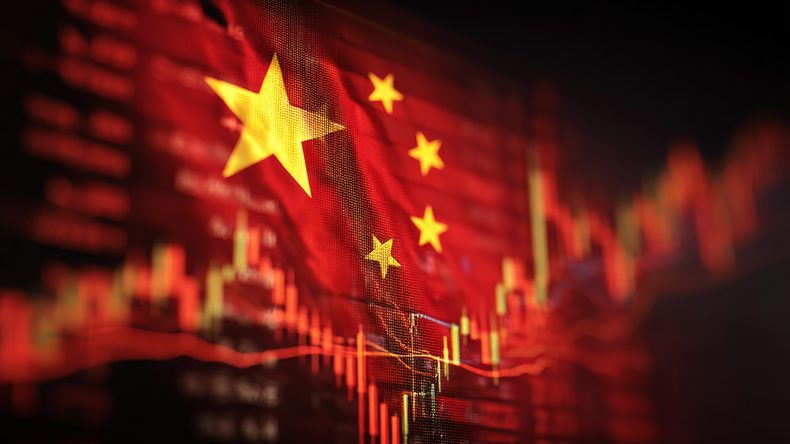
IMAGE: Shanghai container freight futures have hit their daily trading limits for two consecutive sessions, fuelled by disruption from the Hormuz blockade and carriers’ aggressive rate hikes (Source: Mirador)
Once Washington began targeting not only oil cargoes but the financial and logistical architecture around them, Chinese restraint became more costly, and the political signal from the top was unmistakable. On April 28, as the fallout from the war spread, the Politburo said China must systematically respond to external shocks and challenges, improve energy-resource security, and strengthen self-reliance and control over supply chains.
That language is significant because it shows the response was not a ministry improvisation. It had backing from the highest political level and sat inside a broader state project of economic resilience under pressure.
China may not believe itself invulnerable, but it certainly does appear to believe it is now resilient enough to stop absorbing this kind of pressure in silence. That shift in confidence carries the story beyond the news of the sanctions. Beijing is no longer just asking Washington to restrain itself. It is beginning to build the legal and commercial tools to refuse Washington’s terms.
The fight behind the tankers
That refusal only makes sense once the battlefield is understood properly. Treasury’s own sanctions language shows that the struggle has moved well beyond ships, ports, and refinery intake. If Iran can keep selling oil into China and keep converting the proceeds through offshore or semi-opaque channels, then sanctions can raise costs without severing the trade.
That is why settlement systems, intermediaries, and shadow-banking channels now sit at the center of the fight. Washington is trying to hit the arteries, not merely the cargo.

IMAGE: A bulk carrier and a tanker anchored in Muscat, Oman. Analysts say around 2,470 vessels have not moved in the Arabian Gulf since March 5 (Source: AGBI)
Beijing is reading the same map from the other side. What is at stake is not simply the movement of crude, but whether the wider infrastructure of sanctioned trade can keep functioning under pressure. That means settlement systems, offshore intermediaries, shipping, insurance, domestic legal remedies, and the right to reject foreign extraterritorial coercion inside China’s own jurisdiction.
At that point, the May 2 order no longer looked like a narrow defense of a few refiners. It looked like Beijing trying to protect the wider trade network behind them.
There is already a precedent for how ugly that fight can become. In 2019, U.S. sanctions on a Chinese COSCO Shipping tanker unit sent shipping rates sharply higher and jolted crude markets, with industry reports describing a shockwave as charterers rejected Chinese-linked tonnage.
That episode is not benign because it showed how a sanction aimed at one point in the chain could ricochet through freight, insurance, routing, and energy pricing far beyond the original target. The present confrontation carries the same danger, only with more at stake. This time, the financial and legal infrastructure around the trade is openly in the crosshairs.
Beijing’s legal counteroffensive
That is the setting in which Beijing finally stopped hinting and started ordering. In MOFCOM Announcement No. 21 of 2026, the Ministry of Commerce of the People’s Republic of China issued a prohibition order against U.S. sanctions imposed on five Chinese firms over alleged Iranian oil transactions. The companies named were Hengli Petrochemical Dalian Refining Co. Ltd., Shandong Shouguang Luqing Petrochemical Co. Ltd., Shandong Jincheng Petrochemical Group Co. Ltd., Hebei Xinhai Chemical Group Co. Ltd., and Shandong Shengxing Chemical Co. Ltd.

IMAGE: China’s Ministry of Commerce building (MOFCOM) (Source: VCG)
The order did more than identify those companies. MOFCOM said the U.S. measures constituted an unjustified extraterritorial application and stated that, in order to safeguard national sovereignty, security, and development interests, and to protect the legitimate rights and interests of Chinese citizens, legal persons, or other organizations, it was issuing the prohibition order. It also made clear that the order was not some future threat waiting on implementation. It came into force on the date of publication.
Then came the line that changed the character of the dispute. MOFCOM declared that the U.S. measures against those firms, including placement on the Specially Designated Nationals and Blocked Persons List, asset freezes, and transaction prohibitions, shall not be recognized, enforced, or observed. That cannot be characterised as a complaint or some sort of diplomatic gesture, and therefore must be regarded as a state instruction issued under Chinese law, telling domestic actors that Washington’s sanctions line would not govern conduct inside China.
The historical significance is easy to understate. This appears to be the first time China has actually used its 2021 Blocking Rules to issue a concrete prohibition order. In other words, April built the machinery, but May activated it.
Another point that also appears to be significant is that Beijing’s legal response does not end with telling firms to ignore Washington. Under China’s anti-sanctions and anti-extraterritorial framework, companies harmed by compliance with U.S. measures can seek relief in Chinese courts, while firms that help enforce those measures can face compensation claims, entity-list penalties, or wider trade restrictions. The point is not simply to protest American pressure, but to make obedience to that pressure more legally and commercially costly inside China itself. If Beijing follows this route through, it will be testing whether U.S. sanctions can still function as a near-automatic language of global commerce, or whether they now collide with a rival legal order prepared to punish compliance
Beijing’s challenge does not stop at Chinese law. It is also building a broader legal case that U.S. secondary sanctions and pressure on third parties violate basic norms of international law by extending American domestic measures beyond U.S. jurisdiction. That argument can be pushed through several channels at once, from Chinese courts and counter-sanctions rules at home to World Trade Organization disputes over trade-distorting measures and broader appeals to the United Nations, where unilateral coercive measures have repeatedly been challenged as incompatible with the UN Charter and human rights law. The point is not that these forums will suddenly stop Washington, but that China is assembling a legal and diplomatic record to show that punishing third countries for refusing U.S. dictates is not a rules-based order.
What Washington presents as sanctions enforcement, Beijing is increasingly preparing to cast as unlawful coercion against third countries in a world no longer willing to treat U.S. jurisdiction as global destiny
A precedent beyond Iran
The real question now is not whether Beijing has spoken clearly, because it has. The question is whether it can force that clarity to hold once the pressure begins to bite. Early signs suggest both the potential and the limits of China’s new posture. Reuters reported that Hengli Petrochemical restructured its Singapore trading arm after the U.S. sanctions landed.

IMAGE: Hengli Petrochemical Dalian Refinery, China (Source: Xinhua)
That is a useful reality check. A prohibition order can redraw the legal map inside China, but it does not make offshore finance, trading houses, insurers, and counterparties suddenly fearless. In fact, the order creates exactly the kind of dilemma Beijing wants. Companies can be trapped between two legal systems at once: follow U.S. sanctions and risk violating China’s prohibition order, or follow China’s non-observance order and risk U.S. penalties.
That Catch-22 falls especially hard on banks, shipping and logistics firms, insurers, and international trading companies with exposure to both systems. The old assumption that U.S. compliance is always the safest option is precisely what Beijing is trying to break.
Still, the significance of this moment lies elsewhere. Beijing appears to believe it now has enough reserve capacity, administrative discipline, import flexibility, and legal cover to stop sacrificing whole layers of trade infrastructure each time Washington tightens the screws.
If that judgment is correct, the United States will have to go far beyond blacklisting a few refinery names. It will be pushing deeper into the shipping, finance, insurance, and payment networks that keep this trade alive, doubling down on economic coercion at a moment when more of the world is already looking for ways to trade outside Washington’s grip.
That is why this case reaches far beyond Iran. China is not simply objecting to U.S. sanctions. It is trying to overturn the old compliance logic that made those sanctions effective across the world.
By making obedience to foreign sanctions legally risky inside China, and by pairing that move with wartime language about Hormuz and top-level demands for energy security and supply-chain control, Beijing is beginning to assemble a rival legal and commercial order within its own sphere.
If that effort holds, even in part, the implications will travel well beyond the five refiners named in Announcement No. 21. Banks, insurers, traders, shipping firms, and foreign governments will read it as a sign that China is no longer prepared to treat American extraterritorial pressure as a routine condition of global commerce. Iran is only the proving ground. The deeper struggle is over whether non-Western commercial architecture can survive once Washington stops targeting cargoes alone and starts cutting the arteries that keep them alive.
READ MORE CHINA NEWS AT: 21st Century Wire China Files
SUPPORT OUR INDEPENDENT MEDIA PLATFORM – BECOME A MEMBER @21WIRE.TV
VISIT OUR TELEGRAM CHANNEL
21st Century Wire is an alternative news agency designed to enlighten, inform and educate readers about world events which are not always covered in the mainstream media.
Source: https://21stcenturywire.com/2026/05/04/the-us-sanctions-empire-runs-into-chinas-great-wall/
Anyone can join.
Anyone can contribute.
Anyone can become informed about their world.
"United We Stand" Click Here To Create Your Personal Citizen Journalist Account Today, Be Sure To Invite Your Friends.
Before It’s News® is a community of individuals who report on what’s going on around them, from all around the world. Anyone can join. Anyone can contribute. Anyone can become informed about their world. "United We Stand" Click Here To Create Your Personal Citizen Journalist Account Today, Be Sure To Invite Your Friends.
LION'S MANE PRODUCT
Try Our Lion’s Mane WHOLE MIND Nootropic Blend 60 Capsules
Mushrooms are having a moment. One fabulous fungus in particular, lion’s mane, may help improve memory, depression and anxiety symptoms. They are also an excellent source of nutrients that show promise as a therapy for dementia, and other neurodegenerative diseases. If you’re living with anxiety or depression, you may be curious about all the therapy options out there — including the natural ones.Our Lion’s Mane WHOLE MIND Nootropic Blend has been formulated to utilize the potency of Lion’s mane but also include the benefits of four other Highly Beneficial Mushrooms. Synergistically, they work together to Build your health through improving cognitive function and immunity regardless of your age. Our Nootropic not only improves your Cognitive Function and Activates your Immune System, but it benefits growth of Essential Gut Flora, further enhancing your Vitality.

Our Formula includes: Lion’s Mane Mushrooms which Increase Brain Power through nerve growth, lessen anxiety, reduce depression, and improve concentration. Its an excellent adaptogen, promotes sleep and improves immunity. Shiitake Mushrooms which Fight cancer cells and infectious disease, boost the immune system, promotes brain function, and serves as a source of B vitamins. Maitake Mushrooms which regulate blood sugar levels of diabetics, reduce hypertension and boosts the immune system. Reishi Mushrooms which Fight inflammation, liver disease, fatigue, tumor growth and cancer. They Improve skin disorders and soothes digestive problems, stomach ulcers and leaky gut syndrome. Chaga Mushrooms which have anti-aging effects, boost immune function, improve stamina and athletic performance, even act as a natural aphrodisiac, fighting diabetes and improving liver function. Try Our Lion’s Mane WHOLE MIND Nootropic Blend 60 Capsules Today. Be 100% Satisfied or Receive a Full Money Back Guarantee. Order Yours Today by Following This Link.


| Visits: | 1,809,154,877 |
| Stories: | 8,648,114 |
Whistler Blowers, Insiders

