

Peru’s Election: The Old Fujimori Machine Has New Israeli Wiring

Freddie Ponton
21st Century Wire
On the night of June 17, 2026, something happened in Peru that was not supposed to be mathematically possible. Leftist candidate Roberto Sánchez Cerón led Keiko Fujimori by more than forty thousand votes after every domestic ballot had been counted. The race was, by any sober reading of the numbers, over. Then the overseas vote came in, and inside ninety minutes, Fujimori had flipped the entire deficit and won by fifty thousand votes in the other direction. A ninety-thousand-vote reversal. In a single tranche of ballots. From a diaspora that represents less than three per cent of registered voters.
The National Office of Electoral Processes, or ONPE, later put Fujimori ahead by 49,641 votes, but the result still had to be formally proclaimed by the National Elections Board, or JNE
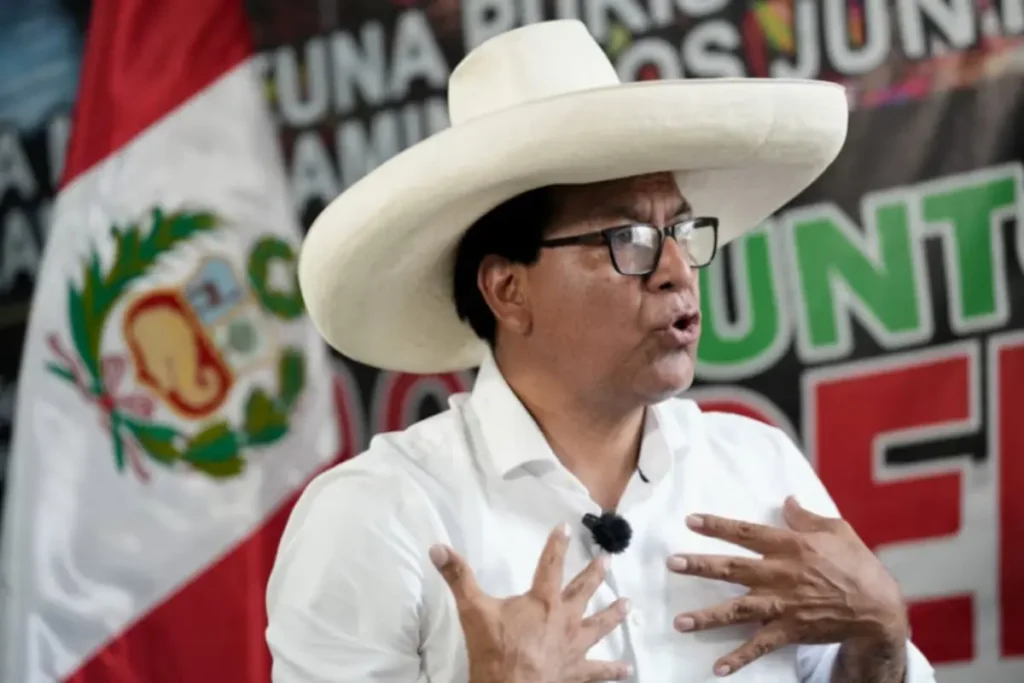
IMAGE: Roberto Sanchez, presidential candidate of the Together for Peru party, speaks during an interview with Reuters ahead of the general election on April 12, in Lima, Peru, April 10, 2026. (Source: REUTERS/Angela Ponce)
Before that overseas count was even published, a man named Carlos Díaz-Rosillo had already appeared on Peruvian national radio, and told the audience, with calm precision, exactly what was about to happen. He knew the margin. He knew the direction. But above all, he knew, as he put it, that the overseas vote would “reverse” Sánchez’s domestic lead and hand Fujimori the presidency, and he was right to the decimal.
Díaz-Rosillo is not a Peruvian. He has never run in a Peruvian election. He is a Cuban-American who served as deputy assistant secretary of defense for Western Hemisphere affairs inside Donald Trump’s first White House, and who went on to found and direct the Adam Smith Center for Economic Freedom at Florida International University, a state-funded institution in Miami that, according to a months-long investigation by WLRN Public Media and the Miami Herald, has received $39 million in Florida taxpayer dollars since 2020, spent less than half of it, and is now openly described by its own director as a “hub” for conservative Latin American politics. Throughout the Peruvian campaign, he was presented on Peruvian television as an independent analyst. He was, in fact, Keiko Fujimori’s primary strategic advisor. Fujimori had been a paid “Global Fellow” at his institution, compensated with $45,000 for a year of work, as Díaz-Rosillo confirmed to Peruvian media.
She flew to Miami, gave lectures, took the credential, and came home with the blessing of a machine that runs from Trump’s Doral golf resort to DeSantis’s statehouse to the Heritage Foundation to the Israeli defense industry, and that has been quietly building the infrastructure for exactly this kind of result for years.
What follows is not speculation, but rather a reconstruction built from official Peruvian government filings, Contraloría General de la República audit reports, criminal investigation records, Israeli Embassy Lima communications, Florida budget records, reporting on the first Montesinos-Kouri “Vladivideo”, open footage of the Canal N broadcast, and the documented timeline of arms deals, cybersecurity agreements, and diplomatic maneuvers that preceded and followed the vote. Peru’s new president did not win because Peruvians changed their minds. Peru’s new president won because a system had been built over years and across multiple governments to make sure she would.
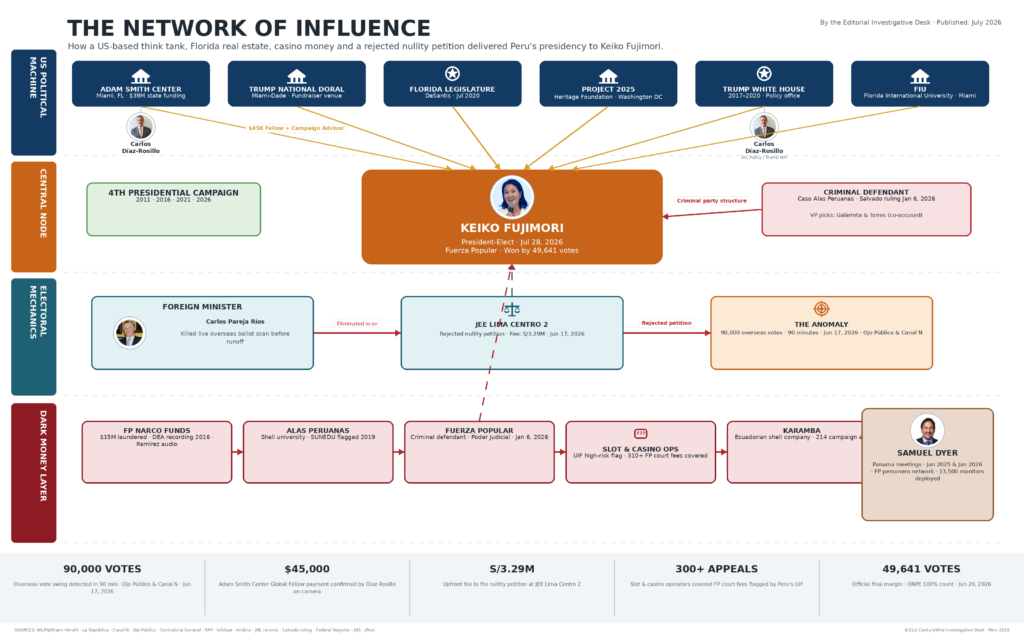
GRAPHIC 1: THE NETWORK OF INFLUENCE: Who Delivered Peru’s 2026 Election
This map traces the political, financial, and operational network behind Keiko Fujimori’s victory. It connects the Trump White House alumni who advised her campaign, the $39 million Florida state-funded think tank that housed her as a fellow, the shell companies running digital influence operations from Miami and Ecuador, and the party that Peru’s own courts have designated a criminal defendant in a narco-finance laundering case. Each arrow represents a documented, sourced connection. Follow the money, the people, and the mechanics that moved this election. (Created by Author)
Miami, Doral, and the $39 Million Machine
The Adam Smith Center for Economic Freedom does not look dangerous. It occupies a second-floor office at FIU’s Management and Advanced Research Center in west Miami-Dade with a blue rug and a gold nameplate on the door. What it does from that office is something else entirely.

IMAGE: Carlos Diaz-Rosillo was a senior advisor to President Donald Trump during his first administration, and he is the founding director of the Adam Smith Center for Economic Freedom at FIU. (Source: Daniel Rivero, WLRN via Miamiherald)
It was created by Florida legislation in July 2020, signed by Ron DeSantis, sponsored by then-state Senator Ray Rodrigues, who is now chancellor of the entire Florida State University System. The founding director was Díaz-Rosillo, who had just left the Trump White House, where his portfolio explicitly covered Latin American policy and defence. The state gave it $1 million to start. Then $5 million. Then $15 million a year in recurring state funding. In six years, it has received $39 million in Florida taxpayer dollars and spent $13.4 million of it. The rest sits, or moves, in ways FIU has refused to fully explain to its own faculty senate.
The annual fundraiser is held at Trump National Doral. The Center co-hosted events with Project 2025 and its parent organization, the Heritage Foundation. Its podcast was originally produced by a Milei-linked Argentine think tank and paid for with Florida taxpayer money; that network has appeared in event materials alongside the International Republican Institute, a federally funded group whose board, until Trump nominated him secretary of state, included Marco Rubio. The Center’s advertising budget went from $680 in 2023 to $122,000 in 2025. Billboards showing Díaz-Rosillo embracing Javier Milei run in Terminal C of Reagan National Airport
FIU professors who tried to get basic budget records handed to a faculty subcommittee were denied, according to WLRN’s investigation. One faculty member told WLRN the Centre is a “Trojan horse” for right-wing politics inside a public university. Sociologist and FIU visiting scholar Katie Rainwater, whom WLRN identifies as having researched the Adam Smith Center, put it more precisely: “It’s attempting to create a network of right-wing politicians and think tanks in Latin America that are going to support American interest in the region. I don’t think it’s non-partisan. I also don’t think it’s independent. I think it’s politically directed in that it was put on FIU’s campus to further a partisan political project.”
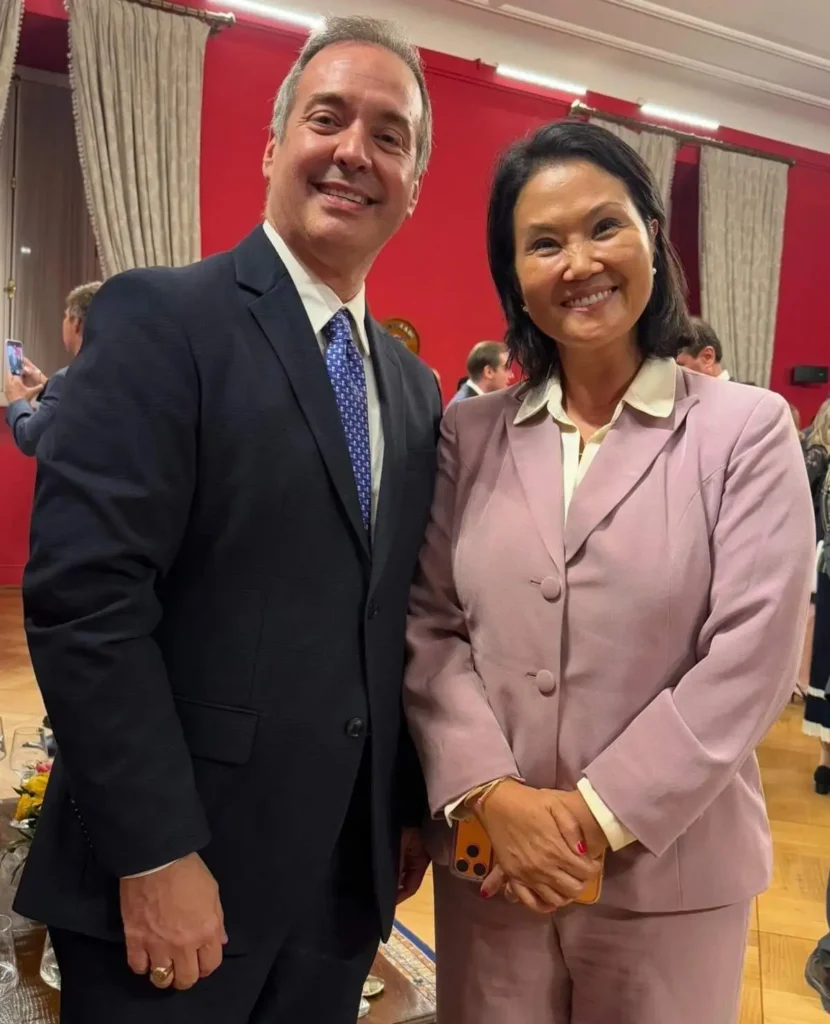
IMAGE: Carlos Diaz-Rosillo with Peruvian presidential candidate Keiko Fujimori. Fujimori gave lectures at the Adam Smith Center in 2025. (Source: FIU’s Adam Smith Center for Economic Freedom)
Read more at: https://www.miamiherald.com/news/local/article315924226.html#storylink=cpy
The fellows list reads like the guest roster at a Latin American right-wing revival meeting. Former Colombian President Álvaro Uribe, currently under investigation for allegedly bribing paramilitary witnesses, is a Senior Leadership Fellow. Former Argentine President Mauricio Macri. Former Mexican President Felipe Calderón. Former Venezuelan “interim president” Juan Guaidó, whose $40,000 salary at the Center was paid by a National Endowment for Democracy grant, federal taxpayer dollars, despite a Florida state law banning Venezuelan nationals from being directly hired at state universities. And Keiko Fujimori, who according to WLRN “gave lectures” at the Center in 2025 and “finished first place in the first round of Peruvian presidential elections” months after completing her stint.
Díaz-Rosillo confirmed to WLRN that he has “voiced support” for Fujimori and that “three or four fellows or former fellows are actively promoting candidates” in Latin America. He claimed he always asks them not to mention the Center when doing political work. He did not explain how a publicly-funded academic institution’s money is tracked once its personnel cross the border into active campaign operations.
What he did do, on the night of June 17, 2026, was appear on Peruvian national radio and announce that the overseas votes were about to reverse everything. He was Fujimori’s man. He knew the numbers. The Center’s $25 million surplus, sitting in accounts Florida’s own faculty cannot audit, had not purchased that knowledge by accident.

GRAPHIC 2: THE ISRAEL ARCHITECTURE IN PERU: 25 Years of Strategic Penetration
This diagram maps the layered institutional infrastructure Israel has built inside the Peruvian state across five distinct domains: arms manufacturing (IWI rifles assembled on Peruvian soil, Elbit rocket systems), cybersecurity access (INCD MOU giving Israel’s cyber directorate reach into Peru’s voter database and interior ministry), diplomatic and financial alignment (Isaac Accords IDB Fund, Trump’s MNNA designation), the individuals who signed and managed each agreement, the sanctuary layer, and the documented pattern of Israeli jurisdiction shielding Peruvian political figures from extradition. The timeline runs from the Fujimori regime’s 2000 arms scandal to the night of the 2026 runoff. (Created by Author)
The Vote That Moved Overseas
To understand what happened to the overseas count, you have to understand what was done to it before it was counted, and what was done to prevent anyone from legally challenging it afterwards.

IMAGES: 2026 Elections: First ballots and electoral records arrive in Peru from abroad (Source: Ministry of Foreign Affairs of Peru)
Peru’s Oficina Nacional de Procesos Electorales (ONPE) had previously required overseas consulates to send scanned copies of tally sheets to ONPE immediately after vote counting, before the physical return of electoral materials by diplomatic pouch. Before the 2026 runoff, ONPE approved new “Lineamientos para las Actividades Electorales en el Extranjero – Segunda Elección Presidencial 2026”, governing overseas electoral activities for the second presidential election. Foreign Minister Carlos Pareja, who publicly urged Peruvians abroad to participate in the June 7 runoff, oversaw the foreign-vote operation through Peru’s consular network. After the vote, the Foreign Ministry denied wrongdoing, but EFE reported that Roberto Sánchez’s party accused Pareja of “arbitrarily and unjustifiably” dismantling the logistical, computer, and diplomatic custody system by sending overseas tally sheets to Peru in diplomatic pouches.
Pareja is not a neutral figure. He served inside the Fujimori state apparatus in the 1990s. He was brought back under Dina Boluarte‘s administration and placed in charge of the foreign ministry that oversees consular operations, the same consular infrastructure that processes and transmits overseas votes. His directive ensured that the chain of custody for the precise tranche of ballots that reversed the election was invisible to outside observers.
Sánchez’s party, Juntos por el Perú, did formally challenge the overseas count. They petitioned the Jurado Electoral Especial (JEE) Lima Centro 2 to nullify the overseas vote entirely, then filed separate requests to annul 1,751 mesas in Lima and 647 in the United States. The JEE rejected every one of them, not on the merits, but on procedural grounds: the resources were filed twelve days past the three-day legal deadline, and the electoral filing fees had not been paid. The fee for contesting 2,398 individual mesas at 1,375 soles per table came to 3,297,250 soles, roughly $880,000, payable upfront, in a single lump sum, before any substantive review could begin. Juntos por el Perú asked the Jurado Nacional de Elecciones (JNE) for an exceptional payment extension. It was denied. Peru’s electoral system had effectively priced a formal challenge to the overseas anomaly out of reach, and the procedural clock had run before the losing party had the funds to file. The case was closed. Fujimori was declared president-elect.
On June 30, Sánchez announced he would file a formal petition with the Inter-American Commission on Human Rights (IACHR), citing the mid-count change to overseas ballot procedures as a violation of electoral intangibility. That petition, once registered, would place the overseas ballot procedure under international scrutiny for the first time. Separately, Juntos por el Perú had already filed a constitutional criminal complaint against Foreign Minister Carlos Pareja on June 21, accusing him of alleged irregularities in the transfer of overseas election records and seeking political and pretrial proceedings against him.
Meanwhile, in Lima’s southern districts, working-class neighborhoods where Sánchez ran strongest. A state-funded ballot delivery operation called GALAGA S.A.C. was under Contraloría-linked scrutiny for irregularities in the distribution of voting materials. Raids on ONPE facilities in those precincts recovered anomalous materials. The full findings have not been published.
Reportedly, in a rented office park in Guayaquil, Ecuador, a company called Karamba S.A.C. was operating what investigators from Peru’s Ojo Público and Ecuador’s El Foco described as a coordinated digital influence operation targeting the Peruvian election, including 214 YouTube ads, six channels removed simultaneously by Google during the campaign, and a now-deleted LinkedIn profile belonging to a Florida-based digital consultant named Diana Procel who described her work as managing “positive troll centers” in Peru and Ecuador. Karamba was registered in Ecuador for $800, with a Florida operator as its controlling entity. Procel worked from Miami. The Center’s very home city.
The Party Under Criminal Indictment
The party Keiko Fujimori will govern from is not merely led by people under investigation. It is itself, as a legal entity, a defendant in a criminal money laundering case.
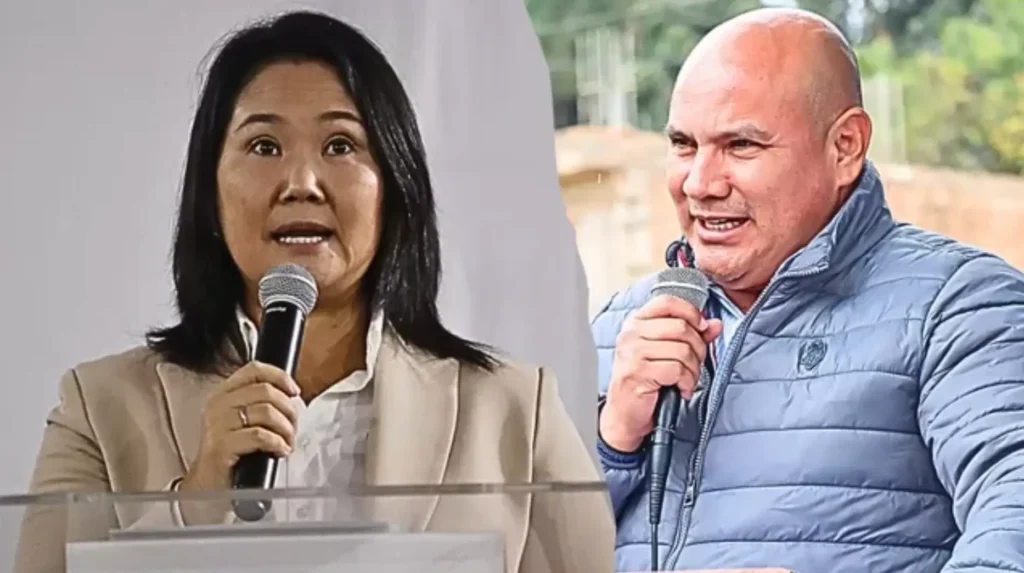
IMAGE: The judiciary ordered the inclusion of Fuerza Popular in the Alas Peruanas case (Source: CanalN)
On January 6, 2026, six months before the runoff, Peru’s Fourth National Preparatory Investigation Court ordered Fuerza Popular formally incorporated as an accused party in the Caso Alas Peruanas, the money laundering investigation of Joaquín Ramírez Gamarra, the party’s former secretary-general. The court ruling, issued by Judge Margarita Salcedo, was reported by Infobae in January 2026 and is a matter of public record.
The Fiscalía‘s theory is very specific and indicates that Ramírez, who built his fortune through the Universidad Alas Peruanas, a now-dissolved private university tied to a major fraud and money-laundering case, funnelled illegal proceeds from that institution into Fujimori’s 2011 and 2016 presidential campaigns. The Poder Judicial found the Fiscalía’s argument sufficient to include the party itself as an organizational defendant, on the grounds that Fuerza Popular “benefited from the commission of money laundering through the use of its organization, financial structure, and operative apparatus.”
Fujimori and her former chief legal strategist Pier Paolo Figari Mendoza, are accused as co-authors of the underlying crime. Her 2026 vice-presidential running mate Luis Galarreta and party veteran Miguel Torres face separate charges in the same proceeding for allegedly financing the 2021 “fraud” narrative with suspect money. The DEA had been investigating Ramírez since at least 2012, and in 2016 obtained an undercover recording in which he discussed laundering $15 million for Fujimori’s campaigns. The Wall Street Journal reported on it in May of that year. He resigned from the party within days. The party continued, but the money stayed.
The woman who will take office as Peru’s president governs a party that a Peruvian court has formally designated an accused entity in a narco-finance laundering case. That is not an allegation. It is a court order.
The Factory on Peruvian Soil
While the political machinery was running above ground, a different kind of infrastructure was being built inside Peru’s state weapons factory.
In March 2023, the Fábrica de Armas y Municiones del Ejército (FAME SAC) signed a five-year Technology Transfer Agreement with Israel Weapons Industries (IWI). The deal allowed IWI to install a physical assembly line inside FAME’s facilities and produce Israeli-designed ARAD assault rifles on Peruvian soil. Ten thousand ARAD-7 rifles went to the Peruvian Army for $27.3 million. Seven thousand three hundred ARAD-5 rifles went to the Policía Nacional del Perú (PNP) for $19.6 million. Neither contract went through open international tender. Both were processed under a private competition framework that, the Contraloría later found, was engineered specifically to exclude other suppliers.
In June 2024, the Contraloría General issued Audit Report N.° 018-2024-2-0848-AC. It named four FAME officials by name and title and found that they had acted “in the benefit of IWI and to the detriment of public resources.” The specific violation: FAME had originally agreed to retain a 12.08 percent profit margin on the IWI contract, a standard commercial protection for a state enterprise. After IWI’s request, three named officials agreed to reduce it to 5.5 per cent.
Peru’s public weapons factory cut its own income in half, on paper, for the benefit of an Israeli private arms company.
The three named officials are Marco Vega Oliveros, General Manager of FAME; César Álvarez Flores, Chief Legal Counsel; and Leoncio Ugas Noriega Moreano, Commercial Manager. A fourth, FAME’s Finance and Administration Manager, was also named in the audit. The audit is listed in the Ministry of Defense’s Recomendaciones Auditoría 2024 II annex as Report N.° 018-2024-2-0848, concerning the acquisition and supply of 10,000 ARAD-7 assault rifles, caliber 7.62 x 51 mm, for the Army’s III Division.
Anti-corruption prosecutor José Bustíos Ledesma opened a formal criminal investigation in February 2024 for the crime of negociación incompatible, improper influence in state contracting. MINDEF’s own audit-recommendations annex tracked the case through a June 17, 2026 deadline, making the absence of publicly visible sanctions by that date part of the official follow-up record.
The Contraloría also found that the contract eliminated the standard 12-year warranty on the weapons, reducing it to two years, as reported by La República and Canal N. Rather than requiring IWI to bring weapons samples to Peru for testing, the legally standard procedure, FAME sent ten Peruvian Army officers to Israel to conduct the evaluation at IWI’s facilities, handing the supplier control over its own product assessment.
FAME issued an official public communiqué calling the reporting “false” and “tendentious.” The same communiqué acknowledges the reduction of FAME’s margin from 12.08 percent to 5.5 percent while disputing that it was sudden or arbitrary. The Contraloría audit report is a numbered official government document, and it exists in the public record regardless.
The Presidential Family at the Table
In February 2025, Canal N’s investigative unit filmed a covert meeting at a Miraflores restaurant in Lima. Three men sat down together, as reported by Canal N.
The first was Paulo César Zevallos Rivarola, then acting as FAME’s Commercial Manager, the official responsible for IWI’s contract operations inside the factory. The second was Diego Alfaro Di Natale, a private businessman identified in the investigation as linked to IWI’s business in Peru. The third was Jorge Garboza, identified by prosecutors as an intermediary of Nicanor Boluarte, the brother of Peru’s then-sitting president Dina Boluarte. Garboza’s lawyer told América TV that Nicanor Boluarte had been contracted by Garboza’s NGO as an education expert, while denying that Garboza received anything in return.
Eight days after the restaurant meeting, Zevallos was formally appointed permanent Commercial Manager of FAME, according to Canal N. Alfaro Di Natale and Zevallos had traveled together to Spain in June 2024, and Alfaro Di Natale was also linked by investigators to a US$20.3 million contract involving Milenium Veladi Corp., described in the reporting as a company under investigation, according to Canal N and Infobae. Both face separate fiscal investigations. Neither has been charged.
The IWI-FAME relationship now runs from Israel’s weapons production lines through Peru’s presidential family, through the state weapons factory management, through contracts worth more than US$47 million, none of them put to open competition. Infobae, citing La República, reports that Diego Alfaro Di Natale participated in the US$27.3 million ARAD-7 sale to the Army and the US$19.7 million ARAD-5 sale to the Interior Ministry, both through FAME and IWI. Peruvian state officials were also accused in official audit material of having reduced Peru’s financial take in IWI’s favor. The factory that makes Israeli weapons on Peruvian soil was managed, at the moment the election was decided, by a man whose appointment had followed a Miraflores restaurant meeting with the president’s brother’s alleged intermediary and the Israeli arms company’s local man.
The Cybersecurity Door
Arms deals are visible, but often cybersecurity agreements are not. On November 21, 2025, four months before the first round of Peru’s presidential election, the Presidencia del Consejo de Ministros signed a Memorandum of Understanding with Israel’s National Cyber Directorate. The MOU was authorized by Resolución Ministerial N.° 215-2025-PCM, which delegated authority to the Secretary of Government and Digital Transformation to represent PCM before Israel’s cyber directorate and sign the agreement. Jaime Alejandro Honores Coronado had been appointed to that post on July 1, 2025, through Resolución Ministerial N.° 152-2025-PCM. The agreement was signed for Peru by Honores and for Israel by Yossi Karadi, Director General of Israel’s National Cyber Directorate, with Israeli Ambassador Eran Yuvan participating, according to the official PCM communiqué.

IMAGE: Government and Digital Transformation formalized a strategic alliance with the National Cyber Directorate of the State of Israel on November 21, 2025 by signing a memorandum of understanding (Source: GOB.pe)
The INCD is Israel’s national cybersecurity directorate. Aviram Atzaba, its Executive Director for International Strategic Affairs, manages and deepens INCD relations with governments, international organizations and multinational companies, and supports partnerships between allied governments and the Israeli cyber industry, according to his OECD speaker profile. The same infrastructure-partnership model operates through BIRD Cyber, a U.S.-Israel program focused on cybersecurity and emerging technologies for critical infrastructure.
What Honores brought to the table was not merely a signature. Before taking the PCM role, Honores had led RENIEC’s IT office: an official Gob.pe conference page identifies him as “jefe de la Oficina de Tecnología de la Información del Reniec” in a presentation on RENIEC’s digital architecture. RENIEC’s public-facing identity system is accessible through its Identidad Ciudadano portal. Honores was later appointed Secretary of Government and Digital Transformation by Resolución Ministerial N.° 152-2025-PCM, placing him in charge of Peru’s central digital-government agenda. The man who signed Israel’s INCD into Peru’s digital infrastructure had previously managed the IT systems of the institution that underpins the country’s civil-identity architecture.
The MOU’s scope, according to PCM, was to strengthen digital security, incident management and protection of Peru’s critical infrastructure. Yinam Cohen, head of Israel’s Foreign Ministry Latin America division, stated in a DNews interview that the agreement involved not only training for Peruvian professionals but also joint and commercial work in digital-security technologies. That means the agreement opened a path not just for cooperation, but for Israeli cybersecurity companies to seek commercial footholds inside Peru’s state systems.
The groundwork had been laid months earlier. In February 2025, Honores’s predecessor, César Vílchez Inga, met with Ambassador Eran Yuvan, Aviram Atzaba and Israeli Commercial Attaché Tal Seinuk to discuss a joint cybersecurity roadmap, according to the Israeli Embassy in Lima. By November, the agreement had been signed. By June, the election was over.
Israel as Safe Harbor
Peru’s history with Israel does not begin with weapons factories and cybersecurity MOUs. It begins with the understanding, established across multiple presidencies and political currents, that Israel is a jurisdiction Peru has struggled to reach.

IMAGE: Eliane Karp, left, with her husband, former Peruvian President Alejandro Toledo, at a convention in Dublin, Ireland, October 16, 2014. (Source: Clodagh Kilcoyne/Getty Images via JTA)
In February 2017, as Peru pursued former President Alejandro Toledo on corruption allegations, Israel’s Foreign Ministry said Toledo would be allowed to enter Israel only once his legal matters in Peru were resolved; at the time, reporting noted that Israel had no extradition treaty with Peru, complicating any Peruvian effort to recover him from Israeli territory. Toledo’s longtime business partner was Josef Maiman, an Israeli businessman who served as the financial pipeline for Odebrecht bribes paid to Toledo. Peruvian prosecutors later took Maiman’s confession at the Peruvian embassy in Israel, where he acknowledged that the US$35 million deposited by Odebrecht in his accounts was bribes for Toledo, as reported by IDL-Reporteros and Peru’s state news agency Andina. Israeli outlet Ynet News had reported earlier that Maiman signed a state-witness agreement with Peruvian prosecutors and was expected to testify against Toledo.
Toledo himself was eventually arrested in the United States and extradited to Peru by U.S. authorities. His wife, Eliane Karp, who has Israeli citizenship and studied at Hebrew University, according to Times of Israel, was not. Karp flew from San Francisco to Tel Aviv in May 2023, just after Toledo was extradited, and Times of Israel reported that Peru has no extradition treaty with Israel and that Karp holds Israeli nationality. In December 2024, Peru approved a formal request asking Israel to extradite Karp and former Toledo security adviser Avi Dan On, with Justice Minister Eduardo Arana acknowledging that Peru had no extradition treaty with Israel and would rely instead on the UN Convention against Corruption and reciprocity, as EFE reported. In September 2025, Karp gave an interview from Israel in which she rejected returning to Peru while the preventive-detention order and Interpol listing remained in place, as Gestión reported.
The pattern is not incidental. Israel functions, for parts of Peru’s political elite, as a place where accountability can stall. The same bilateral framework that has made it a defence manufacturing partner, a cybersecurity co-signatory, and a diplomatic ally also makes it, structurally, a sanctuary. That is not a coincidence. It is an architecture whose first wing was built by the Fujimori family.
The Bigger Architecture
In January 2026, Donald Trump designated Peru a Major Non-NATO Ally by Presidential Determination No. 2026-04, signed on January 14 and published in the Federal Register on January 23. The designation placed Peru inside Washington’s privileged defense-cooperation tier, a category the State Department describes as granting benefits in defense trade and security cooperation.
Four months before Peruvians cast their first-round ballots, Washington had already moved Peru into a higher security lane. That did not formally endorse a candidate. But it told Peru’s military establishment where the next government was expected to sit: inside the U.S. security architecture, not outside it.
On June 1, 2026, one week before the runoff, Israeli Finance Minister Bezalel Smotrich and Inter-American Development Bank President Ilan Goldfajn signed a declaration of intent in Washington to promote the Isaac Accords Fund, a vehicle designed to push investment into Latin America and the Caribbean through the IDB framework. The next day, while Peru was still campaigning, Prime Minister Luis Arroyo met with Israeli Trade Commissioner Roey Fisher to discuss mining, technology, cybersecurity cooperation, and Peru’s OECD accession, as reported by Andina. The meeting was not about the past. It was about the commercial and security relationship that would exist after the election.
On June 30, Israeli Foreign Minister Gideon Sa’ar congratulated Keiko Fujimori in Spanish, calling Peru and Israel “close friends that share common values,” according to Andina. That was not the language of a distant diplomatic formality. It sounded like recognition of a relationship already in motion.
Felicitaciones a la presidenta electa del Perú, @KeikoFujimori por su victoria en las elecciones presidenciales. Le deseo mucho éxito. Perú e Israel son amigos cercanos que comparten valores comunes, y confío en que juntos seguiremos fortaleciendo nuestros lazos y promoviendo la…
— Gideon Sa’ar | גדעון סער (@gidonsaar) June 30, 2026
The regional picture was moving in the same direction. Ecuador, where the shell company Karamba was registered and where Diana Procel’s troll operation had nodes, was governed by Daniel Noboa, a president aligned with the Isaac Accords framework. Colombia had just elected a right-wing government by a one-percent margin, in a result Gustavo Petro challenged while alleging digital manipulation on Israeli servers. Peru now joined that map: a Fujimori government preceded by an INCD cybersecurity MOU, an Israel-linked defense procurement pipeline, and congratulations from Israel’s foreign minister within hours of the result.
A TEXIN defense analysis described Peru as Israel’s “principal strategic partner in Latin America.” The missing question is what that designation bought, and what Peru’s new president owes the people who built the machinery around it.
The Defense Minister
Amadeo Flores Carcagno was sworn in as Peru’s Minister of Defense on April 22, 2026, one week after the first round of voting. Andina reported the appointment and noted that Flores had previously served as chief of staff at the Defense Ministry. América TV traced his Fuerza Popular record: candidate for Lima councilor in 2018, adviser to congresswoman Rosangella Barbarán from 2021 to 2023, and party donor for S/4,150 over the same period.
El presidente de la República, José María Balcázar, tomó juramento a Amadeo Flores Carcagno como nuevo ministro de Defensa y ocupará el puesto de Carlos Díaz, quien renunció en horas de la mañana a la cartera ministerial.
Todos los detalles en https://t.co/43QpuLsB8e pic.twitter.com/rLv4WPnQlj
— Perú21 (@peru21noticias) April 23, 2026
That résumé matters because Flores was not entering the ministry from outside. From November 2024 to July 2025, he served as Chief of Staff of the Defense Ministry’s Ministerial Cabinet, inside the building while the Elbit Systems PULS rocket-launcher process advanced. In July 2025, Defensa.com reported that FAME had selected Elbit Systems as its strategic partner to assemble artillery systems in Peru, including PULS.
The deal was not minor. It put Israel’s rocket-artillery platform inside Peru’s domestic defense-production system, through FAME. Flores Carcagno was in the ministry while the arrangement moved forward. After the first round, he became the minister overseeing the file.
He replaced Carlos Díaz Dañino, who left amid controversy over a separate F-16 Block 70 fighter-jet acquisition. The minister caught in the American fighter controversy was removed. The official who had been inside the ministry while the Israeli artillery deal advanced took his place.
The Man Who Never Goes Away
Alberto Fujimori’s relationship with Israel was not ideological. It was operational. It moved through weapons, intelligence, procurement channels, and the men who understood how to turn state secrecy into private money.
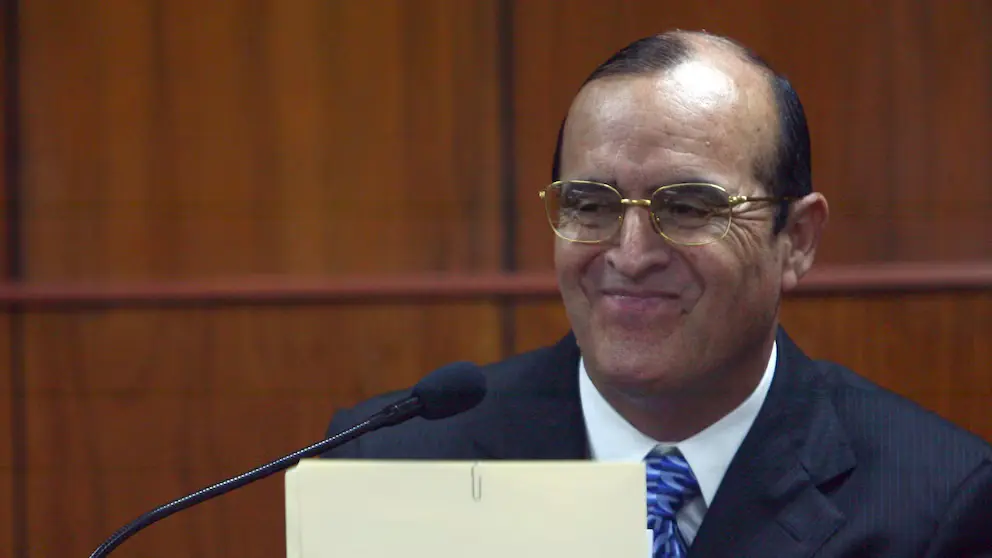
IMAGE: Vladimiro Montesinos sonríe al expresidente Alberto Fujimori en su primer encuentro en los juzgados, en junio de 2008 (Source: AFP/archivo)
At the center of that world stood Vladimiro Montesinos, Fujimori’s intelligence chief and the regime’s shadow operator. Around him moved Israeli arms dealer Moshe Rothschild Chassin, tied to the purchase of MiG-29 and Sukhoi-25 aircraft for the Peruvian Air Force. Peru’s Ministerio Público later obtained an asset-forfeiture order over more than US$8 million in a Swiss account belonging to Rothschild, describing him as an Israeli businessman linked to the overvalued purchase of 36 MiG-29 and Sukhoi-25 aircraft during the Fujimori government. Andina reported that Peru’s judiciary eventually secured repatriation of the Swiss account, while noting that Rothschild had not been sentenced because he remained an absent defendant.
Peru tried to bring him back. In 2013, Times of Israel reported that Peru was seeking Rothschild’s extradition from Israel over alleged bribes connected to fighter-plane sales, and that Peru and Israel had no extradition treaty. Convoca later exposed Rothschild’s offshore structure, identifying him as the largest arms seller linked to the Fujimori government and the Montesinos corruption network; Peru’s Ministerio Público separately tied him to illicit commissions from arms contracts and the Swiss offshore account later recovered by the state. Rothschild was not a peripheral figure. He was part of the original machinery.
By 2026, that machinery no longer looked like the clandestine procurement networks of the 1990s. It had become formal, multilateral, and institutional. Israeli weapons were no longer simply arriving in Peru; they were being assembled there. EDR Magazine reported in 2023 that Israel Weapon Industries and FAME signed a transfer-of-technology agreement to establish an assembly and production line in Peru for the ARAD family of assault rifles. European Security & Defence later reported that the IWI–FAME plant was already supplying ARAD rifles to Peru’s armed forces and National Police.
The digital side followed. Israel’s cybersecurity directorate now has a signed MOU with Peru covering digital security, incident management and critical infrastructure. Israeli businessmen appear in both tracks: Rothschild in the Fujimori-era arms network, and Josef Maiman as the financial conduit for Odebrecht payments to Toledo. Peruvian prosecutors took Maiman’s confession at the Peruvian embassy in Israel, where he acknowledged that the US$35 million deposited by Odebrecht in his accounts were bribes for Toledo, as reported by IDL-Reporteros and Peru’s state news agency Andina. In both the Rothschild and Karp cases, the same hard wall appears: Peru has no extradition treaty with Israel, a fact noted by Times of Israel in its coverage of Eliane Karp’s flight to Tel Aviv.
Carlos Díaz-Rosillo told WLRN that Adam Smith Center money “absolutely” does not go to political campaigns in Latin America. “Zero,” he said. But WLRN also documented the center’s public funding, private-donor structure, Latin America programming, and ties to conservative political networks. Díaz-Rosillo paid Keiko Fujimori US$45,000 for a fellowship, publicly supported her during the campaign, and appeared in Peruvian media as a foreign analyst while his proximity to her was already visible. “Zero” does not describe a wall. It describes a loophole.
Peruvian journalist Marco Sifuentes and former presidential candidate Mesías Guevara publicly questioned Díaz-Rosillo’s role, accusing him of posing as an independent commentator while operating in Fujimori’s favor, as reported by Mesa Redonda. Díaz-Rosillo acknowledged being a voluntary adviser to Fujimori and denied being paid. That denial answers only the narrowest question. It does not answer the larger one: what was being built around her, and who paid to build it.
The four FAME officials named in the IWI rifle audit have not been publicly sanctioned. MINDEF’s own Recomendaciones Auditoría 2024 II annex tracked Report N.° 018-2024-2-0848, the audit concerning the acquisition and supply of 10,000 ARAD-7 rifles for the Army’s III Division — through a June 17, 2026 deadline. The criminal investigation opened by anti-corruption prosecutor José Bustíos Ledesma in February 2024 has produced no publicly visible resolution. Fuerza Popular has been incorporated as a legal person in a money-laundering process related to the Alas Peruanas case, according to Infobae. Eliane Karp remains in Israel, beyond the easy reach of Peruvian justice, in the same country whose cybersecurity directorate now has a signed agreement covering Peru’s state digital-security architecture.
Keiko Fujimori is Peru’s president-elect. The Israeli weapons assembly line inside FAME continues to operate, and the INCD agreement remains in place. The Adam Smith Center’s surplus remains inside a Florida university-adjacent structure whose finances are difficult to inspect from outside, as documented by WLRN.
The crumbs are not hidden. In fact, they form a path which ends in a country whose weapons are increasingly built through Israeli foreign defense companies, whose digital-security systems are opened to Israeli cybersecurity partnerships, whose governing party is under money-laundering scrutiny, and whose president benefited from a Florida operative who predicted her path to victory before the count was done. The question is not whether the architecture exists. I believe we have established that. The hard question is who, among the people who built it, will ever be asked to answer.
21st Century Wire is an alternative news agency designed to enlighten, inform and educate readers about world events which are not always covered in the mainstream media.
Source: https://21stcenturywire.com/2026/07/02/perus-election-the-old-fujimori-machine-has-new-israeli-wiring/
Anyone can join.
Anyone can contribute.
Anyone can become informed about their world.
"United We Stand" Click Here To Create Your Personal Citizen Journalist Account Today, Be Sure To Invite Your Friends.
Before It’s News® is a community of individuals who report on what’s going on around them, from all around the world. Anyone can join. Anyone can contribute. Anyone can become informed about their world. "United We Stand" Click Here To Create Your Personal Citizen Journalist Account Today, Be Sure To Invite Your Friends.
LION'S MANE PRODUCT
Try Our Lion’s Mane WHOLE MIND Nootropic Blend 60 Capsules
Mushrooms are having a moment. One fabulous fungus in particular, lion’s mane, may help improve memory, depression and anxiety symptoms. They are also an excellent source of nutrients that show promise as a therapy for dementia, and other neurodegenerative diseases. If you’re living with anxiety or depression, you may be curious about all the therapy options out there — including the natural ones.Our Lion’s Mane WHOLE MIND Nootropic Blend has been formulated to utilize the potency of Lion’s mane but also include the benefits of four other Highly Beneficial Mushrooms. Synergistically, they work together to Build your health through improving cognitive function and immunity regardless of your age. Our Nootropic not only improves your Cognitive Function and Activates your Immune System, but it benefits growth of Essential Gut Flora, further enhancing your Vitality.

Our Formula includes: Lion’s Mane Mushrooms which Increase Brain Power through nerve growth, lessen anxiety, reduce depression, and improve concentration. Its an excellent adaptogen, promotes sleep and improves immunity. Shiitake Mushrooms which Fight cancer cells and infectious disease, boost the immune system, promotes brain function, and serves as a source of B vitamins. Maitake Mushrooms which regulate blood sugar levels of diabetics, reduce hypertension and boosts the immune system. Reishi Mushrooms which Fight inflammation, liver disease, fatigue, tumor growth and cancer. They Improve skin disorders and soothes digestive problems, stomach ulcers and leaky gut syndrome. Chaga Mushrooms which have anti-aging effects, boost immune function, improve stamina and athletic performance, even act as a natural aphrodisiac, fighting diabetes and improving liver function. Try Our Lion’s Mane WHOLE MIND Nootropic Blend 60 Capsules Today. Be 100% Satisfied or Receive a Full Money Back Guarantee. Order Yours Today by Following This Link.


| Visits: | 1,825,606,172 |
| Stories: | 8,677,075 |
Whistler Blowers, Insiders

