

10 Foods That Will Keep You Alive When the Stores Shut Down Because of the Food Crisis

Civilization has never fallen from a height this great. Make no mistake: collapse doesn’t arrive with fanfare and televised announcements. It comes silently, in gas station lines, in empty shelves, in the darkness of your refrigerator at midnight when the power dies and doesn’t come back. Those who survive aren’t the strongest—they’re the prepared. And preparation starts with what you put between your teeth when supermarkets become cathedrals of famine.
This list isn’t for weekend warriors. This isn’t for people who think a bag of rice and a few cans of tuna are enough. These are nutritional weapons—foods chosen for caloric density, extreme durability, versatility, and the ability to keep your body functional when everything around you disintegrates. Every entry has been tested by time, by catastrophe, by those who survived when others couldn’t.
Before we dive in, understand something fundamental: the food you buy now, in abundance, is different from the food that will keep you alive. Most people die in the first 90 days of a crisis not because they have no food, but because they have the wrong food. They have chips, they have expiring cereal, they have frozen meat that rots when the power dies. They have foods requiring complex preparation, abundant water, or storage conditions that vanish when infrastructure crumbles.
What follows are the ten pillars of survival nutrition. Stock them deep, stock them now, and pray you never need them.
1. White Rice – The Infinite Calorie
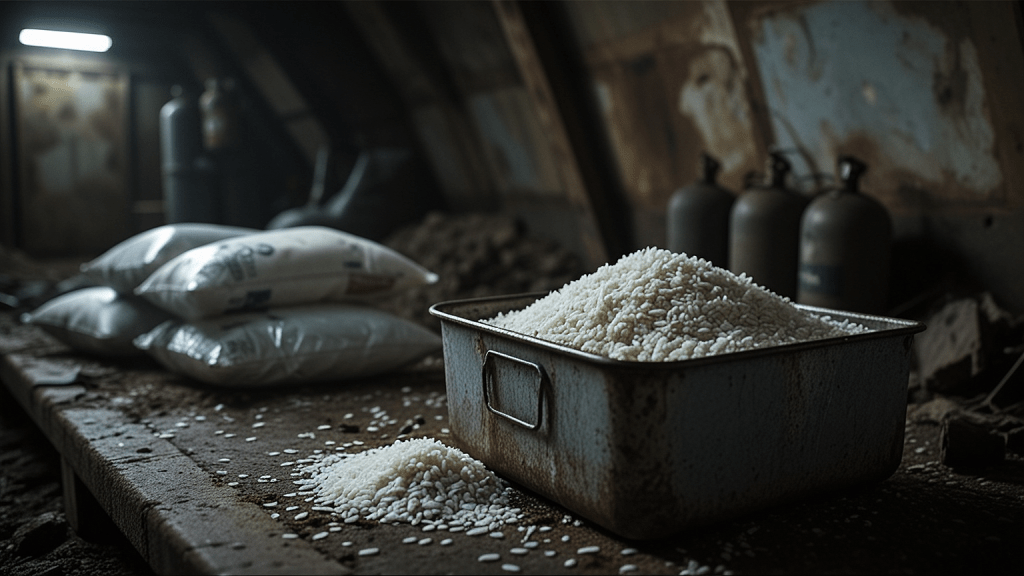
If you could only pick one food, this would be it. Not brown rice—not with its oils that go rancid within months. White rice, stripped of its perishable bran, is the ultimate survival carbohydrate. Stored properly in mylar bags with oxygen absorbers, white rice lasts 30+ years. I’ve eaten rice from sealed containers that sat in a basement since 1989. Tasted fine. Cooked fine. Kept people alive.
A cup of dry white rice delivers about 700 calories. It fills bellies. It pairs with literally anything. It requires minimal fuel to cook—just boil water, add rice, kill the heat, let it steam. In a fuel-scarce environment, this matters more than you can imagine. Rice water—the starchy liquid left after cooking—can even be used as a binding agent or emergency glue.
The downside: rice is calorie-dense but nutrient-poor. You can’t live on rice alone without developing deficiency diseases. That’s why this list has nine other entries. But as your caloric foundation? Nothing beats it. Store 100 pounds per person, minimum. Sounds like a lot. It’s not. That’s roughly three months of survival calories if that’s all you have.
2. Dried Beans – The Protein That Never Dies
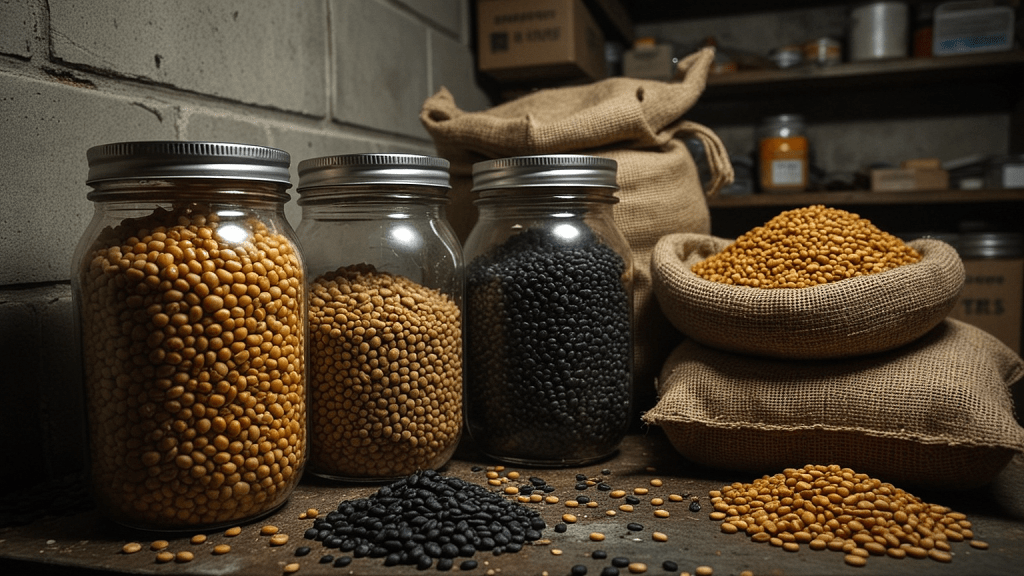
Beans are rice’s perfect partner. Together, they form a complete protein—meaning your body gets all nine essential amino acids it can’t manufacture on its own. Without complete proteins, your muscles cannibalize themselves. I’ve seen it happen in survival scenarios: people with calories but no protein become weak, lethargic, their bodies literally consuming muscle tissue to survive.
Dried beans, properly stored, last 20-30 years. Pinto beans, black beans, navy beans, lentils—they’re all immortal in sealed containers. Lentils cook faster than larger beans, which matters when fuel is scarce. But larger beans provide more satiety. Store a mix.
The downside: beans require water and fuel to cook. They’re not grab-and-go food. You need to soak them (reduces cooking time and gas), boil them for hours, or use a pressure cooker (if you have power or fuel). But the protein payoff is worth it. 50 pounds per person. Minimum. In a true long-term scenario, you’ll want more.
There’s also the matter of digestion. If you’re not used to eating beans, your gut will rebel. Start eating them now. Get your microbiome accustomed. The last thing you want in a crisis is to be doubled over with gas pains while trying to secure your perimeter.
3. Honey – The Eternal Sweetness
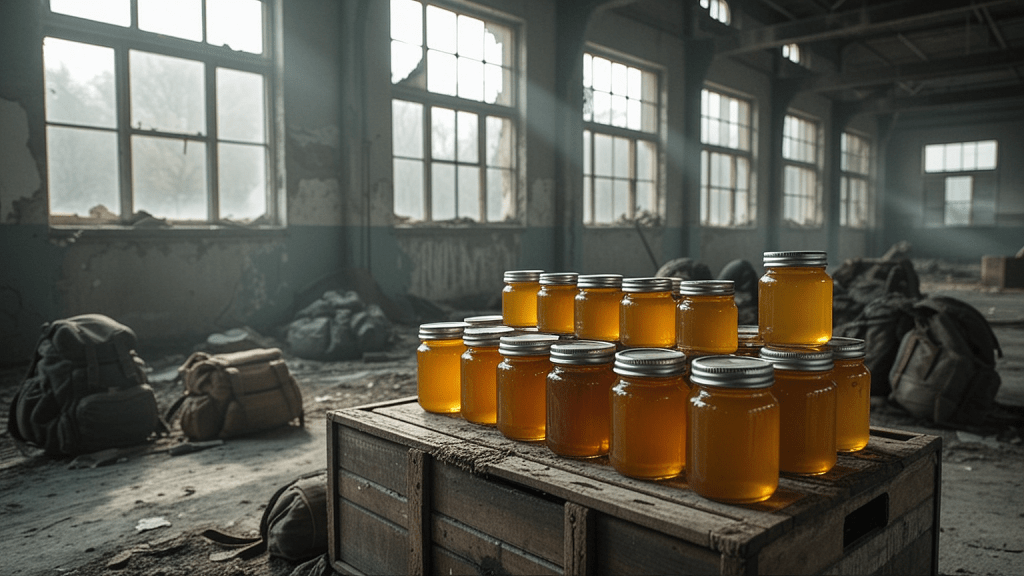
Archaeologists have found honey in Egyptian tombs—three thousand years old—still edible. Honey never spoils. Its low water content, acidic pH, and natural hydrogen peroxide production make it lethal to bacteria. In a world without refrigeration, honey becomes medicine, food, and barter currency.
Calorically, honey packs 64 calories per tablespoon. That’s pure, fast-absorbing energy. When you’re hypothermic, when your blood sugar crashes, when you need immediate fuel—honey delivers. It also has antimicrobial properties. Apply it to wounds (seriously, it’s been used for millennia as an antiseptic). Mix it with water for hydration that actually helps retain fluids better than plain water.
Store honey in glass, not plastic. Plastic degrades over decades and can leach chemicals. Keep it sealed, keep it dark, keep it cool. It may crystallize—that’s fine. Warm it gently and it returns to liquid. Buy local raw honey if possible. It contains pollen that can help with allergies in your new environment, and it hasn’t been heated to death like commercial honey.
Five gallons per person sounds insane. It’s not. Honey is energy, medicine, and trade goods. In a collapsed economy, honey is worth more than gold. Gold can’t feed you. Honey can.
4. Salt – The White Gold of Survival
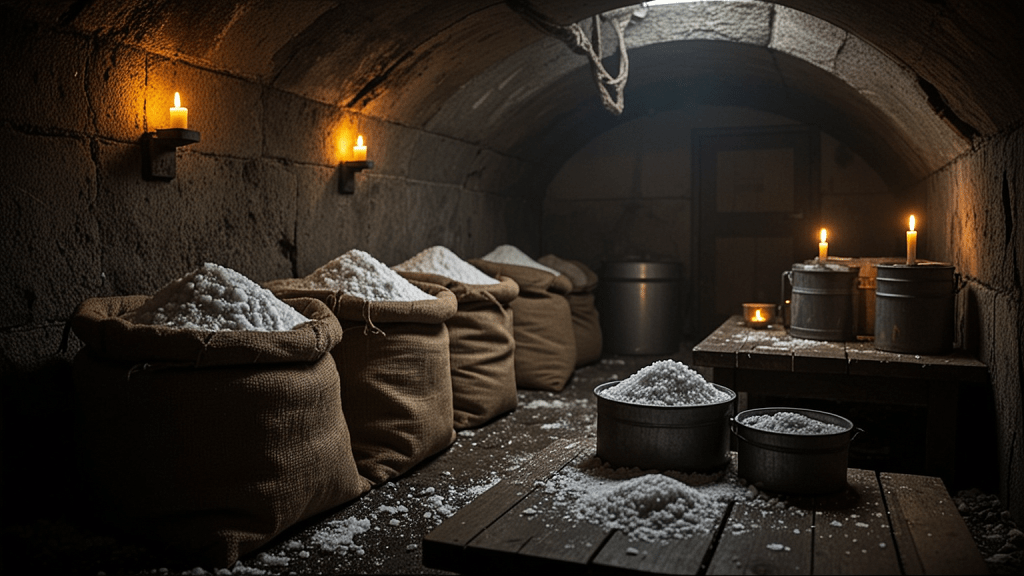
Without salt, you die. Full stop. Your body needs sodium for nerve transmission, muscle contraction, fluid balance. In a survival situation—especially one involving physical labor, heat, or diarrhea—you lose salt rapidly. Hyponatremia (low blood sodium) kills quietly. Headaches, confusion, seizures, death.
WHEN THE GRID DIES: Inside the First 90 Days of America’s Vanished Civilization .

But salt is more than nutrition. It’s the oldest preservative known to humanity. Salt meat, salt fish, salt vegetables—and they last months instead of days. Salt creates an environment hostile to bacteria. Before refrigeration, salt was the only reason civilization survived winters.
Store iodized salt for consumption, pure salt (canning/pickling salt) for preservation. Salt is cheap now. It won’t be cheap later. Store 10 pounds per person per year for consumption alone. Double that for preservation needs. Keep it dry, keep it sealed. Salt lasts indefinitely if protected from moisture.
In a barter economy, salt becomes currency. Roman soldiers were paid in salt—that’s where “salary” comes from. Throughout history, salt has been worth its weight in gold because it keeps you alive and makes food edible. Ignore salt at your peril.
5. Powdered Milk – The Calcium That Saves Your Bones
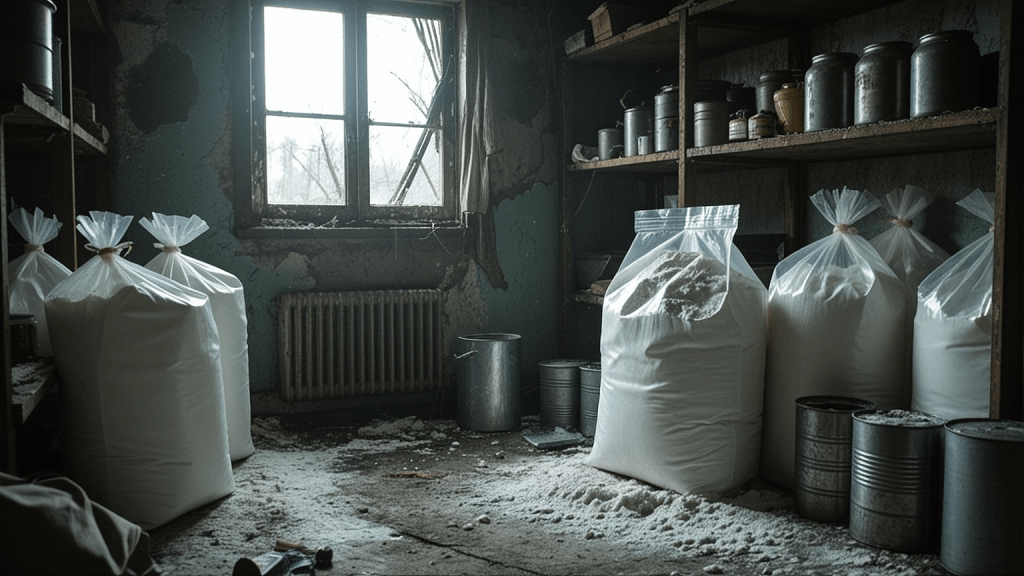
When fresh milk disappears, your skeleton doesn’t stop needing calcium. Without it, your body pulls calcium from bones to maintain blood levels. Osteoporosis sets in. Bones snap. Teeth rot and fall out. In a survival scenario, a broken bone can be a death sentence.
Powdered milk, properly stored in mylar with oxygen absorbers, lasts 20+ years. It’s whole milk that matters—fat included. Non-fat powder lasts longer but provides fewer calories. In survival, calories are king. Whole milk powder delivers about 150 calories per ounce plus complete protein and essential fats.
Reconstitute it for drinking, cooking, baking. Use it in rice dishes to add creaminess and nutrition. Mix it with honey for an energy-dense paste. In a world without dairy, powdered milk becomes precious beyond measure.
Store 50 pounds per person. That sounds like a lot. It’s roughly a year’s supply at moderate consumption. Rotate it—use the oldest first, replace with fresh. But even “expired” powdered milk is often fine for years if stored properly. Trust your nose. If it smells rancid, it’s done. If it smells like milk, it’s good.
Children especially need this. Pregnant women need this. Anyone doing physical labor needs this. Don’t skip the milk.
6. Rolled Oats – The Breakfast That Outlasts Empires
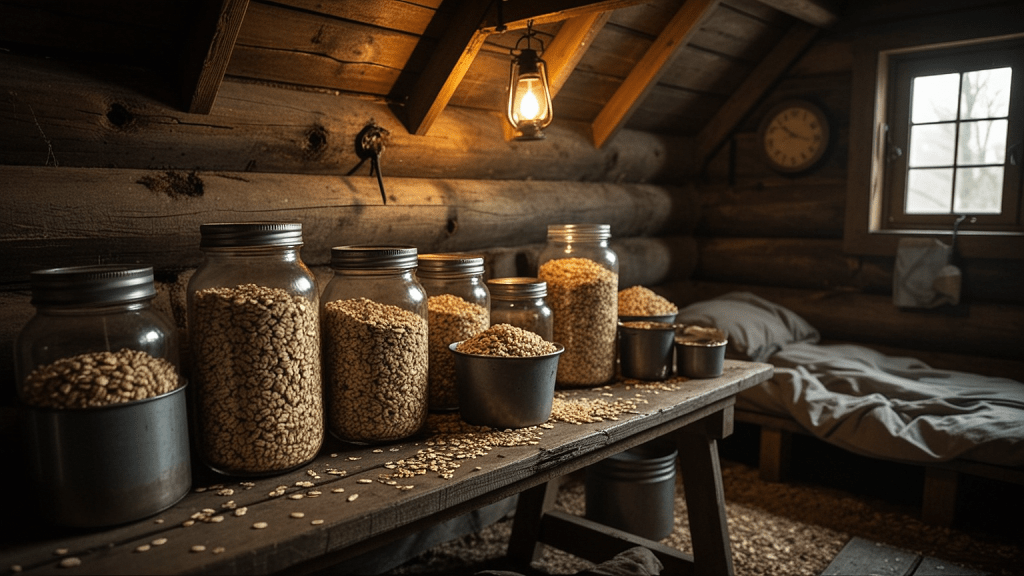
Oats are the unsung heroes of survival food. They store 20-30 years. They cook fast—just add hot water, cover, wait five minutes. They provide sustained energy through complex carbohydrates that break down slowly, keeping blood sugar stable for hours.
Nutritionally, oats deliver fiber (crucial when your diet shifts to survival foods that can cause constipation), protein (13% by weight), and calories—about 300 per cup dry. They’re also incredibly versatile. Oatmeal for breakfast. Ground into flour for baking. Soaked and added to meat as extender. Mixed with honey and dried fruit for energy bars.
Steel-cut oats store longer than rolled oats, but take longer to cook. Rolled oats strike the balance between shelf life and preparation speed. Instant oats have added ingredients and shorter shelf life—avoid them for long-term storage.
Store oats in mylar with oxygen absorbers, just like rice. Keep them cool and dark. 75 pounds per person gives you a solid foundation. Rotate through them—oats for breakfast now means oats you can eat later.
There’s also the comfort factor. When everything is falling apart, a warm bowl of oatmeal with honey is sanity in a spoon. Mental health matters in survival. Oats help.
7. Canned Meat (SPAM, Tuna, Chicken) – The Protein Bomb
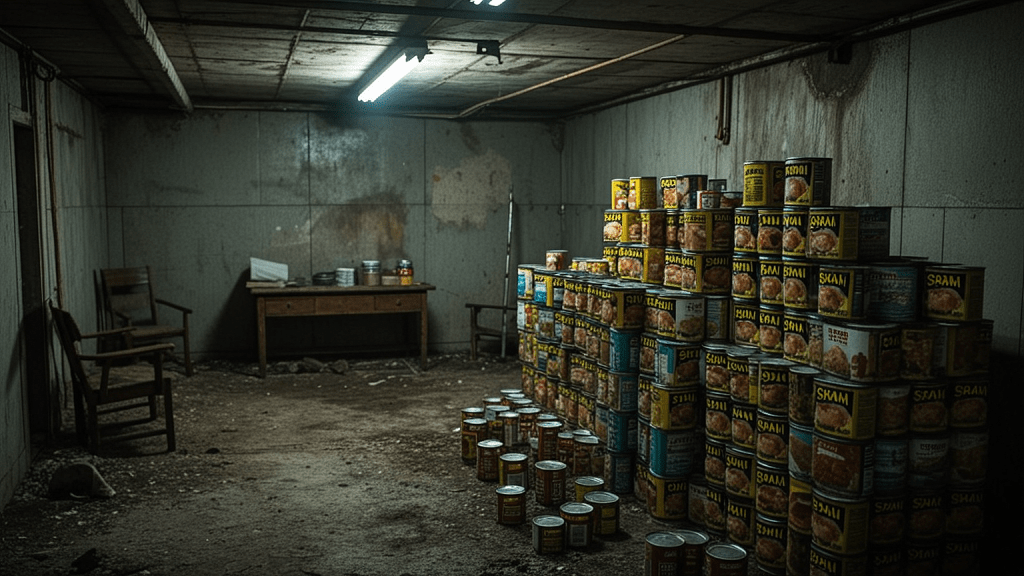
Dried beans are great. But sometimes you need protein NOW. Without cooking. Without water. Without hours of preparation. That’s where canned meat comes in.
SPAM—the butt of jokes in normal times—is survival gold. 12 ounces delivers 1,080 calories and 84 grams of protein. It lasts 3-5 years on the shelf (often much longer). It can be eaten cold straight from the can, fried, diced into rice, mixed with beans. It’s salty—very salty—which helps with electrolyte balance but means you need water.
Tuna in oil (not water—the oil provides crucial calories) delivers protein and healthy fats. Chicken breast in cans provides lean protein that can be added to anything. Corned beef hash, chili, stews—all available in cans that last years.
Rotate your stock. Canned meat doesn’t last forever like dried goods. But 5-year-old canned meat is usually fine if the can isn’t bulging or rusted. Store in cool, dry places. Heat destroys canned goods faster than time.
Store 100 cans per person. That sounds insane. It’s roughly a year’s supply at 2-3 cans per week. In a crisis, you’ll want more protein than you think. Physical labor demands it. Healing demands it. Immune function demands it.
Don’t turn your nose up at canned meat. The people who do will be the people begging for it six months in.
8. Pasta – The Carbohydrate That Cooks Fast
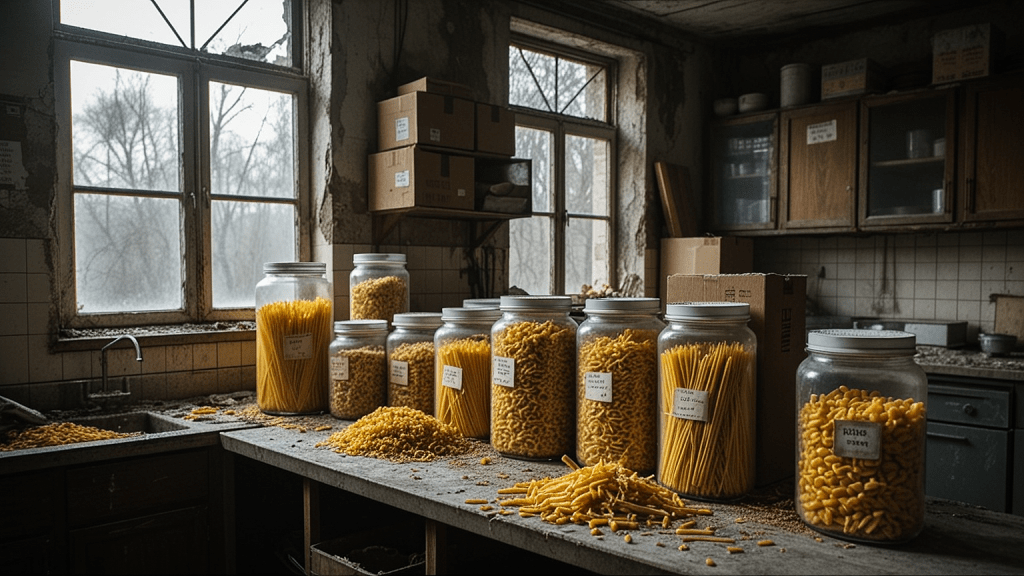
White flour goes rancid within months due to oils in the wheat germ. But dried pasta—semolina flour and water, dried hard—lasts 20-30 years in proper storage. It’s white rice’s Italian cousin: pure carbohydrate energy that fills bellies and fuels bodies.
Pasta cooks in 8-10 minutes in boiling water—faster than rice, faster than beans. It absorbs sauce, making small amounts of flavoring go far. A pound of pasta delivers 1,600 calories. It’s compact, stackable, and comforting in a way that matters when morale crumbles.
Store varieties that cook at similar times—spaghetti, penne, macaroni. Egg noodles contain fats that reduce shelf life—avoid them for long-term storage. Whole wheat pasta sounds healthy but contains oils that go rancid—stick to white pasta for survival.
Like rice, pasta needs pairing with protein and fat to be a complete meal. But as a calorie delivery system, it’s unmatched for speed and ease. 50 pounds per person gives you serious carbohydrate reserves.
9. Sugar – The Energy That Never Fades
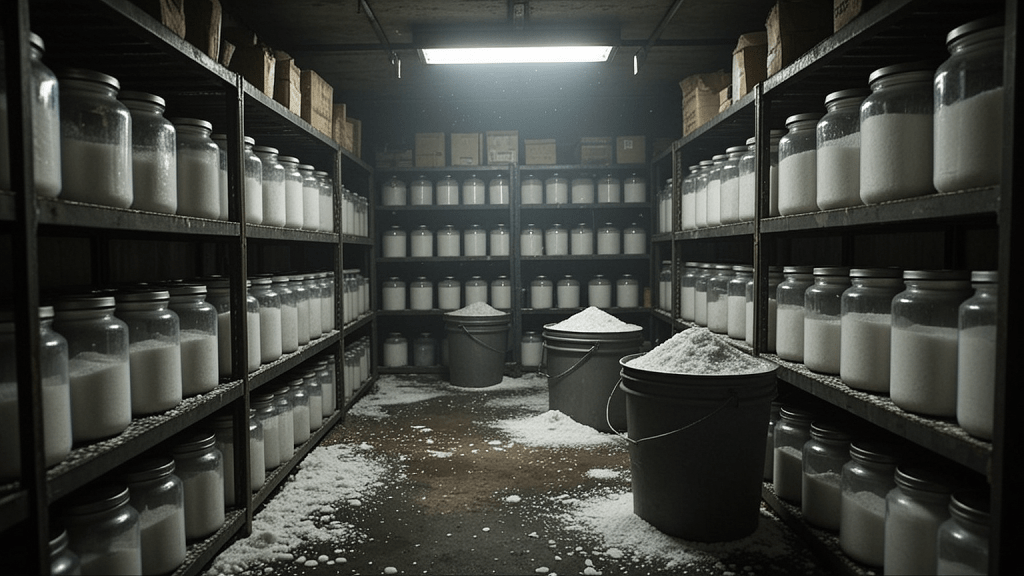
White granulated sugar, stored properly, lasts indefinitely. It doesn’t spoil. It doesn’t degrade. Archaeologists have found edible sugar in ancient shipwrecks. In a survival scenario, sugar becomes crucial for energy, preservation, fermentation, and morale.
Calorically, sugar delivers 15 calories per teaspoon—pure, fast energy. When you’re hypothermic, exhausted, or in shock, sugar can save your life. Mixed with water and salt, it becomes oral rehydration solution—better than plain water for shock or dehydration. Mixed with fruit and water, it becomes alcohol through fermentation—useful for sterilization, preservation, and barter.
Sugar also preserves. Jam, jelly, preserved fruits—these require sugar. In a world without refrigeration, preserved foods become essential. Sugar draws moisture from bacteria, killing them. It’s nature’s preservative.
Store white granulated sugar, not brown (moisture content makes it clump and degrade). Keep it dry, keep it sealed, keep it pest-free. 50 pounds per person minimum. Sounds like a lot. It’s not. In a crisis, sugar becomes currency, medicine, and energy.
Don’t listen to the health gurus who say sugar is poison. In survival, sugar is life. The diabetic warnings matter—if you’re diabetic, stock insulin and testing supplies. But for the rest of us, sugar is pure, storable, tradeable energy.
10. Bouillon Cubes / Powdered Broth – The Flavor That Makes Life Worth Living
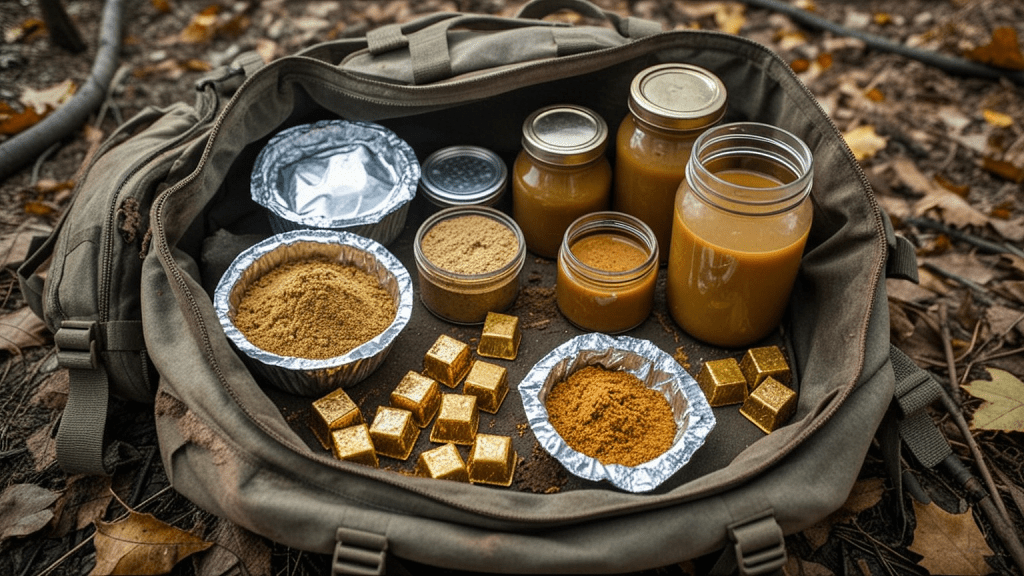
This is the dark horse. The unsung hero. The item people forget until they’re eating plain rice for the third week straight and contemplating suicide by zombie.
Bouillon cubes—chicken, beef, vegetable—are concentrated flavor and salt. One cube transforms a pot of bland rice and beans into something resembling food. They provide electrolytes, flavor variety, and psychological comfort that can’t be overstated.
Nutritionally, they’re mostly salt and MSG—which means they help with electrolyte balance and provide umami that satisfies protein cravings. They can be dissolved in water for instant broth when you’re sick and can’t handle solid food. They can be crushed and used as seasoning. They last 10+ years in sealed containers.
Store variety—chicken, beef, vegetable. Each provides different flavor profiles. 500 cubes per person sounds like a lot. It’s not. That’s roughly one cube per day for a year and a half. In a crisis, you’ll use them faster than you think. Rice and beans again? Add a beef cube. Suddenly it’s chili. Add a chicken cube. Suddenly it’s soup.
Mental health in survival is real. Flavor is mental health. Bouillon cubes are cheap, small, and worth more than gold when everything tastes like despair.
This is your secret weapon. Don’t tell people you have them. Trade them only for things you desperately need. But have them. Because without them, you’ll break.
Anyone can join.
Anyone can contribute.
Anyone can become informed about their world.
"United We Stand" Click Here To Create Your Personal Citizen Journalist Account Today, Be Sure To Invite Your Friends.
Before It’s News® is a community of individuals who report on what’s going on around them, from all around the world. Anyone can join. Anyone can contribute. Anyone can become informed about their world. "United We Stand" Click Here To Create Your Personal Citizen Journalist Account Today, Be Sure To Invite Your Friends.
LION'S MANE PRODUCT
Try Our Lion’s Mane WHOLE MIND Nootropic Blend 60 Capsules
Mushrooms are having a moment. One fabulous fungus in particular, lion’s mane, may help improve memory, depression and anxiety symptoms. They are also an excellent source of nutrients that show promise as a therapy for dementia, and other neurodegenerative diseases. If you’re living with anxiety or depression, you may be curious about all the therapy options out there — including the natural ones.Our Lion’s Mane WHOLE MIND Nootropic Blend has been formulated to utilize the potency of Lion’s mane but also include the benefits of four other Highly Beneficial Mushrooms. Synergistically, they work together to Build your health through improving cognitive function and immunity regardless of your age. Our Nootropic not only improves your Cognitive Function and Activates your Immune System, but it benefits growth of Essential Gut Flora, further enhancing your Vitality.

Our Formula includes: Lion’s Mane Mushrooms which Increase Brain Power through nerve growth, lessen anxiety, reduce depression, and improve concentration. Its an excellent adaptogen, promotes sleep and improves immunity. Shiitake Mushrooms which Fight cancer cells and infectious disease, boost the immune system, promotes brain function, and serves as a source of B vitamins. Maitake Mushrooms which regulate blood sugar levels of diabetics, reduce hypertension and boosts the immune system. Reishi Mushrooms which Fight inflammation, liver disease, fatigue, tumor growth and cancer. They Improve skin disorders and soothes digestive problems, stomach ulcers and leaky gut syndrome. Chaga Mushrooms which have anti-aging effects, boost immune function, improve stamina and athletic performance, even act as a natural aphrodisiac, fighting diabetes and improving liver function. Try Our Lion’s Mane WHOLE MIND Nootropic Blend 60 Capsules Today. Be 100% Satisfied or Receive a Full Money Back Guarantee. Order Yours Today by Following This Link.


| Visits: | 1,834,625,759 |
| Stories: | 8,718,967 |
Whistler Blowers, Insiders

