

70s Music Legends Who Were Followers Of Devil

70s Music Legends Who Were Followers Of Devil
Among 1970s music legends, Sammy Davis Jr. and Anton LaVey are the only figures confirmed as actual followers of Satan. Davis Jr. accepted honorary membership in the Church of Satan in 1973, while LaVey was its founder.
Other prominent musicians were frequently rumored to be Satanists or deeply involved in the occult, though these claims were often based on theatrical imagery, occult interests, or false accusations:
-
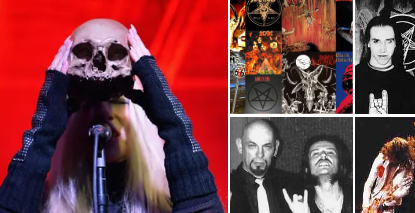
Alice Cooper changed his name via a Ouija board session and became identified with the occult.
-
Jimmy Page of Led Zeppelin was a dedicated occultist who collected artifacts and bought Aleister Crowley’s former home, Boleskine House.
-
-
Marilyn Manson received an honorary priesthood from the Church of Satan and referenced occultists like LaVey and Crowley in his lyrics.
-
King Diamond is a LaVeyan Satanist who cited LaVey as a major inspiration for his lyrics.
-
Jinx Dawson of the band Coven fronted a group explicitly tied to the Satanic underground and occult mission.
-
-
Jim Morrison of The Doors had broader occult and shamanic interests, including a private Celtic pagan handfasting, but had no Church of Satan link.
-
David Bowie was fascinated by the occult and Aleister Crowley from his youth.
-
Graham Bond was heavily influenced by Crowley’s teachings, though he is less widely cited than the others.
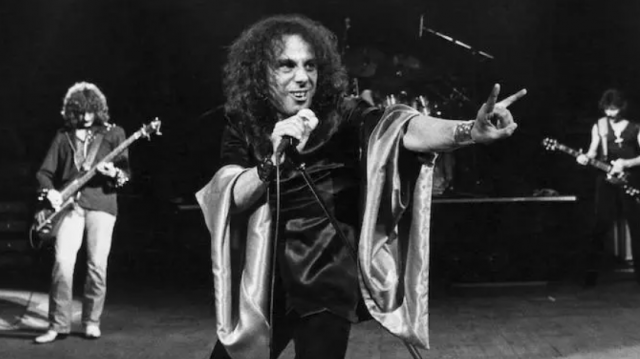
Many other artists, such as Ozzy Osbourne, Ronnie James Dio, and John Bonham, were accused of Satanism due to album art or stage theatrics, but these links were largely myths or misinterpretations.
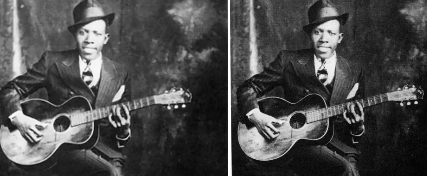
The legend found its apotheosis in Robert Johnson, a Mississippi-born musician who supposedly sold his soul to Satan himself, at midnight, near the very Dockery plantation where blues singer Charlie Patton was raised. According to the myth, Johnson was transformed from an average itinerant musician into one of the greatest guitarists of all time after his pact with Beelzebub (maybe the Devil has almost as many names as Lady Gaga has outfits). And the legend of the man who composed “Hell Hound On My Trail” was only strengthened by his mysterious death (possibly a murder) at the age of 27.
The legend of how “The King Of The Delta Blues” earned his powers has remained potent, inspiring Walter Hill’s 1986 film Crossroads, which has an original score by Ry Cooder and also features legendary bluesman Sonny Terry on harmonica. The plotline of a blues guitarist selling his soul is also part of the Coen Brothers’ wonderful movie O Brother, Where Art Thou?, and it provided the inspiration for the 1979 hit song “The Devil Went Down To Georgia” by The Charlie Daniels Band.
It has since proved attractive for musicians to claim (with varying degrees of seriousness) that they also made their own deal with the Devil. John Lennon told a press conference that the reason The Beatles were so successful was that he had sold his soul, and Katy Perry and Eazy-E are among those to have made the claim in recent times. Bon Jovi even told teen pop magazine Smash Hits that “I’d kill my mother for rock’n’roll. I would sell my soul.”
In his autobiography, The Doggfather, Snoop Dogg claimed that the Devil agreed to make the rapper rich and famous in exchange for his soul, a theme he explored in the song “Murder Was The Case.” But using the mystique of the dark side to your career advantage is nothing new. Peetie Wheatstraw, an influential blues musician in the 30s, re-branded himself as “The High Sheriff From Hell” and “The Devil’s Son-In-Law.”
Many blues musicians simply used Satanic words and supernatural images to help make their music more powerful, as in Skip James’ “Devil Got My Woman.” For some, the subject provided a rich vein of creativity, as with Howlin’ Wolf’s interesting meditations on the problem of evil.
As rock’n’roll emerged from the blues, it was easy to see how young, sexy, gyrating singers such as Elvis Presley fueled the idea that there was a new musical Lucifer in town – especially when rocker Little Richard declared his career was “directed and commanded by the power of darkness”.
The Beatles and The Rolling Stones
However, not all rock’n’roll stars were alarming. It would have been hard to see Bill Haley and his middle-aged band as part of the Devil’s covert army, but as music changed and darkened in the 60s, and bands became more raw and edgy, the link between music and Satanism reached a new height. Gone were the days of West Side Story singalongs (“Maria, I just met a beast named Maria”); the world was entering the volatile era of Charles Manson and his communes. And Manson, incidentally, released his own bizarre records.
John Lennon and his fellow Beatles were still at primary school when notorious occult figure Aleister Crowley died in Hastings, in 1947, but the so-called “wickedest man on the planet” cast a shadow long after his death. Crowley appeared as one of the faces on Peter Blake’s iconic cover for The Beatles’ 1967 album Sgt Pepper’s Lonely Hearts Club Band. It was in that same year that The Rolling Stones released an album called Their Satanic Majesties Request, the first time the Prince Of Darkness had been summoned in the title of a major rock release.
It was predominantly Mick Jagger, who had dabbled in reading about the occult in books such as Taoist Secret Of The Golden Flower, and Keith Richards who created a defining moment in music’s relationship with the Devil with the 1969 cut “Sympathy For The Devil.” In the song, which originally had the less memorable working title of “The Devil Is My Name,” the Stones imagine Satan’s appearances at crucial moments in history.
Playing up the Satanic image, Jagger performed the song on the concert film The Rolling Stones Rock And Roll Circus while shirtless and covered in fake devil tattoos. There were also claims that the Church Of Satan used the song (which has been covered by artists as diverse as Sandie Shaw, Bryan Ferry, Motörhead and Guns N’ Roses), as an anthem but Jagger’s girlfriend at the time, the singer Marianne Faithfull, said that many people missed the complexity and irony in the lyrics, including the salient point that “Mick never, for one moment, believed he was Lucifer.”
Whether they wanted to or not, Jagger and his band had created a massively influential song. Jagger said: “I thought it was a really odd thing, because it was only one song, after all. It wasn’t like it was a whole album, with lots of occult signs on the back. People seemed to embrace the image so readily, [and] it carried all the way over into heavy metal bands.”
David Bowie, Jimmy Page, and Ozzy Osbourne
Crowley had a major influence on David Bowie, a musician who had been interested in the occult since he was a young teenager playing with Tarot cards and performing exorcism rituals. Bowie paid tribute to Crowley in his 1971 song “Quicksand,” while in 1976 he admitted to Rolling Stone, “Rock has always been the Devil’s music…I believe rock’n’roll is dangerous. I feel we’re only heralding something even darker than ourselves.” Bowie’s Ziggy Stardust character is perhaps popular music’s most potent embodiment of the archetype of the “dying god,” and the musician continued his interest in mysticism right up to his death in 2016.
But Bowie’s fascination with what he called “the dark never-world” almost pales with that of Led Zeppelin’s Jimmy Page, who reportedly attended séances, collected occult artifacts, and even (in the year that Bowie released “Quicksand”) purchased Boleskine House, Crowley’s former home, on the shores of Loch Ness, in Scotland. Page’s interest in the occult led to accusations that that Led Zeppelin was a “Satanic band,” while songs such as “Houses Of The Holy” addressed the subject of the Devil directly. Page once said that mixing in Satanic influences was like an “alchemical process,” but in 2007, the songwriter and guitarist, then 63, told Guitar World that he didn’t like to speak about the occult anymore “because the more you discuss it, the more eccentric you appear to be.”
The links between music and the Devil got even more extreme as the 70s wore on and heavy metal bands began to gain a mass following. When he put an inverted cross on the inside gatefold of Black Sabbath’s debut album and made references to black magic in the lyrics, singer Ozzy Osbourne may simply have been looking to outdo the diabolical flirtations of other musicians. Osbourne, who was not alone among musicians of that genre in battling drug and alcohol addictions, talked publicly about his “devil-worshipping” songs and even referred to himself as “The Prince Of Darkness.” He said: “I was convinced I truly was possessed by the Devil. I remember sitting through The Exorcist a dozen times, saying to myself, ‘Yeah, I can relate to that.’”
Anyone can join.
Anyone can contribute.
Anyone can become informed about their world.
"United We Stand" Click Here To Create Your Personal Citizen Journalist Account Today, Be Sure To Invite Your Friends.
Before It’s News® is a community of individuals who report on what’s going on around them, from all around the world. Anyone can join. Anyone can contribute. Anyone can become informed about their world. "United We Stand" Click Here To Create Your Personal Citizen Journalist Account Today, Be Sure To Invite Your Friends.
LION'S MANE PRODUCT
Try Our Lion’s Mane WHOLE MIND Nootropic Blend 60 Capsules
Mushrooms are having a moment. One fabulous fungus in particular, lion’s mane, may help improve memory, depression and anxiety symptoms. They are also an excellent source of nutrients that show promise as a therapy for dementia, and other neurodegenerative diseases. If you’re living with anxiety or depression, you may be curious about all the therapy options out there — including the natural ones.Our Lion’s Mane WHOLE MIND Nootropic Blend has been formulated to utilize the potency of Lion’s mane but also include the benefits of four other Highly Beneficial Mushrooms. Synergistically, they work together to Build your health through improving cognitive function and immunity regardless of your age. Our Nootropic not only improves your Cognitive Function and Activates your Immune System, but it benefits growth of Essential Gut Flora, further enhancing your Vitality.
Our Formula includes: Lion’s Mane Mushrooms which Increase Brain Power through nerve growth, lessen anxiety, reduce depression, and improve concentration. Its an excellent adaptogen, promotes sleep and improves immunity. Shiitake Mushrooms which Fight cancer cells and infectious disease, boost the immune system, promotes brain function, and serves as a source of B vitamins. Maitake Mushrooms which regulate blood sugar levels of diabetics, reduce hypertension and boosts the immune system. Reishi Mushrooms which Fight inflammation, liver disease, fatigue, tumor growth and cancer. They Improve skin disorders and soothes digestive problems, stomach ulcers and leaky gut syndrome. Chaga Mushrooms which have anti-aging effects, boost immune function, improve stamina and athletic performance, even act as a natural aphrodisiac, fighting diabetes and improving liver function. Try Our Lion’s Mane WHOLE MIND Nootropic Blend 60 Capsules Today. Be 100% Satisfied or Receive a Full Money Back Guarantee. Order Yours Today by Following This Link.


| Visits: | 1,835,548,860 |
| Stories: | 8,724,457 |
Whistler Blowers, Insiders

