

Fears vs. Phobias: What Writers Need to Know

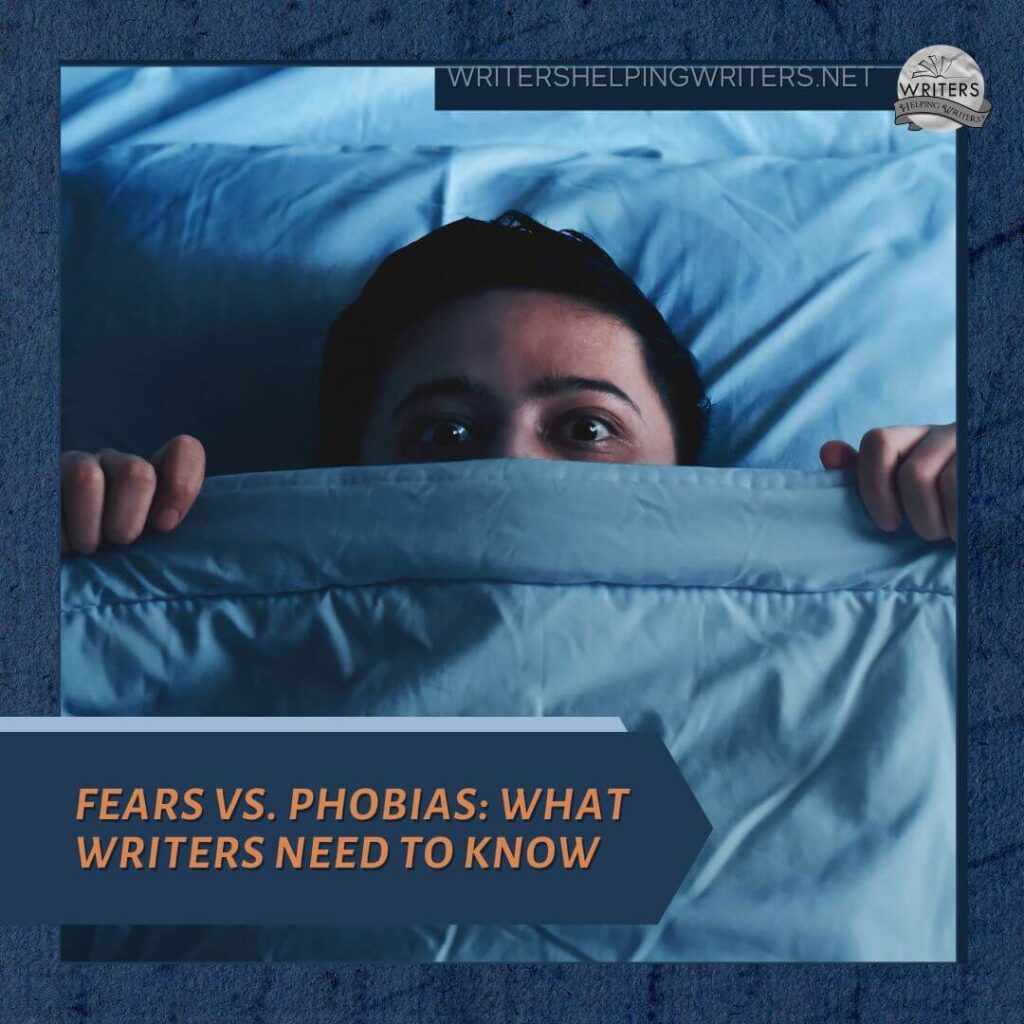
When we think about phobias, extreme fear comes to mind. But phobias are actually considered a class of anxiety disorder, and they hijack the body’s alarm system. Understanding how this happens is important to ensure we don’t inadvertently perpetuate mental health stereotypes in our writing.
Fear is an instinctual reaction to a real or perceived danger, triggering a chain of physiological responses: senses heighten, awareness sharpens, and the body prepares to fight, freeze, or flee. A phobia, on the other hand, bypasses the brain’s ability to assess danger. Panic overrides logic, resulting in an overwhelming feeling of terror disproportionate to the object, situation, or activity that triggers it.
Imagine a mother with a phobia of enclosed spaces who needs to take her chronically ill son to a specialist. She approaches the building and sees a revolving door that allows one person through at a time. Her son runs ahead; he loves these spinning doors. But her? Suddenly, the ground is uneven, and the glass doors warp before her eyes. She can’t breathe. Nausea hits, and her knees buckle. She sinks to the pavement and grips her chest, sure by the rapid bashing of her heart that she’s about to die.
This is a panic attack, an extreme response to a phobia. Most characters, like people, will do anything to avoid experiencing such intense panic and terror. The severity of a response depends on the character’s phobia and how frequently they’re exposed to its triggers, but even low-level phobias can hinder a character’s happiness and freedom.
The Origin of Phobias
Everyone has an irrational fear or three, but when these minor issues become so severe they prevent someone from living a full life, it’s considered a phobia. How do these serpents sink their fangs into us in the first place? The most common reason is trauma.
No logic leap is needed to see how surviving a plane crash could cause a paralyzing phobia of flying, or how being repeatedly locked in a closet as a child might spark panic at the sound of a door clicking shut. Emotional trauma forges links between painful feelings and a specific object or situation—a trigger.
Phobias can also be learned. For example, a character might develop a germ-related phobia from growing up with parents who followed strict cleaning protocols and constantly preached the dangers of bacteria and viruses. Genetics play a role, too, making some people more susceptible than others.
Whatever your character’s phobia, explore its backstory so you can foreshadow appropriately and plan suitable responses. Even if you don’t show the exact reason it develops, readers need to feel that it has a place in the story and you’re writing it with authority, not winging it.
Differentiating Phobias from Fear
The key difference between phobias and fears lies not in how intense they feel but in how they came about and what happens after each is triggered. These factors can help you determine whether the character is dealing with a fear or a phobia.
Is there a credible reason to believe a threat exists?

People rely on experience, instinct, and survival knowledge to determine danger. For example, a grease fire erupting on a kitchen stove will naturally cause your character to experience fear and even a measure of panic. Phobias are triggered even when someone is obviously safe, meaning a character with a fire phobia would likely react the same way when encountering a lit candle.
Is there a specific trigger?
Danger and threats come in many forms. A phobia is generated by a specific trigger (or type of trigger), and the character will avoid it at all costs.
How intense and immediate is the reaction?
Characters who experience extreme fear may not jump to terror immediately (or at all). Because the brain can adequately analyze the danger level of a threat, a character’s fear may escalate gradually. But a phobia triggers an anxiety response that bypasses the brain’s assessment process, resulting in a profound leap to panic.
Is your character able to calm down?
This is the big one. Once a crisis is over, someone in a state of fear can regain control quickly. But panic lingers for those gripped by a phobia, even after the trigger is removed.
Should My Character Have a Fear or Phobia?
Choosing your character’s main challenge comes down to which serves the story best. Since phobias are intense, personalized, and less common than fears, a struggle with a phobia would likely be more memorable to readers. But simply wanting more attention for a character isn’t reason enough to give them a phobia. A more compelling reason is to show the character learning to manage (rather than overcome) their difficulty, because a phobia isn’t likely to be completely conquered.
Phobias limit a character’s life, often shutting down their ability to function. Therapy, gradual exposure, support, and medication can help but won’t typically abolish them. Instead, these measures allow the character to manage their phobia. This journey is a powerful one, because learning to live with any permanent struggle is an experience many readers can identify with. If this is the kind of story you want to write, a phobia is a good choice.
Fear, on the other hand, requires a different battle: the fight to subdue and overcome it so the character can move forward with life. This is a common path for change arc stories, so if this is your goal, work with fears that target basic human needs.
If the goal is a simple one—to give the character an interesting, human layer—consider using mild or even irrational fears. Readers will have their own dislikes and illogical triggers, so they’ll relate to a character who fears something as inane as clowns (Columbus in Zombieland) or sock puppets (Homer in The Simpsons). They’ll understand the character’s reactions and desire to gain distance from whatever is causing extreme discomfort.
Did You Know…

When you purchase The Fear Thesaurus: A Writer’s Guide to What Holds Characters Back from our bookstore, you get a free Mini Guide on Phobias! So if you would like to dive more into phobias and how to write about them, this mini guide covers 10 common ones often found in fiction and film.
You’ll learn how each can create life-altering challenges, steer behavior, and come with a variety of triggers your character will seek to avoid at all costs.
To learn more about fear and the power it weilds in your story, The Fear Thesaurus explores 80+ human fears, from betrayal and heartbreak to powerlessness and death. Master this key story element to write relatable characters who think, act, and struggle just like real people do.
The post Fears vs. Phobias: What Writers Need to Know appeared first on WRITERS HELPING WRITERS®.
The Bookshelf Muse is a hub for writers, educators and anyone with a love for the written word. Featuring Thesaurus Collections that encourage stronger descriptive skills, this award-winning blog will help writers hone their craft and take their writing to the next level.
Source: https://writershelpingwriters.net/2026/04/fear-phobias/
Anyone can join.
Anyone can contribute.
Anyone can become informed about their world.
"United We Stand" Click Here To Create Your Personal Citizen Journalist Account Today, Be Sure To Invite Your Friends.
Before It’s News® is a community of individuals who report on what’s going on around them, from all around the world. Anyone can join. Anyone can contribute. Anyone can become informed about their world. "United We Stand" Click Here To Create Your Personal Citizen Journalist Account Today, Be Sure To Invite Your Friends.
LION'S MANE PRODUCT
Try Our Lion’s Mane WHOLE MIND Nootropic Blend 60 Capsules
Mushrooms are having a moment. One fabulous fungus in particular, lion’s mane, may help improve memory, depression and anxiety symptoms. They are also an excellent source of nutrients that show promise as a therapy for dementia, and other neurodegenerative diseases. If you’re living with anxiety or depression, you may be curious about all the therapy options out there — including the natural ones.Our Lion’s Mane WHOLE MIND Nootropic Blend has been formulated to utilize the potency of Lion’s mane but also include the benefits of four other Highly Beneficial Mushrooms. Synergistically, they work together to Build your health through improving cognitive function and immunity regardless of your age. Our Nootropic not only improves your Cognitive Function and Activates your Immune System, but it benefits growth of Essential Gut Flora, further enhancing your Vitality.

Our Formula includes: Lion’s Mane Mushrooms which Increase Brain Power through nerve growth, lessen anxiety, reduce depression, and improve concentration. Its an excellent adaptogen, promotes sleep and improves immunity. Shiitake Mushrooms which Fight cancer cells and infectious disease, boost the immune system, promotes brain function, and serves as a source of B vitamins. Maitake Mushrooms which regulate blood sugar levels of diabetics, reduce hypertension and boosts the immune system. Reishi Mushrooms which Fight inflammation, liver disease, fatigue, tumor growth and cancer. They Improve skin disorders and soothes digestive problems, stomach ulcers and leaky gut syndrome. Chaga Mushrooms which have anti-aging effects, boost immune function, improve stamina and athletic performance, even act as a natural aphrodisiac, fighting diabetes and improving liver function. Try Our Lion’s Mane WHOLE MIND Nootropic Blend 60 Capsules Today. Be 100% Satisfied or Receive a Full Money Back Guarantee. Order Yours Today by Following This Link.


| Visits: | 1,809,414,194 |
| Stories: | 8,648,697 |
Whistler Blowers, Insiders

