

The Small Business Marketing Trends 2026 Report Nobody Wants to Admit Is True

Updated: April 2026
Every January, thousands of people publish a small business marketing trends list. Everyone reads them, saves them, and forgets them by February. This year, I’m writing it in April — because the trends that matter in 2026 aren’t showing up in predictions. They’re showing up in real numbers, right now. According to HubSpot’s Small Business Trends Report, 68% of small businesses are raising their marketing budgets — and fewer than 20% feel confident any of it is working. That gap is the story.
The businesses that will look back on 2026 as a breakout year aren’t the ones spending the most. They’re the ones who understand what’s actually going on — and market accordingly. Here’s what the trends are really telling us.
The Economy Small Business Owners Are Actually Selling Into
Before you think about tactics, think about your customer. The person you’re selling to in 2026 is stretched thin.
Food costs more. Housing costs more. Energy costs more. According to the U.S. Bureau of Labor Statistics, prices have risen roughly 43% in cumulative real terms over the past several years. Your customers feel that every month when they pay their bills.
The NFIB Small Business Economic Trends report puts it plainly: inflation is the top challenge for 53% of small business owners. And Gallup’s State of the Global Workplace 2026 found that more U.S. workers now say they’re “struggling” than “thriving” — the first time that’s happened since 2020.
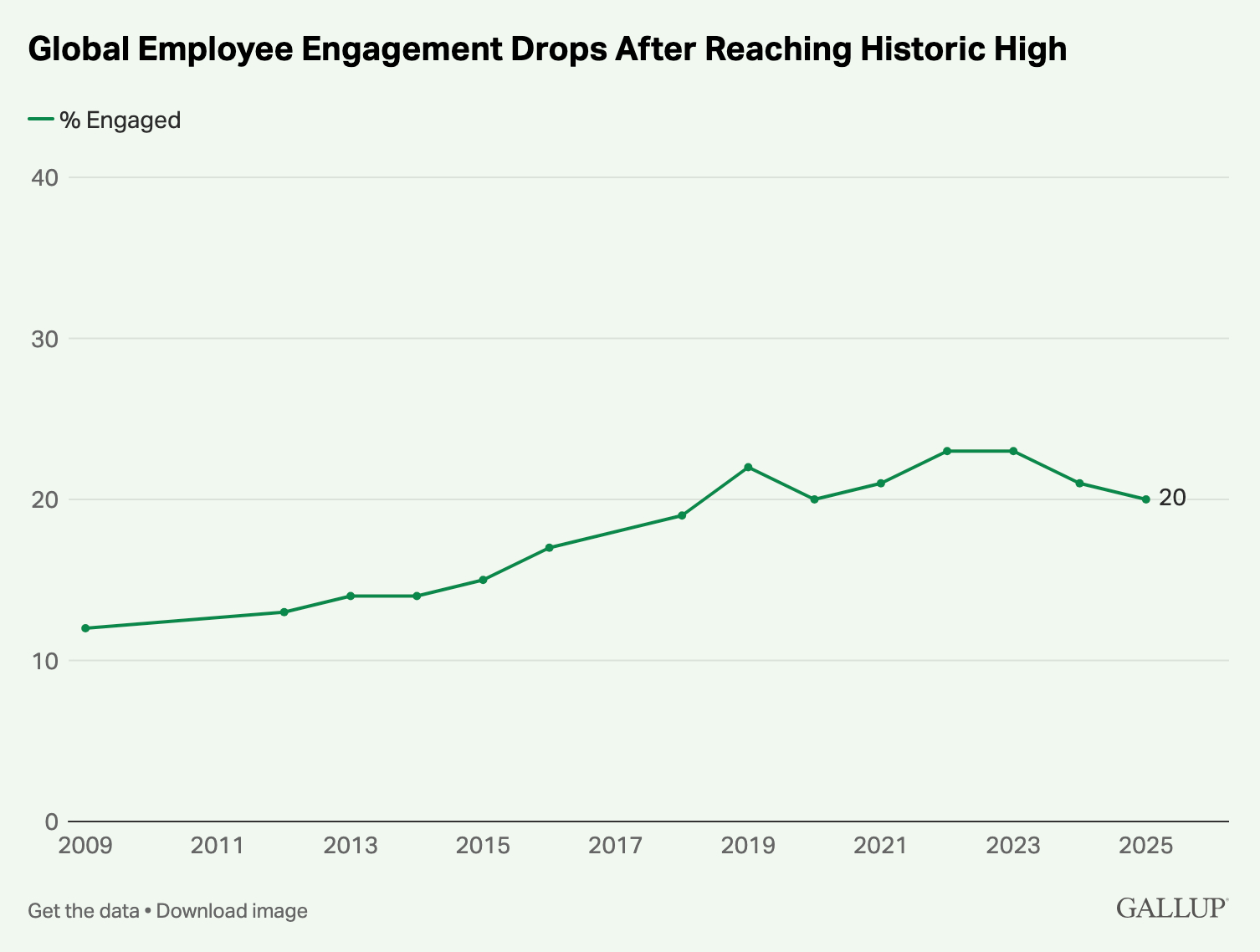
What does this mean for your marketing? Your customers are tired. They’re careful with money. They don’t trust ads the way they used to. The old playbook — more volume, more urgency, more retargeting — is burning people out. Your message needs to meet them where they actually are.
Small Business Marketing Trend #1: The Entrepreneurship Wave Is Reshaping Your Audience
According to SCORE’s 2026 Entrepreneurship Trends report, 33% of U.S. adults plan to start a business or side hustle this year. That’s nearly double the number from last year. Gen Z is leading the charge, with Millennials close behind.
The survey says it’s about freedom. The truth is more practical: wages aren’t keeping up with costs, jobs feel less stable, and starting something of their own feels like the one thing people can control.
Here’s what that means for you. A growing slice of your audience is new to business, short on cash, and very skeptical of big promises. They’ve been burned before. If your marketing sounds like it was written for a Fortune 500 company, you’re going to lose them fast.
What wins with this crowd? Simple, honest, specific messaging. Tell them exactly what it costs. Tell them exactly what they get. Tell them exactly who it’s for. That kind of transparency is rare — and it’s a competitive advantage.
Small Business Marketing Trend #2: AI Has Split Into Two Camps — and One Is Quietly Losing
According to the QuickBooks Small Business Insights report, 68% of small businesses now use AI regularly — up from 48% in mid-2024. And 87% of those users say it’s had a positive impact on their business.
Those numbers sound great. But there’s a catch. Two very different groups of businesses are using AI — and only one is winning.
The first group uses AI to get faster and more personal with customers. Better follow-up. Quicker responses. Stronger content. The second group uses AI to replace the human parts of their business — support, onboarding, service. That second group is saving money in the short term and losing customers in the long term.
Think about it from your customer’s perspective. They’re paying more for everything. And now they’re also doing more of the work themselves — figuring out your product alone, solving problems through FAQ pages, getting answers from a chatbot instead of a person. That’s not a better experience. It just costs less to deliver.
Before you add any AI tool, read the most common AI marketing mistakes small businesses make. The pattern I see most often is automation in exactly the wrong places.
Small Business Marketing Trend #3: The Best Marketing Channel in 2026 Is One You Can’t Buy
According to HubSpot’s Small Business Trends Report, 61% of entrepreneurs say word-of-mouth is how they find customers. Social media comes in at 68% — but that’s usage, not effectiveness. Email sits at 41%. There’s a big difference between what business owners use and what actually works.
Word of mouth has always been the best marketing channel for small businesses. What’s different in 2026 is that it matters even more. Business is now the most trusted institution — more trusted than the government, the media, or nonprofits. When a real customer tells a real person that your business is worth their money, that recommendation lands harder than any ad.
One happy customer who sends you two referrals is worth more than $500 in Facebook ads. That’s not an opinion. It’s basic math.
If your referral system is informal — you just hope people mention you — there’s a structural fix for that. Start with how to get referrals intentionally, then learn how to ask for referrals without it feeling awkward. And if your referral momentum has stalled, the reasons referral marketing stops working are usually fixable in a weekend.
What Small Business Marketing Budgets Are Getting Wrong in 2026
Here’s what makes this trend so frustrating. Everyone is spending more on marketing. And almost nobody feels like it’s working. According to HubSpot’s Small Business Trends Report, fewer than 20% of small business owners say they feel confident their marketing is effective.
Why? More channels. More noise. More competition for the same eyeballs. When everyone spends more at the same time, you end up on a treadmill. You spend more just to stay where you were.
For a clearer framework on how to set a marketing budget that actually makes sense for your revenue stage, see how small businesses should set a marketing budget.
The businesses breaking out of the treadmill are doing three things differently:
Investing in retention, not just acquisition. It costs 5x more to acquire a new customer than to keep one. A loyalty touchpoint, a personal check-in after purchase, a birthday email — these are marketing investments with compounding returns.
Building on owned channels. Social media reach is rented. Email is owned. Search rankings are earned. Businesses with strong email lists and organic traffic have a structural advantage over those dependent on platform algorithms. If your email list is thin, that’s your most important marketing project of 2026.
Treating customer experience as a marketing channel. Every touchpoint after the sale is a marketing opportunity — for retention, upsells, referrals, and reviews. The businesses that win are the ones where customers think, “I should tell someone about this.”
How Small Business Marketing Trends 2026 Are Changing the Trust Equation
The 2026 Edelman Trust Barometer shows that employers now rank highest in trust at 78%. General business comes in at 64%. Government sits at 53%.
Here’s what that means for you. People trust businesses they’ve had a good experience with more than they trust almost anything else. Your job is to become one of those businesses — fast.
Here’s what builds trust quickly in 2026:
Show your process. Behind-the-scenes content consistently outperforms polished promotional content because it makes you real. A 60-second video of how you actually do the work beats a glossy brand video almost every time.
Admit what you don’t do. Saying “this isn’t right for you if you need X” builds more trust than any testimonial. Specificity signals confidence.
Publish actual results. “Our clients reduce their marketing time by 6 hours a week” beats “we help businesses grow” every single time. Specific and verifiable outperforms vague and impressive.
Respond to everything. Review responses, comment replies, DMs. Responsiveness is a trust signal in 2026, not just a courtesy. Silence reads as indifference.
If you’re in a networking-heavy business, trust also gets built in rooms. The BNI review breaks down whether structured networking groups are worth the investment for your stage of business — and alternatives to BNI if the format isn’t a fit.
What to Drop From Your Marketing in 2026
Boring content with no opinion. The internet is full of safe, forgettable content. If your posts and emails don’t say something specific, they won’t get remembered. Say something true. Take a position.
Being everywhere on social media. The small business owners with the best marketing aren’t on every platform. They’re really good on one or two. Spreading thin means being forgettable everywhere.
Vanity metrics. Follower counts and impressions don’t pay bills. Track the numbers that matter: email subscribers, leads, booked calls, repeat purchases.
More marketing on a bad experience. This is the biggest trap of 2026. If customers leave because you didn’t deliver on your promise, spending more on marketing will only speed up the churn. Fix the experience first.
| If You’re Doing This… | What It Actually Signals | What to Do Instead |
|---|---|---|
| Increasing ad spend with flat results | Audience is tuning you out | Invest in referral activation and email |
| High traffic, low conversions | Messaging-to-offer mismatch | Fix the offer page, not the traffic source |
| Using AI to reduce customer contact | Trading trust for efficiency | Use AI to free time for more human contact |
| Posting on 4+ social platforms | Spreading thin, building nothing | Dominate one or two channels instead |
| Tracking followers and impressions | Optimizing for vanity, not revenue | Switch to leads, bookings, and repeat purchases |
Your 2026 Small Business Marketing Priorities — In Order
1. Fix your referral engine first. HubSpot research shows word-of-mouth drives 61% of new customers for small businesses. Stop leaving it to chance — make it a system.
2. Build your email list. Social media reach disappears when algorithms change. Email is yours. Own it.
3. Use AI to do more, not less. AI should free up your time so you can be more human with customers — not replace the human parts of your business.
4. Say something specific. Generic content gets ignored. Pick a point of view and stick with it.
5. Stop tracking what feels good. Followers and impressions are not business results. Track leads, repeat purchases, and revenue.
—
Frequently Asked Questions About Small Business Marketing Trends 2026 What are the most important small business marketing trends in 2026?
Three things stand out. First, AI is more useful as a customer experience tool than a cost-cutting tool. Second, word-of-mouth referrals matter more than ever in an environment where people don’t trust ads. Third, raising your marketing budget without improving your customer experience is a trap. The businesses winning in 2026 invest in experience first and use marketing to amplify it.
How much should a small business spend on marketing in 2026?
The HubSpot Small Business Trends Report shows 68% of small business owners plan to increase marketing budgets in 2026. But budget alone isn’t the right metric. A better question: what’s your cost to acquire a customer versus the lifetime value of that customer? For most small businesses, the highest-ROI marketing spend is in referral activation, email list growth, and content that earns search rankings — not paid ads. Start there before raising the total budget.
Is AI marketing worth it for small businesses in 2026?
Yes, with one important caveat. QuickBooks research shows 87% of small business owners who use AI tools report positive business impact. But the gains go to businesses using AI to enhance customer experience — faster responses, better-personalized follow-up, stronger content — not to those using AI to replace human touchpoints in service and support. If the AI adoption strategy is “how do we do less for customers,” it will cost more in churn than it saves in overhead.
What marketing channels actually work for small business in 2026?
According to HubSpot, word-of-mouth referrals (61%), social media (68% usage), and email (41%) are the top three channels small businesses use. But social media “usage” doesn’t equal effectiveness — most small businesses see the best conversion rates from email and referrals, not social. The most resilient strategy is owning your audience through email and search, then using social media to stay top of mind.
Why is small business marketing harder in 2026 than it used to be?
Three reasons. Your customers have less money and less time than they did a few years ago — prices have gone up and paychecks haven’t kept up. There’s more competition for attention than ever, on every platform. And trust in ads and branded content is low, while trust in recommendations from real people is high. The answer isn’t to market louder. It’s to deliver a better experience so people recommend you on their own.
—
Additional Reading
- How to Get Referrals: A System That Works Without Feeling Pushy
- How to Ask for Referrals the Right Way
- AI Marketing Mistakes Small Businesses Keep Making
Data sources: NFIB Small Business Economic Trends (February 2026), Gallup State of the Global Workplace 2026, QuickBooks Small Business Insights, U.S. Bureau of Labor Statistics, HubSpot Small Business Report 2026.
Low budget marketing strategies for CEOs with no marketing department. Join DIYMarketers.com for free marketing tips.
Source: https://diymarketers.com/small-business-marketing-trends/
Anyone can join.
Anyone can contribute.
Anyone can become informed about their world.
"United We Stand" Click Here To Create Your Personal Citizen Journalist Account Today, Be Sure To Invite Your Friends.
Before It’s News® is a community of individuals who report on what’s going on around them, from all around the world. Anyone can join. Anyone can contribute. Anyone can become informed about their world. "United We Stand" Click Here To Create Your Personal Citizen Journalist Account Today, Be Sure To Invite Your Friends.
LION'S MANE PRODUCT
Try Our Lion’s Mane WHOLE MIND Nootropic Blend 60 Capsules
Mushrooms are having a moment. One fabulous fungus in particular, lion’s mane, may help improve memory, depression and anxiety symptoms. They are also an excellent source of nutrients that show promise as a therapy for dementia, and other neurodegenerative diseases. If you’re living with anxiety or depression, you may be curious about all the therapy options out there — including the natural ones.Our Lion’s Mane WHOLE MIND Nootropic Blend has been formulated to utilize the potency of Lion’s mane but also include the benefits of four other Highly Beneficial Mushrooms. Synergistically, they work together to Build your health through improving cognitive function and immunity regardless of your age. Our Nootropic not only improves your Cognitive Function and Activates your Immune System, but it benefits growth of Essential Gut Flora, further enhancing your Vitality.

Our Formula includes: Lion’s Mane Mushrooms which Increase Brain Power through nerve growth, lessen anxiety, reduce depression, and improve concentration. Its an excellent adaptogen, promotes sleep and improves immunity. Shiitake Mushrooms which Fight cancer cells and infectious disease, boost the immune system, promotes brain function, and serves as a source of B vitamins. Maitake Mushrooms which regulate blood sugar levels of diabetics, reduce hypertension and boosts the immune system. Reishi Mushrooms which Fight inflammation, liver disease, fatigue, tumor growth and cancer. They Improve skin disorders and soothes digestive problems, stomach ulcers and leaky gut syndrome. Chaga Mushrooms which have anti-aging effects, boost immune function, improve stamina and athletic performance, even act as a natural aphrodisiac, fighting diabetes and improving liver function. Try Our Lion’s Mane WHOLE MIND Nootropic Blend 60 Capsules Today. Be 100% Satisfied or Receive a Full Money Back Guarantee. Order Yours Today by Following This Link.


| Visits: | 1,801,834,229 |
| Stories: | 8,632,689 |
Whistler Blowers, Insiders

