

Is There Asbestos in Fireworks?

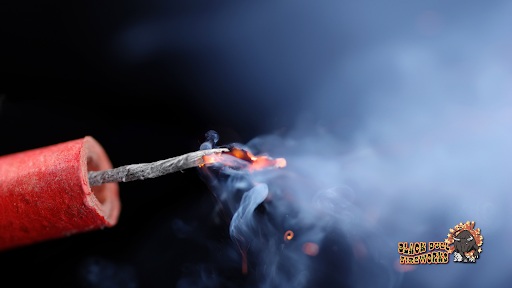
No. Modern consumer fireworks sold in the United States do not contain asbestos. This is a question that comes up regularly, and the direct answer is that asbestos is not a component of fireworks. If you are searching for a fireworks store near me and wondering about what goes into the products you buy, this article explains exactly what consumer fireworks contain, what chemicals are banned by federal regulation, and what air quality concerns are actually worth knowing about.
What Consumer Fireworks Actually Contain
Consumer fireworks are regulated by the U.S. Consumer Product Safety Commission (CPSC) under the Federal Hazardous Substances Act. The CPSC sets strict performance and chemical composition requirements for every consumer firework sold in the United States.
The core components found inside a standard consumer firework are:
- Black powder: A mixture of potassium nitrate, charcoal, and sulfur that acts as the propellant and burst charge
- Metal salts: Color-producing compounds such as strontium for red, barium for green, copper for blue, and sodium for yellow
- Oxidizers: Chemicals such as potassium perchlorate that supply oxygen to sustain combustion
- Binders: Materials that hold the pyrotechnic composition together inside the shell
- Metal powders: Aluminum, magnesium alloys, titanium, and iron filings used for sparks and white flash effects
Asbestos is not on this list. It has no function in fireworks chemistry. It does not contribute to combustion, color, sound, or any pyrotechnic effect. There is no technical reason for it to be present in a firework shell.
What Chemicals Are Prohibited in Consumer Fireworks
The CPSC Business Guidance for Fireworks, published at 16 C.F.R. part 1507, lists specific chemicals that are prohibited in consumer fireworks. These include:
- Arsenic sulfide, arsenates, and arsenites
- Boron
- Gallates or gallic acid
- Mercury salts
- Red or white phosphorus
- Picrates or picric acid
- Thiocyanates
- Unalloyed magnesium
- Zirconium in certain particle sizes
Asbestos does not appear on the prohibited list because it was never a recognized ingredient in consumer fireworks to begin with. The prohibited list addresses chemicals that were historically used in pyrotechnics but posed specific hazards. Asbestos was used in building insulation, brake parts, and heat-resistant textiles, not in firework composition.
Where the Asbestos Question Comes From
The confusion around asbestos and fireworks likely stems from two separate issues that get conflated. The first is the general concern about airborne particles from fireworks smoke. The second is the well-documented problem of asbestos contamination in talc products, which affected cosmetics, baby powder, and industrial materials throughout the 20th century.
Talc and asbestos naturally occur close together in underground mineral deposits, making separation difficult. By 1973, U.S. federal law required all talc products to be asbestos-free. While talc has industrial uses in coatings and fillers, it is not a standard component of modern consumer fireworks. The concern about asbestos in talc is real and documented, but it applies to cosmetics and industrial products, not to fireworks.
What Fireworks Smoke Actually Contains
While fireworks do not contain asbestos, their smoke does release particles and compounds into the air that are worth understanding. The EPA monitors ambient air quality during large fireworks events as part of its Air Toxics program.
Fireworks smoke contains:
- Particulate matter: Fine particles released during combustion that can affect air quality temporarily
- Potassium chloride and sulfur dioxide: Byproducts of black powder combustion
- Metal compounds: Residues from color-producing elements including barium, strontium, magnesium, and lead
- Carbon monoxide: A combustion byproduct produced when black powder burns
These compounds disperse quickly in open outdoor air. The EPA notes that lead is the only metal currently regulated in ambient air monitoring. Short-term exposure during a single fireworks display represents a brief, localized spike in particulate matter rather than sustained exposure. People with respiratory sensitivities may notice effects during or shortly after a large display, but the exposure profile differs significantly from occupational asbestos exposure, which involves sustained, repeated inhalation of fibers over years.
Why Asbestos Is Not a Fireworks Concern
Asbestos causes harm through a specific mechanism. According to the EPA, asbestos fibers released into the air can be inhaled and remain lodged in lung tissue for a long time. The health conditions associated with asbestos, including mesothelioma and asbestosis, result from prolonged or high-level exposure to airborne asbestos fibers, typically in occupational settings.
Fireworks do not release asbestos fibers because they do not contain asbestos. The particulate matter from fireworks smoke is a different category of airborne material entirely. Metal salt residues, sulfur dioxide, and combustion byproducts behave differently in the air than asbestos fibers and do not carry the same fiber-inhalation risk profile that makes asbestos specifically dangerous.
How CPSC Regulates What Goes Into Consumer Fireworks
The CPSC requires manufacturers and importers of consumer fireworks to issue a General Certificate of Conformity confirming the product meets the requirements of 16 CFR part 1507. This regulation covers chemical composition, fuse burn time, casing construction, and labeling requirements.
The CPSC also conducts ongoing laboratory testing of fireworks samples collected at ports of entry, from manufacturers, and from retailers. In 2022, approximately 43 percent of tested consumer fireworks were found to contain noncompliant components, primarily fuse violations, prohibited chemicals, and pyrotechnic material overloads. Those enforcement findings reflect real compliance issues in the market, which is exactly why buying from a reputable fireworks store near me that stocks properly labeled, CPSC-compliant inventory matters for every consumer.
What to Look for When Buying Consumer Fireworks
Buying from a reputable retailer protects you from products that may contain off-specification chemicals or fail CPSC performance requirements. Here is what to check before purchasing:
- The product carries a UN 0336 or 1.4G classification for consumer use
- The label includes CPSC-required cautionary language and handling instructions
- The product is not labeled as professional or display grade
- The retailer is a licensed fireworks retailer operating within state law
- The product has no visible damage, moisture exposure, or missing fuse
Illegal or non-compliant fireworks are more likely to contain prohibited chemicals and carry a higher injury risk. The CPSC encourages consumers to report unsafe products through SaferProducts.gov.
Shop Fresh, Compliant Fireworks
At Black Bull Fireworks, we have been serving Michigan City, Indiana since 1998 and have been voted Best Fireworks Store in Indiana 16 years in a row. We stock CPSC-compliant products and are here to help you find exactly what you need for your next display. Find us or call us at (219) 561-0203.
Anyone can join.
Anyone can contribute.
Anyone can become informed about their world.
"United We Stand" Click Here To Create Your Personal Citizen Journalist Account Today, Be Sure To Invite Your Friends.
Before It’s News® is a community of individuals who report on what’s going on around them, from all around the world. Anyone can join. Anyone can contribute. Anyone can become informed about their world. "United We Stand" Click Here To Create Your Personal Citizen Journalist Account Today, Be Sure To Invite Your Friends.
LION'S MANE PRODUCT
Try Our Lion’s Mane WHOLE MIND Nootropic Blend 60 Capsules
Mushrooms are having a moment. One fabulous fungus in particular, lion’s mane, may help improve memory, depression and anxiety symptoms. They are also an excellent source of nutrients that show promise as a therapy for dementia, and other neurodegenerative diseases. If you’re living with anxiety or depression, you may be curious about all the therapy options out there — including the natural ones.Our Lion’s Mane WHOLE MIND Nootropic Blend has been formulated to utilize the potency of Lion’s mane but also include the benefits of four other Highly Beneficial Mushrooms. Synergistically, they work together to Build your health through improving cognitive function and immunity regardless of your age. Our Nootropic not only improves your Cognitive Function and Activates your Immune System, but it benefits growth of Essential Gut Flora, further enhancing your Vitality.

Our Formula includes: Lion’s Mane Mushrooms which Increase Brain Power through nerve growth, lessen anxiety, reduce depression, and improve concentration. Its an excellent adaptogen, promotes sleep and improves immunity. Shiitake Mushrooms which Fight cancer cells and infectious disease, boost the immune system, promotes brain function, and serves as a source of B vitamins. Maitake Mushrooms which regulate blood sugar levels of diabetics, reduce hypertension and boosts the immune system. Reishi Mushrooms which Fight inflammation, liver disease, fatigue, tumor growth and cancer. They Improve skin disorders and soothes digestive problems, stomach ulcers and leaky gut syndrome. Chaga Mushrooms which have anti-aging effects, boost immune function, improve stamina and athletic performance, even act as a natural aphrodisiac, fighting diabetes and improving liver function. Try Our Lion’s Mane WHOLE MIND Nootropic Blend 60 Capsules Today. Be 100% Satisfied or Receive a Full Money Back Guarantee. Order Yours Today by Following This Link.


| Visits: | 1,814,400,650 |
| Stories: | 8,658,930 |
Whistler Blowers, Insiders

