

The World Runs on More Than 180 Currencies: Navigating Global Payment Complexity

There are more than 180 currencies in circulation worldwide. Most people interact with only one or two in daily life.
For a business that sells, sources, or hires internationally, the rest of that list isn’t trivia – it’s an operational reality. The real challenge isn’t knowing these currencies exist – it’s being able to actually send and receive money in them.
This is what’s known as currency coverage. For most businesses, the gap between what’s needed and what’s accessible is wider than expected.
The U.S. dollar dominates global trade, accounting for the majority of international invoicing and transactions. That dominance can create a false sense of simplicity.
But when you need to pay a supplier in Vietnamese dong, compensate a contractor in Nigerian naira, or collect payment from a customer in Philippine pesos, you quickly discover that traditional banking infrastructure wasn’t built for the long tail of global currencies.
The infrastructure that connects your business to these currencies is fragmented, expensive, and often outdated. Banks prioritize major currency corridors where volume justifies the cost.
Payment processors focus on markets with the highest returns. That leaves dozens of active, legitimate currencies in a coverage gap that costs businesses time, money, and opportunity.
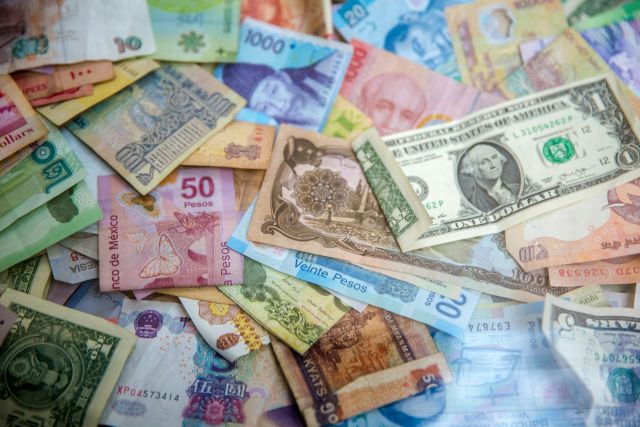
The Long Tail of Currencies Most Businesses Ignore
A handful of major currencies dominate global commerce. The US dollar, euro, British pound, and Japanese yen are easy to transact in and widely supported by payment infrastructure everywhere.
But business growth increasingly happens beyond these familiar currencies. Emerging economies across Africa, Asia, the Middle East, and Latin America operate in currencies that sit much further down the global list.
These markets represent the long tail of the currency landscape. They include:
- Nigerian naira
- Vietnamese dong
- Philippine peso
- Egyptian pound
- Kenyan shilling
- Indonesian rupiah
- Colombian peso
- Moroccan dirham
For companies expanding into these regions, the local currency isn’t a preference. It’s the currency your customers earn in, your suppliers invoice in, and your employees need to be paid in.
You can’t build a meaningful presence in Lagos, Manila, or Cairo while only accepting euros. Your customers won’t convert their money into foreign currencies just to pay you, and your operational costs will be tied to local rates.
Most payment platforms and banking infrastructure prioritize the top currencies because they’re easier and more profitable. This leaves businesses that need to operate in emerging markets struggling with limited options, high conversion fees, and fragmented solutions.
Why Reaching These Currencies Is Harder Than It Looks
Traditional banks excel at handling major currencies like the US dollar, euro, and British pound. Beyond this core group of perhaps a dozen currencies, their capabilities decline sharply.
The problems become apparent when you attempt to transact in less common currencies. You’ll typically encounter poor exchange rates that include wide spreads between buy and sell prices.
Settlement times stretch from days to weeks rather than hours. Many transactions require chains of correspondent banks, each adding fees and delays as your payment hops from institution to institution.
Common obstacles include:
- Limited liquidity for minor currencies
- No direct trading pairs (transactions often route through the dollar first)
- Restricted banking hours in local time zones
- Compliance requirements that vary drastically by country
- Some currencies simply aren’t supported by your banking infrastructure at all
For certain currencies, particularly those from smaller or emerging economies, you may find no practical way to transact through traditional banking channels. Most businesses discover these limitations only when they try to enter a new market and suddenly can’t accept payments or pay suppliers in local currency.
The cost of this friction is rarely transparent upfront. Hidden fees accumulate across currency conversion, intermediary banks, and unfavorable rates.
A transaction that appears simple on paper can consume 3-7% of its value by the time it settles, assuming it settles at all.
The Currency Coverage Gap
A business’s genuine international reach is defined by a simple question: which currencies can it actually send and receive? The gap between the currencies a company needs and the currencies its banking setup supports is a real, if rarely named, constraint on growth.
Traditional banking relationships typically cover a narrow band of major currencies. Your business bank account might handle USD, EUR, GBP, and perhaps a handful of others.
But what happens when you need to pay suppliers in Chilean pesos, collect revenue in Vietnamese dong, or settle invoices in Ghanaian cedis?
The workaround has historically been expensive. You convert through intermediaries, accept unfavorable rates, or simply avoid certain markets altogether.
Each currency you cannot reach directly is a market where you operate at a disadvantage. This gap has narrowed dramatically thanks to specialist payment platforms built for global reach.
Providers with local payment and collection capabilities now support well over 140 currencies across 30+ markets, far beyond what a traditional bank account typically reaches.
The difference is not just the number of currencies listed. It is whether you can actually receive local payments in Brazil, send payroll in Poland, or collect customer payments in Thailand without routing everything through major currency conversions.
Coverage means direct access, not theoretical availability.
How Modern Payment Platforms Are Closing the Gap
Modern payment platforms are solving the currency coverage problem through three core capabilities that traditional banks were never built to provide.
Multi-currency accounts let you hold and transact in dozens of currencies from a single interface.
Instead of opening separate accounts in each market, you maintain balances across 20, 50, or even 100+ currencies simultaneously.
This means you can receive payments in Thai baht, hold them as baht, and pay suppliers in baht without converting through USD or EUR as an intermediary step.
Local payment rails move money within a market using that country’s domestic infrastructure.
When you pay an Indonesian vendor in rupiah, the transaction clears through Indonesia’s internal network rather than routing through multiple correspondent banks across borders.
This cuts both cost and settlement time from days to minutes.
Broad currency support extends beyond the major currencies that legacy banks prioritize.
While traditional providers focus on USD, EUR, GBP, and JPY, modern platforms integrate payment systems across emerging markets.
You can now send and receive payments in Vietnamese dong, Kenyan shillings, or Colombian pesos with the same ease as dollars.
Anyone can join.
Anyone can contribute.
Anyone can become informed about their world.
"United We Stand" Click Here To Create Your Personal Citizen Journalist Account Today, Be Sure To Invite Your Friends.
Before It’s News® is a community of individuals who report on what’s going on around them, from all around the world. Anyone can join. Anyone can contribute. Anyone can become informed about their world. "United We Stand" Click Here To Create Your Personal Citizen Journalist Account Today, Be Sure To Invite Your Friends.
LION'S MANE PRODUCT
Try Our Lion’s Mane WHOLE MIND Nootropic Blend 60 Capsules
Mushrooms are having a moment. One fabulous fungus in particular, lion’s mane, may help improve memory, depression and anxiety symptoms. They are also an excellent source of nutrients that show promise as a therapy for dementia, and other neurodegenerative diseases. If you’re living with anxiety or depression, you may be curious about all the therapy options out there — including the natural ones.Our Lion’s Mane WHOLE MIND Nootropic Blend has been formulated to utilize the potency of Lion’s mane but also include the benefits of four other Highly Beneficial Mushrooms. Synergistically, they work together to Build your health through improving cognitive function and immunity regardless of your age. Our Nootropic not only improves your Cognitive Function and Activates your Immune System, but it benefits growth of Essential Gut Flora, further enhancing your Vitality.

Our Formula includes: Lion’s Mane Mushrooms which Increase Brain Power through nerve growth, lessen anxiety, reduce depression, and improve concentration. Its an excellent adaptogen, promotes sleep and improves immunity. Shiitake Mushrooms which Fight cancer cells and infectious disease, boost the immune system, promotes brain function, and serves as a source of B vitamins. Maitake Mushrooms which regulate blood sugar levels of diabetics, reduce hypertension and boosts the immune system. Reishi Mushrooms which Fight inflammation, liver disease, fatigue, tumor growth and cancer. They Improve skin disorders and soothes digestive problems, stomach ulcers and leaky gut syndrome. Chaga Mushrooms which have anti-aging effects, boost immune function, improve stamina and athletic performance, even act as a natural aphrodisiac, fighting diabetes and improving liver function. Try Our Lion’s Mane WHOLE MIND Nootropic Blend 60 Capsules Today. Be 100% Satisfied or Receive a Full Money Back Guarantee. Order Yours Today by Following This Link.


| Visits: | 1,815,011,872 |
| Stories: | 8,660,278 |
Whistler Blowers, Insiders

