
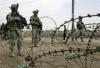
The Silent Weight of the Badge: How Cumulative Trauma Changes Officers Over Time


Policing is often described in snapshots: the foot chase, the domestic call, the violent crash, the split-second decision that becomes a headline. But the deeper story of law enforcement stress is rarely a single moment. It is the slow accumulation of exposure—repeated contact with danger, human suffering, and responsibility—layered over years. Cumulative trauma is not simply “having a bad day at work.” It is what happens when the nervous system, the conscience, and the body absorb thousands of smaller shocks, many of them never spoken aloud, until the officer begins to change in ways that are difficult to notice from the outside and even harder to name from the inside. Research consistently shows that police stress is associated with both psychological outcomes (such as PTSD symptoms, depression, and burnout) and physical consequences (such as disrupted sleep and cardiovascular risk), shaping not only how officers feel, but how they think, decide, relate, and endure. (PMC)
Cumulative trauma rarely arrives with a label. Early in a career, the body often interprets stress as energy: heightened alertness, sharper scanning, a readiness to act. Over time, that same arousal can become chronic—less like readiness and more like a stuck accelerator. One major reason is repetition. Officers do not just witness traumatic scenes; they return to work the next day, and the next, often without adequate decompression. The brain learns patterns: certain tones of voice, certain smells, certain environments become triggers for vigilance. Researchers studying police and other first responders emphasize that PTSD risk is shaped not only by what happens, but by how the officer’s body reacts in the moment (for example, panic-like reactions during the event) and how the officer processes and copes afterward. In other words, cumulative trauma is not weakness—it is a predictable outcome when intense exposures pile up faster than recovery. (PubMed)
Two real-life situations illustrate how cumulative trauma can reshape an officer’s life.
First, consider the story reported by the Associated Press of Joseph William Holsopple, an Ohio officer whose life began to unravel after a 2015 use-of-force incident in which a mentally ill man died. Although the force was deemed justified, his records and those around him reflected concerns about possible PTSD-related changes and escalating alcohol misuse; he was later fired for reporting to work intoxicated, and he died in 2020 from alcoholism. The details are painful precisely because they show cumulative trauma doing what it often does: it does not always explode immediately—it erodes, quietly, while the officer keeps showing up. (AP News)
Second, look at the public reporting on San Antonio SWAT officer Rhett Shoquist, who returned to duty after a severe shooting injury that cost him an eye. The story describes not only the physical recovery, but ongoing emotional challenges, including PTSD symptoms, alongside the role of family, teammates, and a wellness unit in supporting his return. This is a different arc than Holsopple’s, but it highlights the same core truth: trauma does not end when the scene ends. It continues as adaptation—sometimes supported and integrated, sometimes avoided and carried alone. (San Antonio Express-News)
Cumulative trauma changes officers in at least five overlapping ways.
First, it changes attention. Vigilance is adaptive in dangerous environments, but chronic hypervigilance is exhausting. Officers may scan constantly even off duty, struggle to relax in crowds, or interpret ordinary ambiguity as threat. That constant readiness can narrow perception—useful in a fight, but costly in relationships and restorative sleep. Over time, the nervous system can become less flexible, shifting from situational alertness to persistent tension. (PMC)
Second, it changes emotion. Policing culture often rewards emotional control, but long-term exposure can create emotional constriction: officers feel “flat,” detached, or numb. This is not a lack of compassion; it is frequently a protective strategy. The trouble is that numbing rarely stays contained. It can spill into home life, making connection feel effortful and joy feel distant. At the other extreme, cumulative trauma can lead to irritability and anger—often less about temperament than about a nervous system that is depleted and easily flooded. (PMC)
Third, it changes meaning. Many officers enter policing with a strong service identity. Over time, repeated exposure to cruelty, exploitation, or preventable harm can create moral distress: the painful gap between what an officer believes should happen and what they are able to make happen. Even when officers act lawfully and professionally, the emotional residue of events—especially those involving children, suicide, or helpless victims—can accumulate as a quiet form of grief. The IACP’s “Breaking the Silence” work underscores that mental health challenges, including suicidal ideation and behavior, exist in the profession and are worsened by stigma and a culture that discourages seeking help.
Fourth, it changes the body. Trauma is not only a mental event; it is physiological. Stressful law enforcement duties have been associated with markedly higher risk of sudden cardiac death compared with routine or non-emergency duties, underscoring how acute stress loads the cardiovascular system. Over years, disrupted sleep, shift work, and chronic stress can compound health risk and reduce resilience—making psychological recovery harder because the body is already running a deficit. (PMC)
Fifth, it changes risk. Suicide in law enforcement is difficult to measure precisely, but occupational mortality analyses have found elevated suicide risk patterns in law enforcement categories compared with the general working population in the datasets examined. This matters because cumulative trauma often expresses itself indirectly—through substance misuse, relationship breakdown, disciplinary problems, or reckless behavior—long before a crisis is visible. When an agency only responds at the breaking point, it has missed the long middle where intervention is most effective.
So what actually helps?
The evidence and the field experience point toward three practical principles: earlier, easier, and culturally normal.
Earlier means proactive mental wellness, not only post-incident counseling. The IACP strategy emphasizes culture change, early warning and prevention protocols, training, and event-response protocols—because waiting until an officer is in visible crisis is waiting too long. (LEO Near Miss)
Easier means reducing friction to care: confidential access, peer support, clinicians who understand police work, and leadership that treats mental health as part of officer safety rather than a personal flaw. If officers believe help equals punishment, they will hide until they cannot. (LEO Near Miss)
Culturally normal means supervisors and respected peers naming the reality of cumulative trauma out loud. Not with slogans, but with routines: normalized check-ins after high-impact calls, structured decompression, sleep protection, and policies that treat repeated exposure as an operational hazard—like hearing loss or toxic exposure—not as a character test. (PMC)
The silent weight of the badge is not inevitable in its worst form. Trauma exposure is part of the job; carrying it alone should not be. The goal is not to turn officers into patients. The goal is to keep them fully human: capable of courage without corrosion, service without self-destruction, and professionalism that lasts longer than the body’s ability to absorb what it was never designed to hold indefinitely.
References (APA)
International Association of Chiefs of Police. (2017). Breaking the silence on law enforcement suicides: IACP National Symposium on Law Enforcement Officer Suicide and Mental Health. Office of Community Oriented Policing Services.
Marmar, C. R., McCaslin, S. E., Metzler, T. J., Best, S., Weiss, D. S., Fagan, J., … Neylan, T. (2006). Predictors of posttraumatic stress in police and other first responders. Annals of the New York Academy of Sciences, 1071, 1–18.
Robinson, C. F., Shen, R., & Violanti, J. M. (2013). Law enforcement suicide: A national analysis. International Journal of Emergency Mental Health and Human Resilience, 15(4), 289–297.
Varvarigou, V., Farioli, A., Korre, M., Sato, S., Dahabreh, I. J., & Kales, S. N. (2014). Law enforcement duties and sudden cardiac death among police officers in United States: Case distribution study. BMJ, 349, g6534.
Violanti, J. M. (2017). Police stressors and health: A state-of-the-art review. Policing: An International Journal, 40(4), 642–656.
Violanti, J. M., Owens, S. L., Fekedulegn, D., Ma, C. C., Andrew, M. E., & Charles, L. E. (2018). Police stressors and PTSD: Moderating effects of coping. Journal of Police and Criminal Psychology, 33, 271–282.
Associated Press. (2024, October 8). The cumulative stress of policing has public safety consequences for law enforcement officers, too.
Source: http://criminal-justice-online.blogspot.com/2025/12/the-silent-weight-of-badge-how.html
Anyone can join.
Anyone can contribute.
Anyone can become informed about their world.
"United We Stand" Click Here To Create Your Personal Citizen Journalist Account Today, Be Sure To Invite Your Friends.
Before It’s News® is a community of individuals who report on what’s going on around them, from all around the world. Anyone can join. Anyone can contribute. Anyone can become informed about their world. "United We Stand" Click Here To Create Your Personal Citizen Journalist Account Today, Be Sure To Invite Your Friends.
LION'S MANE PRODUCT
Try Our Lion’s Mane WHOLE MIND Nootropic Blend 60 Capsules
Mushrooms are having a moment. One fabulous fungus in particular, lion’s mane, may help improve memory, depression and anxiety symptoms. They are also an excellent source of nutrients that show promise as a therapy for dementia, and other neurodegenerative diseases. If you’re living with anxiety or depression, you may be curious about all the therapy options out there — including the natural ones.Our Lion’s Mane WHOLE MIND Nootropic Blend has been formulated to utilize the potency of Lion’s mane but also include the benefits of four other Highly Beneficial Mushrooms. Synergistically, they work together to Build your health through improving cognitive function and immunity regardless of your age. Our Nootropic not only improves your Cognitive Function and Activates your Immune System, but it benefits growth of Essential Gut Flora, further enhancing your Vitality.

Our Formula includes: Lion’s Mane Mushrooms which Increase Brain Power through nerve growth, lessen anxiety, reduce depression, and improve concentration. Its an excellent adaptogen, promotes sleep and improves immunity. Shiitake Mushrooms which Fight cancer cells and infectious disease, boost the immune system, promotes brain function, and serves as a source of B vitamins. Maitake Mushrooms which regulate blood sugar levels of diabetics, reduce hypertension and boosts the immune system. Reishi Mushrooms which Fight inflammation, liver disease, fatigue, tumor growth and cancer. They Improve skin disorders and soothes digestive problems, stomach ulcers and leaky gut syndrome. Chaga Mushrooms which have anti-aging effects, boost immune function, improve stamina and athletic performance, even act as a natural aphrodisiac, fighting diabetes and improving liver function. Try Our Lion’s Mane WHOLE MIND Nootropic Blend 60 Capsules Today. Be 100% Satisfied or Receive a Full Money Back Guarantee. Order Yours Today by Following This Link.


| Visits: | 1,772,293,834 |
| Stories: | 8,573,669 |
Whistler Blowers, Insiders

