

Is your AI conscious?

If I ask you, “How does the visual system work?” you will tell me about light waves, the eye, and the brain translating those light waves into what we see. You will explain that we believe we see a wall, a baseball, or a painting, but what we actually “see” is the brain’s translation of light waves.
If I ask you, “Why do we see color, you’ll give me essentially the same answer: The brain’s translation of light waves.
But then, if I ask, “Why do I get a special feeling from seeing red,” will the answer –which should be exactly the same answer as before (i.e., the brain’s translation) – instead become something like, “an inner, subjective feeling.”?
Why do we understand everything about seeing as being our brain’s translation, but can’t understand an emotion exactly the same way?
Same question about pain. Pain is easily understood. But the emotions about pain? Not understood. I keep beating this same horse, but it continues to puzzle me.
I just read another article about consciousness in the October 17 New Scientist Magazine (“I think, therefore I am”), and it went on and on about the mystery of consciousness, and whether other animals have it. Few ask whether a dog feels pain. We know it does. But then we ask whether a dog is conscious!
Here are some excerpts:
AI company Anthropic published a paper arguing that Claude had recently developed something akin to the human mind’s “global workspace”. According to one leading hypothesis, this is the seat of consciousness – where sights and sounds, thoughts and feelings pop into awareness.
Its presence in Anthropic’s chatbot could therefore suggest a form of artificial consciousness. While it still seems highly unlikely that AIs have mental experiences like you or I, these emergent properties may allow us to understand what the differences between us are.
Exactly how we should interpret potential signs of consciousness in humans, animals or machines depends, in part, on a distinction outlined in the 1990s. An iguana may lazily walk into my path on the islands without me being aware of its presence, until I suddenly realise that I am about to step on its tail.
Only then does this information pop into my mind so I can speak about it. Some define this availability of information for report and reasoning as “access consciousness”.
“Phenomenal consciousness”, on the other hand, describes the subjective experience itself: what it is like to be on the island and see the iguana’s mottled green scales or its sudden movements towards safety.
So now, we not only have mysterious consciousness, but two mysterious versions of consciousness, neither of which we can precisely locate in the brain.
Many neuroscientists and philosophers believe that the global neuronal workspace theory (GNWT) is best placed to address access consciousness.
In our walks on the islands, conference attendees speculate about whether the iguanas, sea lions and blue-footed boobies we see are capable of thought and feeling. Unlike humans, you can’t ask these creatures to report their inner experiences.
But if GNWT is correct, you might expect them to also have global workspaces.
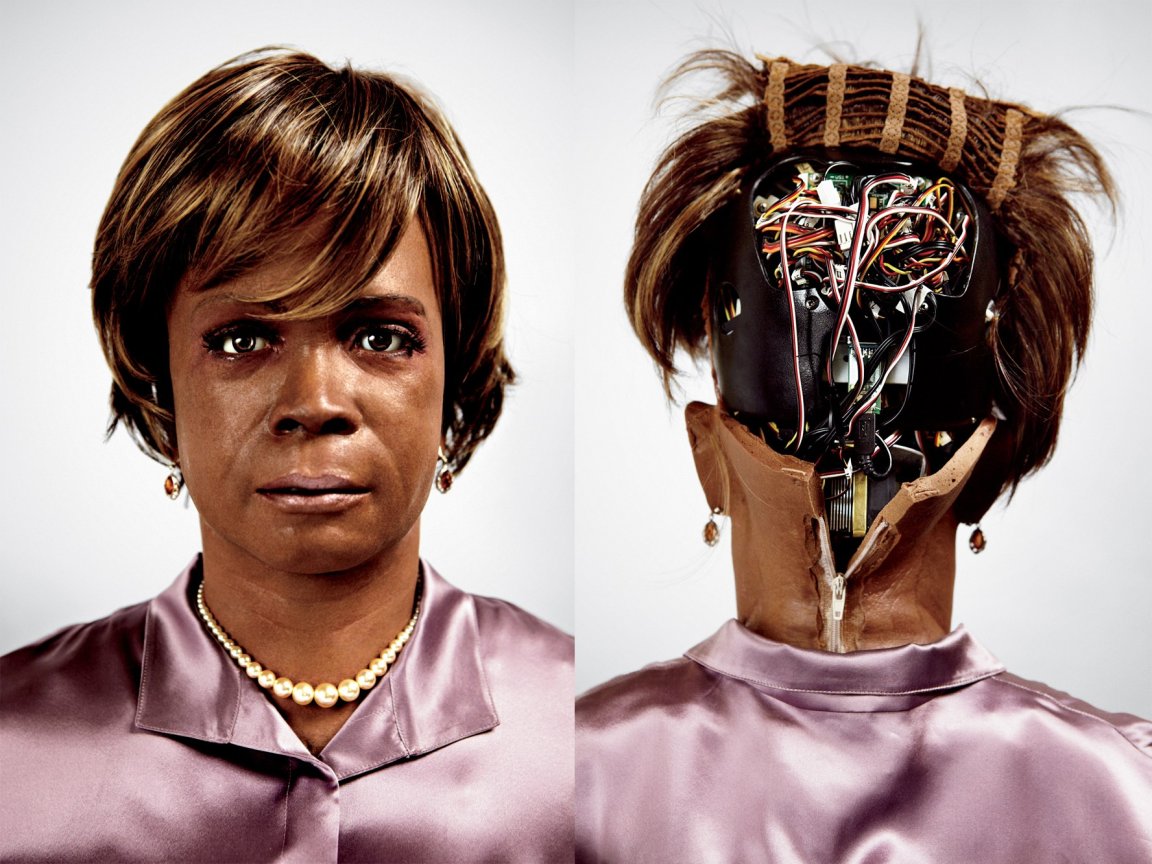
This is the sort of speculation that has occupied minds for many centuries: Is a human fetus conscious? A newborn human? A chimpanzee? A dog? A bird? A bee? An ant? A tree? An amoeba? An AI computer? Where does consciousness begin and end?
It’s all so . . . mysterious.
And the answer is one we already know but refuse to accept. It’s the brain’s response to stimuli. Why do we feel fear? Why do we feel hunger? What about pain? Lust? These, and all other “inner feelings” are simply the brain’s translations of, and responses to, stimuli — coming from within and outside our bodies.
A feeling is part of the body’s response to a stimulus, not some mysterious additional phenomenon that requires an entirely different explanation. Touching a hot stove produces a complex response: nerve signals, brain activity, withdrawal of the hand, memory formation, and the unpleasant feeling we call pain.
Hunger is the brain’s translation of complex signals coming from various parts of the body. So is pain. So is lust.
Unpleasantness is not something mysteriously added to response. It is part of response.
And evolution helps explain why pain, for instance, generally is unpleasant. Organisms that respond to tissue damage by avoiding its causes have a survival advantage. People born with congenital insensitivity to pain often suffer serious injuries because they lack that protective warning system. Some die prematurely.
We accept that the brain produces visual recognition, memory, fear, pleasure, and pain. Yet when we group some of those responses under the heading “subjective experience,” (aka, “the hard problem”), we treat them as an entirely different category of existence.

So long as we insist that there is something metaphysical called “inner, subjective feelings” to describe consciousness, the argument will continue for another dozen centuries or more. Is a two-month fetus conscious? A nine-month fetus? A one-year old human? A person having breathed ether? A drunk person? An elephant? A bacterium? Where does consciousness begin and where does it end?
Consciousness is not an “on/off switch. It is a range, from more or less conscious. Consciousness is a measure of any entity’s responses to stimuli. The more varied and complex the stimuli and responses, the more complex is the entity.
So, for any discussion about consciousness, we begin with the fact that all things are conscious to some degree, and there are two questions that should be addressed: How intense, varied, and complex were the stimuli and how intense, varied and complex were the responses?
By that measure, Claude is moderately conscious. It’s stimuli are relatively basic, while it’s responses may be somewhat more complex, but less than a dog.
Rodger Malcolm Mitchell
Source: https://mythfighter.com/2026/11/23/is-your-ai-conscious/
Anyone can join.
Anyone can contribute.
Anyone can become informed about their world.
"United We Stand" Click Here To Create Your Personal Citizen Journalist Account Today, Be Sure To Invite Your Friends.
Before It’s News® is a community of individuals who report on what’s going on around them, from all around the world. Anyone can join. Anyone can contribute. Anyone can become informed about their world. "United We Stand" Click Here To Create Your Personal Citizen Journalist Account Today, Be Sure To Invite Your Friends.
LION'S MANE PRODUCT
Try Our Lion’s Mane WHOLE MIND Nootropic Blend 60 Capsules
Mushrooms are having a moment. One fabulous fungus in particular, lion’s mane, may help improve memory, depression and anxiety symptoms. They are also an excellent source of nutrients that show promise as a therapy for dementia, and other neurodegenerative diseases. If you’re living with anxiety or depression, you may be curious about all the therapy options out there — including the natural ones.Our Lion’s Mane WHOLE MIND Nootropic Blend has been formulated to utilize the potency of Lion’s mane but also include the benefits of four other Highly Beneficial Mushrooms. Synergistically, they work together to Build your health through improving cognitive function and immunity regardless of your age. Our Nootropic not only improves your Cognitive Function and Activates your Immune System, but it benefits growth of Essential Gut Flora, further enhancing your Vitality.

Our Formula includes: Lion’s Mane Mushrooms which Increase Brain Power through nerve growth, lessen anxiety, reduce depression, and improve concentration. Its an excellent adaptogen, promotes sleep and improves immunity. Shiitake Mushrooms which Fight cancer cells and infectious disease, boost the immune system, promotes brain function, and serves as a source of B vitamins. Maitake Mushrooms which regulate blood sugar levels of diabetics, reduce hypertension and boosts the immune system. Reishi Mushrooms which Fight inflammation, liver disease, fatigue, tumor growth and cancer. They Improve skin disorders and soothes digestive problems, stomach ulcers and leaky gut syndrome. Chaga Mushrooms which have anti-aging effects, boost immune function, improve stamina and athletic performance, even act as a natural aphrodisiac, fighting diabetes and improving liver function. Try Our Lion’s Mane WHOLE MIND Nootropic Blend 60 Capsules Today. Be 100% Satisfied or Receive a Full Money Back Guarantee. Order Yours Today by Following This Link.


| Visits: | 1,839,488,405 |
| Stories: | 8,742,366 |
Whistler Blowers, Insiders