

Do I Need a Dedicated Desk for Remote Work?

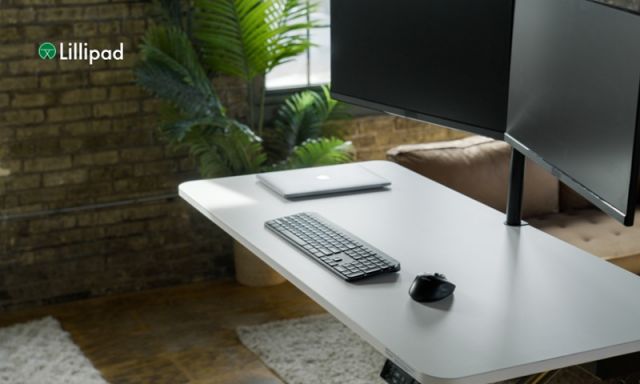
A dedicated desk for remote work is not a luxury item. It is a functional boundary that separates focused work from the rest of domestic life. The question is not whether you need a desk but whether the desk you use is set up in a way that supports consistent, productive output. A work from home desk setup built around a fixed location, reliable equipment, and clear visual separation from living space changes how the brain signals between work mode and rest mode. This article covers what the research says, what desk features actually matter, and when a purpose-built solution outperforms improvised alternatives.
What Does Research Say About Dedicated Home Workspaces?
The connection between physical workspace design and remote work outcomes is well documented. A systematic review published in PMC examining 1,219 remote workers during the pandemic found that employees with a dedicated home workroom experienced fewer depressive symptoms, higher sleep quality, greater productivity, and stronger engagement compared to those working from a shared living space or bedroom corner.
The same review found that satisfaction with daylight, lighting quality, and greenery in the workspace were directly linked to mental health outcomes among remote workers. Privacy within the workspace was identified as one of the strongest predictors of both concentration and wellbeing. These findings point to a consistent conclusion: the physical qualities of a dedicated workspace have measurable effects on output and mental state, independent of the type of work being performed.
What Happens Without a Dedicated Workspace?
Working from a kitchen table, sofa, or bed creates what researchers call boundary blurring, the collapse of the physical signal that separates work from non-work life. The brain uses environmental cues to shift between cognitive states. When the same surface serves meals, leisure, and focused work, those cues become inconsistent and context-switching becomes harder.
A systematic review of 48 studies on remote work and work-life balance, published in PMC, identified workspace limitations as one of the primary stressors for remote workers. Participants who lacked a dedicated work area reported higher work-family conflict, difficulty concentrating, and increased feelings of being unable to switch off after working hours. Those with adequate, designated workspace adjusted more successfully to the remote work arrangement and reported better balance between professional and personal responsibilities.
Does Desk Ergonomics Affect Output in a Home Setting?
Yes, and the effect is direct. Poor ergonomics create physical discomfort that competes with concentration during working hours. A desk that is too high forces shoulder elevation. One that is too low causes neck flexion. Both generate postural fatigue within 90 to 120 minutes of sustained computer use.
A proper work from home desk setup positions the keyboard at elbow height with the forearms parallel to the floor and the top of the monitor at or just below eye level. This configuration keeps the cervical spine in a neutral position and reduces the muscle recruitment needed to maintain posture. When the body is working to maintain a poorly supported position, cognitive resources are diverted from the task. A desk that adjusts to correct ergonomic height both sitting and standing removes that drain entirely.
Is a Foldable WFH Desk a Viable Option for Small Spaces?
For remote workers in studio apartments, shared living situations, or rooms without a spare corner, a permanent desk creates a permanent workspace intrusion. The desk stays visible, the equipment stays out, and the visual cue that work is ongoing never fully disappears.
A foldable desk solves this by making the workspace removable. The Lillipad WFH desks collapse to 6 inches and slide under a bed, behind a couch, or into a closet when the workday ends. When deployed, the Standard model provides a 46.25″ x 24″ work surface large enough for a full dual-monitor setup, laptop, and peripherals. This allows a remote worker in a small home to have a complete, ergonomic, height-adjustable workstation during work hours and a clear living space the rest of the time.
What Desk Features Matter Most for Remote Work?
Not all desks support sustained remote work equally. These are the features that have the most direct impact on daily output:
- Height adjustability: A desk fixed at the wrong height forces the user to adapt their posture rather than the equipment adapting to them. Adjustability covers both sitting and standing positions.
- Surface size: A minimum of 40 inches wide accommodates a single-monitor setup with keyboard, mouse, and notebook. For dual monitors, 46 inches is the practical minimum.
- Stability at working height: A desk that wobbles during typing creates micro-interruptions. Certification to UL962 confirms the desk has passed stability testing.
- Cable management: Visible cable clutter is a low-level cognitive stressor. Built-in power outlets at desk level eliminate floor-to-desk cable runs entirely.
- Storability: For small-space remote workers, a desk that can be put away supports the physical boundary between work and rest that research consistently links to better wellbeing outcomes.
How Does Desk Choice Connect to Work-Life Separation?
Physical boundary management is one of the most studied aspects of remote work psychology. A PMC review of remote workers across multiple countries found that participants who could create physical separation between their workspace and living space reported lower work-family conflict, better recovery from work-related stress, and higher overall wellbeing scores. Those without physical separation compensated through behavioral tactics closing laptops at specific times, leaving the house for break. But these strategies were less effective than structural separation.
A desk that folds away creates structural separation without requiring a dedicated room. The Lillipad WFH desks support this directly: the workspace exists when the desk is deployed and stops existing when it is folded and stored. That physical on/off switch replaces the cognitive effort of mentally separating work from home when the desk is always visible.
When Is an Improvised Setup Enough?
An improvised setup: a dining table, a laptop on a couch works for occasional or short-duration remote work. It stops working when remote work becomes the primary mode of daily output. The physical discomfort compounds over weeks, the boundary blurring accumulates, and the productivity effects that research documents in dedicated workspace studies begin to reverse.
The tipping point is not a specific number of hours but a pattern. When the improvised surface causes recurring posture discomfort, when the visible presence of work equipment disrupts rest, or when context-switching between work and non-work states becomes difficult, those are the signals that a dedicated work from home desk setup is no longer optional. For small-space remote workers, a purpose-built foldable desk that adjusts in height and stores completely flat addresses all three signals without requiring a permanent room or permanent floor space.
Anyone can join.
Anyone can contribute.
Anyone can become informed about their world.
"United We Stand" Click Here To Create Your Personal Citizen Journalist Account Today, Be Sure To Invite Your Friends.
Before It’s News® is a community of individuals who report on what’s going on around them, from all around the world. Anyone can join. Anyone can contribute. Anyone can become informed about their world. "United We Stand" Click Here To Create Your Personal Citizen Journalist Account Today, Be Sure To Invite Your Friends.
LION'S MANE PRODUCT
Try Our Lion’s Mane WHOLE MIND Nootropic Blend 60 Capsules
Mushrooms are having a moment. One fabulous fungus in particular, lion’s mane, may help improve memory, depression and anxiety symptoms. They are also an excellent source of nutrients that show promise as a therapy for dementia, and other neurodegenerative diseases. If you’re living with anxiety or depression, you may be curious about all the therapy options out there — including the natural ones.Our Lion’s Mane WHOLE MIND Nootropic Blend has been formulated to utilize the potency of Lion’s mane but also include the benefits of four other Highly Beneficial Mushrooms. Synergistically, they work together to Build your health through improving cognitive function and immunity regardless of your age. Our Nootropic not only improves your Cognitive Function and Activates your Immune System, but it benefits growth of Essential Gut Flora, further enhancing your Vitality.

Our Formula includes: Lion’s Mane Mushrooms which Increase Brain Power through nerve growth, lessen anxiety, reduce depression, and improve concentration. Its an excellent adaptogen, promotes sleep and improves immunity. Shiitake Mushrooms which Fight cancer cells and infectious disease, boost the immune system, promotes brain function, and serves as a source of B vitamins. Maitake Mushrooms which regulate blood sugar levels of diabetics, reduce hypertension and boosts the immune system. Reishi Mushrooms which Fight inflammation, liver disease, fatigue, tumor growth and cancer. They Improve skin disorders and soothes digestive problems, stomach ulcers and leaky gut syndrome. Chaga Mushrooms which have anti-aging effects, boost immune function, improve stamina and athletic performance, even act as a natural aphrodisiac, fighting diabetes and improving liver function. Try Our Lion’s Mane WHOLE MIND Nootropic Blend 60 Capsules Today. Be 100% Satisfied or Receive a Full Money Back Guarantee. Order Yours Today by Following This Link.


| Visits: | 1,836,223,783 |
| Stories: | 8,727,284 |
Whistler Blowers, Insiders

