

What Your Foot Odor Reveals About Your Health

Article originally published on The Lost Herbs!
You take off your shoes after a long day and the smell hits you. You’re embarrassed. You wonder if anyone else noticed. You buy fancy powders and sprays that don’t really work.
Here’s the truth: almost everyone’s feet smell sometimes. You have about 250,000 sweat glands in your feet, more than almost anywhere else on your body. When sweat meets the bacteria that naturally live on your skin, those bacteria produce smelly acids. Warm, damp feet in closed shoes create the perfect environment for this to happen.
Most foot odor is just a hygiene issue, not a health crisis. But persistent, unusual odors—or odor that comes with other symptoms—can signal something that needs attention.
Let me show you what causes foot odor, when to worry, and the natural soaks and remedies that actually work.
If you are in a hurry, you can watch this quick presentation or you can just go through all the extra information offered in the article below:
What Actually Causes Stinky Feet

Your feet sweat. Bacteria on your skin break down that sweat and release smelly compounds. Add tight shoes, synthetic socks, and hours on your feet, and you’ve got the perfect recipe for odor.
Hormones, certain medications, and conditions like diabetes or thyroid problems can increase sweating, which means more odor. But most of the time, foot odor just means your feet need better care and more air.
But the most common and worst are fungal infections like athlete’s foot. They make the problem worse—they produce a cheesy or yeasty smell on top of the regular sweat odor. Any foot infection, cut, or ingrown toenail can also contribute to unusual smells.
Most people treat fungal infections like they’re just a surface problem. Cream on, problem gone… until it comes back.
That’s because fungus doesn’t just sit on your skin—it takes advantage of what’s going on inside your body too.
That’s what surprised me when I first went through the fungal infection protocol from Nicole Apelian.
It doesn’t just talk about athlete’s foot… it goes deeper: oral thrush, yeast infections, nail fungus, even full candida overgrowth.
And instead of random tips, it actually shows you what to do throughout the day—what to eat, what to apply, which herbs to use, how to support your body from the inside out. It’s the kind of structure you don’t find online.
Honestly, it’s the book I reach for whenever something like this shows up. I’ll leave it here for you.
When Foot Odor Means Something More
Most foot odor is harmless.
But if the smell is unusually strong, chemical-like, or doesn’t go away with proper care, it can signal something deeper. Especially if it comes with pain, swelling, or other symptoms. In those cases, don’t ignore it; get it checked.
Prevention: The Basics That Actually Matter
Simple hygiene prevents most foot odor problems. Here’s what works:
Wash and dry daily. Wash your feet every day with soap, and dry them completely—especially between the toes. Damp feet breed bacteria and fungus.
Trim your nails. Keep toenails short and clean. Long nails trap dirt and bacteria.
Rotate your shoes. Don’t wear the same shoes two days in a row. Let them air out completely between wears. Sprinkle baking soda inside overnight to absorb moisture.
Most people try to fix foot fungus from the outside… creams, sprays, hoping something sticks.
But there’s this one thing Nicole shows that completely flipped how I look at it.
A simple herbal powder you put in your socks. That’s it.
But what it actually does is draw out moisture, fight fungus, and keep your feet dry all day—right where the problem starts.

It’s one of those remedies you wouldn’t think of… until you see it work.
She shows exactly how to make it inside her academy, step by step.
I’ll leave it here if you want to learn it properly.
Choose the right socks. Cotton or wool socks breathe better than synthetic. Change them daily, or twice daily if your feet sweat heavily.
Go barefoot when you can. At home, let your feet air out. Fresh air is the enemy of foot odor.
Wear sandals in public showers. Locker rooms and gym showers are breeding grounds for athlete’s foot fungus. Protect your feet.
If you exercise or work on your feet all day, wipe them off and change socks as soon as you can. Don’t let sweat sit on your skin for hours.
Natural Foot Soaks That Work
Foot soaks aren’t just spa luxury—they actually reduce odor-causing bacteria and fungus. Here are the ones backed by evidence.
Vinegar Soak: The Odor Killer
Vinegar’s acetic acid kills odor-causing germs and changes your skin’s pH to discourage fungus and bacteria. Research confirms it works.
Recipe:
- 1 cup apple cider or white vinegar
- 2 cups warm water
Mix in a basin. Soak feet for 15-20 minutes. Pat completely dry, especially between toes.
This ratio is gentle enough not to burn skin if you don’t have open wounds. Add 5-10 drops of tea tree oil for extra antifungal power.
Vinegar soaks don’t cure athlete’s foot on their own, but they make the environment hostile to the fungus and bacteria causing the smell.
Epsom Salt Soak: For Tired, Sore Feet
Epsom salt (magnesium sulfate) soothes tired feet, draws out moisture, and softens rough skin. Smooth skin has fewer cracks where bacteria hide.
Recipe:
- 1/2 cup Epsom salt
- Warm water to fill a basin
Dissolve salt in water. Soak feet for 10-15 minutes. Dry completely and apply moisturizer to prevent cracks.
Don’t soak every night—overdoing it can dry your skin too much, especially if you have diabetes. Once or twice a week is plenty for maintenance.
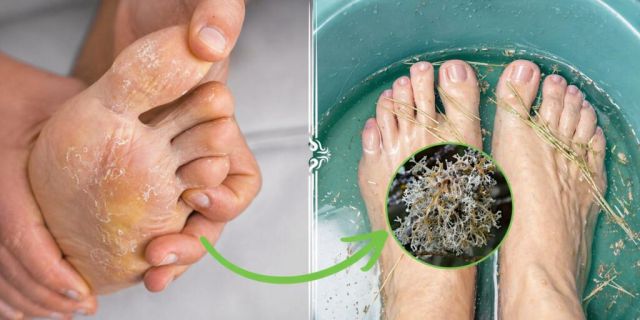
Usnea: The Powerhouse Lichen
If you can find usnea (Old Man’s Beard lichen), it’s exceptionally effective. Usnea contains usnic acid, which research confirms strongly inhibits bacteria and some fungi.
Apply usnea tincture or salve directly to toenails and skin to handle stubborn infections. Some herbalists swear by it for persistent foot fungus that won’t respond to other treatments.
Usnea isn’t just antifungal. Its compounds—like usnic acid—are antibacterial, antiviral, and anti-inflammatory too. That’s why people have used it for everything from wounds… to sore throats… even disinfecting surfaces.
It’s that broad. And when you think about your feet—warm, dark, humid… it’s basically a playground for microbes.
That’s exactly where I use it. Between the toes. Right where things start.
I used to forage it myself. But honestly… identifying it, harvesting it, extracting it properly—it takes time. Lately I’ve just been using a ready-made usnea tincture spray. Same potency. No guesswork.
And for the price? It’s not even worth the hassle of doing it myself anymore.
I’ll leave it here if you want something simple that actually works.
Tea Tree Oil: The Natural Antifungal
Tea tree oil has solid research backing its antifungal properties. Studies show it clears athlete’s foot in a significant number of people when applied regularly.
Recipe: Add 5-10 drops of pure tea tree oil to either the vinegar or Epsom salt soak above. The oil must be diluted—full-strength tea tree can irritate skin.
You can also mix a few drops of tea tree oil with coconut oil and massage into clean, dry feet before bed.
Herbal Tea Soak: Gentle and Soothing
Steep herbal tea bags (or dried herbs) in hot water, cool slightly, and use for a foot soak. Chamomile, rosemary, thyme, and peppermint all have antimicrobial properties and soothe skin.
Recipe:
- 2-3 tablespoons dried herbs (rosemary, thyme, mint, or lavender)
- 2 cups hot water
Steep for 10 minutes. Pour into foot basin and add cool water until comfortable temperature. Soak for 15 minutes.
Rosemary releases oils that deter fungus. Thyme and oregano have proven antifungal activity. Chamomile soothes irritated skin.
There’s only so much I can share in one article. First, because there’s not enough space, and second, they’d probably ban me for what I’d share.
Thats why… some of the most effective remedies don’t even make it online.
But I’ll tell you the source where I learned a couple more remedies besides the one I knew and already shared here. Inside this book, you’ll find the Nail Fungus Herbal Cream, the Anti-Fungal Powder for Toenail Fungus, the Anti-Fungal Salve, and dozens of other remedies for skin problems and wounds that go far beyond basic DIY fixes.
Everything is laid out step by step. Pictures, measurements, exactly how to make them, how to use them.
It’s not just one remedy… it’s an entire system you can keep on your shelf and come back to whenever something shows up.
If you’re serious about handling these things naturally instead of guessing every time, this is one of those resources you’ll actually use.
The After-Soak Routine
Here’s what makes foot soaks actually work long-term:
Dry completely. Especially between your toes. Damp feet are stinky feet, no matter how good your soak was.
Moisturize. After drying, apply a light layer of coconut oil mixed with a drop of lavender or tea tree oil. This keeps skin healthy and slightly acidic, which discourages bacteria.
Powder before socks. A light dusting of foot powder or cornstarch keeps feet dry inside shoes.
Give it time. One soak won’t cure chronic foot odor. Do this 2-3 times per week for a few weeks and you’ll notice real improvement.
After you’ve been fighting fungus, your skin is not in great shape.
It’s dry, irritated, sometimes even cracked… because you’ve basically been trying to kill something on it. That’s where the right kind of salve matters.
Not synthetic creams, obviously. I only recommend real plants like yarrow, calendula, plantain, and balsam poplar that actually help your skin recover.
You can make something like this yourself, sure. But it takes time—infusions, ratios, getting the texture right.
 Or you can just have it ready when you need it. For something that goes on your skin daily, I’d rather keep it simple and clean.
And honestly, for what it offers, it’s cheaper than the time and effort you’d spend making it yourself.
This is the herbal salve I use myself and want to share with you.
Safety Notes
Foot soaks are generally safe. Use common sense: dilute acids and essential oils properly, don’t soak deep cuts or open wounds, and stop if you feel burning.
If you have diabetes, poor circulation, or numbness in your feet, be extra careful. Check water temperature carefully—you might not feel if it’s too hot. Inspect your feet daily for cuts or changes. Talk to your doctor before trying new foot treatments.
If you have a chronic wound, very dry cracked skin, or persistent foot odor despite good care, see a doctor. Don’t try to treat serious infections at home.
The Bottom Line
Foot odor is usually just a message: wash more carefully, dry more thoroughly, and let your feet breathe. It’s not something to be embarrassed about—it’s something to address with simple, effective care.
Regular washing and drying, breathable footwear, and occasional herbal foot soaks keep the smell at bay. Vinegar kills odor-causing bacteria. Epsom salt soothes and softens. Tea tree oil fights fungus. Herbal soaks add gentle antimicrobial power.
Your feet carry you through life. They deserve care and attention. With these natural remedies, you can keep them healthy, comfortable, and odor-free.
Anyone can join.
Anyone can contribute.
Anyone can become informed about their world.
"United We Stand" Click Here To Create Your Personal Citizen Journalist Account Today, Be Sure To Invite Your Friends.
Before It’s News® is a community of individuals who report on what’s going on around them, from all around the world. Anyone can join. Anyone can contribute. Anyone can become informed about their world. "United We Stand" Click Here To Create Your Personal Citizen Journalist Account Today, Be Sure To Invite Your Friends.
LION'S MANE PRODUCT
Try Our Lion’s Mane WHOLE MIND Nootropic Blend 60 Capsules
Mushrooms are having a moment. One fabulous fungus in particular, lion’s mane, may help improve memory, depression and anxiety symptoms. They are also an excellent source of nutrients that show promise as a therapy for dementia, and other neurodegenerative diseases. If you’re living with anxiety or depression, you may be curious about all the therapy options out there — including the natural ones.Our Lion’s Mane WHOLE MIND Nootropic Blend has been formulated to utilize the potency of Lion’s mane but also include the benefits of four other Highly Beneficial Mushrooms. Synergistically, they work together to Build your health through improving cognitive function and immunity regardless of your age. Our Nootropic not only improves your Cognitive Function and Activates your Immune System, but it benefits growth of Essential Gut Flora, further enhancing your Vitality.

Our Formula includes: Lion’s Mane Mushrooms which Increase Brain Power through nerve growth, lessen anxiety, reduce depression, and improve concentration. Its an excellent adaptogen, promotes sleep and improves immunity. Shiitake Mushrooms which Fight cancer cells and infectious disease, boost the immune system, promotes brain function, and serves as a source of B vitamins. Maitake Mushrooms which regulate blood sugar levels of diabetics, reduce hypertension and boosts the immune system. Reishi Mushrooms which Fight inflammation, liver disease, fatigue, tumor growth and cancer. They Improve skin disorders and soothes digestive problems, stomach ulcers and leaky gut syndrome. Chaga Mushrooms which have anti-aging effects, boost immune function, improve stamina and athletic performance, even act as a natural aphrodisiac, fighting diabetes and improving liver function. Try Our Lion’s Mane WHOLE MIND Nootropic Blend 60 Capsules Today. Be 100% Satisfied or Receive a Full Money Back Guarantee. Order Yours Today by Following This Link.


| Visits: | 1,804,945,786 |
| Stories: | 8,639,785 |
Whistler Blowers, Insiders

