

Study makes a disturbing discovery inside prostate cancer tumors

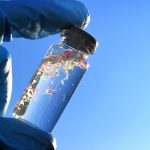 (NaturalHealth365) Microplastics have already been found in human blood, breast milk, lungs, and even the placenta. Now, researchers have detected them somewhere even more alarming – deep inside prostate cancer tumors. And what they found there raises serious questions about a risk factor for cancer that most men have never been told to think about.
A study from NYU Langone Health presented at the American Society of Clinical Oncology’s Genitourinary Cancers Symposium in February 2026 analyzed prostate tissue from ten men who had undergone surgery to remove the entire organ. Researchers identified plastic particles in 90% of tumor samples.
Moreover, cancerous tissue contained roughly 2.5 times more plastic than nearby healthy tissue – approximately 40 micrograms of plastic per gram of tumor compared with 16 micrograms per gram in benign tissue.
Why this study is unlike anything researchers have done before
Past research has detected microplastics in nearly every human organ. But this is the first Western study to directly measure plastic particles inside prostate tumor tissue and to compare concentrations between cancerous and healthy tissue from the same patients. That comparison is what makes the finding significant.
Researchers used two independent detection methods to ensure accuracy. Visual inspection paired with Raman microscopy identified and measured individual particles. A second technique – Pyrolysis-Gas Chromatography/Mass Spectrometry – quantified the total plastic mass and identified the specific polymer types present. Both methods confirmed the same pattern.
Plastic accumulates in cancerous tissue at far higher concentrations than in healthy tissue. Lead researcher Dr. Stacy Loeb of NYU Grossman School of Medicine stated that the study provides important evidence that microplastic exposure may be a risk factor for prostate cancer.
Plastic is getting into the body in multiple ways
Plastic materials break down into microscopic fragments through heat, friction, and chemical exposure. These fragments – some smaller than a human cell – enter the body through food and water, inhaled air, and skin contact. Food packaged or heated in plastic containers is a particularly concentrated source. So is tap water, bottled water, and seafood from polluted waters.
Once inside the body, microplastics are not easily eliminated. Many plastic types are fat-soluble and accumulate in fatty tissue over time. Others trigger a prolonged immune response as the body attempts to clear these foreign substances.
Researchers believe this chronic immune activation may be one mechanism linking microplastic accumulation to cancer development. Over time, sustained inflammation in prostate tissue can damage cells and drive the kind of genetic changes that allow cancer to take hold.
This is not the first time plastic has shown up in the human body
This study did not stand alone. A landmark study published in The New England Journal of Medicine in 2024 found that patients with microplastics in their arterial plaque were 4.5 times more likely to experience a serious cardiovascular event. Together, these findings point toward microplastic accumulation as a systemic health threat – one that builds silently across organs and decades before clinical consequences become apparent.
Prostate cancer is the most common cancer among men in the United States, affecting one in eight. The causes have traditionally been attributed to age, genetics, and hormonal factors. But environmental exposures are increasingly entering the conversation. And plastic is now measurably present in the tissue where this cancer grows.
Sadly, Western medicine has been slow to incorporate environmental toxic burden into cancer risk assessment. Standard prostate screening does not account for plastic exposure. And no major clinical guideline currently addresses microplastic reduction as a prevention strategy.
Simple daily changes that meaningfully lower your plastic load
Eliminate plastic from food storage, preparation, and heating as a first priority. Research consistently shows that heating food in plastic containers dramatically increases the migration of plastic particles into the food. Switch to glass, ceramic, or stainless steel for food storage and reheating.
Avoid single-use plastic water bottles and use filtered water in glass or stainless-steel containers. These changes meaningfully reduce the daily plastic load entering the body through the most concentrated route of exposure.
Support the body’s detoxification pathways through targeted nutrition. The liver is the primary organ responsible for processing and clearing environmental contaminants. Organic cruciferous vegetables – including broccoli, Brussels sprouts, and cauliflower – contain sulforaphane, which activates the liver’s phase II detoxification enzymes.
Additionally, research suggests that adequate selenium from Brazil nuts and N-acetylcysteine supplementation support glutathione production – the body’s master antioxidant and a key player in cellular protection against environmental toxins.
Reduce total toxic burden across multiple daily exposure points. Microplastic exposure does not come from food and water alone. Synthetic clothing sheds plastic fibers with every wash. Air fresheners, nonstick cookware, and food packaging all contribute to the cumulative plastic load the body must manage.
Choosing natural fiber clothing, filtering household air, and minimizing processed and packaged foods reduce exposure across multiple channels simultaneously. Together, these shifts lower the overall toxic burden that accumulates silently over decades.
What your doctor is almost certainly not telling you about cancer risk
A finding this significant – plastic inside prostate tumors at 2.5 times the concentration found in healthy tissue – deserves to be part of every conversation about cancer risk. And yet, environmental toxic load rarely comes up in a standard urology appointment.
Jonathan Landsman’s Stop Cancer Docu-Class addresses the full picture of what drives cancer risk beyond genetics – environmental toxins, detoxification strategies, functional lab testing that reveals toxic burden years before symptoms appear, and the evidence-based nutrition and lifestyle approaches that support the body’s natural cancer defenses.
Click here to own the Stop Cancer Docu-Class.
Sciencedaily.com
Ascopubs.org
Openaccessgovernment.org
The post Study makes a disturbing discovery inside prostate cancer tumors appeared first on NaturalHealth365.
Visit Natural Health 365 Here /
Source: https://www.naturalhealth365.com/study-makes-a-disturbing-discovery-inside-prostate-cancer-tumors.html
Anyone can join.
Anyone can contribute.
Anyone can become informed about their world.
"United We Stand" Click Here To Create Your Personal Citizen Journalist Account Today, Be Sure To Invite Your Friends.
Before It’s News® is a community of individuals who report on what’s going on around them, from all around the world. Anyone can join. Anyone can contribute. Anyone can become informed about their world. "United We Stand" Click Here To Create Your Personal Citizen Journalist Account Today, Be Sure To Invite Your Friends.
LION'S MANE PRODUCT
Try Our Lion’s Mane WHOLE MIND Nootropic Blend 60 Capsules
Mushrooms are having a moment. One fabulous fungus in particular, lion’s mane, may help improve memory, depression and anxiety symptoms. They are also an excellent source of nutrients that show promise as a therapy for dementia, and other neurodegenerative diseases. If you’re living with anxiety or depression, you may be curious about all the therapy options out there — including the natural ones.Our Lion’s Mane WHOLE MIND Nootropic Blend has been formulated to utilize the potency of Lion’s mane but also include the benefits of four other Highly Beneficial Mushrooms. Synergistically, they work together to Build your health through improving cognitive function and immunity regardless of your age. Our Nootropic not only improves your Cognitive Function and Activates your Immune System, but it benefits growth of Essential Gut Flora, further enhancing your Vitality.

Our Formula includes: Lion’s Mane Mushrooms which Increase Brain Power through nerve growth, lessen anxiety, reduce depression, and improve concentration. Its an excellent adaptogen, promotes sleep and improves immunity. Shiitake Mushrooms which Fight cancer cells and infectious disease, boost the immune system, promotes brain function, and serves as a source of B vitamins. Maitake Mushrooms which regulate blood sugar levels of diabetics, reduce hypertension and boosts the immune system. Reishi Mushrooms which Fight inflammation, liver disease, fatigue, tumor growth and cancer. They Improve skin disorders and soothes digestive problems, stomach ulcers and leaky gut syndrome. Chaga Mushrooms which have anti-aging effects, boost immune function, improve stamina and athletic performance, even act as a natural aphrodisiac, fighting diabetes and improving liver function. Try Our Lion’s Mane WHOLE MIND Nootropic Blend 60 Capsules Today. Be 100% Satisfied or Receive a Full Money Back Guarantee. Order Yours Today by Following This Link.


| Visits: | 1,811,417,568 |
| Stories: | 8,652,689 |
Whistler Blowers, Insiders

