

Low and Falling Fertility Means Social Security’s Funding Problems Are Worse Than Expected

Romina Boccia and Krit Chanwong

Social Security’s long-term shortfall is likely significantly worse than projected. In 2025, the Social Security Trustees estimated that the program faces a 75-year funding shortfall equal to $27 trillion in present-value terms. But those projections rely on unusually optimistic assumptions about future US fertility rates. The Trustees are likely understating Social Security’s insolvency problem by assuming Americans will start having far more children than current trends suggest.
If fertility instead follows projections from the Congressional Budget Office (CBO) or the US Census Bureau, Social Security’s 75-year deficit rises to at least $30 trillion. In other words, the Trustees and the Social Security Administration (SSA) may be understating the size of Social Security’s long-term financing gap by at least $3 trillion in present value terms.
Examining Social Security’s Fertility Rate Assumptions
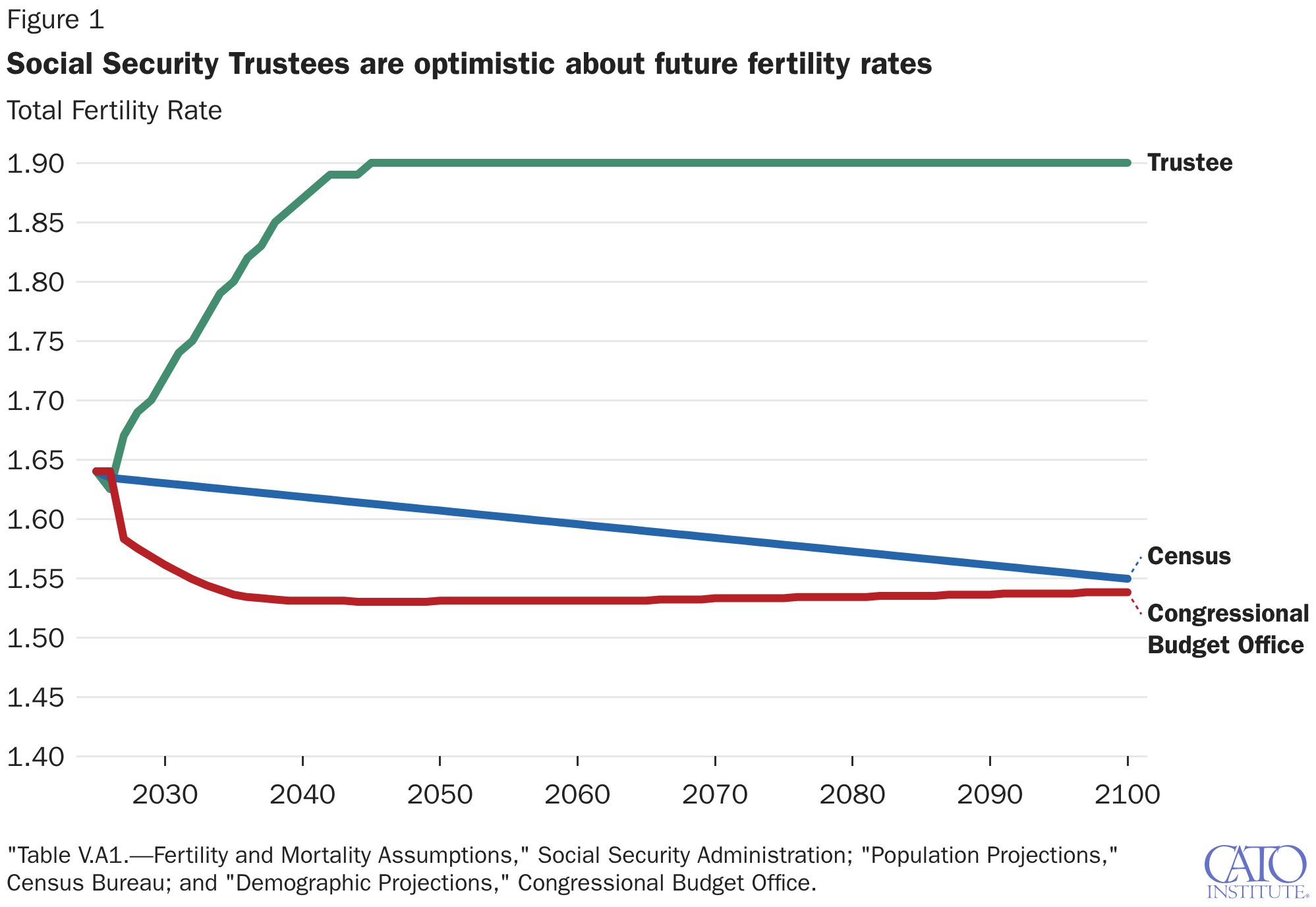
Figure 1 compares the Trustees’ total fertility rate projections with those of other peer organizations. The Trustees assume that the current fertility rate of about 1.6 children per woman will increase to 1.9 by the early 2040s. But the Trustees are, by far, the most optimistic about future fertility. By 2100, the SSA projects a total fertility rate roughly 30 percent higher than both the Census Bureau and the CBO, who project that fertility is likely to continue to decline.
The SSA gives three reasons for its optimistic fertility forecasts.
First, the SSA cites American exceptionalism, arguing that the United States has a distinctive “cultural and economic climate” that will prevent the kind of prolonged fertility decline experienced in many other OECD countries.
Andrew Biggs at the American Enterprise Institute interprets this claim as referring to how religious Americans are when compared to their OECD counterparts. But Biggs also points out that young Americans are becoming less religious.
One way to test whether the US exhibits uniquely high fertility patterns relative to its OECD peers is to compare actual US fertility rates against predicted OECD patterns. As Figure 2 shows, the United States converged to OECD fertility patterns after the 2007 Recession.
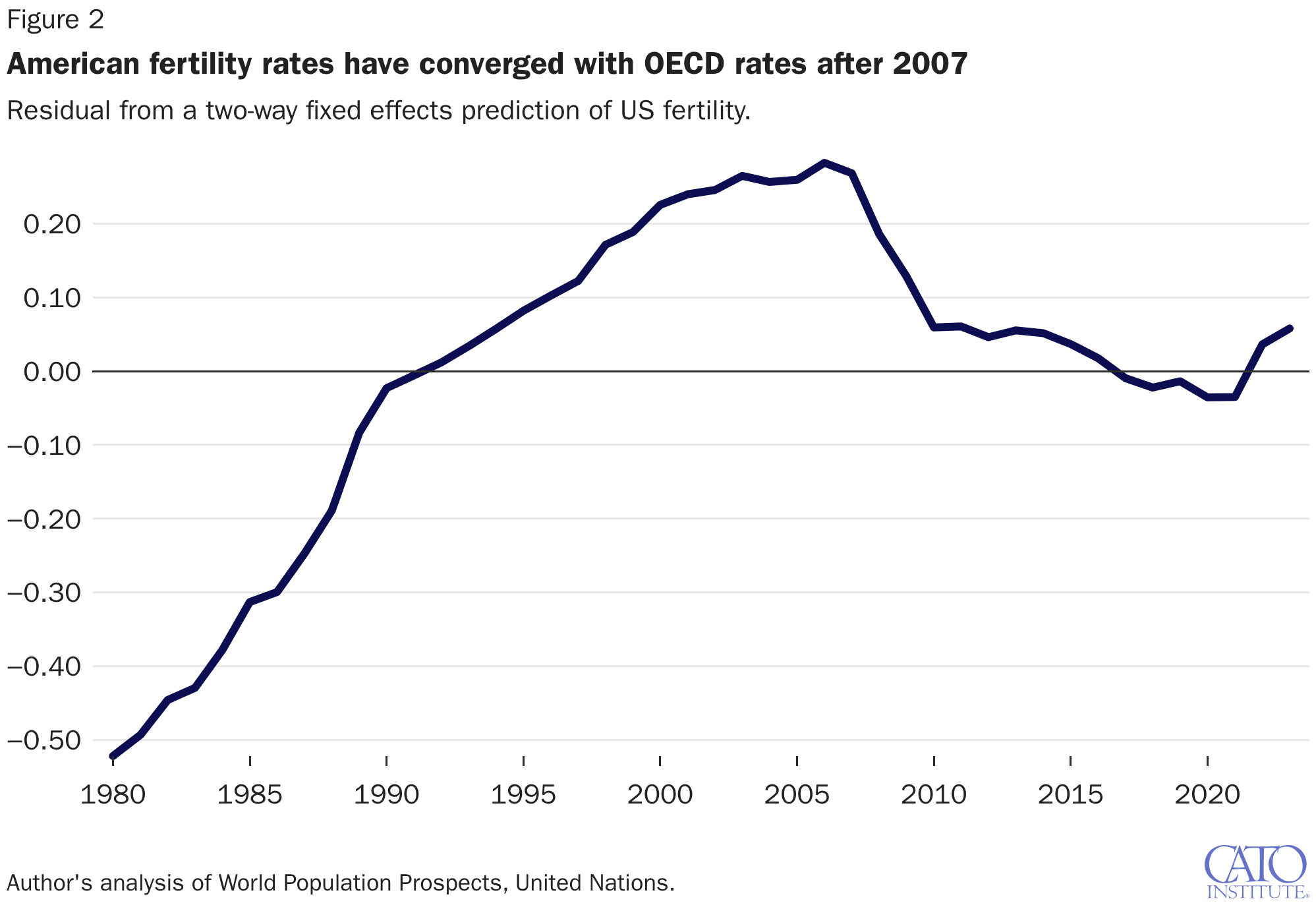
This convergence has also been documented in the economics literature. In a 2022 report, economists Melissa Kearney and Phillip B. Levine argue that “the US fertility rate is belatedly converging toward other high-income countries,” while Erasmo Papagni also documents the strong statistical convergence of US fertility rates with other high-income, low-fertility countries. The SSA’s view that the United States will remain demographically distinct from its OECD peers no longer reflects current fertility trends.
Second, the SSA cites survey data that the number of children that Americans state they wish to have remains above 2.0. The Trustees take this to be evidence that fertility will likely increase toward that level.
The SSA’s claim, however, goes against decades of demographic research that finds an increasing divergence between intended fertility and actual fertility. As Figure 3 shows, intended fertility rates do not closely follow actual fertility rates.
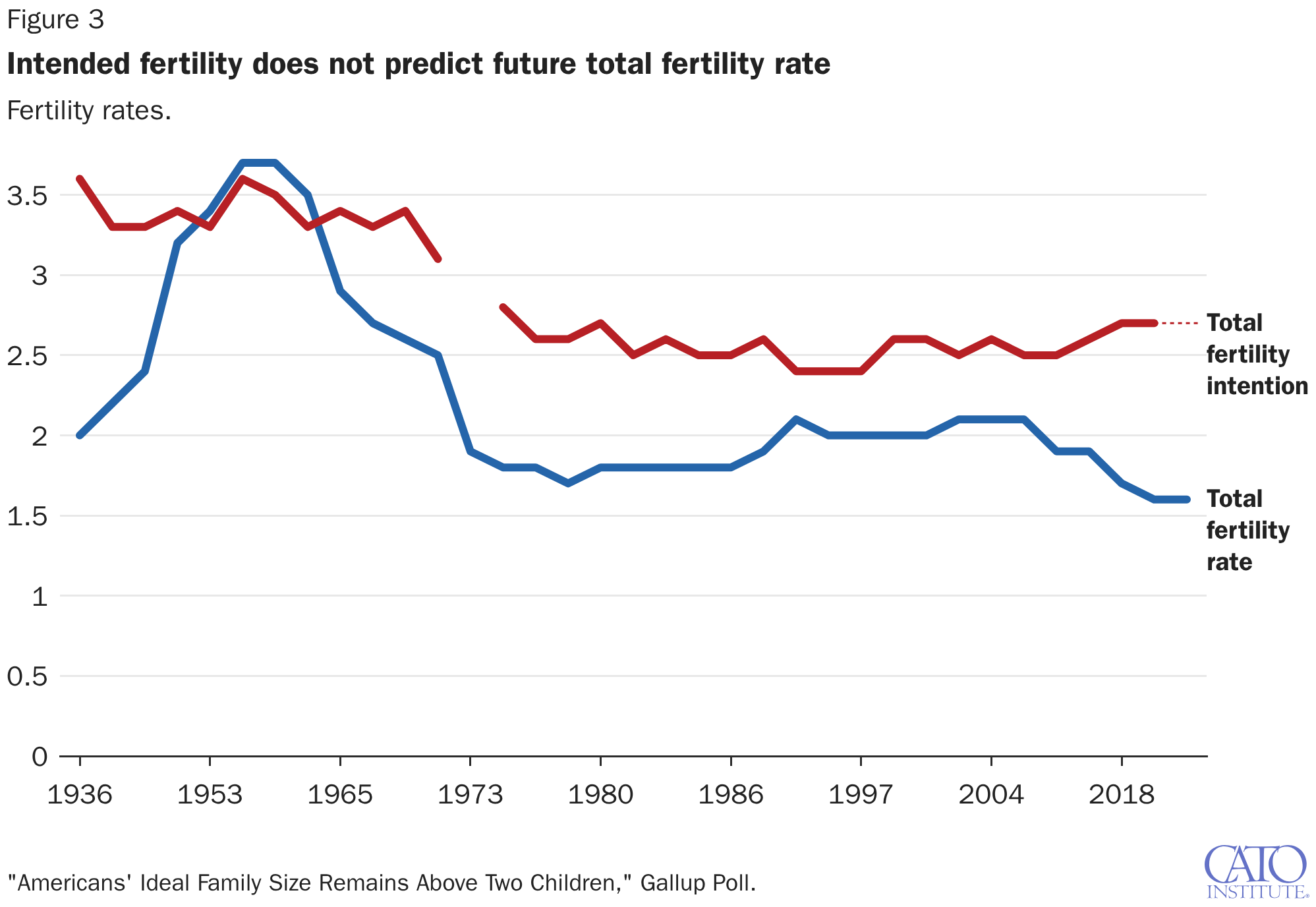
To more rigorously test whether one can project actual fertility rates from intended fertility rates, we also conduct a Granger causality test for up to three lags (code here). These tests indicate that neither series (at least in aggregate) is useful for forecasting the other. As such, the fact that Americans say they want to have more than two children does not necessarily mean that Americans will have more than two children.
This is not uncommon. Even in low-fertility Europe, women typically state that they desire a significantly larger family than they end up having. The Trustees should not rely on unrealized fertility intentions to project actual fertility.
Finally, the Trustees suggest that falling fertility rates may simply reflect delayed births rather than fewer births overall, assuming that postponed births will eventually show up at older ages, thus stabilizing or increasing future fertility.
The Trustees’ optimism is not supported by historical trends. Table 1 shows the change in birth rates by age group between 2007 and 2023. Older cohorts are indeed having slightly more children, and younger women are having fewer. But the gains among older cohorts are not nearly large enough to compensate for falling fertility among younger cohorts.
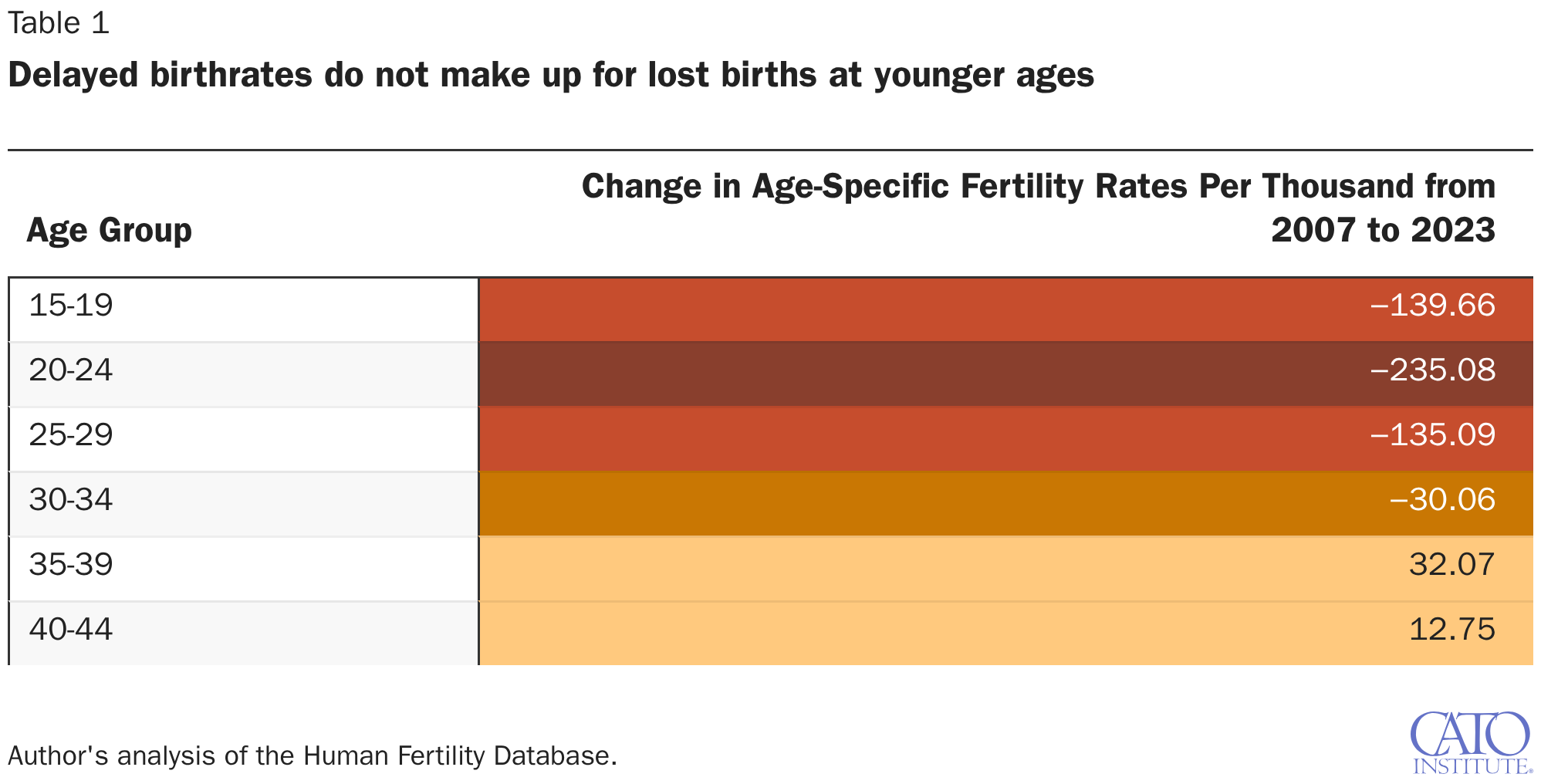
We estimate that, from 2007 to 2023, for every additional birth gained at older ages, twelve births were lost at younger ages. So, for delayed births to stabilize or increase fertility, older cohorts should have at least twelve times more children. This may be technically possible, but historical evidence gives us little reason to consider it likely. It is also unrealistic if we consider that many other countries have experienced a delay in fertility without any corresponding increase in fertility rates. As such, the Trustees cannot reasonably claim that delayed fertility will stabilize or increase total fertility rates in the future.
Consequences of the Trustees’ Optimistic Projection
Figure 4 plots the SSA’s projections of total population against peer forecasters. The Trustees project a far larger population compared to the CBO or the Census Bureau, by as much as 25 percent above the next largest estimate.
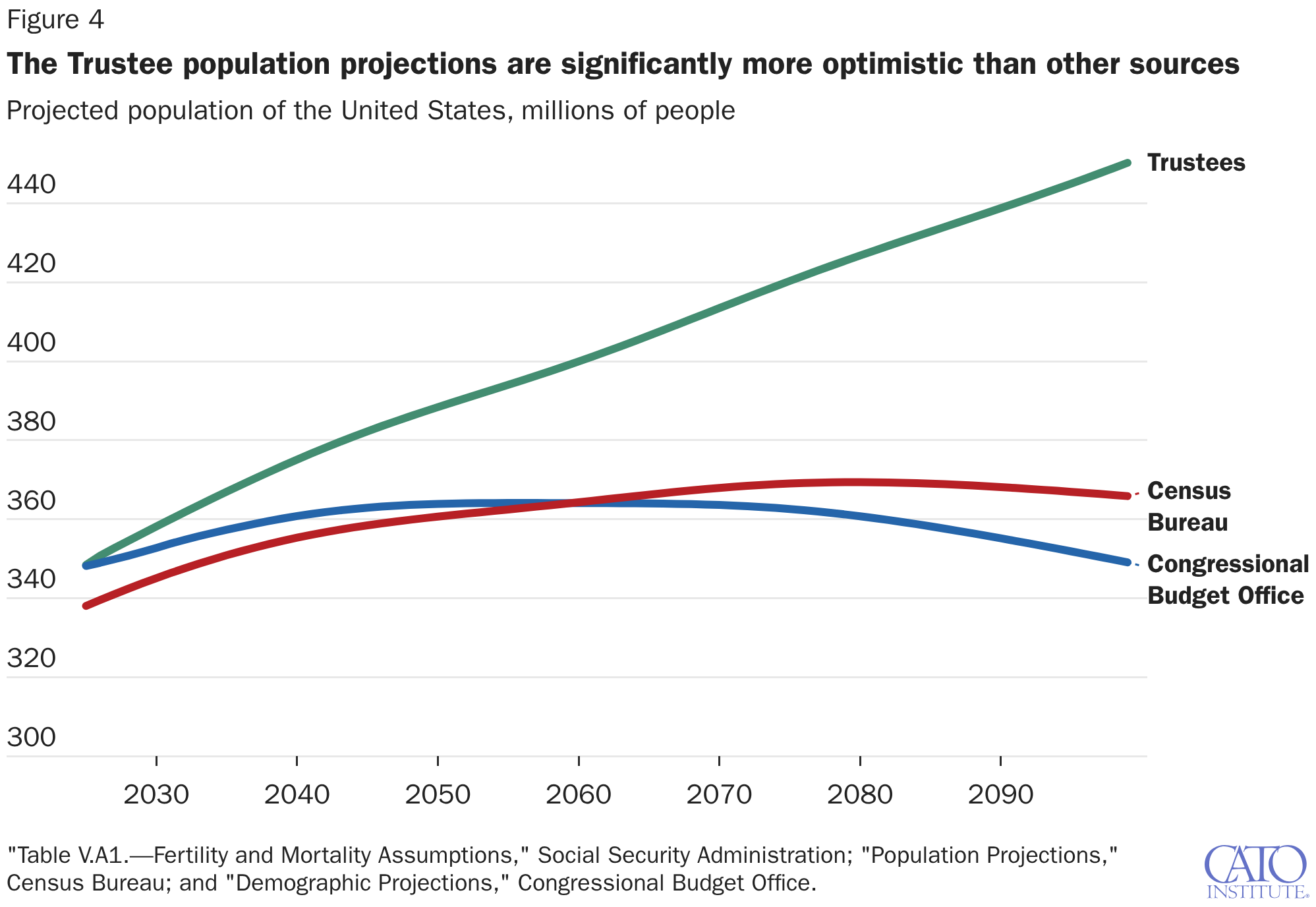
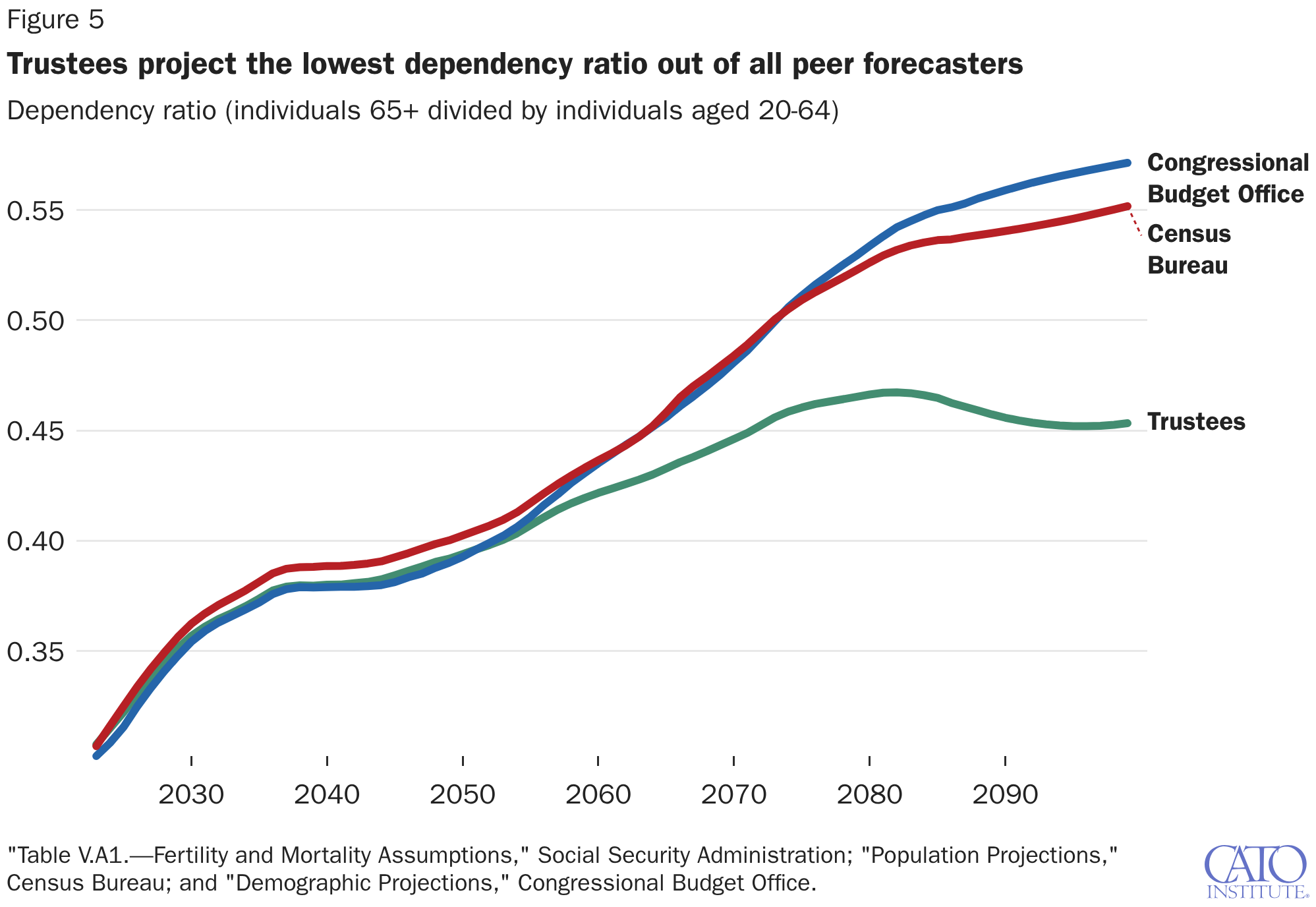
Figure 5 plots the SSA’s projections of the dependency ratio against peer forecasters. Again, the SSA produces low forecasts for the dependency ratio, with its 2100 forecasts a fifth lower than the next-nearest projection.
Optimistic population assumptions translate into optimistic financial projections. In a pay-as-you-go system like Social Security, higher assumed fertility means more future workers paying taxes to finance benefits and thus a smaller projected shortfall. To estimate the fiscal impact of the Trustees’ fertility assumptions, we rerun the Trustees’ intermediate long-range projections using CBO and Census fertility projections instead (code here). As Figure 6 shows, adopting more realistic total fertility rate assumptions can lead to much more pessimistic projections of Social Security’s 75-year balance.
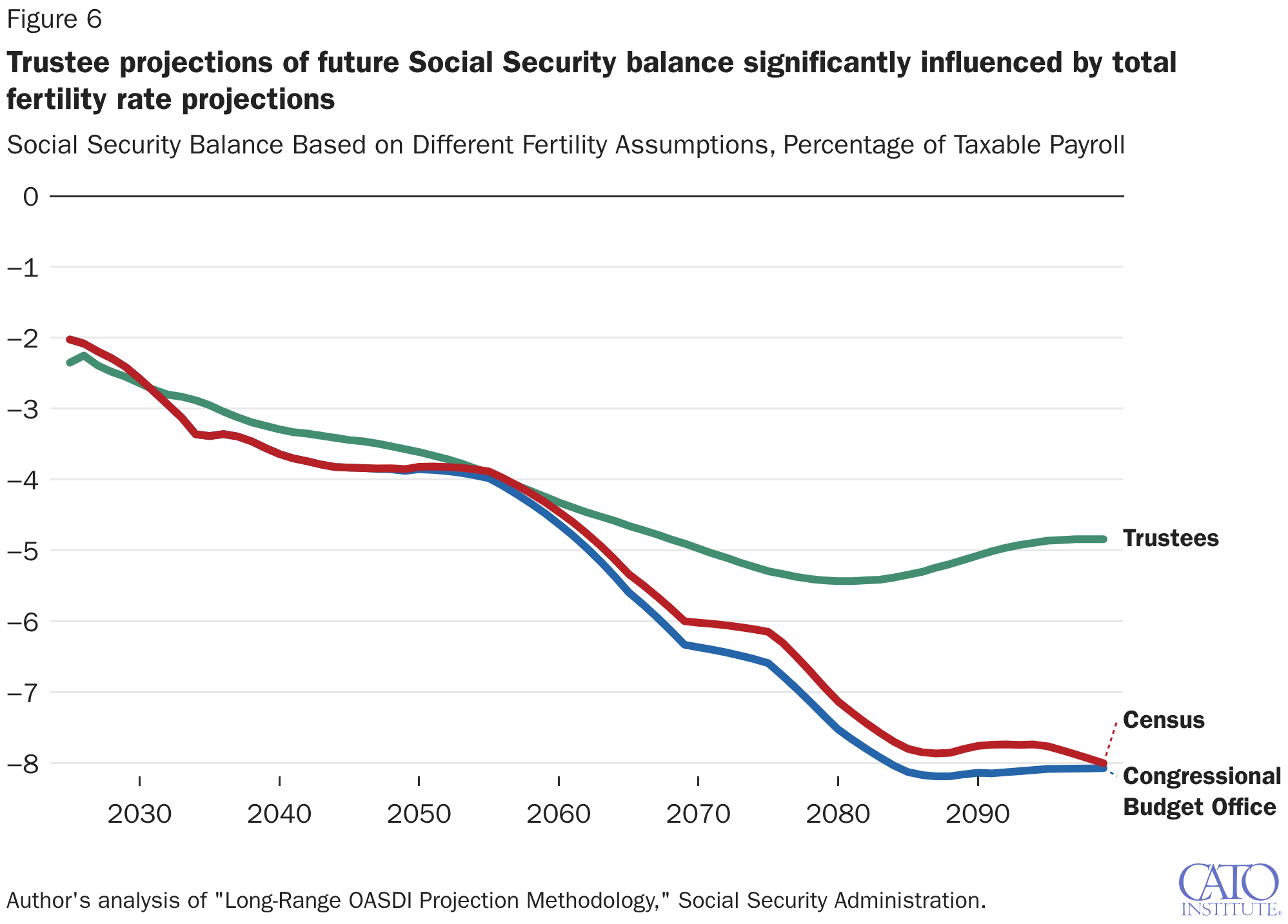
The Trustees project that Social Security’s 75-year shortfall is $27 trillion in present value terms. However, with more realistic total fertility rate assumptions, Social Security’s 75-year shortfall increases to $30 trillion (with Census projections) or $31 trillion (with CBO projections) in present value terms.
Note that the Census’s and CBO’s projections of future fertility may also be optimistic. Both the Census’s and CBO’s estimates assume that long-term fertility rates will plateau at around 1.53 to 1.56. Yet fertility has been declining in the United States for the last two decades. And there seems to be little reason to believe that this decline will stop anytime soon.
Congress Should Demand Answers
The Trustees’ fertility assumptions are not a technical footnote. Because Social Security is financed on a pay-as-you-go basis, fertility projections directly shape estimates of the program’s long-run solvency. If the Trustees’ fertility assumptions are too optimistic, then Social Security’s financing gap is significantly larger than official projections suggest.
As Congress debates Social Security reform, it should be wary of relying on demographic assumptions that are substantially more optimistic than those used by other government forecasters. Policymakers risk basing reform decisions on projections that overestimate the future size of the workforce and, in turn, the program’s future revenue base. At a minimum, lawmakers should explore why the Trustees’ fertility projections appear to be such outliers, and the Social Security Advisory Board should reconvene the Technical Panel on Assumptions and Methods to better assess the fertility rates likely to occur in the US in the future.
The authors thank Andrew Biggs for reviewing and editing this piece.
Source: https://www.cato.org/blog/low-falling-fertility-means-social-securitys-funding-problems-are-worse-expected-0
Anyone can join.
Anyone can contribute.
Anyone can become informed about their world.
"United We Stand" Click Here To Create Your Personal Citizen Journalist Account Today, Be Sure To Invite Your Friends.
Before It’s News® is a community of individuals who report on what’s going on around them, from all around the world. Anyone can join. Anyone can contribute. Anyone can become informed about their world. "United We Stand" Click Here To Create Your Personal Citizen Journalist Account Today, Be Sure To Invite Your Friends.
LION'S MANE PRODUCT
Try Our Lion’s Mane WHOLE MIND Nootropic Blend 60 Capsules
Mushrooms are having a moment. One fabulous fungus in particular, lion’s mane, may help improve memory, depression and anxiety symptoms. They are also an excellent source of nutrients that show promise as a therapy for dementia, and other neurodegenerative diseases. If you’re living with anxiety or depression, you may be curious about all the therapy options out there — including the natural ones.Our Lion’s Mane WHOLE MIND Nootropic Blend has been formulated to utilize the potency of Lion’s mane but also include the benefits of four other Highly Beneficial Mushrooms. Synergistically, they work together to Build your health through improving cognitive function and immunity regardless of your age. Our Nootropic not only improves your Cognitive Function and Activates your Immune System, but it benefits growth of Essential Gut Flora, further enhancing your Vitality.

Our Formula includes: Lion’s Mane Mushrooms which Increase Brain Power through nerve growth, lessen anxiety, reduce depression, and improve concentration. Its an excellent adaptogen, promotes sleep and improves immunity. Shiitake Mushrooms which Fight cancer cells and infectious disease, boost the immune system, promotes brain function, and serves as a source of B vitamins. Maitake Mushrooms which regulate blood sugar levels of diabetics, reduce hypertension and boosts the immune system. Reishi Mushrooms which Fight inflammation, liver disease, fatigue, tumor growth and cancer. They Improve skin disorders and soothes digestive problems, stomach ulcers and leaky gut syndrome. Chaga Mushrooms which have anti-aging effects, boost immune function, improve stamina and athletic performance, even act as a natural aphrodisiac, fighting diabetes and improving liver function. Try Our Lion’s Mane WHOLE MIND Nootropic Blend 60 Capsules Today. Be 100% Satisfied or Receive a Full Money Back Guarantee. Order Yours Today by Following This Link.


| Visits: | 1,816,123,238 |
| Stories: | 8,661,524 |
Whistler Blowers, Insiders

