

Personalized Pricing Isn’t All Bad for Consumers

Christopher Gardner and Juan Londoño
Across the United States, bills have been proposed on “algorithmic,” “surveillance,” and “dynamic” pricing. A phenomenon of many names, policymakers are primarily responding to the fear that firms are using automated, data-driven tools to maximize their profit per transaction at the expense of consumer surplus. Put simply, advocates for such policies are afraid that firms will use a customer’s personal data to charge individuals the highest price possible at any given moment. This level of personalized pricing is essentially an individualized dynamic pricing (IDP) strategy. In marginal cases, some of these fears may be legitimate. But attempts to protect consumers by banning personalized pricing as a whole would only serve to eradicate the potential of these tools to increase market efficiency and ultimately decrease both prices and waste.
Prices play a valuable role in the market as signals that coordinate supply and demand. In a free market, prices allocate a supply of goods to those who gain the most benefit, or utility, from them. Because “utility” is an abstract concept, economists and markets use a proxy for it in the form of the price a consumer is willing to pay. The greater the price a consumer will pay for a good, the greater the benefit the consumer expects from that good. This principle—that whoever buys the good values it more than the price—is the bedrock of how markets are able to allocate a limited amount of a good to those who value it most.
The novelty of IDP lies in the ability to autonomously set prices by using an individual’s data to infer how much they are willing to pay for a product. Many industries, from car sales to higher education, practice some sort of individualized pricing. The primary distinction for IDP is that it can adjust prices cheaply, autonomously, and without bias. This arrangement allows companies to increase profits while offering lower prices to consumers.
Individualized and Dynamic Pricing Are Not New
IDP can be broken down into two concepts: individualized pricing and dynamic pricing. Dynamic pricing can best be understood as the adjustment of prices in response to changing market conditions. A familiar example for many is Uber’s “surge pricing.” When a concert or sporting event finishes, a sudden surge in demand for Uber rides typically occurs. To reduce the demand for rides and increase the supply of drivers, Uber raises prices. Consumers who need the limited resources right away might pay more, while those who have more time to wait can expect prices to normalize or decrease as supply improves.
While Uber is a relatively young company, dynamic pricing has been common practice for nearly 40 years, since American Airlines first implemented it in the 1980s. Before dynamic pricing, selling tickets at a flat price to all consumers created a quandary for the airline: Sold-out planes were flying at only 85 percent capacity. To address this waste, American implemented the Dynamic Inventory Allocation and Maintenance Optimizer (DINAMO) system, which allocated seats across fare classes to maximize revenue. In other words, selling the right seats to the right customers at the right prices. By automatically adjusting the availability of seats at different price levels in response to changing demand, American was able to offer cheaper tickets to compete with budget airlines while preserving space for passengers willing to book later at higher prices. Besides enabling American to respond to competition and offer cheaper tickets, DINAMO also reduced the number of wasted seats on sold-out flights from 15 percent to 3 percent.
These extraordinary efficiency gains demonstrate the promise of dynamic pricing to benefit both businesses and customers. It’s why the practice has been in use for years across an array of industries, from insurance to retail. Each instance represents an effort to increase company profits, but it also helps allocate goods and services more effectively to those who need them. Algorithmic pricing’s recent turn in the spotlight is not a function of its increased use. Rather, technological advancement, which has enabled greater speed and individualization, has made the reality of those price changes more apparent to the average consumer.
This brings us to the other half of IDP: individualized pricing. This practice has been around since the dawn of commerce, when merchants and customers haggled over the price of a given product. The unprecedented prosperity of recent times has shifted the developed world toward more static prices. But some industries still typically tailor prices to individual customers.
A common example of individualized pricing is buying a car. Going to a car dealership often involves meeting with a salesperson to discuss available options and pricing. The salesperson is generally going to tailor the price of each car specifically to the buyer. This price will be set according to the information the salesperson can gather from reputational factors, such as one’s credit score, and the buyer’s preferences. Notably, unlike in the case of IDP, the personal biases of the salesperson can also affect the price the buyer ultimately pays. In this way, IDP can be less subjective than a human salesperson. This makes the purchasing process smoother and more trustworthy for everyone involved.
Both individualized and dynamic pricing have existed in our daily lives for years. But the combination of the two using modern technology has led to fears such as those of New York Senate Deputy Leader Michael Gianaris. In support of a ban on algorithmic pricing, he claimed that “corporations are collecting our personal data to extract every cent they can to pad their pockets.” Gianaris’ colleague in the New York Assembly, Nily Rozic, equivocated algorithmic pricing with “unscrupulous corporate conduct that hurts working families and worsens the affordability crisis.” These concerns are echoed in state capitals across the country, but they reflect a fundamental misunderstanding over how IDP works
Individualized Pricing: Myth Versus Reality
Those expressing concerns about personalized pricing often characterize it as a tool businesses can use to charge users more if they notice that users are willing to pay more. They worry that businesses would have an incentive to set “artificially high” baseline prices and then use individualized discounts to draw back consumers who would no longer buy the product at the new price. However, that is not how individualized pricing is usually employed. Most of the time, businesses use these tools as an extra nudge to lure in potential customers who are on the fence over a product.
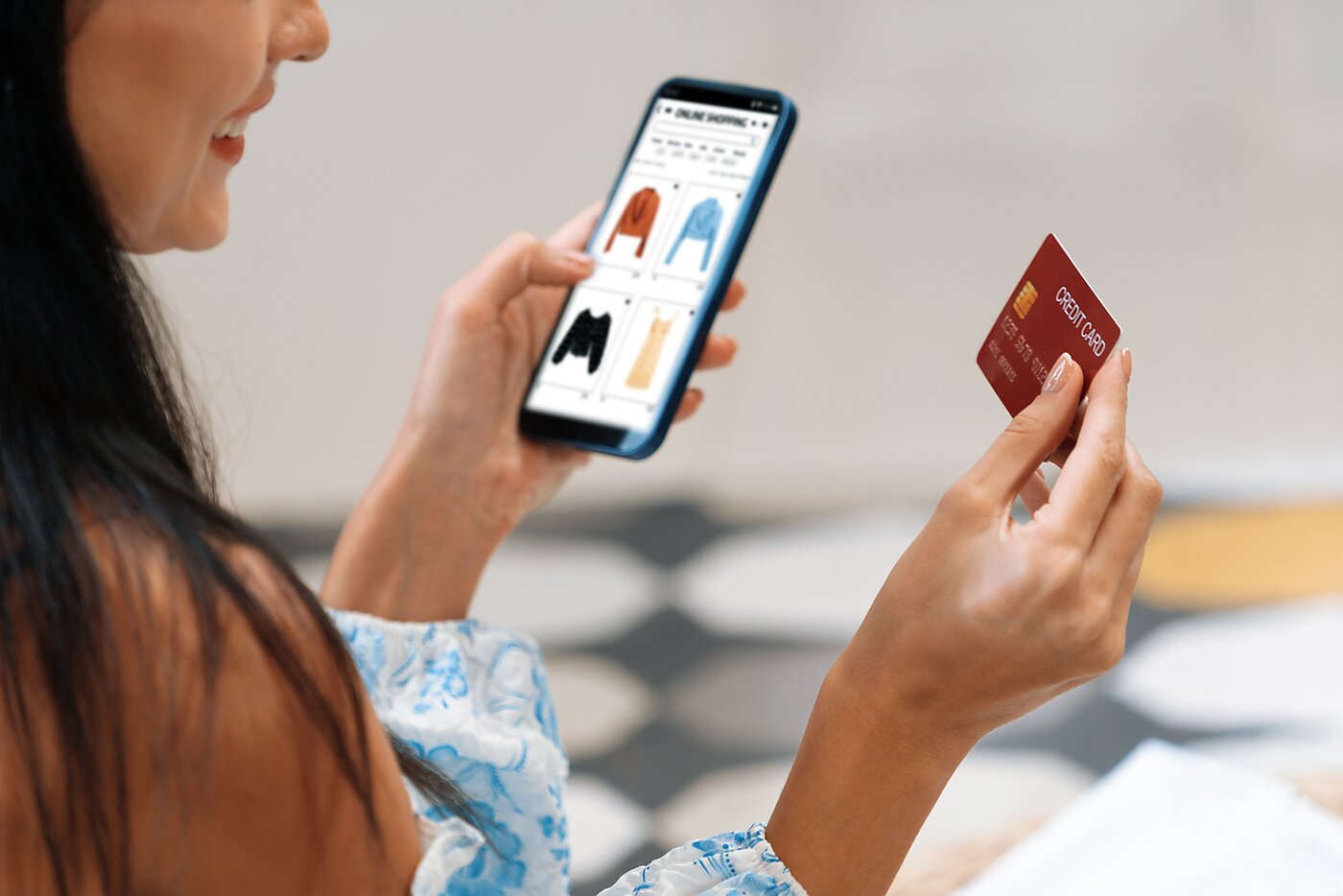
An example of how businesses commonly use IDP, particularly in online retail, is to combat “cart abandonment,” a term for when a user adds a product to their virtual shopping cart but ultimately decides not to buy it. When the website realizes that the customer is wavering in their resolve to buy a product or is browsing a competitor’s website to compare prices, it might “sweeten” the deal by offering a personalized discount hoping that the deal might convince the customer to complete the purchase.
In such a situation, both the consumer and the business win. The consumer will ultimately end up with the product they are looking for at a lower price, while the business still makes a sale that it would not have otherwise.
While fears of abuse do exist, the best protection for consumers is a competitive market. In competitive markets with no supply constraints, IDP has proven to largely benefit consumers. Any time a firm uses IDP to raise prices for a given consumer, that automatically allows a competing firm to undercut those prices and take that consumer away. The nature of these structural protections is borne out as new technologies are implemented, such as electronic shelf labels. In spite of regulatory concern, there is virtually no evidence that electronic shelf labels are intended or used for surprise price increases. Other potential issues, including the use of health conditions or other forms of sensitive data to set prices, are best addressed in the broader context of data privacy. Consumers’ fears over the extent businesses can use sensitive personal data are largely a by-product of the absence of a federal comprehensive data law. The current patchwork approach fails to provide customers with a clear and consistent standard of what types of data companies can collect and process and how that data can be used.
How Might Policy Respond to Individualized Dynamic Pricing
Multiple bills have been proposed at the state and federal levels trying to regulate, restrict, or outright ban the use of IDP. However, as some note, most of these bills consistently face scope issues in which they inadvertently affect pricing strategies that do not resemble IDP at all. For example, certain definitions of dynamic or personalized pricing would lump in popular pro-consumer discounts such as happy hours. But these mistakes are not always coincidental, and some treat disclosure requirements or expansive scopes as a first step toward broader price controls. Sometimes, the line of what could constitute a dynamic price, a personalized price, or a classic response to market fluctuations can be blurred. Policymakers should be wary of passing new regulations that are likely to affect pro-competitive behavior.
Of course, at times, anti-competitive behavior can create consumer harm. In concentrated markets or markets facing supply shortages, IDP could be used to raise prices without incurring much punishment or encouraging entry. But this is largely a function of the market structure. For example, even with more drivers for the Super Bowl or World Cup seeking higher fares, demand can well exceed any possible supply. But in these contexts, a distinction is still needed between supply limitations and true anti-competitive behavior, which would consist of actions that harm the competitive process. In the taxi context, this could mean colluding with all other competing drivers to charge the same, artificially high price. If true anti-competitive behavior and not mere demand exceeding supply is the reason for such issues, then the best remedy against potential abuse of market power is the vigorous enforcement of our antitrust laws.
Existing regulations often provide consumers with ample protection, given that the conduct underlying IDP is not novel despite technological advances. Aside from antitrust law covering concentrated markets, existing regulations on deceptive pricing directly address concerns about fictitious high baseline prices.
Consumers themselves may also be a strong line of defense against abuse. Companies face strong market and social pressure not to abuse IDP. If a customer feels that they are not getting a good deal compared to other customers, that is a marketing issue, not one that calls for policymakers’ intervention. The market has corrective mechanisms that will ultimately express those customers’ concerns. For example, companies including Delta, Amazon, and Home Depot have already rolled back the rollout of personalized pricing due to consumer backlash. These examples help demonstrate that a dynamic marketplace enables consumers and competitors to punish abusive practices without any need for government intervention.
Conclusion
The use of individualized dynamic pricing by businesses has drawn increased attention from policymakers, with the fear that the tool will drive price increases affecting consumer welfare. The reality, however, is that banning IDP would outlaw a tool with tremendous potential to create win-win scenarios for consumers and retailers. While it can be abused to harm consumers through anti-competitive behavior or deceptive practices, these behaviors are already sanctioned and policed by existing antitrust and consumer protection regulations. This is why proposals to ban IDP risk introducing redundant, potentially exploitable regulations for behavior already punished by existing guardrails.
Prices are signals used by both corporations and consumers to communicate what they want and when they want it. When government forces intervene, these signals become distorted. The past years of US inflation have hammered American families, but prohibiting algorithmic pricing or IDP is akin to banning stoplights to stop people from rear-ending each other. Not only does it fail to stop people from crashing, but it may actively make the problem worse.
Source: https://www.cato.org/blog/personalized-pricing-isnt-all-bad-consumers
Anyone can join.
Anyone can contribute.
Anyone can become informed about their world.
"United We Stand" Click Here To Create Your Personal Citizen Journalist Account Today, Be Sure To Invite Your Friends.
Before It’s News® is a community of individuals who report on what’s going on around them, from all around the world. Anyone can join. Anyone can contribute. Anyone can become informed about their world. "United We Stand" Click Here To Create Your Personal Citizen Journalist Account Today, Be Sure To Invite Your Friends.
LION'S MANE PRODUCT
Try Our Lion’s Mane WHOLE MIND Nootropic Blend 60 Capsules
Mushrooms are having a moment. One fabulous fungus in particular, lion’s mane, may help improve memory, depression and anxiety symptoms. They are also an excellent source of nutrients that show promise as a therapy for dementia, and other neurodegenerative diseases. If you’re living with anxiety or depression, you may be curious about all the therapy options out there — including the natural ones.Our Lion’s Mane WHOLE MIND Nootropic Blend has been formulated to utilize the potency of Lion’s mane but also include the benefits of four other Highly Beneficial Mushrooms. Synergistically, they work together to Build your health through improving cognitive function and immunity regardless of your age. Our Nootropic not only improves your Cognitive Function and Activates your Immune System, but it benefits growth of Essential Gut Flora, further enhancing your Vitality.

Our Formula includes: Lion’s Mane Mushrooms which Increase Brain Power through nerve growth, lessen anxiety, reduce depression, and improve concentration. Its an excellent adaptogen, promotes sleep and improves immunity. Shiitake Mushrooms which Fight cancer cells and infectious disease, boost the immune system, promotes brain function, and serves as a source of B vitamins. Maitake Mushrooms which regulate blood sugar levels of diabetics, reduce hypertension and boosts the immune system. Reishi Mushrooms which Fight inflammation, liver disease, fatigue, tumor growth and cancer. They Improve skin disorders and soothes digestive problems, stomach ulcers and leaky gut syndrome. Chaga Mushrooms which have anti-aging effects, boost immune function, improve stamina and athletic performance, even act as a natural aphrodisiac, fighting diabetes and improving liver function. Try Our Lion’s Mane WHOLE MIND Nootropic Blend 60 Capsules Today. Be 100% Satisfied or Receive a Full Money Back Guarantee. Order Yours Today by Following This Link.


| Visits: | 1,817,783,096 |
| Stories: | 8,664,939 |
Whistler Blowers, Insiders

