

There Are No Good Arguments for a Massive Fed Balance Sheet

Jai Kedia and Norbert J. Michel
New Federal Reserve Chair Kevin Warsh has committed publicly to reducing the Fed’s financial footprint and reverting its balance sheet back to a sensible size. This is a worthy goal and something we have advocated for several times in the past. Unfortunately, the Fed’s balance sheet and financial footprint are as large as they are only because previous leadership failed to normalize operations after the past two crises. Given the size of the balance sheet (now over $6 trillion) and the cost of the current policy regime, Warsh should waste no time implementing a credible plan to reduce the Fed’s asset holdings.
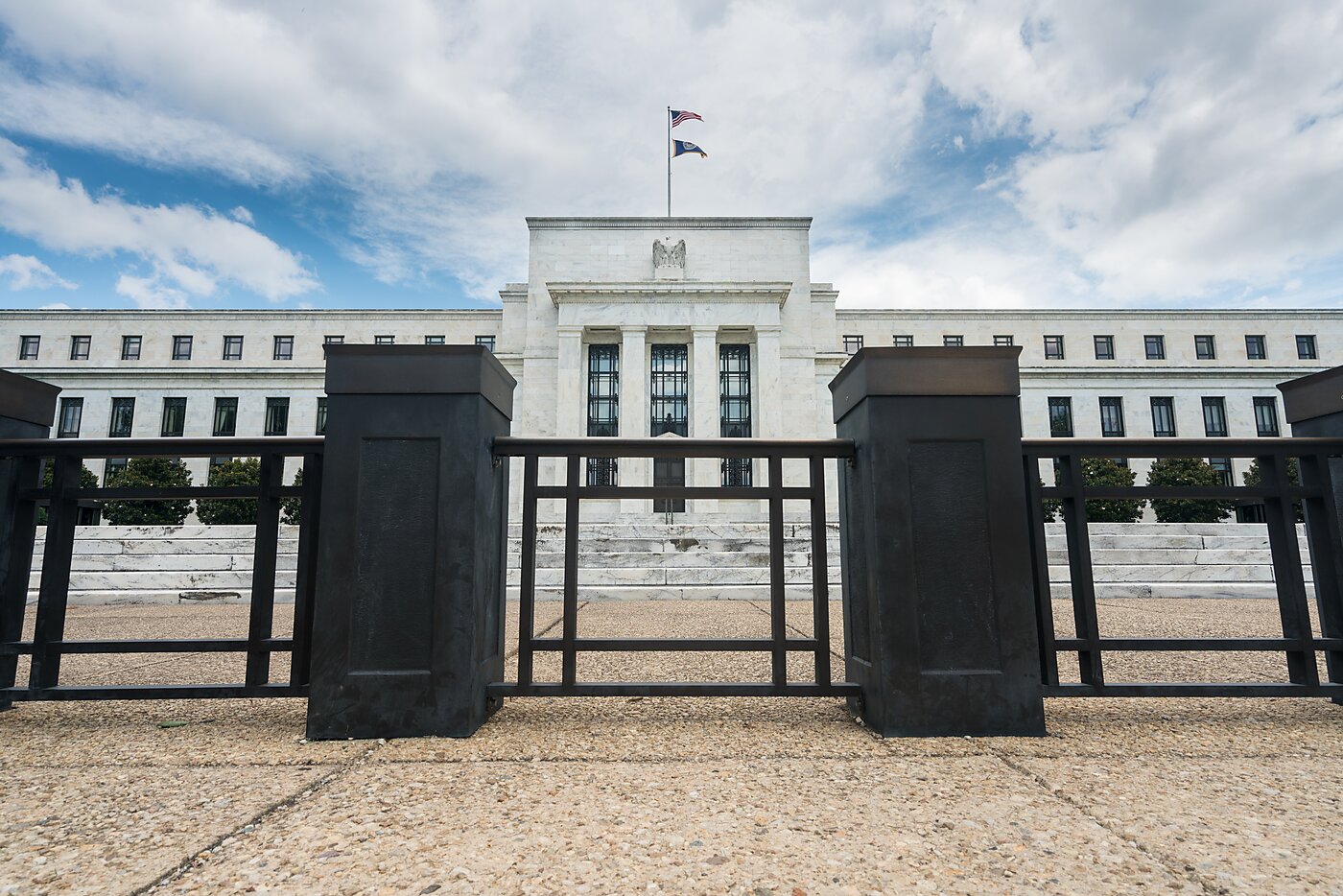
Warsh will face resistance from defenders of the current regime, many of whom are his colleagues at the Fed. Present and former Fed officials have often advocated for the large balance sheet, but the arguments they rely on do not hold up. Ultimately, the Fed’s balance sheet should be used for traditional monetary policy, not fiscal or banking policy. In this article, we explain why the main arguments used by supporters of the Fed’s current regime are flawed.
Here are five common arguments by supporters of the current regime, along with our responses:
-
Reserves are costless to create, so a large balance sheet with abundant reserves is the efficient policy choice.
Fed officials have argued that since reserves can be created at a zero marginal cost, economic efficiency requires that their opportunity cost to banks also be zero. While the accounting cost of creating these reserves may be zero, their economic costs are high. For starters, every dollar in created reserves must be backed by asset holdings. If the rate of return on those assets does not match the cost of paying banks interest on reserves (IOR), the Fed can suffer losses. The Fed accrued nearly $200 billion in operating losses in 2023 and 2024 in this manner—losses ultimately borne by taxpayers through forgone Treasury remittances.
Among other potential costs, the abundant reserve framework enables fiscal quantitative easing (QE), allowing Congress to fund spending programs through the Fed’s balance sheet without going through the appropriations process. (For a more detailed analysis of the costs associated with the current regime, see this post.) A balance sheet of this size also distorts financial markets. The Fed’s decision to purchase nearly $3 trillion in mortgage-backed securities preferentially allocated credit to the housing market and amounted to a backdoor bailout of Fannie Mae and Freddie Mac, one that relieved Congress of its responsibility.
-
Market volatility increases when reserves dip below their ample level.
Supporters of the large balance sheet point to the September 2019 repo market episode, when overnight repo rates briefly spiked above 10 percent in a single day, as evidence that reducing reserves risks financial instability.
This incident is poor justification for a permanent policy change, even ignoring that the market currently functions as it does partly owing to the Fed’s current policy regime. The September 2019 spike resulted from a one-day coincidence of corporate tax payments and a large Treasury auction settlement that simultaneously drained reserves from banks. At the same time, postcrisis liquidity rules, specifically the liquidity coverage ratio, made banks unwilling to lend reserves they held for regulatory compliance—that is, the volatility resulted from regulatory choices made after 2008, not from having too few reserves. The Fed has since addressed this vulnerability by establishing the Standing Repo Facility.
Still, there is a deeper problem with this argument. The Fed expanded its balance sheet dramatically under QE and, when partial drawdowns created stress, concluded that the balance sheet must remain large to stave off financial stress. This reasoning is circular. The Fed created the conditions for this problem and now cites the problem as justification for maintaining those conditions. Such episodes were rare in the decades before 2008, when the Fed operated under scarce reserves without recurring money market dysfunction.
-
Shrinking the balance sheet is tantamount to quantitative tightening and may lead to unintentionally tight credit conditions.
There is concern that reducing the balance sheet necessarily tightens financial conditions and that such tightening could conflict with the Fed’s monetary policy stance. But this concern is about implementation, not principle.
No serious proponent of balance sheet reduction advocates doing so overnight, so the risk is easily mitigated. Given a clear policy statement and a long enough horizon to draw down the balance sheet, market participants will be unlikely to view the gradual downward trend in asset holdings as a signal of tightening conditions. We have argued that the simplest way to achieve this is for Congress to mandate an end to IOR payments 10–15 years in the future—roughly the time it has taken to build the balance sheet up to its current level. Even with a shorter timeline and no congressional mandate, setting a clear end date for IOR will signal that the Fed must wind down its balance sheet by that date.
-
Monetary policy is too difficult to implement without abundant reserves and IOR.
Fed officials have argued that reverting to a scarce-reserves corridor framework would make it significantly harder to conduct monetary policy, as the Fed would lose its primary lever (IOR) for maintaining the federal funds rate within its target range.
It is true that the Fed currently exercises more control over the federal funds rate using IOR and that it would need to conduct more frequent open market operations in its absence. But this is exactly how the Fed operated for decades before 2008, and precise control over the federal funds rate is something of an illusion. Nor has this better control over short-term rates translated into better macroeconomic outcomes. The Great Moderation, a period of low and stable inflation and unemployment that lasted from roughly the mid-1980s to the mid-2000s, coincided with the scarce-reserves framework. Meanwhile, the recovery from the 2008 recession was prolonged and post-pandemic inflation surged despite the abundant-reserves regime.
Moreover, the current setup’s apparent precision comes at a cost. To begin with, the Fed sets the IOR rate directly and simply adjusts a target range for the federal funds rate accordingly. However, the federal funds market, where banks lend reserves to each other, is all but devoid of the private lending that occurred there prior to 2008 because reserves are so abundant. Thus, the Fed has eliminated a key private source of bank liquidity and the price signals that would otherwise emerge from that interbank lending, a high cost for the apparent rate-setting precision. Those interbank lending signals carried real-time information about liquidity conditions and financial risks that the Fed cannot fully observe or replicate.
-
The Fed’s balance sheet must structurally backstop the Treasury market, which has grown too large for dealers to absorb under stress.
The March 2020 Treasury market disruption is frequently cited in support of a large Fed balance sheet. During that episode, bid-ask spreads widened dramatically in Treasury markets. Defenders of the large balance sheet argue that this shows the Fed must remain a standing buyer of last resort.
The cause of this disruption is misidentified. The Treasury market’s inability to absorb stress without Fed intervention was largely a function of regulatory constraints on primary dealers, specifically the supplementary leverage ratio (SLR). Strangely, the SLR treats Treasury holdings as risky for leverage purposes, making it costly for dealers to warehouse Treasuries during periods of stress even when they have adequate capital. This is a regulatory problem that requires a regulatory solution and the Fed’s balance sheet should be used for monetary policy, not banking policy. Reforming the SLR to exclude Treasuries from the leverage calculation would substantially restore dealers’ capacity to intermediate the market.
A permanently large Fed balance sheet is not the right answer to a poorly calibrated regulation, and it comes with its own costs: It entrenches the Fed as a structural participant in government financing, undermining the fiscal discipline that market mechanisms would otherwise impose. Ultimately, the Fed should not be a standing buyer of last resort—it should be a lender of last resort that provides emergency liquidity only when nobody else can.
Conclusion
Kevin Warsh’s chairmanship offers a rare chance to seriously reform the Fed. Key among these reforms is shrinking the balance sheet. Most arguments supporting the permanently large balance sheet seem to exhibit a fundamental misunderstanding of the appropriate role of the central bank—some Fed officials seem to think that it should provide general bank lending instead of emergency lending. But the Fed is supposed to be a lender of last resort to markets, not a buyer and lender of any resort, actively participating in what amounts to government-supported credit allocation.
Regardless of policy preferences, both critics and supporters of the Fed must admit that the central bank now has many responsibilities that Congress never intended. The Fed is now tasked with achieving specific macroeconomic goals, providing fiscal support to the federal government, regulating thousands of banks and other financial institutions, engaging in credit allocation to private institutions, and operating core components of the payment and settlement system. Ideally, Congress will start to reverse this trend and shrink the Fed’s responsibilities so the central bank’s footprint will be more compatible with a limited government and a free-enterprise economy. The Fed serves the US public best when it does less, not more, and an overly active central bank undermines free enterprise and increases risk within the financial sector. The new Fed chair has an excellent opportunity to improve economic outcomes by putting the Fed on this path.
Source: https://www.cato.org/blog/there-are-no-good-arguments-massive-fed-balance-sheet
Anyone can join.
Anyone can contribute.
Anyone can become informed about their world.
"United We Stand" Click Here To Create Your Personal Citizen Journalist Account Today, Be Sure To Invite Your Friends.
Before It’s News® is a community of individuals who report on what’s going on around them, from all around the world. Anyone can join. Anyone can contribute. Anyone can become informed about their world. "United We Stand" Click Here To Create Your Personal Citizen Journalist Account Today, Be Sure To Invite Your Friends.
LION'S MANE PRODUCT
Try Our Lion’s Mane WHOLE MIND Nootropic Blend 60 Capsules
Mushrooms are having a moment. One fabulous fungus in particular, lion’s mane, may help improve memory, depression and anxiety symptoms. They are also an excellent source of nutrients that show promise as a therapy for dementia, and other neurodegenerative diseases. If you’re living with anxiety or depression, you may be curious about all the therapy options out there — including the natural ones.Our Lion’s Mane WHOLE MIND Nootropic Blend has been formulated to utilize the potency of Lion’s mane but also include the benefits of four other Highly Beneficial Mushrooms. Synergistically, they work together to Build your health through improving cognitive function and immunity regardless of your age. Our Nootropic not only improves your Cognitive Function and Activates your Immune System, but it benefits growth of Essential Gut Flora, further enhancing your Vitality.

Our Formula includes: Lion’s Mane Mushrooms which Increase Brain Power through nerve growth, lessen anxiety, reduce depression, and improve concentration. Its an excellent adaptogen, promotes sleep and improves immunity. Shiitake Mushrooms which Fight cancer cells and infectious disease, boost the immune system, promotes brain function, and serves as a source of B vitamins. Maitake Mushrooms which regulate blood sugar levels of diabetics, reduce hypertension and boosts the immune system. Reishi Mushrooms which Fight inflammation, liver disease, fatigue, tumor growth and cancer. They Improve skin disorders and soothes digestive problems, stomach ulcers and leaky gut syndrome. Chaga Mushrooms which have anti-aging effects, boost immune function, improve stamina and athletic performance, even act as a natural aphrodisiac, fighting diabetes and improving liver function. Try Our Lion’s Mane WHOLE MIND Nootropic Blend 60 Capsules Today. Be 100% Satisfied or Receive a Full Money Back Guarantee. Order Yours Today by Following This Link.



| Visits: | 1,816,257,800 |
| Stories: | 8,661,810 |
Whistler Blowers, Insiders


No, because you’ll quit paying taxes.