

From ‘Prosecutor Republic’ to ‘Police State’: How Lee Jae-myung’s Power Grab Endangers Korean Democracy

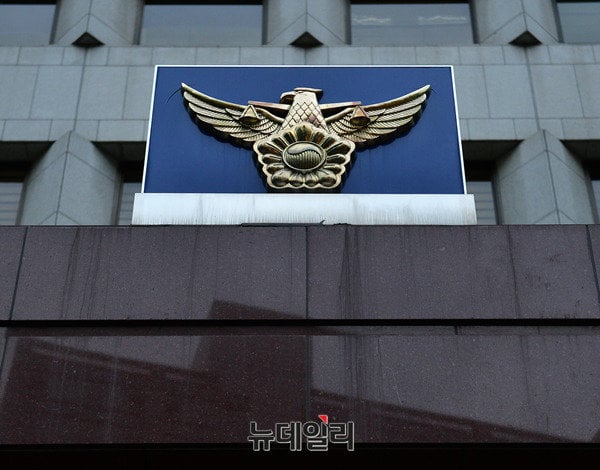
Lee Jae-myung’s ascent—from factory floors to South Korea’s presidency, carried aloft by the Democratic Party—has been marketed as a parable of grit, resilience, and populist authenticity. Yet governing under a shadow of unresolved criminal allegations, Lee now presides over a far starker transformation: the long-term degradation of democratic restraint through the consolidation of coercive state power. Even where convictions were overturned or cases remain pending, the scandals themselves—Daejang-district profiteering, politically convenient rezoning deals, and illicit remittances linked to North Korea—continue to cling like exhaust fumes that never quite dissipate. Under the banner of “reform,” the prosecutorial system was dismantled and replaced by a swollen police apparatus that concentrates authority over major crimes, intelligence gathering, and institutional oversight units—an architecture that trades legal contestation for administrative command. Revived police intelligence units, cosmetically rebranded but structurally familiar, resurrected the habits of political surveillance without restoring the external checks that once constrained them. This is not the democratization of justice so much as a classically illiberal power swap: authority shifted from a visible, litigable institution to a sprawling police bureaucracy insulated by discretion and scale. In the long run, such hypertrophy corrodes democratic development itself, normalizing surveillance as governance and substituting managerial control for popular accountability. South Korea’s old prosecutorial monopoly has been exchanged for a mega-police—accountable upward, politicized downward—an arrangement not merely convenient for a presidency under a permanent cloud, but actively hostile to the patient, adversarial checks on which durable democracy depends.
Lee Jae-myung holds four confirmed prior convictions—all resulting in fines—that together sketch an early and revealing pattern of ethically dubious, ends-justify-means conduct. In the early 2000s, he impersonated a prosecutor in order to secretly record and intimidate the mayor of Seongnam City during a corruption investigation; when confronted, he escalated by filing false charges, ultimately earning convictions for simulating public authority and perjury, compounded by violating a confidentiality pledge when he publicized the recording. Earlier still, as a political activist in the 1990s, Lee led a violent occupation of the Seongnam City Council over an ordinance dispute, obstructing official proceedings and physically injuring three councilors—injuries lasting two to three weeks—for which he was fined five million won. These pre-office episodes—abuse of authority, betrayal of trust, and willingness to deploy physical coercion—take on added significance when viewed alongside unresolved mega-cases rooted in municipal governance: the Daejang-dong public–private development project in Seongnam City (roughly $375 million in public losses tied to preferential treatment for private developers, with close aides already convicted), the Baekhyeon-dong rezoning scandal involving alleged breach of trust and illicit lobbying, accusations of embezzlement through Gyeonggi Province funds, and approximately $8 million in illegal remittances to North Korea. The absence of jail time and the lack of post-inauguration verdicts as of February 2026 have not softened these critiques; they have sharpened them, reinforcing the view that Lee is a serial opportunist whose early methods have merely scaled up alongside his power.
From Criminal Exposure to Police Expansion, South Korea Moves Toward a Surveillance State
It is within this context—not abstraction—that Lee’s signature institutional project must be judged. Branded as “prosecutorial reform,” his government did not merely curb an overmighty legal caste. It dismantled the prosecutorial system altogether, formally abolishing prosecutors’ investigative authority by October 2026 and transferring its core functions to the police. What replaced the so-called “prosecutor republic” was not a diffusion of power, but its consolidation—this time in uniform.
The centerpiece of this shift is the Heavy Crime Investigation Headquarters (hereafter Jungsubon). By 2026, Jungsubon had expanded to more than 6,400 officers, absorbing over 1,600 new hires in a single year. Its jurisdiction now spans the “nine major crimes”: corruption, economic crime, public officials, elections, defense, disasters, drugs, national security, and cybercrime—virtually the entire domain once monopolized by prosecutors. Budgets and manpower increased by roughly 30 percent in tandem, while oversight mechanisms lagged behind. The police, unlike prosecutors, operate without an external indictment authority or a genuinely independent supervisory body. Power moved laterally, not downward.
The internal dynamics of this expansion are equally revealing. In 2026 alone, 1,214 officers were reassigned from riot control units into Jungsubon divisions focused on phishing, narcotics, and financial crime. Applications for detective posts surged by 2.2 times amid public hype surrounding the new elite investigative corps. Career advancement within the police has been recalibrated around centralized investigation and intelligence work, embedding surveillance-oriented policing at the apex of institutional ambition. This was not accidental. It was design.
The resurrection of the police Information Division completes the picture. Officially abolished in 2024 after decades of criticism over political surveillance, the division returned quietly but extensively: 1,424 officers redeployed across 198 police stations nationwide. The stated rationale was operational failure—intelligence lapses exposed by a high-profile kidnapping case in Cambodia. Yet the response was not narrow correction but wholesale revival. To blunt public backlash, the units were rebranded as “Cooperation Officers,” a cosmetic fix meant to sanitize a historically toxic function. Interior Ministry assurances that there would be “no spying” were paired with a telling caveat: oversight would remain internal.
What emerges from these reforms is not democratized law enforcement but a fused apparatus of investigation, intelligence, and enforcement—a “mega-police” state. Authority now flows through Police Review Boards and the National Police Commission, bodies structurally tethered to the executive. The old prosecutorial monopoly has been replaced by something more opaque: a police force that gathers intelligence, controls investigations, and reviews itself, all within a single bureaucratic ecosystem.
Defenders argue that this merely ends prosecutorial abuse. But the cure may be worse than the disease. Prosecutors, for all their pathologies, were constrained by courts, adversarial procedure, and public visibility. Police power, by contrast, is front-loaded with surveillance—communications metadata, financial tracking, informant networks, digital monitoring. When such tools are deployed at scale across elections, corruption, and national security, the boundary between crime control and political management erodes rapidly.
The danger here is structural, not conspiratorial. Under a presidency burdened by ongoing legal exposure, the incentives for politicized enforcement need not be explicit. Anticipatory compliance—investigators intuiting the preferences of those who control budgets, promotions, and jurisdiction—does the work quietly. Abuse does not require orders; it emerges organically.
South Korea did not slide into a surveillance state through tanks in the streets. It arrived there through reform bills, staffing tables, and administrative fixes to elite crisis. In dismantling one illiberal institution, Lee Jae-myung’s government constructed another—larger, less transparent, and harder to challenge. What he governs today is not merely a country under a cloud, but a security architecture optimized for governing under one.
Source: https://foreignpolicyblogs.com/2026/03/19/from-prosecutor-republic-to-police-state-how-lee-jae-myungs-power-grab-endangers-korean-democracy/
Anyone can join.
Anyone can contribute.
Anyone can become informed about their world.
"United We Stand" Click Here To Create Your Personal Citizen Journalist Account Today, Be Sure To Invite Your Friends.
Before It’s News® is a community of individuals who report on what’s going on around them, from all around the world. Anyone can join. Anyone can contribute. Anyone can become informed about their world. "United We Stand" Click Here To Create Your Personal Citizen Journalist Account Today, Be Sure To Invite Your Friends.
LION'S MANE PRODUCT
Try Our Lion’s Mane WHOLE MIND Nootropic Blend 60 Capsules
Mushrooms are having a moment. One fabulous fungus in particular, lion’s mane, may help improve memory, depression and anxiety symptoms. They are also an excellent source of nutrients that show promise as a therapy for dementia, and other neurodegenerative diseases. If you’re living with anxiety or depression, you may be curious about all the therapy options out there — including the natural ones.Our Lion’s Mane WHOLE MIND Nootropic Blend has been formulated to utilize the potency of Lion’s mane but also include the benefits of four other Highly Beneficial Mushrooms. Synergistically, they work together to Build your health through improving cognitive function and immunity regardless of your age. Our Nootropic not only improves your Cognitive Function and Activates your Immune System, but it benefits growth of Essential Gut Flora, further enhancing your Vitality.

Our Formula includes: Lion’s Mane Mushrooms which Increase Brain Power through nerve growth, lessen anxiety, reduce depression, and improve concentration. Its an excellent adaptogen, promotes sleep and improves immunity. Shiitake Mushrooms which Fight cancer cells and infectious disease, boost the immune system, promotes brain function, and serves as a source of B vitamins. Maitake Mushrooms which regulate blood sugar levels of diabetics, reduce hypertension and boosts the immune system. Reishi Mushrooms which Fight inflammation, liver disease, fatigue, tumor growth and cancer. They Improve skin disorders and soothes digestive problems, stomach ulcers and leaky gut syndrome. Chaga Mushrooms which have anti-aging effects, boost immune function, improve stamina and athletic performance, even act as a natural aphrodisiac, fighting diabetes and improving liver function. Try Our Lion’s Mane WHOLE MIND Nootropic Blend 60 Capsules Today. Be 100% Satisfied or Receive a Full Money Back Guarantee. Order Yours Today by Following This Link.


| Visits: | 1,814,689,667 |
| Stories: | 8,659,574 |
Whistler Blowers, Insiders

