

Board of Peace Cultivates a New Corridor of the Willing: Kosovo Moves to Deploy Troops to Gaza, Demonstrating State Capacity

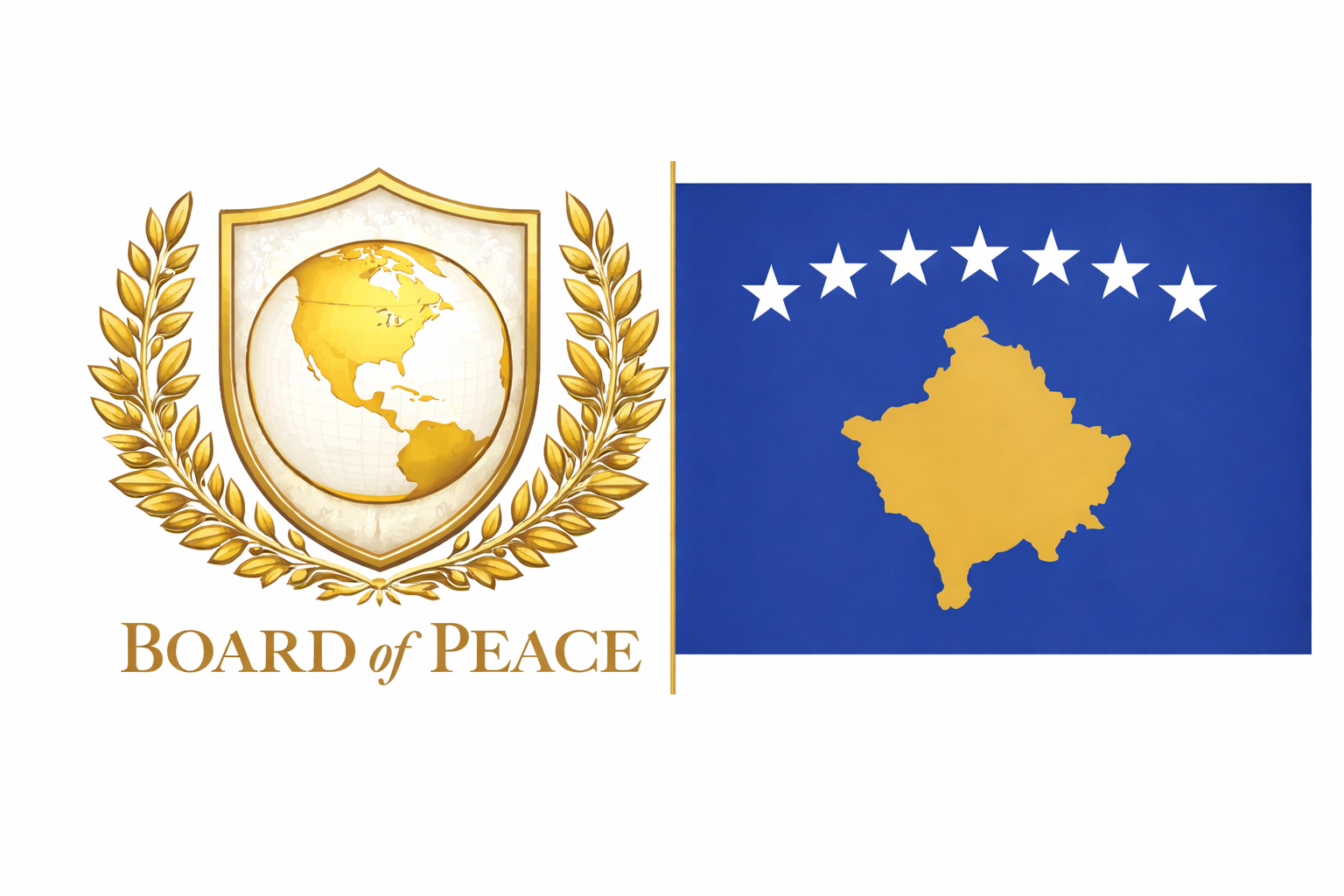
Will the Board of Peace become another short‑lived episode, akin to the Summit for Democracy, or will it thrive as a sustainable, pragmatic international body for reconstruction and development that also advances the values of universalism/communitarianism with American characteristics?
On March 30, 2026, Kosovo’s government, led by Prime Minister Albin Kurti, approved deployment of troops to Gaza as part of the Board of Peace –aligned International Stabilization Force (ISF), thereby aligning itself with a U.S.-backed and UN‑mandated mission. The initial Kosovo Security Force (KSF) operation element is expected to consist largely of specialized units—demining and unexploded ordnance disposal (EOD) teams, medical personnel, planning elements, and special operations support. Yet this move reflects the growing support of nation‑building and middle‑power–aspiring states across the broader Eurasian region, encompassing Eastern Europe, the Balkans, and Central Asia, revealing to the world a deeper commitment to addressing post‑conflict instability, countering terrorism, and laying the foundations for long‑term security.
“We are ready to participate and help the people of Gaza, because we ourselves have been, and remain, beneficiaries of international forces since 1999,” Prime Minister Kurti emphasized the ethics behind Kosovo’s shift from a passive recipient of international security assistance to an active contributor to global peace operations when announcing the troop deployment. Yet the implications go beyond the realm of ethics. For Kosovo—a state still navigating the threshold of UN membership—the mission presents a critical opportunity to validate its nation‑building trajectory by evolving its role on the global stage.
In response to Kosovo’s courageous decision, the Board of Peace promptly endorsed the deployment, noting that it “welcomes the strong commitment of the Government of Kosovo to advance peace and reconstruction in Gaza.” By giving Kosovo the green light, the Board of Peace has paved the way for it to further consolidate the international legitimacy of its latest diplomatic and military initiative.
Kosovo’s Nation-Building Aspirations Impeded by EU Western Balkan Politics
In the aftermath of the European Union’s 2014 enlargement moratorium—effectively implemented under Jean-Claude Juncker’s Commission during a period of Eurozone recovery and enlargement fatigue—Western Balkan integration trajectories diverged into two competing paradigms: pan-regional institutionalism and state-driven pragmatic regionalism.
The first, embodied in Germany’s Berlin Process and later institutionalized through the EU’s Common Regional Market (CRM), pursued a comprehensive, multilateral approach. Launched by Chancellor Angela Merkel in 2014, the Berlin Process brought together all six Western Balkan states (WB6)—Albania, Bosnia and Herzegovina, Kosovo, Montenegro, North Macedonia, and Serbia—into a coordinated framework designed to prepare the region for eventual EU accession. Across eleven annual summits, from Berlin in 2014 to Tirana in 2024, and supported by EU institutional mechanisms such as the Regional Cooperation Council (RCC) and the Western Balkans Investment Framework (WBIF), the initiative mobilized more than €10 billion in funding and achieved meaningful progress in regional infrastructure, including transport and energy connectivity projects. In 2020, the CRM further deepened integration by advancing the policy ideas of the four freedoms—the movement of goods, services, capital, and labor—while aligning with the EU’s main agendas, including digital market harmonization, SEPA payment integration, and the European Green Deal.
However, the EU’s integration efforts have gradually stalled, due in part to the behind‑the‑scenes politics and diplomacy of the region, as this consensus‑driven model required unanimous agreement among all WB6 participants and proved highly susceptible to political vetoes. In particular, Serbia’s persistent obstruction of Kosovo‑related measures—notably its repeated blockage of initiatives aimed at normalizing Belgrade–Pristina cooperation—has significantly slowed progress. Such obstructive behavior is especially noticeable in Serbia’s refusal to fully implement the 2013 Brussels Agreement, which integrates North Kosovo into Kosovo’s legal and institutional framework and effectively acknowledges Kosovo’s authority over the judiciary and police, while Serbia formally refrains from recognizing Kosovo’s independence. Instead of embracing Kosovo’s authority under this framework, Serbia has pushed for the establishment of the Association/Community of Serb‑Majority Municipalities (ASM/CSM) within Kosovo, thereby seeking to strengthen collective Serb autonomy inside the country rather than accepting the logic of Kosovo’s centralized institutional authority.
In contrast to the EU’s Berlin Process–centered Common Regional Market (CRM), the Open Balkan initiative, launched in 2021 by Albanian Prime Minister Edi Rama in partnership with Serbian President Aleksandar Vučić and North Macedonian Prime Minister Zoran Zaev (later Dimitar Kovačevski), adopted a more flexible and pragmatic approach. Often described as a “Mini‑Schengen,” Open Balkan prioritized rapid, tangible outcomes through non‑binding agreements, bypassing the EU’s formal accession framework. By 2023, the initiative had delivered expedited border procedures, mutual recognition of professional qualifications and health certifications, pension portability, and a unified tourism framework. In sum, intra‑regional trade among the participating states increased significantly, alongside greater cross‑border labor mobility.
Despite the neighbouring countries’ growing interdependency, Kosovo again remained structurally excluded from Open Balkan from its inception. Political tensions with Serbia, particularly Belgrade’s refusal to engage with Kosovo on a state‑to‑state basis, effectively barred Pristina’s participation. A clear example is the 2021 Belgrade summit, where Serbia insisted that Kosovo be invited not as an equal state participant but as a technical observer, without formal signing rights, effectively limiting its role in shaping the initiative’s rules and benefiting from its core provisions. As a result, the initiative’s benefits were unevenly distributed, reinforcing Kosovo’s marginalization within regional economic and political frameworks.
Consequently, both paradigms of the Western Balkans’ integration into the EU produced unintended constraints on Kosovo’s nation‑building trajectory. The pan‑regional model, while inclusive in design, empowered rival actors’ veto power to block Kosovo’s progress, whereas the Open Balkan framework, though more efficient, effectively institutionalized Kosovo’s exclusion. These dynamics were in turn compounded by broader EU‑level stagnation, including limited accession momentum, shifting political priorities, and growing skepticism toward enlargement. As a result of these combined factors, by 2025–2026 Kosovo faced a convergence of structural challenges: prolonged political deadlock following snap elections—epitomized by the 2021 parliamentary early election, called after the legislature’s dissolution under constitutional and political strain—the suspension of key EU funding mechanisms, and stalled progress in accession‑related processes.
Within this context, Kosovo’s participation in the Board of Peace emerged not as an isolated foreign policy decision, but as an alternative strategic avenue. It reflects a broader strategic recalibration, enabling Pristina to circumvent regional and European constraints and position itself as a proactive contributor to international peace and security.
The Board of Peace’s New Corridor of the Willing Establishes a Comprehensive Developmental Architecture with American Characteristics
The Board of Peace marks the rise of a ‘New Corridor of the Willing,’ redefining multilateral integration through a distinctly American lens of strategic pragmatism. This framework replaces the passive, open-ended institutionalism of previous eras with the principle of functional sovereignty. By aligning approximately 31% of its membership as active stakeholders along the IMEC and Middle Corridor, the Board of Peace consolidates a comprehensive developmental architecture where stability and reconstruction are shared responsibilities. Within this system, a core axis of partners—most notably the UAE, Azerbaijan, and Albania—functions as the essential financial and infrastructure nodes that sustain these transnational networks.
In this strategic triad, the UAE serves as the primary capital hub for the IMEC zone, while Azerbaijan acts as the indispensable energy anchor for the Middle Corridor. Albania emerges as the regional gatekeeper at the strategic crossroads where these corridors converge into the European market via the Trans Adriatic Pipeline (TAP). By prioritizing the selective integration of these pivotal nations, the US-led Board of Peace provides a robust mechanism to neutralize the monopolistic leverage of dominant regional actors.
This stewardship replaces traditional power asymmetries with a model of strategic interdependence, anchored in synchronized technological standards and permanent route diversification. Such structural redundancy effectively strips any single transit power of the ability to exercise a unilateral veto over global supply chains, ensuring the corridor remains insulated from local political volatility. Ultimately, this approach transforms the position of smaller states, such as Kosovo, from points of geographic vulnerability into indispensable, tech-integrated anchors for regional reconstruction, advancing a pragmatic form of universalism/communitarianism with American characteristics.
Source: https://foreignpolicyblogs.com/2026/04/15/board-of-peace-cultivates-a-new-corridor-of-the-willing-kosovo-moves-to-deploy-troops-to-gaza-demonstrating-state-capacity/
Anyone can join.
Anyone can contribute.
Anyone can become informed about their world.
"United We Stand" Click Here To Create Your Personal Citizen Journalist Account Today, Be Sure To Invite Your Friends.
Before It’s News® is a community of individuals who report on what’s going on around them, from all around the world. Anyone can join. Anyone can contribute. Anyone can become informed about their world. "United We Stand" Click Here To Create Your Personal Citizen Journalist Account Today, Be Sure To Invite Your Friends.
LION'S MANE PRODUCT
Try Our Lion’s Mane WHOLE MIND Nootropic Blend 60 Capsules
Mushrooms are having a moment. One fabulous fungus in particular, lion’s mane, may help improve memory, depression and anxiety symptoms. They are also an excellent source of nutrients that show promise as a therapy for dementia, and other neurodegenerative diseases. If you’re living with anxiety or depression, you may be curious about all the therapy options out there — including the natural ones.Our Lion’s Mane WHOLE MIND Nootropic Blend has been formulated to utilize the potency of Lion’s mane but also include the benefits of four other Highly Beneficial Mushrooms. Synergistically, they work together to Build your health through improving cognitive function and immunity regardless of your age. Our Nootropic not only improves your Cognitive Function and Activates your Immune System, but it benefits growth of Essential Gut Flora, further enhancing your Vitality.

Our Formula includes: Lion’s Mane Mushrooms which Increase Brain Power through nerve growth, lessen anxiety, reduce depression, and improve concentration. Its an excellent adaptogen, promotes sleep and improves immunity. Shiitake Mushrooms which Fight cancer cells and infectious disease, boost the immune system, promotes brain function, and serves as a source of B vitamins. Maitake Mushrooms which regulate blood sugar levels of diabetics, reduce hypertension and boosts the immune system. Reishi Mushrooms which Fight inflammation, liver disease, fatigue, tumor growth and cancer. They Improve skin disorders and soothes digestive problems, stomach ulcers and leaky gut syndrome. Chaga Mushrooms which have anti-aging effects, boost immune function, improve stamina and athletic performance, even act as a natural aphrodisiac, fighting diabetes and improving liver function. Try Our Lion’s Mane WHOLE MIND Nootropic Blend 60 Capsules Today. Be 100% Satisfied or Receive a Full Money Back Guarantee. Order Yours Today by Following This Link.


| Visits: | 1,835,915,931 |
| Stories: | 8,726,352 |
Whistler Blowers, Insiders

