

Something Old, Something New

The following is an excerpt from American Vision’s new book, The Greatest and the Least: A Biblical Theology of John the Baptist, by Eric Rauch and Zach Davis:
In the New Testament, we find the familiar stories of the miraculous births of John the Baptist and Jesus. Luke gives the most information (Luke 1–2) and Matthew adds a bit more to our understanding of the historical events (Matthew 1:18-25). While there are similarities between their births, it is in the differences that the unfolding biblical narrative gets very interesting. God uses both of these births, as well as their ensuing lives, as an object lesson about the difference between the Old and the New Covenants.
We tend to sentimentalize the events surrounding the births of John and Jesus as part of the “Christmas Story.” There’s nothing wrong with this and it’s good to remember and rehearse the stories every December, but there’s a danger of missing the miraculous and prophetic significance. The statistical likelihood of Zechariah being priest that year was nearly impossible. He was one of 300 in his own division (Abijah, Luke 1:5), and one of 7200 overall. (Some sources put the estimate as high as 10,000.) Daniel Darling explains the historical reality well:
Zechariah was a priest from the family of Aaron, Moses’s brother. Elizabeth was also from the family of Aaron. So priestly functions and duties were in their blood. There were twenty- four divisions or families of priests, each with three hundred priests. Every division would have two weeks out of the year to serve at the temple, outside of the major festivals, where it was all hands on deck for every priest. This particular day that Luke describes was a special day for Zechariah because he was chosen to go into the holy place and burn incense at the altar. To decide who would get this honor, priests would cast lots. If chosen, this would be a once-in-a-lifetime event, the highest honor in a temple priest’s life.[1]
With so many priests to choose from, even within a division, the possibility of ever being selected to burn the incense in the Holy of Holies was very remote. Despite the unlikely fact of the lot falling to Zechariah, there is also the unusual situation of an angel appearing at the very same time. It would be difficult to describe this as anything less than divine providence. Darling continues:
Angels didn’t just regularly appear at Herod’s temple in Zechariah’s day. The people of God, let’s remember, had not heard from God in four hundred years. So after this long winter of silence, suddenly and without warning, Gabriel, the same angel who had appeared before Daniel (Dan. 9:21) five hundred years earlier during a time of sacrifice, was now in the presence of the trembling priest, Zechariah… [His] response is identical to Daniel’s response: they both fell on their faces in fear. Today when we think of angels, we are not afraid of them really. To be “touched by an angel” is to be followed around by Clarence, the affable messenger from It’s a Wonderful Life. But in Scripture, when a messenger of God arrived, it sparked fear. Fear because an angel, even in a diminished sense, represented the holiness and white-hot glory of God. In those days, God was not seen as the helpful “man upstairs.” He was the One who could strike with vengeance and who judged the nations.[2]
The angel Gabriel delivers messages regarding the births to both Zechariah and Mary (Luke 1:19 and 26–27). They are described by Luke as “good news” (1:19 and 2:10–11) and defy the normal conventions of pregnancy: Zechariah and his wife Elizabeth were childless and “advanced in years” (Luke 1:7) and Mary was a young virgin (1:27, 34). John’s birth would be considered impossible because Elizabeth was barren and beyond her child-bearing years; Jesus is born to a young girl who had never been with a man. Both births are miracles, but for different reasons. The first is in an aged vessel, and the second is in a brand-new one. God was doing a new thing by contrasting it with the old. The old wineskins had served their purpose; it was time for new wine (Mark 2:22).
It is also interesting to note that Zechariah receives his vision in the temple, in the innermost holy place, at the altar of incense.
Zechariah had come up from the hill country of Judea, from the neighborhood of priestly Hebron, to minister in the Temple. His course—that of Abia—was on duty for the week, and the “house of his fathers” for that special day. More than that, the lot had fallen on Zechariah for the most honorable service in the daily ministry—that of burning the incense on the golden altar within the Holy Place. For the first time in his life, and for the last, would this service devolve on him. As the pious old priest ministered within the Holy Place, he saw with such distinctness that he could afterwards describe the very spot, Gabriel standing, as if he had just come out from the Most Holy Place, between the altar and the table of shewbread, “on the right side of the altar.” So far as we know, this was the first and only angelic appearance in the Temple.[3]
As a priest, it makes sense that Zechariah would receive his vision in the temple. Edersheim’s observation about this being the only angelic visit to the temple recorded in Scripture is significant. Mary and Joseph both receive their visits in ordinary places: Mary in Galilee (Luke 1:26–27) and Joseph in his home (presumably asleep in bed, Matthew 1:20, 24). During their ministries three decades later, John locates outside of Jerusalem, in the wilderness, but Jesus makes regular visits to the temple and the surrounding city. John condemns the practices of the scribes and Pharisees—the stewards of God’s temple—from afar, calling them a brood of vipers and false teachers (Matthew 3:7–10), and Jesus leaves Galilee to begin His public ministry—which culminates in a scathing indictment of the scribes and Pharisees in the temple (Matthew 23)—by first going out to John for baptism (Matthew 3:13). The point is clear: the only words of truth coming from within the temple walls are those spoken by Gabriel, and 30 years later, by Jesus.
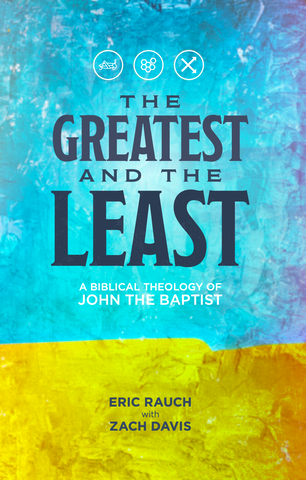
John the Baptist was a polarizing figure in early first century Judea. Before Jesus began his own public ministry, John was attracting a number of young tradesmen as followers. Change was in the air and like many social movements, the young men were the first to take notice. Interestingly, John does not have the same polarizing effect today. He was the transitional figure providing a clear path and a smooth road from the covenant with Adam to the new covenant with the Second Adam. As the final and greatest prophet of the Old Testament, John embodied and fulfilled the very purpose of the Law: revealing Jesus as the Bringer of God’s Kingdom.
[1] Daniel Darling, The Characters of Christmas: The Unlikely People Caught Up in the Story of Jesus (Chicago, IL: Moody Publishers, 2019), 36–37.
[2] Darling, The Characters of Christmas, 37–38.
[3] Alfred Edersheim, The Temple (Grand Rapids, MI: Kregel Publications, [1874] 1997), 108.
American Vision’s mission is to Restore America to its Biblical Foundation—from Genesis to Revelation. American Vision (AV) has been at the heart of worldview study since 1978, providing resources to exhort Christian families and individuals to live by a Biblically based worldview. Visit www.AmericanVision.org for more information, content and resources
Source: https://americanvision.org/posts/something-old-something-new/
Anyone can join.
Anyone can contribute.
Anyone can become informed about their world.
"United We Stand" Click Here To Create Your Personal Citizen Journalist Account Today, Be Sure To Invite Your Friends.
Before It’s News® is a community of individuals who report on what’s going on around them, from all around the world. Anyone can join. Anyone can contribute. Anyone can become informed about their world. "United We Stand" Click Here To Create Your Personal Citizen Journalist Account Today, Be Sure To Invite Your Friends.
LION'S MANE PRODUCT
Try Our Lion’s Mane WHOLE MIND Nootropic Blend 60 Capsules
Mushrooms are having a moment. One fabulous fungus in particular, lion’s mane, may help improve memory, depression and anxiety symptoms. They are also an excellent source of nutrients that show promise as a therapy for dementia, and other neurodegenerative diseases. If you’re living with anxiety or depression, you may be curious about all the therapy options out there — including the natural ones.Our Lion’s Mane WHOLE MIND Nootropic Blend has been formulated to utilize the potency of Lion’s mane but also include the benefits of four other Highly Beneficial Mushrooms. Synergistically, they work together to Build your health through improving cognitive function and immunity regardless of your age. Our Nootropic not only improves your Cognitive Function and Activates your Immune System, but it benefits growth of Essential Gut Flora, further enhancing your Vitality.

Our Formula includes: Lion’s Mane Mushrooms which Increase Brain Power through nerve growth, lessen anxiety, reduce depression, and improve concentration. Its an excellent adaptogen, promotes sleep and improves immunity. Shiitake Mushrooms which Fight cancer cells and infectious disease, boost the immune system, promotes brain function, and serves as a source of B vitamins. Maitake Mushrooms which regulate blood sugar levels of diabetics, reduce hypertension and boosts the immune system. Reishi Mushrooms which Fight inflammation, liver disease, fatigue, tumor growth and cancer. They Improve skin disorders and soothes digestive problems, stomach ulcers and leaky gut syndrome. Chaga Mushrooms which have anti-aging effects, boost immune function, improve stamina and athletic performance, even act as a natural aphrodisiac, fighting diabetes and improving liver function. Try Our Lion’s Mane WHOLE MIND Nootropic Blend 60 Capsules Today. Be 100% Satisfied or Receive a Full Money Back Guarantee. Order Yours Today by Following This Link.


| Visits: | 1,753,329,548 |
| Stories: | 8,541,073 |
Whistler Blowers, Insiders

