

Why Millennial Animal Sacrifices Undermine Christianity

Joel Richardson posted the following on Facebook: “Why Millennial Sacrifices Do Not Undermine the Cross.” There are several problems with this claim. First, Revelation 20 does not say Jesus will reign on Earth for the symbolic thousand years, that another temple will be built (I’m losing count), or that animal sacrifices will take place. Everything the premils say about Revelation must be imported from other parts of the Bible, without regard to context. This was an early practice, as I show in chapter 3 of New Testament Eschatology.
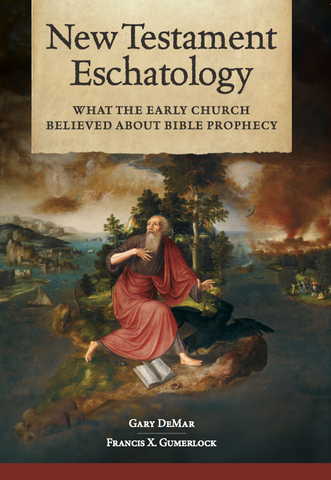
It has been maintained by some modern writers that the early church was predominately premillennial and exclusively futuristic on Bible prophecy. While these claims have been made with certainty, there has always been a lack of clear historical documentation to support them. Sometimes the historical record has been stretched and exaggerated to fit an already developed theory. But since the futurist perspective has been promoted as an early church reality by so many for so long, few question it. New Testament Eschatology challenges this prevailing futurist view with a careful study of the historical record. The evidence shows that many early church writers understood the destruction of Jerusalem in AD 70 to be the end of the Old Covenant world.
Second, there is nothing in Scripture where we are told that animal sacrifices should or could serve as a memorial for the fulfilled redemptive work of Jesus.
Third, has Joel Richardson read the book of Hebrews? An entire NT book was written to settle any ambiguity about the temporary typological sacrificial system that had passed away.
Some people commented that the temple rites were still operating. This is true. Paul went along with them to gain access to his Jewish audience. “Because of the Jews” (Acts 16:3). Paul had to deal with “the false brethren who had sneaked in to spy out our liberty which we have in Christ Jesus, in order to bring us into bondage” (Gal. 2:4). It’s worth reading Paul’s entire argument in Galatians 2, including his rebuke of Peter. The dispute with the Judaizers could have been resolved by saying, “You can continue to circumcise and offer sacrifices as memorials.” It would have created what Paul and the rest of the NT writers were trying to avoid, and dispensationalists want to perpetuate. There aren’t two trees: there’s only one (Rom. 11:11-24). There aren’t two men: there’s only one “new man in Christ” (Eph. 2:11-22).
In Tim LaHaye’s Prophecy Study Bible, we read what dispensationalists claim will take place during the “millennium.” “No foreigner who is uncircumcised in heart and flesh may enter [the temple], neither will any descendants of the Levites conduct services, other than the godly descendants of Zadok.”[1] There aren’t any descendants of Zadok. And if there were, they would not be needed. Circumcision of the heart was an Old Covenant requirement (Deut. 10:16; 30:6; Jer. 4:4). While circumcision of the heart is still required under the New Covenant (Rom. 2:28-29), physical circumcision is not. Those in Christ, whether Jew or Gentile, are the “true circumcision” (Phil. 3:2-3).
John C. Whitcomb, Jr., in his article on “The Millennial Temple” in Tim LaHaye’s Prophecy Study Bible, writes that “five different offerings in Ezekiel (43:13-46:15), four of them with bloodletting, will serve God’s purposes. These offerings are not voluntary but obligatory; God will ‘accept’ people on the basis of these animal sacrifices (43:27), which make reconciliation [atonement] for the house of Israel (45:17, cf. 45:15).”[2] Whitcomb attempts to moderate the problems associated with this unbiblical view by claiming that “the offerings will not take away sin (see Heb. 10:4), but they will be effective in sanctifying Israelites ceremonially because of His infinitely holy presence in their midst.”[3] This is crazy talk!
This interpretation is impossible for at least three reasons. First, these sacrifices are said to be “for atonement” (reconciliation) (Ezek. 45:15, 17), not as Whitcomb claimed, “as effective vehicles of divine instruction for Israel and the nations during the Millennial Kingdom.”[4] Second, Jesus is the once-for-all sacrifice whose blood cleanses us from sin (Heb. 7:26-27; 8:13; 9:11-15; 10:5-22; 1 Peter 3:18). Third, sanctification comes by “the washing of water with the word” (Eph. 5:26), not by the washing of blood from animal sacrifices.
Jesus paid it all, all to Him I owe;
Sin had left a crimson stain,
He washed it white as snow.[5]
Jesus said it Himself, “It is finished” (John 19:30). The debt of sin has been paid—tetelestai. The covenants made with Noah, Abraham, and David are complete. There’s nothing left to fulfill. Any return to the shadows of the Old Testament darkens the truth that Jesus is “the light of the world” (John 8:12). “Every good thing bestowed and every perfect gift is from above, coming down from the Father of lights, with whom there is no variation, or shifting shadow” (James 1:17). Notice how the apostle Paul calls on God’s people not to let anyone judge them regarding “food and drink, or in respect to a festival or a new moon, or a Sabbath day—things which are only a shadow of what is to come; but the substance belongs to Christ” (Col. 2:16-17). Those were the “elementary principles of the oracles of God” that the New Testament Christians were told to leave behind (Heb. 6:1).
In the original Scofield Reference Bible (1909), a note on the nature of these blood sacrifices described in Ezekiel seeks to obscure the problem related to blood sacrifices during the thousand years of Revelation 20 by claiming that “these offerings will be memorial, looking back to the cross, as the offerings under the old covenant were anticipatory, looking forward to the cross.” I wonder why the Judaizers didn’t think of this argument.
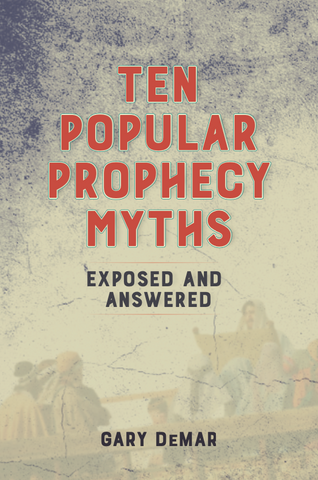
Since the reestablishment of Israel in 1948, “end-time” prophetic speculation has been on the rise. While there is a long history of date setting, the past century has seen an exponential increase in the number of books proclaiming that the end is near. It’s time that the “Boy who cried wolf” syndrome be dealt with in a biblical way. Millions of books have been sold proclaiming countless false prophecies. Many Christians are beginning to take a second look at the biblical prophetic record. A seismic shift in biblical eschatology is taking place around the world because Christians, some for the first time, are willing to challenge what they have been taught based on what the Bible actually says.
A note in the New Scofield Reference Bible (1967) acknowledges that “a problem is posed” by the atoning nature of these sacrifices “since the N.T. clearly teaches that animal sacrifices do not in themselves cleanse away sin (Heb. 10:4) and that the one sacrifice of the Lord Jesus Christ that was made at Calvary completely provides for such expiation (cp. Heb. 9:12, 26, 28; 10:10, 14).” How do the editors solve the problem given their literal hermeneutic? First by suggesting that the blood sacrifices “will be memorial in character,”[6] and second, “the references to sacrifices is [sic] not to be taken literally.” Ryrie takes a similar position: “If the great festivals of Passover and Tabernacles are to be observed during the Millennium, there is no reason why sacrifices would not also be offered. Then, of course, they will be memorials of the finished sacrifice of Christ.” Where Jesus says, “It is finished” (John 19:30), dispensationalists claim that bloodletting and blood sacrifices will continue for a future thousand years with the slain, resurrected, and glorified Jesus sitting on David’s throne from Jerusalem. With His nail prints and sliced side in plain view, the people will still be sacrificing animals!
Ezekiel does not say these sacrifices “will be memorials.” The Bible clearly states that they are “for atonement” (Ezek. 45:17, 20). This means that Ezekiel’s visionary temple was either part of the Old Covenant renewal of the sacrificial system that arose during the post-exile restoration period, or the fulfillment that came through the once-for-all redemptive work of Jesus (Luke 24:25-27, 44-45). Jesus is the fulfillment of the temple and sacrificial system. “Neither by the blood of goats and calves, but by his own blood he entered in once into the holy place, having obtained eternal redemption for us” (Heb. 9:12). Why would there ever be a need for such memorials when we have the Original is Jesus! Are we to assume that the description of the crucifixion is not enough? Do we need the shadow to memorialize the reality?
If the sacrifices are “memorial in character,” as Scofield and Ryrie claim, or are “not to be taken literally,” which Whitcomb contends, then such conclusions violate dispensationalism’s insistence that since “fulfilled promises have been fulfilled in a literal way,” then “that leads to the conclusion that all the promises will have a literal fulfillment.”[7]
If the millennial sacrifices are a “memorial” looking backward in time, why did the author of Hebrews make such an issue of all the blood sacrifices being done away with in terms of what Jesus did if they could be practiced as a memorial? It makes no sense because the Bible doesn’t even hint at the absurdity of it all. Richardson and those who support his views are reviving the Judaizer heresy.
[1] Tim LaHaye, gen. ed., LaHaye Prophecy Study Bible (LPSB)(Chattanooga, TN: AMG Publishers, 2000), 886, comments on Ezekiel 44:5-15.
[2] John C. Whitcomb, Jr., “The Millennial Temple,” LPSB, 883.
[3] Whitcomb, “The Millennial Temple,” 883.
[4] Whitcomb, “The Millennial Temple,” 883.
[5] “Jesus Paid it All” by Elvina M. Hall (1865).
[6] Charles Feinberg follows the memorial approach when explaining why there will be animal sacrifices during the millennium. “The Church has had for some 1900 years a memorial of that sacrifice of Christ in the Lord’s Supper; Israel as such has had none. [Animal sacrifices] will be that memorial for them primarily.” Jesus stated that “this cup [filled with wine] is the new covenant in My blood” (Luke 22:20; cf. 1 Cor. 11:25). Remembrance of Jesus’ shed blood is done through wine, not the blood of animals. Since Jesus will be physically present, according to premillennialists, won’t the nail marks in His hands and feet and the spear mark in His side be enough to remind people of His redemptive ordeal? The Lord’s Supper was inaugurated with Jews using wine and bread. Feinberg reasons, “If no sacrifices are needed where Christ is present, why were they permitted of God all through the earthly ministry of Christ?” The simple and obvious reason is that Jesus had not yet shed His blood. Feinberg hoped to defend his view by asking this question: “And, thirdly, greater wonder still, why, after He had assuredly perfected our salvation forever on the cross, did God allow those sacrifices to go on until 70 A.D. when the temple was destroyed?” Charles L. Feinberg, Premillennialism or Amillennialism?: The Premillennial and Amillennial Systems of Biblical Interpretation Analyzed and Compared, 2nd ed. (Wheaton, IL: Van Kampen Press, 1954), 336-337. The fact that God called for the destruction of the temple, which included the sacrificial system, is clear testimony that the sacrificial system was finished when Jesus’ redemptive work ended.
[7] Benware, Understanding End Times Prophecy, 34.
American Vision’s mission is to Restore America to its Biblical Foundation—from Genesis to Revelation. American Vision (AV) has been at the heart of worldview study since 1978, providing resources to exhort Christian families and individuals to live by a Biblically based worldview. Visit www.AmericanVision.org for more information, content and resources
Source: https://americanvision.org/posts/why-millennial-animal-sacrifices-undermine-christianity/
Anyone can join.
Anyone can contribute.
Anyone can become informed about their world.
"United We Stand" Click Here To Create Your Personal Citizen Journalist Account Today, Be Sure To Invite Your Friends.
Before It’s News® is a community of individuals who report on what’s going on around them, from all around the world. Anyone can join. Anyone can contribute. Anyone can become informed about their world. "United We Stand" Click Here To Create Your Personal Citizen Journalist Account Today, Be Sure To Invite Your Friends.
LION'S MANE PRODUCT
Try Our Lion’s Mane WHOLE MIND Nootropic Blend 60 Capsules
Mushrooms are having a moment. One fabulous fungus in particular, lion’s mane, may help improve memory, depression and anxiety symptoms. They are also an excellent source of nutrients that show promise as a therapy for dementia, and other neurodegenerative diseases. If you’re living with anxiety or depression, you may be curious about all the therapy options out there — including the natural ones.Our Lion’s Mane WHOLE MIND Nootropic Blend has been formulated to utilize the potency of Lion’s mane but also include the benefits of four other Highly Beneficial Mushrooms. Synergistically, they work together to Build your health through improving cognitive function and immunity regardless of your age. Our Nootropic not only improves your Cognitive Function and Activates your Immune System, but it benefits growth of Essential Gut Flora, further enhancing your Vitality.

Our Formula includes: Lion’s Mane Mushrooms which Increase Brain Power through nerve growth, lessen anxiety, reduce depression, and improve concentration. Its an excellent adaptogen, promotes sleep and improves immunity. Shiitake Mushrooms which Fight cancer cells and infectious disease, boost the immune system, promotes brain function, and serves as a source of B vitamins. Maitake Mushrooms which regulate blood sugar levels of diabetics, reduce hypertension and boosts the immune system. Reishi Mushrooms which Fight inflammation, liver disease, fatigue, tumor growth and cancer. They Improve skin disorders and soothes digestive problems, stomach ulcers and leaky gut syndrome. Chaga Mushrooms which have anti-aging effects, boost immune function, improve stamina and athletic performance, even act as a natural aphrodisiac, fighting diabetes and improving liver function. Try Our Lion’s Mane WHOLE MIND Nootropic Blend 60 Capsules Today. Be 100% Satisfied or Receive a Full Money Back Guarantee. Order Yours Today by Following This Link.


| Visits: | 1,804,571,151 |
| Stories: | 8,638,761 |
Whistler Blowers, Insiders

