

Enemies of Energy: “Uniquely dangerous” nuclear power

Editor’s note: The following is an excerpt from the “Myths and Misconceptions” section of Enemies of Energy, a research report created for the Capital Research Center. The page for the full report is here: Enemies of Energy.
***
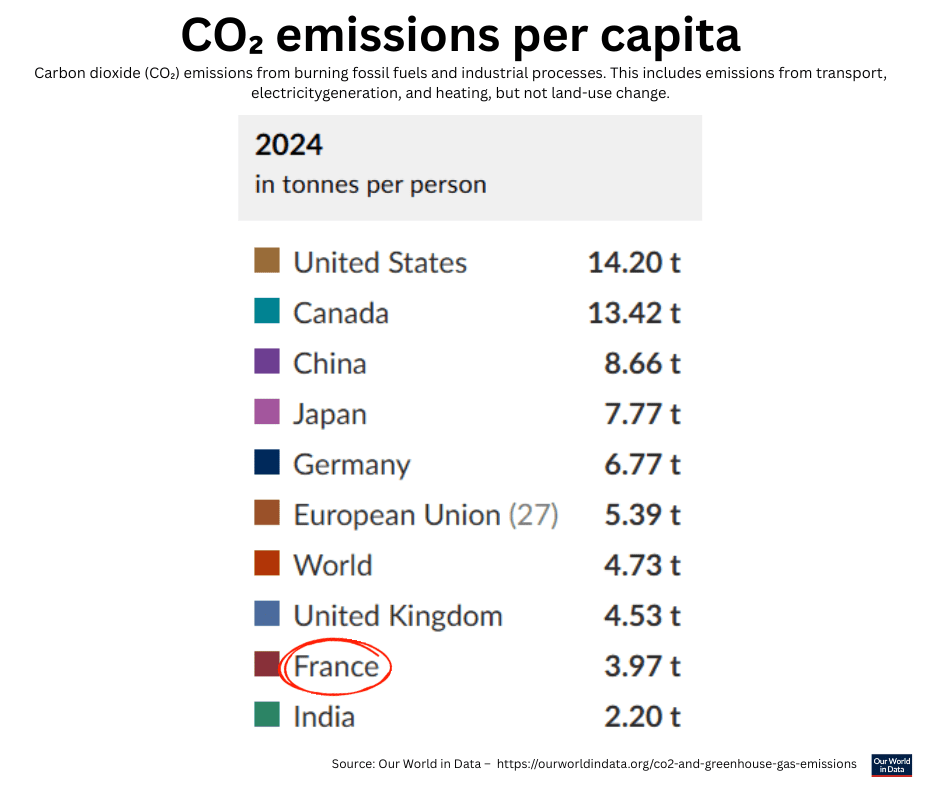
Despite not having a tailpipe, most electric vehicles operating in America generate carbon dioxide emissions because at least 60 percent of our electricity is generated with fuels that emit CO2. This is true for most of the world, with the important exception of France, which produces 70 percent of its electricity from nuclear power stations.[i] [ii]
Nuclear power production does not create greenhouse gas emissions, let alone carbon dioxide. Nuclear power plants emit only water vapor—the clouds that rise out of the iconic cooling towers. No nation collects remotely as much of its electricity from nuclear power as the French, and as a result few economies—and none of the world’s largest—have lower CO2 emissions per person than France. [iii]
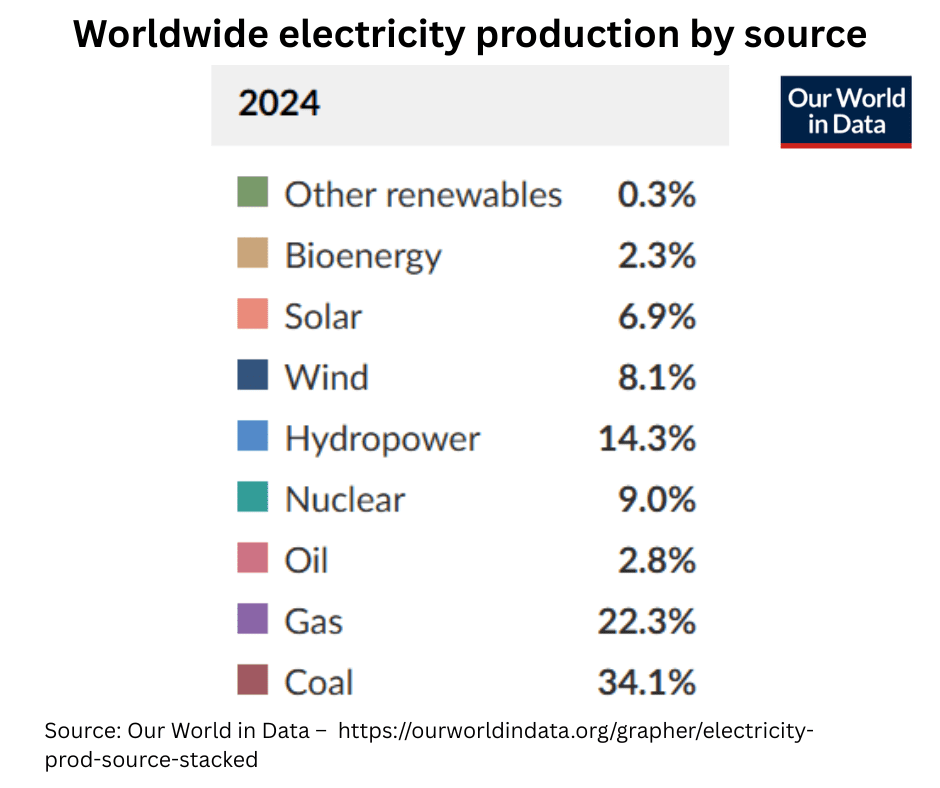
Nuclear is the second largest worldwide generator of electricity without CO2 emissions—ahead of both wind and solar and behind only hydro-electric dams. [iv]
As the massive French buildout of nuclear power demonstrates, it is also the only CO2-free electricity option that is both limitlessly scalable and reliable. There are only so many rivers on Earth that can be dammed up, and that’s assuming they should be used for this purpose, because hydro dams require a lot of land use and impose other environmental issues. Wind and solar, which have land use problems as well, carry the additional burden of working only when the wind and sun cooperate.
Despite creating the first reactor and having the largest fleet of nuclear stations on Earth, the United States now generates less than 20 percent of its electricity this way. [v] [vi] [vii]
***
 ***
***  ***
***
If present trends continue, the USA will soon be eclipsed by China. According to the World Nuclear Association, China is currently building out more than 41,000 megawatts of nuclear capacity, equal to 42 percent of the current American nuclear capacity. As of this writing, the nuclear industry trade group does not credit the United States with even a single reactor under construction. Total American nuclear capacity has been flat for more than two decades. [viii] [ix]
In spite of this, and despite years of lavish subsidies for wind and solar electricity, nuclear power remains America’s single largest emissions-free electricity source, generating more annual kilowatts than wind and solar combined. If the will were there to increase America’s production of CO2-free power generation, then there is no better option than building a lot of nuclear reactors. The United States clearly has the ability and wealth to match and eclipse the Chinese nuclear program. Like the French, we could generate at least 70 percent of our electricity from nuclear power, or even more. [x]
The anti-energy NGOs, all of them gravely concerned about the impact of CO2 emissions, are a major reason this is not happening. They also deserve blame for America’s abandonment of its nuclear energy leadership over the last half century. The Sierra Club is “unequivocally opposed” to nuclear power and claims it is “uniquely dangerous.” Over the last decade hundreds of other American NGOs have made similar statements, engaged in legal actions opposing nuclear power, or otherwise tried to impede it. The combined annual revenue of this anti-nuclear, anti-energy movement now exceeds $3.4 billion. [xi] [xii]
That means these enemies of American energy, and nuclear power in particular, are collecting an average of $9.3 million per day. [xiii]
Their claims do not match reality.
One person died of an assumed radiation-related lung cancer several years after the 2011 Fukushima nuclear incident in Japan. All other reasonably-claimed radiation fatalities from the world’s entire history of nuclear energy are credited to the 1986 Chernobyl disaster in the then-Soviet Union. [xiv]
In a 2017 analysis, Our World in Data reported the “confirmed death toll from Chernobyl is less than 100,” and that the “best approximation is that the true death toll is in the range of 300 to 500 based on the available evidence.” With these assumptions the report concluded that nuclear “is one of the safest energy sources” [xv]
The vagueness of that estimate is due to the difficulty in attributing cancers discovered long after the Chernobyl accident to radiation exposure that occurred during the accident. Other reputable sources have come up with even lower fatality numbers.[xvi]
A June 2024 report from the U.S. Department of Energy stated the following: [xvii]
U.S. nuclear plants are among the safest and most secure industrial facilities in the world. […] In the nearly 70-year history of civil nuclear power generation, with over 20,000 cumulative reactor-years of operation across 36 countries, there have been three significant accidents at nuclear power plants resulting in fewer than 30 deaths due to radiation exposure. [xviii]
But whether the true number of radiation fatalities from the history nuclear power is 500 or 30, it’s comparatively tiny when weighed against other energy options.
For example, 29 people died on a single day because of an April 2010 coal mine explosion in West Virginia. Just in American history, several coal mine accidents have claimed more than 100 lives, and three led to more than 250 fatalities each. A 1975 hydro dam failure in China killed tens of thousands immediately and 100,000 later on due to the impact of the flood. [xix] [xx]
The oil and gas industry is also more dangerous. Examples include the 2010 explosion on the Deepwater Horizon oil platform off the coat of Louisiana that killed 11 workers, and the 1988 Piper Alpha oil platform disaster in the North Sea that killed 167. [xxi] [xxii]
And while wind and solar produce far less energy than hydrocarbon and nuclear fuels, even these technologies claim lives due to accidents such as falls, fires, and drownings.[xxiii]
In a February 2020 report, Our World in Data compared the safety profiles of all forms of energy production, compared to the energy generated, and also included assumed deaths from air pollution. “Nuclear energy,” they concluded, “results in 99.9% fewer deaths than brown coal; 99.8% fewer than coal; 99.7% fewer than oil; and 97.6% fewer than gas.” [xxiv]
Our World in Data also rated nuclear power as being as safe and clean as wind and solar energy. A March 2021 analysis from the Department of Energy confirms this point, stating that nuclear power “produces minimal waste.” [xxv] [xxvi]
The Department of Energy report added this context: [xxvii]
All of the used nuclear fuel produced by the U.S. nuclear energy industry over the last 60 years could fit on a football field at a depth of less than 10 yards!
That waste can also be reprocessed and recycled, although the United States does not currently do this. [xxviii]
That last part is a feature, not a bug. Having never recycled, the United States has essentially gifted itself a large stockpile of zero emissions fuel. France does reprocess and recycle its spent nuclear fuel and now obtains 17 percent of its electricity from the supposed “waste.” As such, there is a good argument that there is no such thing as “nuclear waste.” [xxix]
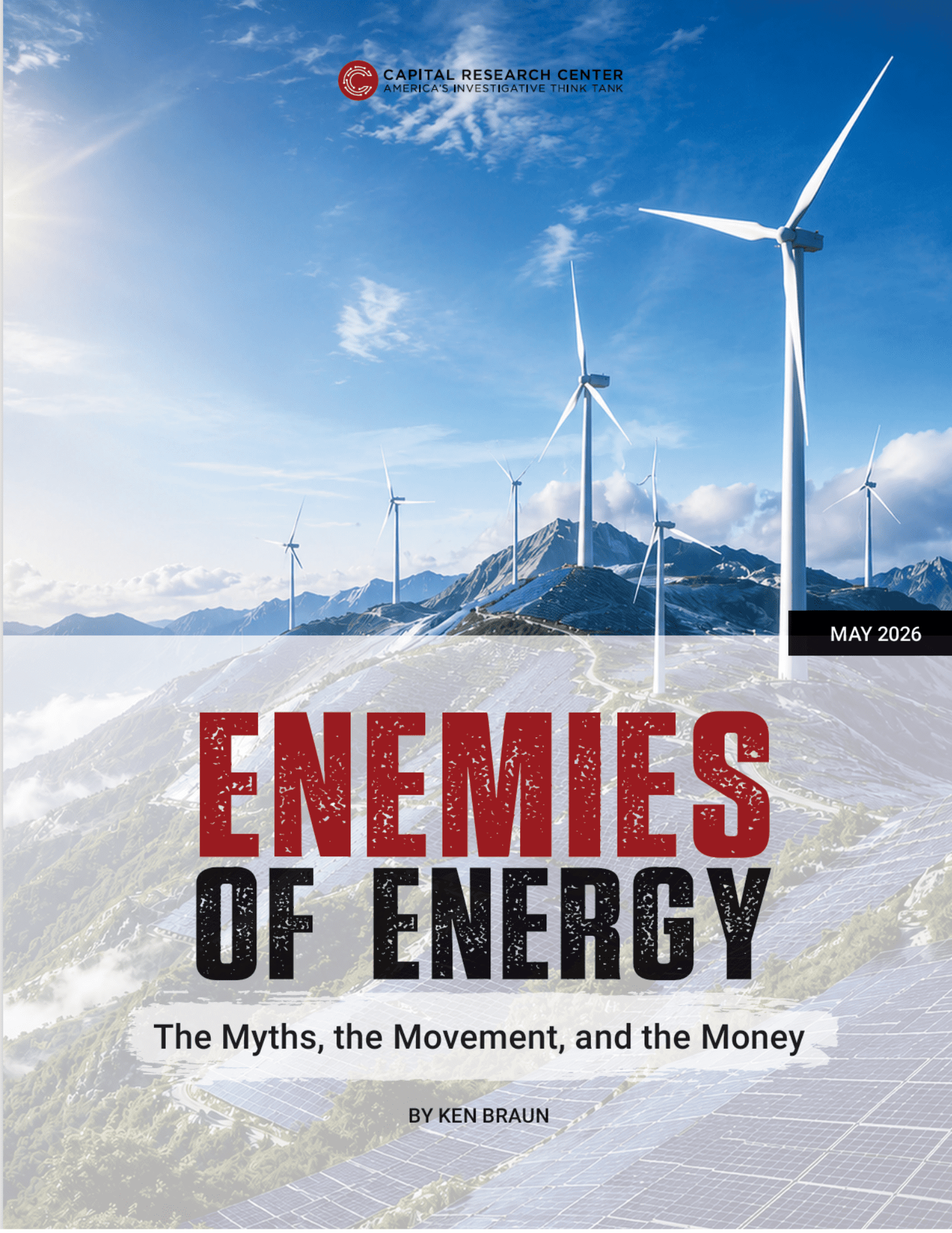
Full report hyperlinked below:
Endnotes
[i] “Electricity Explained.” Energy Information Agency. U.S. Department of Energy. Accessed January 5, 2026. https://www.eia.gov/energyexplained/electricity/
[ii] “Nuclear Power in France.” World Nuclear Association. (Updated January 14, 2026.) Accessed January 16, 2026. https://world-nuclear.org/information-library/country-profiles/countries-a-f/france
[iii] Ritchie, Hannah; Pablo Rosado, and Max Roser. “CO₂ and Greenhouse Gas Emissions.” Our World in Data. Accessed January 16, 2026. https://ourworldindata.org/co2-and-greenhouse-gas-emissions
[iv] “Electricity Production by Source, World.” Our World in Data. Accessed January 16, 2026. https://ourworldindata.org/grapher/electricity-prod-source-stacked
[v] “Electricity Explained.” Energy Information Agency. U.S. Department of Energy. Accessed January 5, 2026. https://www.eia.gov/energyexplained/electricity/
[vi] “Outline History of Nuclear Energy.” World Nuclear Association. (Updated July 17, 2025). Accessed January 16, 2026. https://world-nuclear.org/information-library/current-and-future-generation/outline-history-of-nuclear-energy
[vii] “Reactor Database.” World Nuclear Association. Accessed January 16, 2026. https://world-nuclear.org/nuclear-reactor-database/summary
[viii] “Reactor Database.” World Nuclear Association. Accessed January 16, 2026. https://world-nuclear.org/nuclear-reactor-database/summary
[ix] “Nuclear Reactors in United States Of America.” World Nuclear Association. Accessed January 16, 2026. https://world-nuclear.org/nuclear-reactor-database/summary/United%20States%20Of%20America?
[x] “Electricity Explained.” Energy Information Agency. U.S. Department of Energy. Accessed January 5, 2026. https://www.eia.gov/energyexplained/electricity/
[xi] “Nuclear Free Future.” Sierra Club. Accessed January 16, 2026. https://www.sierraclub.org/nuclear-free
[xii] Braun, Ken. “Anti-nuclear advocates raking in $9.3 million per day.” Capital Research Center. January 8, 2026. Accessed January 16, 2026. https://capitalresearch.org/article/anti-nuclear-advocates-raking-in-9-3-million-per-day/
[xiii] Braun, Ken. “Anti-nuclear advocates raking in $9.3 million per day.” Capital Research Center. January 8, 2026. Accessed January 16, 2026. https://capitalresearch.org/article/anti-nuclear-advocates-raking-in-9-3-million-per-day/
[xiv] Ritchie, Hannah. “What was the death toll from Chernobyl and Fukushima?” Our World in Data. July 24, 2017. Accessed January 16, 2026. https://ourworldindata.org/what-was-the-death-toll-from-chernobyl-and-fukushima
[xv] Ritchie, Hannah. “What was the death toll from Chernobyl and Fukushima?” Our World in Data. July 24, 2017. Accessed January 16, 2026. https://ourworldindata.org/what-was-the-death-toll-from-chernobyl-and-fukushima
[xvi] Ritchie, Hannah. “What was the death toll from Chernobyl and Fukushima?” Our World in Data. July 24, 2017. Accessed January 16, 2026. https://ourworldindata.org/what-was-the-death-toll-from-chernobyl-and-fukushima
[xvii] “5 Reasons Nuclear Is a Good Neighbor.” U.S. Department of Energy | Office of Nuclear Energy. June 13, 2024. Accessed January 16, 2026. https://www.energy.gov/ne/articles/5-reasons-nuclear-good-neighbor
[xviii] “5 Reasons Nuclear Is a Good Neighbor.” U.S. Department of Energy | Office of Nuclear Energy. June 13, 2024. Accessed January 16, 2026. https://www.energy.gov/ne/articles/5-reasons-nuclear-good-neighbor
[xix] “Historical Data on Mine Disasters in the United States.” United States Department of Labor. Accessed January 16, 2026. https://arlweb.msha.gov/MSHAINFO/FactSheets/MSHAFCT8.htm
[xx] Lynch, Andy. “Dam Failure Case Study: Banqiao Dam (China, 1975)” Association of State Dam Safety Officials. 2023. Accessed January 16, 2026. https://damsafety.org/reference/dam-failure-case-study-banqiao-dam-china-1975
[xxi] “Deepwater Horizon oil spill.” Britannica (online encyclopedia). Accessed January 16, 2026. https://www.britannica.com/event/Deepwater-Horizon-oil-spill/Legal-action
[xxii] “Piper Alpha disaster.” Britannica (encyclopedia). Accessed January 19, 2026. https://www.britannica.com/event/Piper-Alpha-disaster
[xxiii] Ritchie, Hannah. “What are the safest and cleanest sources of energy?” Our World in Data. February 10, 2010. Accessed January 16, 2026. https://ourworldindata.org/safest-sources-of-energy
[xxiv] Ritchie, Hannah. “What are the safest and cleanest sources of energy?” Our World in Data. February 10, 2010. Accessed January 16, 2026. https://ourworldindata.org/safest-sources-of-energy
[xxv] Ritchie, Hannah. “What are the safest and cleanest sources of energy?” Our World in Data. February 10, 2010. Accessed January 16, 2026. https://ourworldindata.org/safest-sources-of-energy
[xxvi] “3 Reasons Why Nuclear is Clean and Sustainable.” U.S. Department of Energy. March 31, 2021. Accessed January 16, 2026. https://www.energy.gov/ne/articles/3-reasons-why-nuclear-clean-and-sustainable
[xxvii] “3 Reasons Why Nuclear is Clean and Sustainable.” U.S. Department of Energy. March 31, 2021. Accessed January 16, 2026. https://www.energy.gov/ne/articles/3-reasons-why-nuclear-clean-and-sustainable
[xxviii] “3 Reasons Why Nuclear is Clean and Sustainable.” U.S. Department of Energy. March 31, 2021. Accessed January 16, 2026. https://www.energy.gov/ne/articles/3-reasons-why-nuclear-clean-and-sustainable
[xxix] “Nuclear Power in France.” World Nuclear Association. (Updated January 14, 2026.) Accessed January 16, 2026. https://world-nuclear.org/information-library/country-profiles/countries-a-f/france
Source: https://capitalresearch.org/article/enemies-of-energy-uniquely-dangerous-nuclear-power/
Anyone can join.
Anyone can contribute.
Anyone can become informed about their world.
"United We Stand" Click Here To Create Your Personal Citizen Journalist Account Today, Be Sure To Invite Your Friends.
Before It’s News® is a community of individuals who report on what’s going on around them, from all around the world. Anyone can join. Anyone can contribute. Anyone can become informed about their world. "United We Stand" Click Here To Create Your Personal Citizen Journalist Account Today, Be Sure To Invite Your Friends.
LION'S MANE PRODUCT
Try Our Lion’s Mane WHOLE MIND Nootropic Blend 60 Capsules
Mushrooms are having a moment. One fabulous fungus in particular, lion’s mane, may help improve memory, depression and anxiety symptoms. They are also an excellent source of nutrients that show promise as a therapy for dementia, and other neurodegenerative diseases. If you’re living with anxiety or depression, you may be curious about all the therapy options out there — including the natural ones.Our Lion’s Mane WHOLE MIND Nootropic Blend has been formulated to utilize the potency of Lion’s mane but also include the benefits of four other Highly Beneficial Mushrooms. Synergistically, they work together to Build your health through improving cognitive function and immunity regardless of your age. Our Nootropic not only improves your Cognitive Function and Activates your Immune System, but it benefits growth of Essential Gut Flora, further enhancing your Vitality.

Our Formula includes: Lion’s Mane Mushrooms which Increase Brain Power through nerve growth, lessen anxiety, reduce depression, and improve concentration. Its an excellent adaptogen, promotes sleep and improves immunity. Shiitake Mushrooms which Fight cancer cells and infectious disease, boost the immune system, promotes brain function, and serves as a source of B vitamins. Maitake Mushrooms which regulate blood sugar levels of diabetics, reduce hypertension and boosts the immune system. Reishi Mushrooms which Fight inflammation, liver disease, fatigue, tumor growth and cancer. They Improve skin disorders and soothes digestive problems, stomach ulcers and leaky gut syndrome. Chaga Mushrooms which have anti-aging effects, boost immune function, improve stamina and athletic performance, even act as a natural aphrodisiac, fighting diabetes and improving liver function. Try Our Lion’s Mane WHOLE MIND Nootropic Blend 60 Capsules Today. Be 100% Satisfied or Receive a Full Money Back Guarantee. Order Yours Today by Following This Link.


| Visits: | 1,817,070,906 |
| Stories: | 8,663,477 |
Whistler Blowers, Insiders

