

Not-so-non-partisan voter registration in Michigan

American charities under section 501(c)(3) status are not permitted to conduct politically biased voter registration programs. The IRS website is very clear on this: “Voter education or registration activities with evidence of bias that (a) would favor one candidate over another; (b) oppose a candidate in some manner; or (c) have the effect of favoring a candidate or group of candidates will constitute prohibited participation or intervention.” [emphasis added]
To put it charitably, some charities don’t seem to be following the rules. Consider the work of Promote the Vote Fund Inc. and Promote the Vote Inc., which operate as a paired set of 501(c)(3) and 501(c)(4) nonprofits with the shared name and website of Promote the Vote MI.
In the past, they have behaved as a political machine focused on supporting ballot measures to amend the Michigan constitution. Promote the Vote MI successfully backed Proposal 3 of 2018, which instated automatic voter registration, same-day voter registration, and no-excuse absentee ballots statewide; and Proposal 2 of 2022, which constitutionally mandated nine days of early voting, ballot drop boxes, and other recent changes to election administration.
After successfully undermining Michigan’s election integrity, Promote the Vote MI has shifted its focus to getting people to vote in those elections. In 2024, the most recent year of tax filings available, the group raised more than $5.5 million in combined revenue, with most coming from Promote the Vote Fund, the 501(c)(3) charitable wing. They spent it mostly on canvassing, litigation, advertising, consultants, and 400-plus volunteers who helped get out the vote.
One of the ways they have set about accomplishing their goals in 2026 is purchasing digital ads on Meta and Google, reminding viewers to check their voter registration status and register to vote before election day. Important for this analysis, on both platforms the ads clearly state they were paid for by the 501(c)(3) Promote the Vote Fund—the charity.
What’s the big deal though? Doesn’t this conform with the IRS rules?
Too often, the answer is “no.” Supposedly nonpartisan voter registration ads have a long history of controversy, particularly because several “nonpartisan” groups have been caught trying to use these ads in partisan ways.
Most recently in 2024, another nonprofit, the Voter Participation Center (VPC), was caught using filters on its voter registration ads on Meta that made sure the ads weren’t shown to users who were interested in typically Republican-heavy topics such as the PGA Tour, NASCAR, Tom Clancy, modified Jeeps, and Duck Dynasty. The scandal caused members of Congress to demand an investigation of the group because, by virtue of being a supposedly nonpartisan 501(c)(3) charity, the Voter Participation Center was forbidden from engaging in any kind of partisan electioneering.
Selective registration
Sketchy as VPC’s behavior was, Meta’s political ad transparency library now shows Promote the Vote doing something that’s arguably worse.
Both Meta and Google allow advertisers to select and exclude specific zip codes, cities, and states to target their most likely customers. In the state of New York, for example, Ford might advertise its big SUVs and F-150s by excluding Manhattan, where many residents don’t even own a car, and focus instead on rural upstate regions, where there are lots of truck buyers.
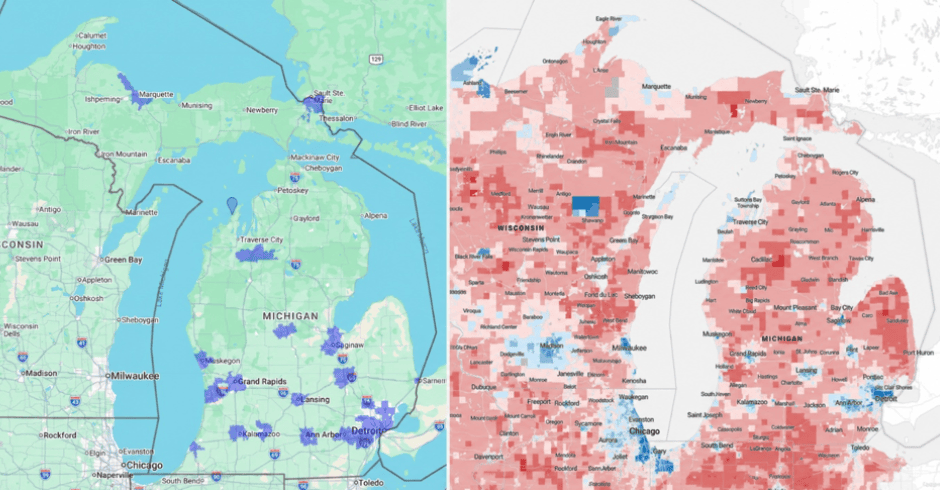
Below is a map of Promote the Vote’s targeted zip codes in Michigan (left) compared to the New York Times map of 2024 precinct-level presidential election results for the state (right). The correlation between Michigan’s heaviest Democratic precincts and Promote the Vote targeting looks as strong as the link between smoking and lung cancer:
Connecting the blue dots in Detroit
A comparison of the maps for Southeast Michigan (Detroit and its suburbs, west out to Ann Arbor and northwest through Oakland County) shows a similar general pattern:
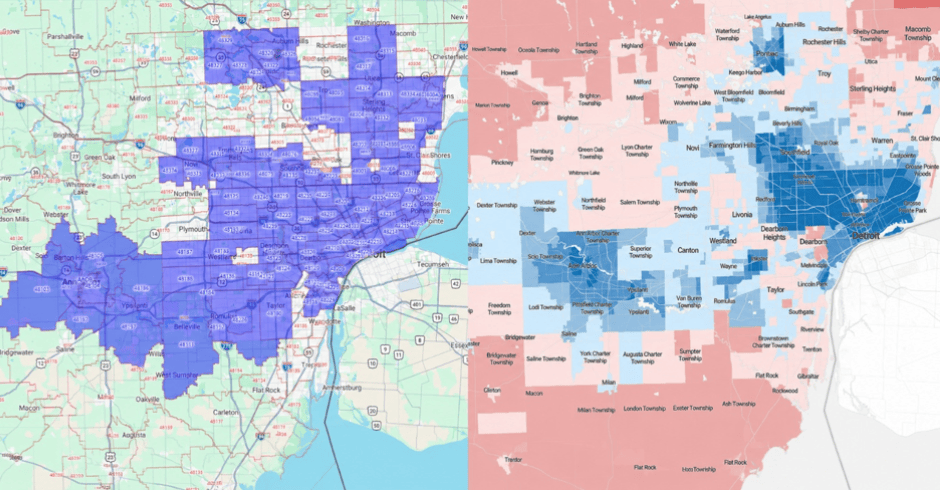
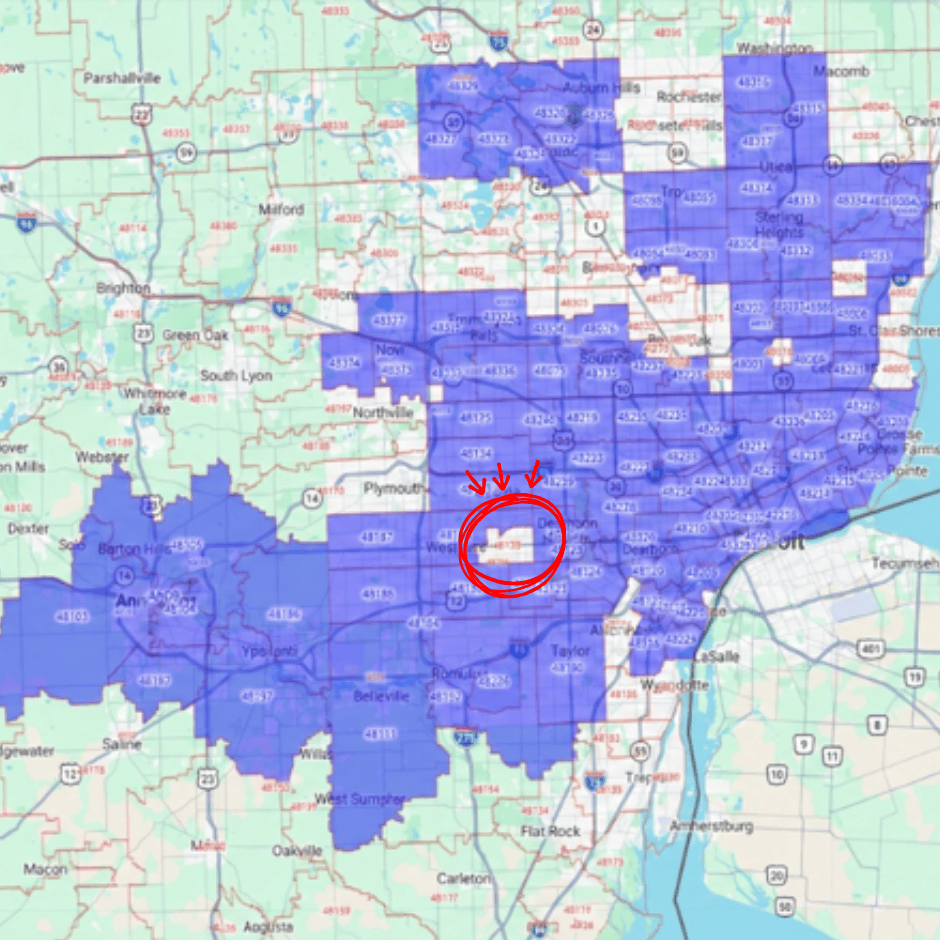
But stronger evidence of bias emerges when specific Detroit suburbs are examined. One of the most striking is Garden City, a Republican-leaning Detroit suburb that Trump won by nearly 9 percentage points in 2024. Promote the Vote excluded Garden City from their targeted advertising, even though they included every single zip code surrounding the town. A map of the Promote the Vote marketing strategy portrays Garden City as a tiny, ignored island in a sea of targeted zip codes:
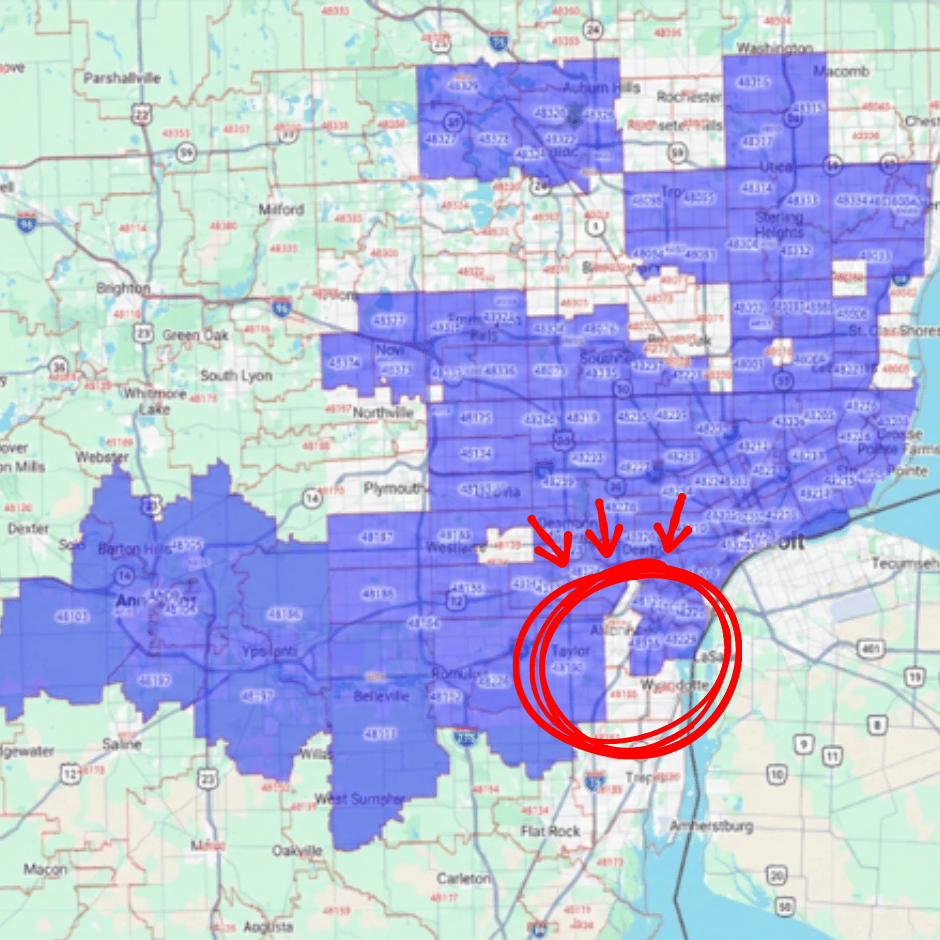
Also, conspicuously absent from Promote the Vote’s targeted zip codes near Detroit are the following:
- A string of zip codes forming a vaguely “L” shaped area from Allen Park to Wyandotte (lower right) that was largely won by Republicans in 2024.
- The Rochester Hills area (top center-right), where many precincts favored Republicans in 2024.
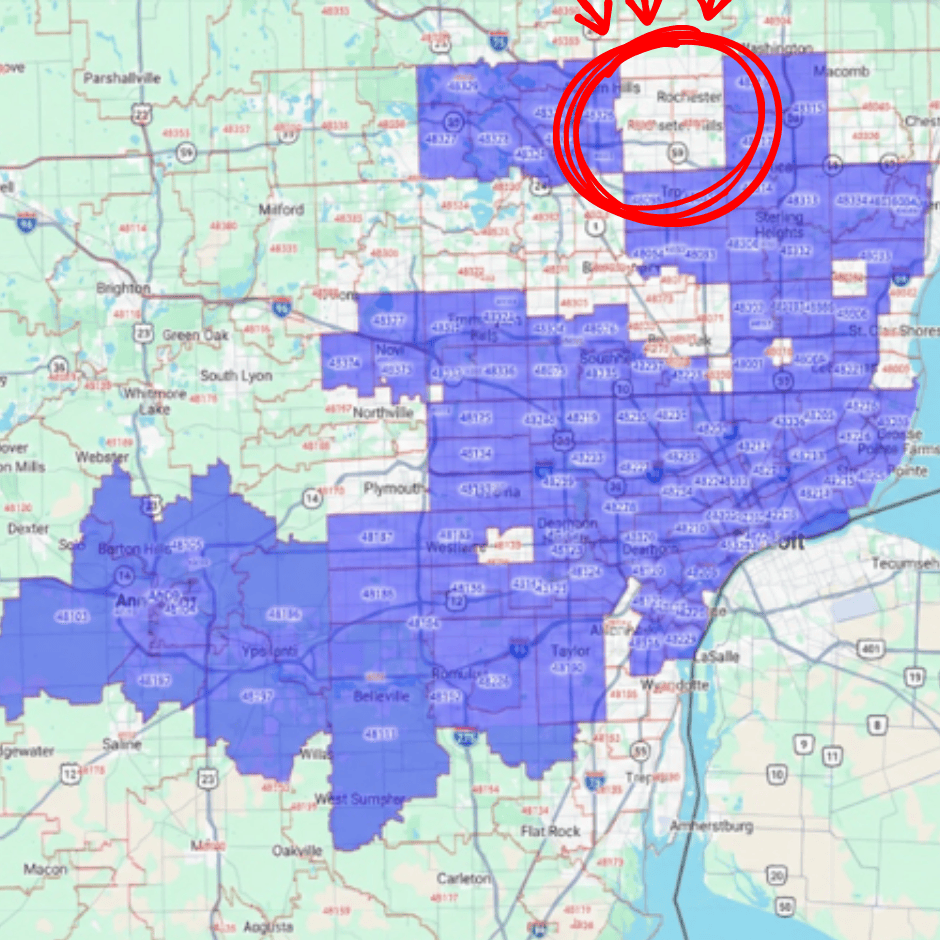
- The city of Fraser (upper right), which is encompassed entirely by targeted zip codes and was soundly Republican in 2024.
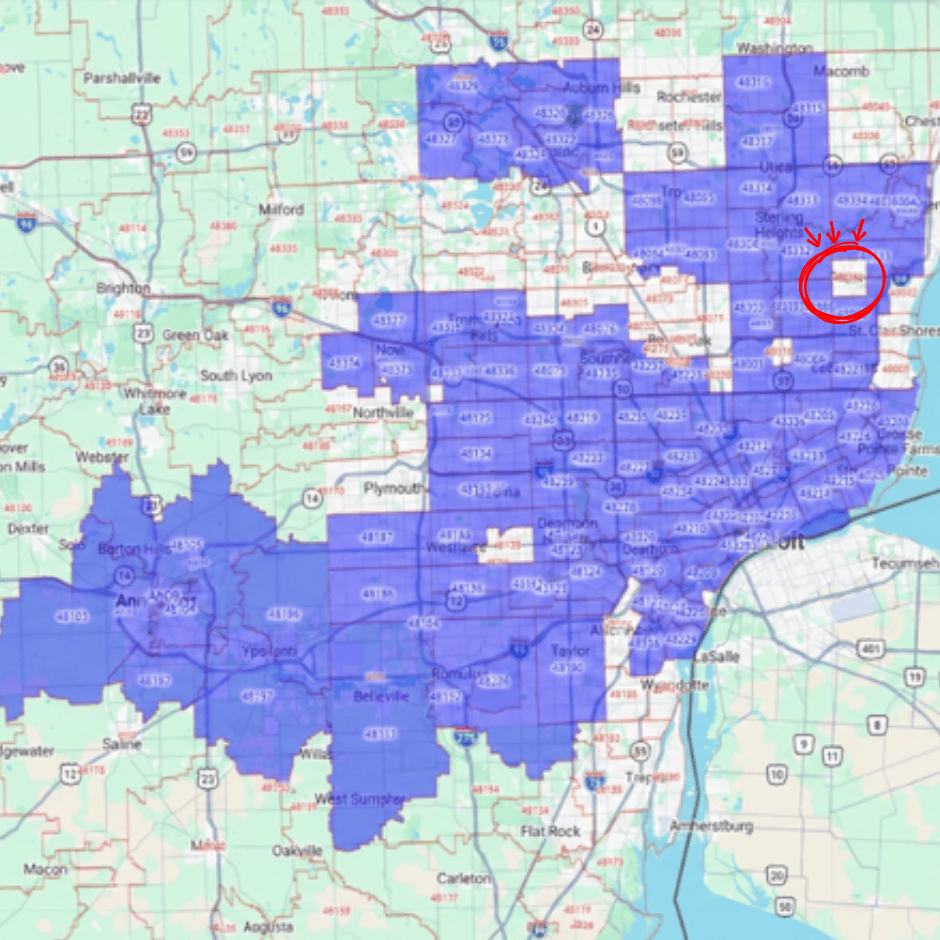
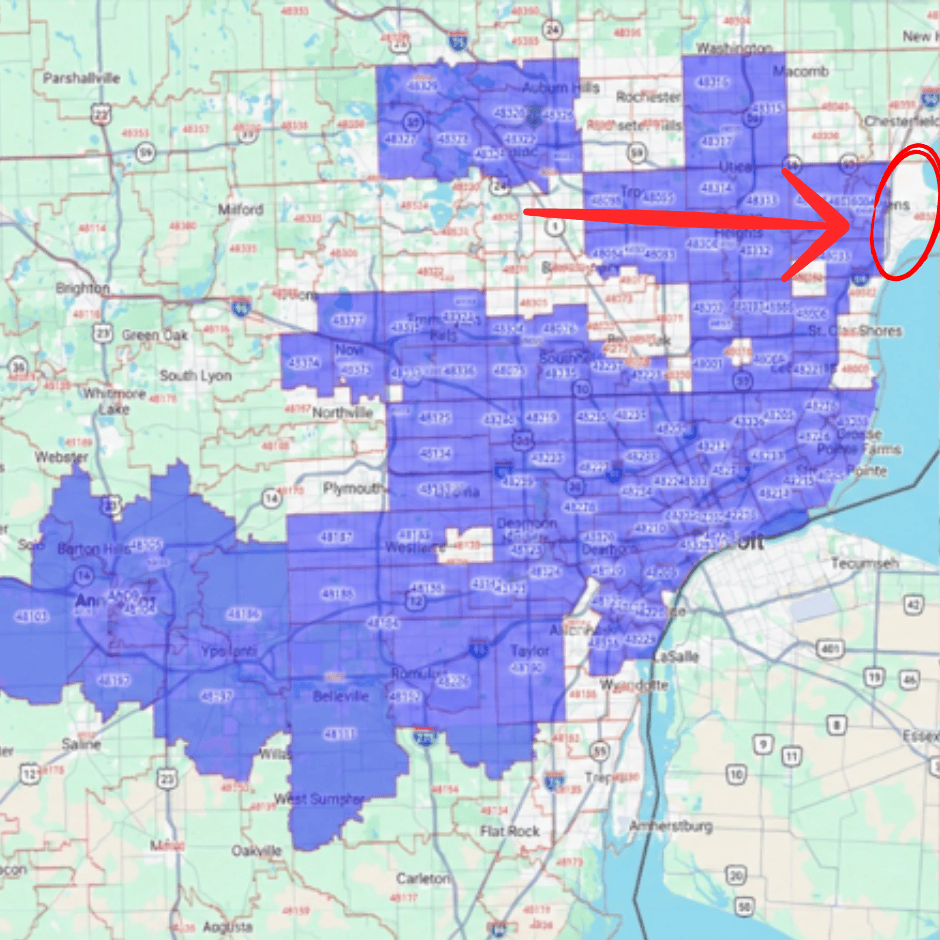
- Harrison Township (top right), which Trump won by 30 percent even though its Democrat leaning, less-populated neighbor Mount Clemens was targeted.
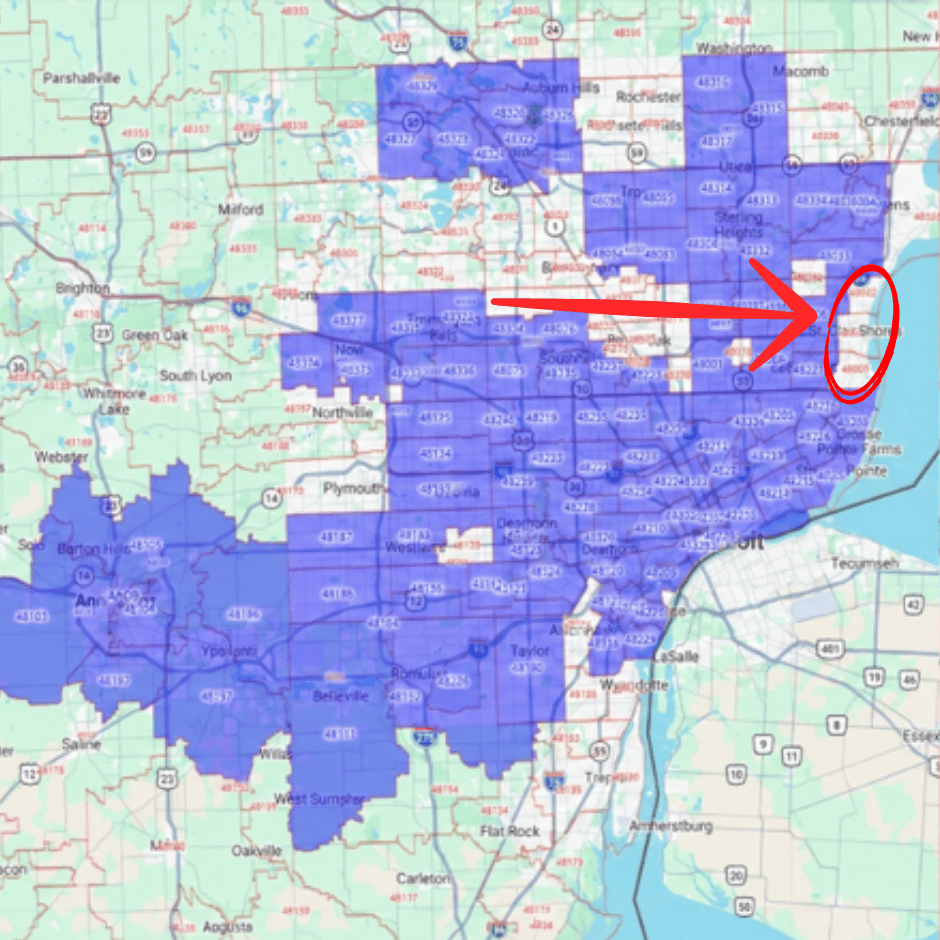
- Three zip codes comprising the city of St. Clair Shores (upper-middle right), which was dominated by Republicans in 2024.
Obviously, the targeting near Detroit follows a pattern. But it isn’t entirely partisan. Here are some exceptions:
- The city of Center Line (upper-middle right), where precincts were left as another untargeted island zip code like Garden City and Fraser.
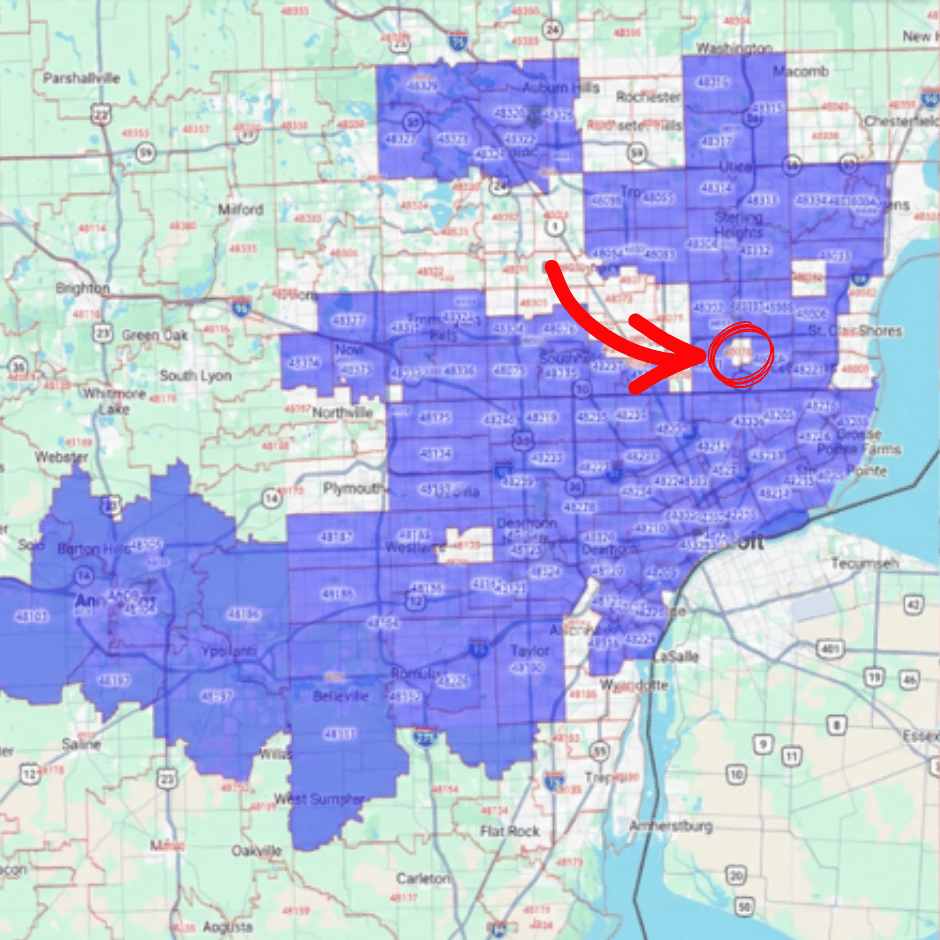
- Just north of that, a stretch of seven zip codes encompassing Sterling Heights, Utica, and Shelby Township (top right), all of which heavily favored Trump in 2024 and 2020, was targeted.
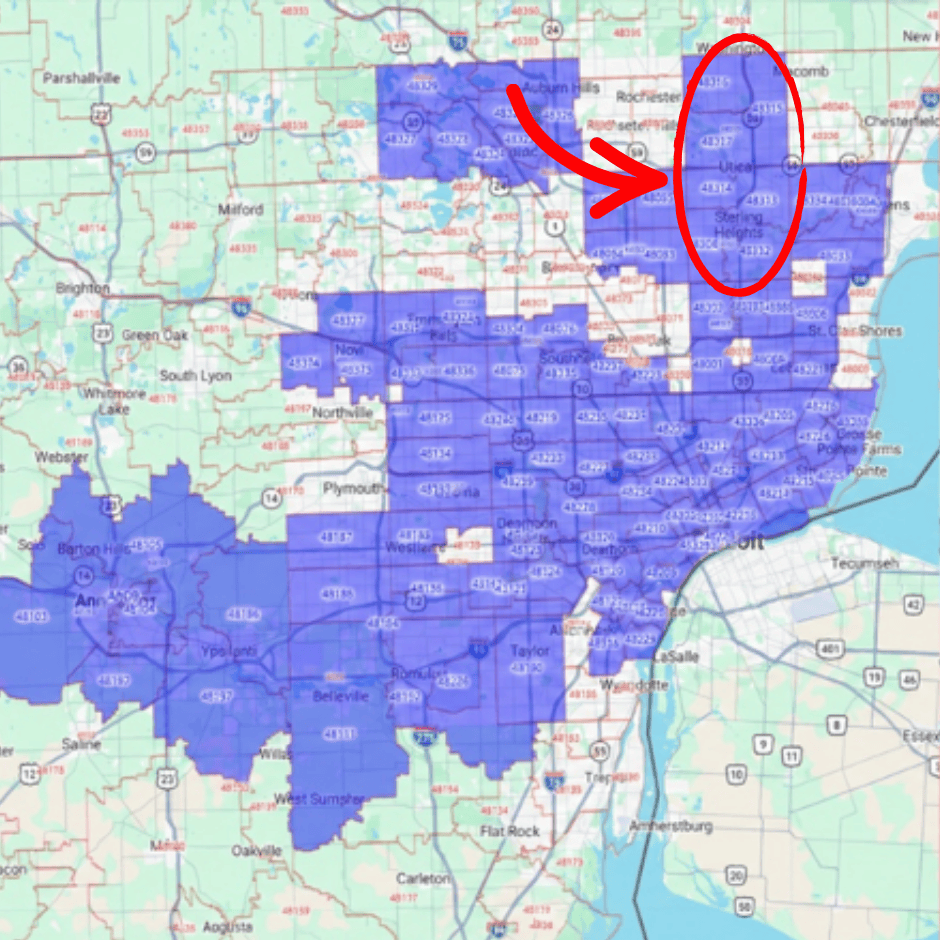
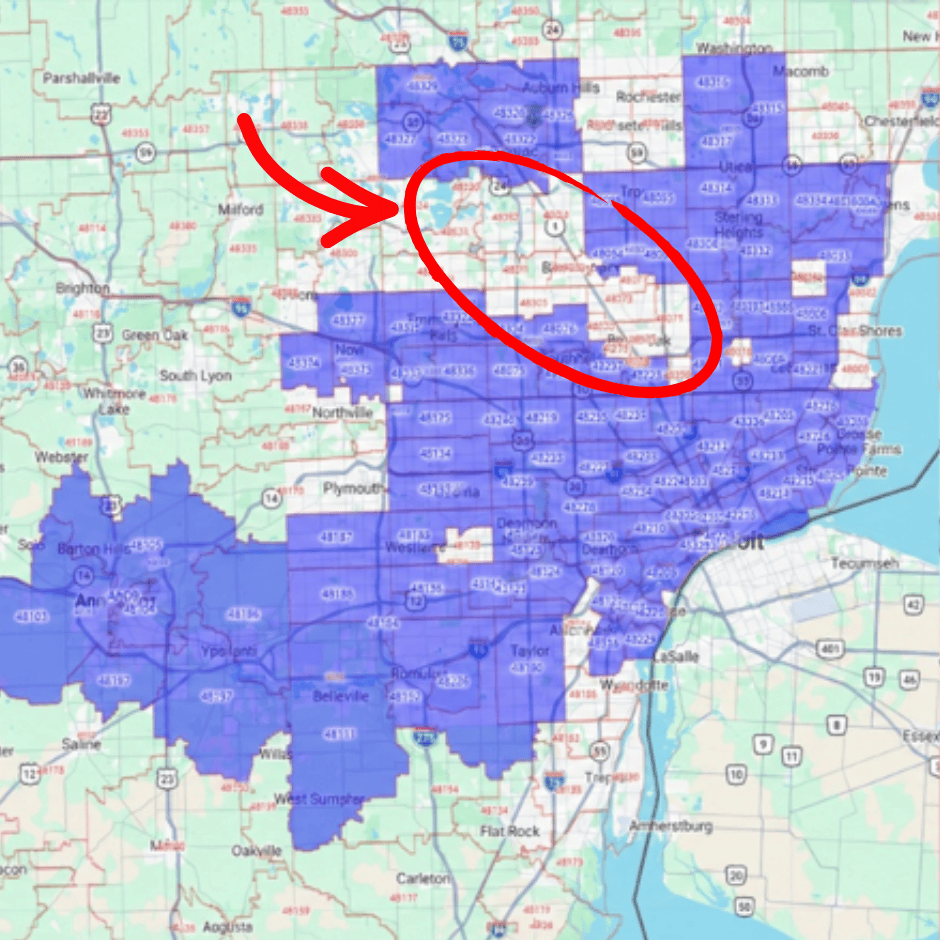
- Conversely, to the south, a diagonal swathe of affluent and reliably Democratic zip codes in Oakland County, stretching from Hazel Park, Madison Heights, and Royal Oak to Birmingham and Orchard Lake Village, was not targeted (upper middle).
Some of Promote the Vote Fund’s defenders might even point out that Dearborn and Dearborn Heights (center) were also targeted, even though the cities were won by Trump in 2024. This would be an extremely weak defense, though, considering the two cities are usually Democrat-strongholds and are once again strongly favoring Democrats in polling after an unusual year: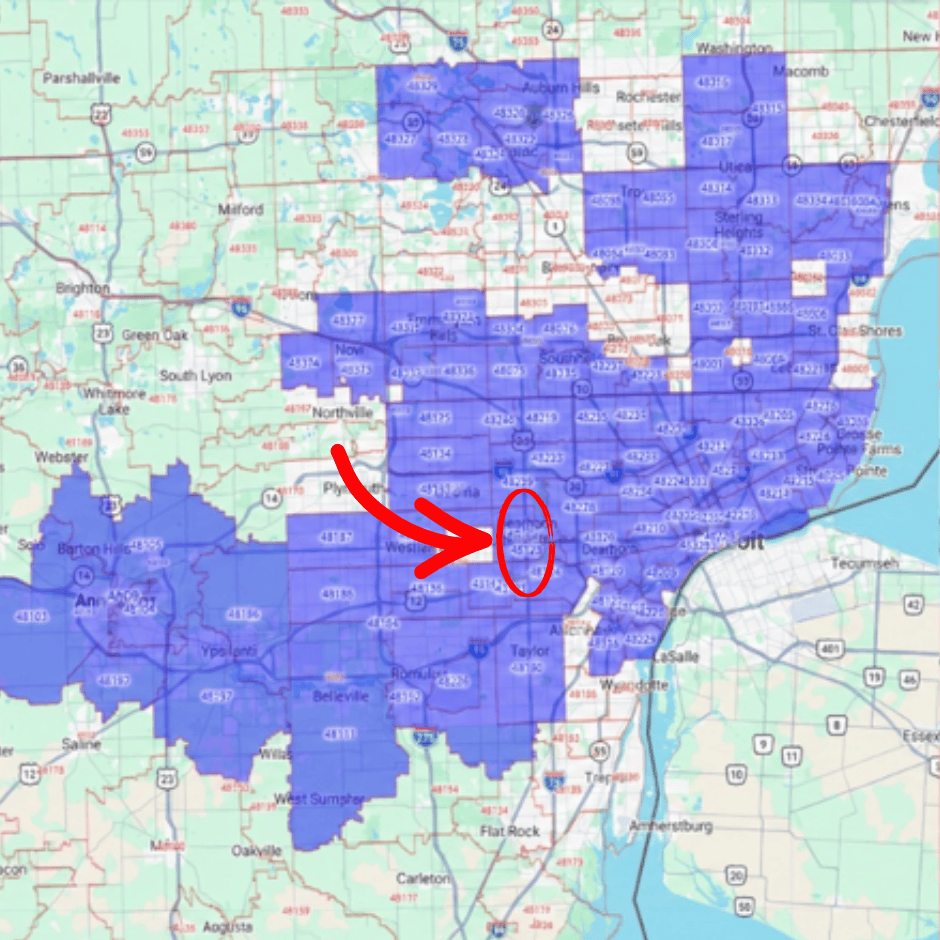
Blue dots statewide
The metro-Detroit region wasn’t the only place Promote the Vote Fund targeted its ads in Michigan. Map comparisons for the rest of the state show that the few cross-partisan ventures into the biggest city’s swing-voting suburbs do not absolve Promote the Vote Fund of the charge of partisan targeting.
Promote the Vote Fund also included areas in and around Ann Arbor, Battle Creek, Bay City, Benton Harbor, Detroit, Flint, Grand Rapids, Holland, Jackson, Kalamazoo, Lansing, Marquette, Mt. Pleasant, Muskegon, Pontiac, Port Huron, Saginaw, Sault St. Marie, Traverse City, and Ypsilanti. One could easily find all of these cities on the 2024 electoral results map by circling each of the darkest (i.e., Democratic-voting) blue dots swimming in a sea of Republican red precincts.
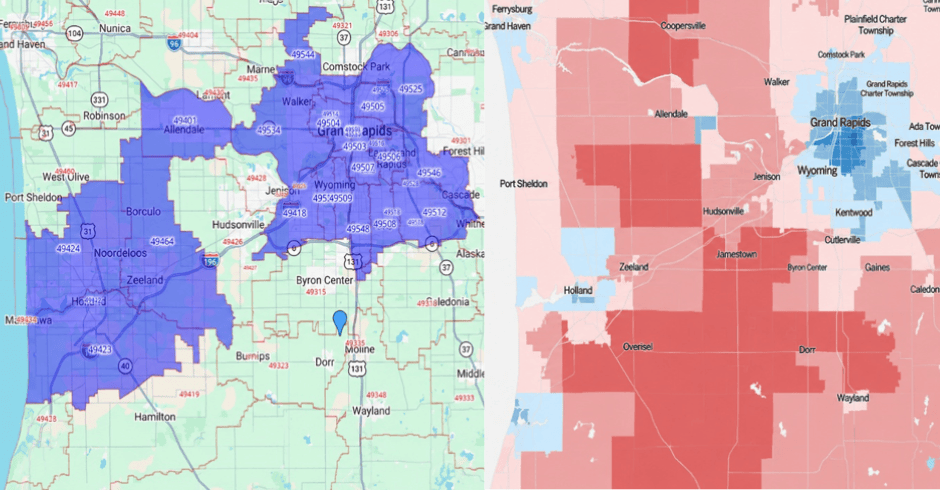
In the maps below, for example, nearly every targeted zip code in the Grand Rapids region reaches into the city to touch at least one of its many deep blue precincts. The only exception to this is a land bridge of mostly Republican zip codes connecting Grand Rapids to Holland by looping up and around the deep red towns of Hudsonville and Jenison (center) and going through Allendale (49401, upper left) instead. Allendale just so happens to contain Grand Valley State University and the lone blue precinct in the area, which Harris won by 33 percent.
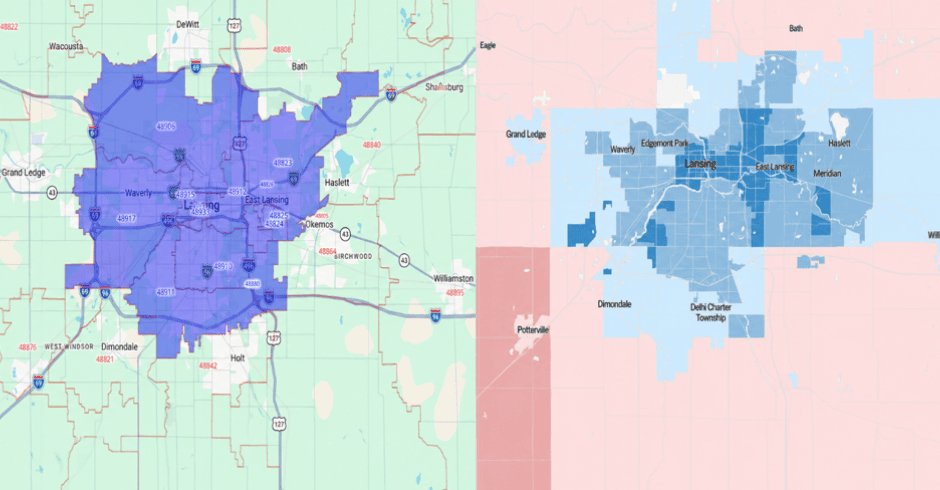
In both 2024 and 2020, Democrats exclusively won the zip codes selected near Lansing. The maps pictured below show only one small area northeast of the city (48906, top left) where the targeted zip codes seem to overlap even partially with a Republican-won precinct. Even some light blue Lansing suburbs, such as Dimondale (lower left) and Williamston (middle right) didn’t make the cut.
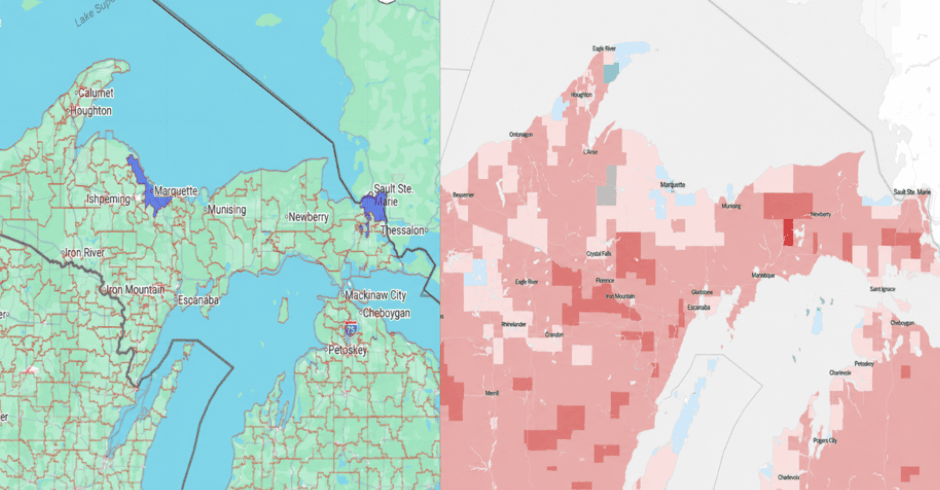
The maps for Michigan’s sparsely populated upper peninsula show only three zip codes targeted. One is for Marquette (center), the only city Kamala Harris won in the Upper Peninsula. Another contains Sault St. Marie (right), where Harris lost, but not by much. The third one is the tiny area of Kincheloe, south of Sault St. Marie, which is home to just 2,500 people and where Democrats have steadily gained vote share since 2016.
Even the smaller cities of the lower peninsula were given the same treatment.
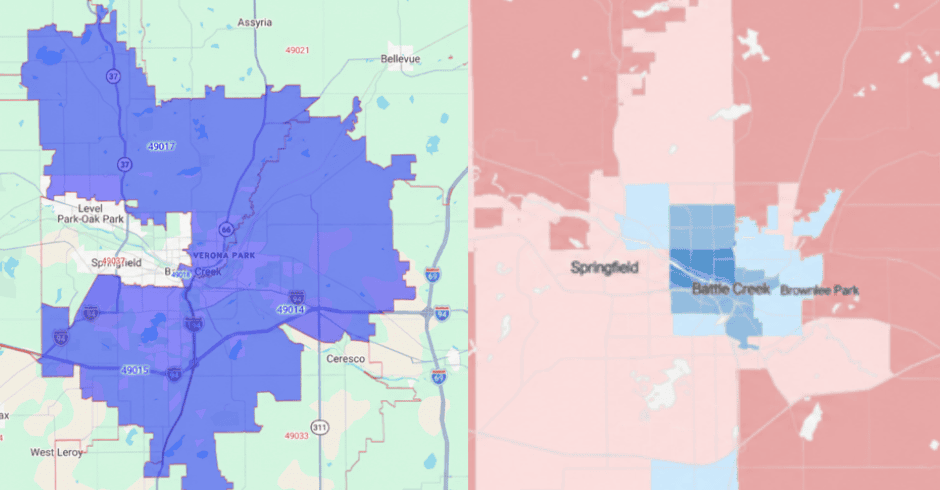
The maps for the city of Battle Creek in southwest Michigan show ads that target every zip code touching the city except for one: 49037 (middle left). That zip code contains a small chunk of Battle Creek that Kamala Harris won by 60 percent, but it also contains the nearby towns of Springfield, Level Park, and Oak Park, which contain far more voters and were won handily by Trump.
The next map is for the city of Jackson, located in south-central Michigan. Here, Promote the Vote’s targeted zip codes might look relatively non-partisan at first because they also include the large, Republican-leaning area surrounding the city.
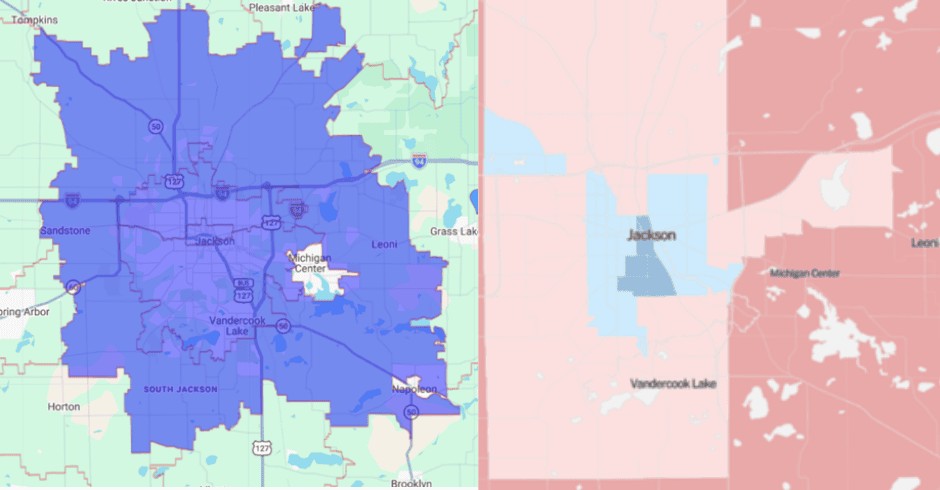
But a closer look reveals this is because the largest of the targeted Jackson City zip codes—49201—is shaped like a great big donut that encircles several other zip codes for the central city.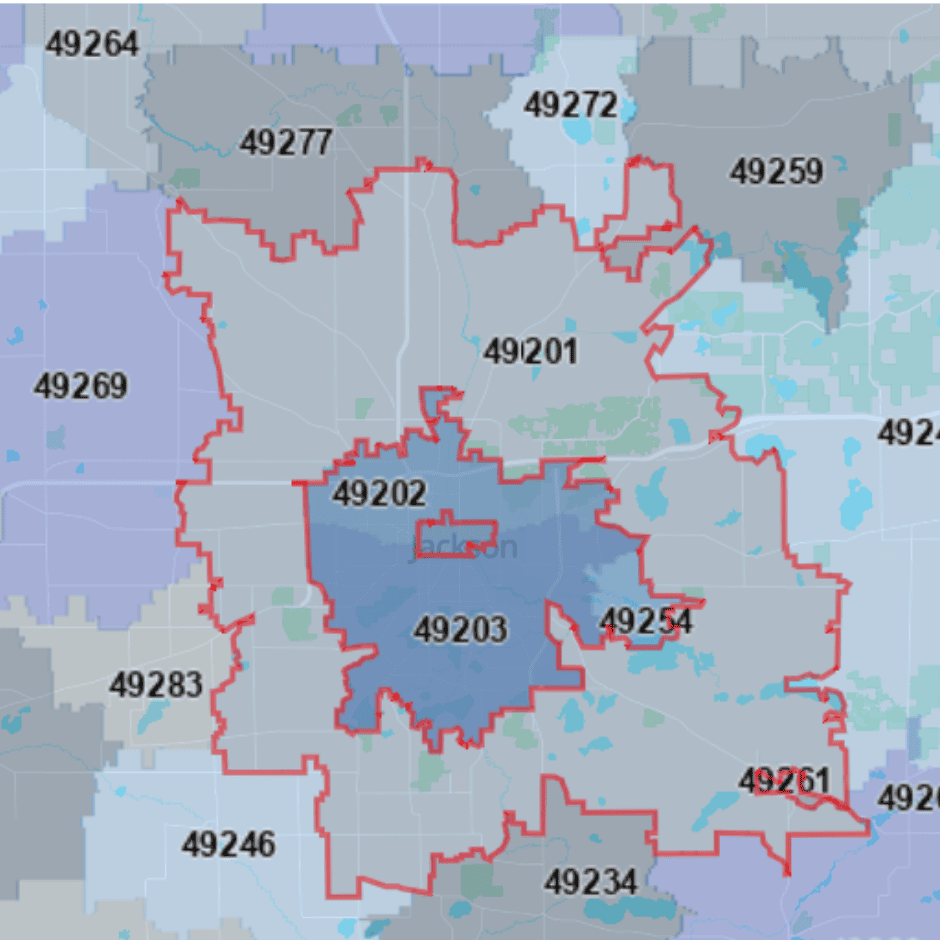
So, to include the center of zip code 49201 and its blue-voting Jackson residents, Promote the Vote also had to include the non-city, Republican-voting outskirts of 49201. The strongest evidence for this is yet another, conspicuously isolated and ignored, island in the sea of real estate targeted by Promote the Vote. That island, zip code 49254, just happens to be the Republican-voting town of Michigan Center.
Similarly, the zip codes targeted near Kalamazoo create a near-perfect map of Democrat precincts on the 2024 electoral map. The zip codes chosen in Bay City neatly encompass an area that Harris won by 80 percent. And the zip codes chosen in Saginaw, Mt. Pleasant, Flint, and other small Michigan cities show the same trend. The consistency is damning.
Out of all 256 zip codes Promote the Vote Fund targeted in ads on Meta, it appears less than two dozen lean Republican on a consistent basis, and even those contain at least one strongly Democrat precinct. Meanwhile, at least 100 of the targeted zip codes don’t contain a single precinct that favored Republicans in 2024.
The map of targeted zip codes used for the Promote the Vote Fund ads on Google is identical. The odds of that happening without partisan calculations being used to select the targeted zip codes are long, to say the least.
The single most effective tactic
The motive for this behavior isn’t hard to understand. Political campaigns must raise non-charitable, after-tax dollars to engage in clearly partisan politicking. Offloading some of that work onto tax-exempt charities increases the bang for the buck of each donation because it implicitly uses the charitable tax break to subsidize the electoral objectives of Democrats.
Mind The Gap, a Democratic super PAC that spent $4.6 million during the 2024 election, has even quantified the value of the help they receive from their supposedly charitable allies. In an internal memo written before the 2020 election, Mind The Gap unapologetically claimed that “501(c)(3) voter registration” is the “single most effective tactic for ensuring Democratic victories” and “2 to 5 times more cost-effective at netting additional Democratic votes than the tactics that campaigns will invest in …” [emphasis added]
Too much of this industry is transactional and partisan, not philanthropic or civic-minded, let alone charitable. This business model may also explain why canvassers working for “charitable” get-out-the-vote groups have been caught submitting huge numbers of fraudulent voter registration forms to meet quotas in Michigan, Pennsylvania, Ohio, and many other states.
The IRS rules show that partisan voter registration is not permitted. Yet it’s still happening. Is anyone with the power to enforce the rules going to do so, or should Republicans just create their own partisan voter registration charities and start breaking the rules as well?
Source: https://capitalresearch.org/article/not-so-non-partisan-voter-registration-in-michigan/
Anyone can join.
Anyone can contribute.
Anyone can become informed about their world.
"United We Stand" Click Here To Create Your Personal Citizen Journalist Account Today, Be Sure To Invite Your Friends.
Before It’s News® is a community of individuals who report on what’s going on around them, from all around the world. Anyone can join. Anyone can contribute. Anyone can become informed about their world. "United We Stand" Click Here To Create Your Personal Citizen Journalist Account Today, Be Sure To Invite Your Friends.
LION'S MANE PRODUCT
Try Our Lion’s Mane WHOLE MIND Nootropic Blend 60 Capsules
Mushrooms are having a moment. One fabulous fungus in particular, lion’s mane, may help improve memory, depression and anxiety symptoms. They are also an excellent source of nutrients that show promise as a therapy for dementia, and other neurodegenerative diseases. If you’re living with anxiety or depression, you may be curious about all the therapy options out there — including the natural ones.Our Lion’s Mane WHOLE MIND Nootropic Blend has been formulated to utilize the potency of Lion’s mane but also include the benefits of four other Highly Beneficial Mushrooms. Synergistically, they work together to Build your health through improving cognitive function and immunity regardless of your age. Our Nootropic not only improves your Cognitive Function and Activates your Immune System, but it benefits growth of Essential Gut Flora, further enhancing your Vitality.

Our Formula includes: Lion’s Mane Mushrooms which Increase Brain Power through nerve growth, lessen anxiety, reduce depression, and improve concentration. Its an excellent adaptogen, promotes sleep and improves immunity. Shiitake Mushrooms which Fight cancer cells and infectious disease, boost the immune system, promotes brain function, and serves as a source of B vitamins. Maitake Mushrooms which regulate blood sugar levels of diabetics, reduce hypertension and boosts the immune system. Reishi Mushrooms which Fight inflammation, liver disease, fatigue, tumor growth and cancer. They Improve skin disorders and soothes digestive problems, stomach ulcers and leaky gut syndrome. Chaga Mushrooms which have anti-aging effects, boost immune function, improve stamina and athletic performance, even act as a natural aphrodisiac, fighting diabetes and improving liver function. Try Our Lion’s Mane WHOLE MIND Nootropic Blend 60 Capsules Today. Be 100% Satisfied or Receive a Full Money Back Guarantee. Order Yours Today by Following This Link.


| Visits: | 1,830,061,735 |
| Stories: | 8,693,106 |
Whistler Blowers, Insiders

