

Red Reviews: W.Z. Foster’s “The Negro People in American History”

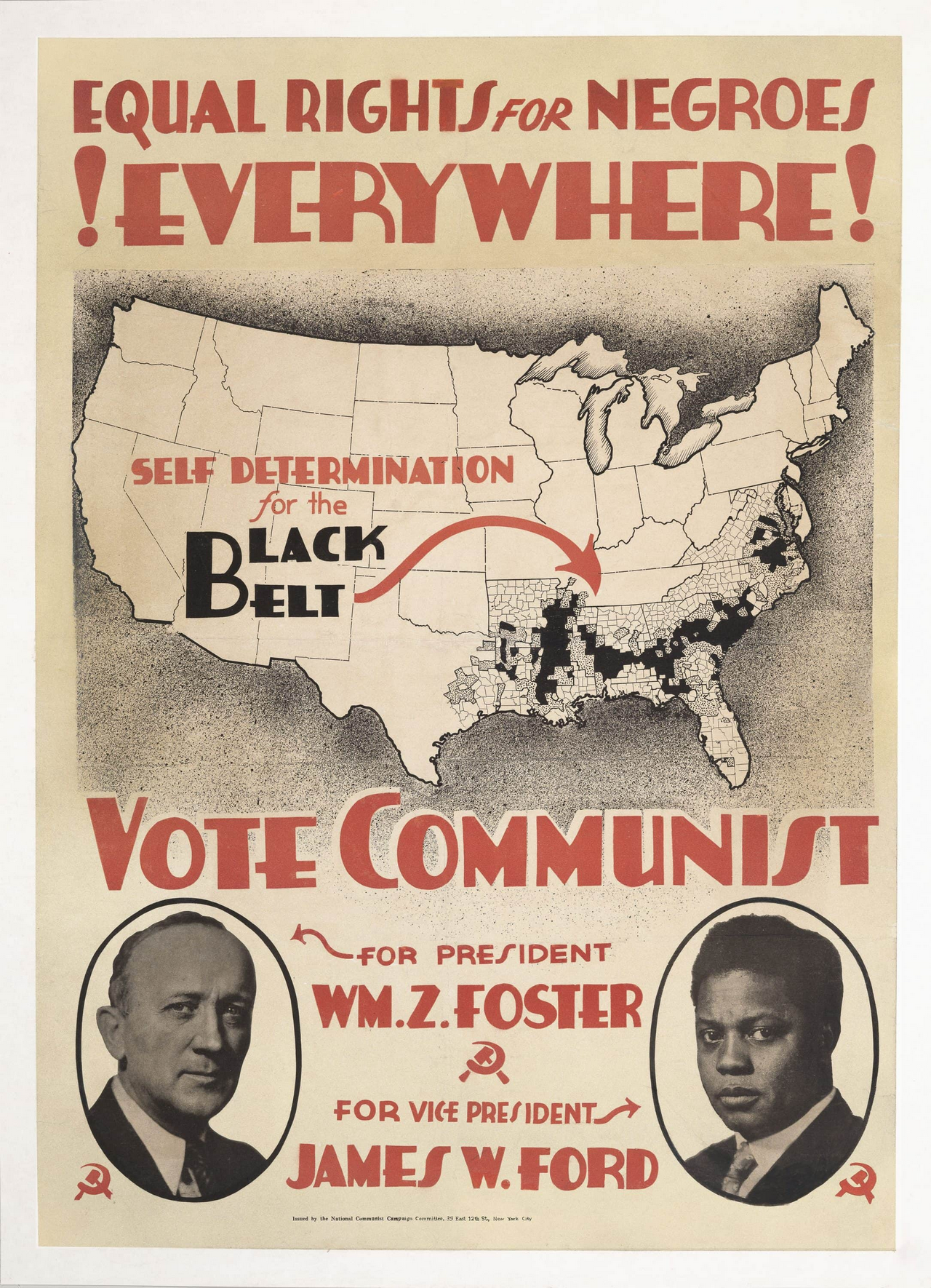
The great labor leader and former General Secretary and Chairman of the CPUSA, William Z. Foster, wrote hundreds of articles and pamphlets, giving a Marxist-Leninist analysis to the events and struggles of the day. He also wrote a number of longer books, especially in his later years.
Foster wrote three major books summing up his experience as a revolutionary organizer in the trade union movement, From Bryan to Stalin (1937), Pages From a Worker’s Life (1939), and American Trade Unionism (1947). These are essential works on the labor movement that every revolutionary should study.
Foster also wrote five major histories, where he looked at particular aspects of history from a distinctly Marxist-Leninist, historical materialist perspective. These important works are Outline Political History of the Americas (1951), History of the Communist Party of the United States (1952), The Negro People in American History (1954), History of the Three Internationals (1955), and Outline History of the World Trade Union Movement (1956).
All of these books are tremendously valuable works of Marxist-Leninist analysis, but here we’re going to focus on his book on the history of the Black liberation struggle in the U.S., The Negro People in American History.
Foster’s analysis
Foster sets out the purpose of his book clearly. He writes
“The general purpose of the present book, written from the standpoint of Marxism-Leninism, is to outline the growth of the American Negro people in relation to the historical development of the American nation. Concretely, the book also aims to stimulate further the present struggle of the Negro people for the fullest freedom along with their white allies, to analyze the factors making for the historical growth into ‘a nation within a nation,’ and to indicate the main lines of the young nation’s perspective of further social development.”
From this standpoint, Foster looks at the history African Americans going back to Africa and its colonization, through the international slave trade, slavery in the American colonies, the role of African Americans in the American Revolution of 1776, the rise of the Abolition movement, Republicanism, and the Civil War, Reconstruction and the counter-revolution against it, up through the Jim Crow period.
The scope of The Negro People in American History is enormous, so for our purposes we’ll only zero in on a few points of particular interest so that we can get a look at how Foster puts Marxism-Leninism to work in analyzing the contradictions in motion in the history of the Black liberation struggle.
Let’s look at how Foster addresses the African American National Question, the central point of the “nation within a nation,” as he put it. This central question runs throughout the book, especially the chapters on Reconstruction, and the chapters on “The Communist Party and Negro Question” and “The Negro People As an Oppressed Nation.”
Foster, first of all, recognizes the revolutionary character of the Civil War and Reconstruction. Foster says “The Civil War was a revolution, the second in United States history. It was a bourgeois-democratic revolution… because it brought about ‘a transference of power from one class to another.’”
Indeed, the Civil War deposed the Southern Planter class that had until then “dominated the Federal Government” and put “the Northern industrialists firmly in the political saddle.” Foster notes that “The general effect of the war was to clear away barriers in the path of capitalism and to stimulate that system into tremendous expansion.” The main barrier in question was the outmoded and archaic system of chattel slavery in the South, which acted as a fetter, holding back industrial capitalist development, then centered in the North.
Foster also astutely points out that the revolutionary demands of the African American people aimed “straight at the heart of the Confederacy.” These were the demands for “(a) the emancipation of the the slaves; (b) the arming of Negro slaves and freedmen; © the enfranchisement of the Negro people; (d) the abolition of Jim Crow and social inequality; and (e) the redistribution of land in the South.” Foster goes on to explain,
“The degree of revolutionary content in the Federal Government’s policy was always measured by the extent to which it adopted and was enforcing the national demands of the Negro people. The sequel showed that the Government never really made the Negro people’s demands its own. It always considered them something alien, to be picked up or dropped as political or military expediency dictated…”
Foster explains that “The revolution, despite its final betrayal [toppling Reconstruction in 1877], brought basic advancement to the Negro people, achieving some of their major demands. Most important of all, it freed them from the terrible, centuries-old bondage of chattel slavery. It also won for them the legal right to vote, the right to education and to bear arms in the national defense.”
But the betrayal of Reconstruction led to counter-revolution, disenfranchisement, lynch-terror and all of the other horrors of the Jim Crow system, including robbing African Americans in the South of political power, stripping them of their land, and thrusting them back onto the plantations under peonage and sharecropping. This period, coinciding with the rise of monopoly capitalism in the United States and its compulsion towards the super-exploitation of the African American people, marks the origin of the African American oppressed nation in the Black Belt South.
Foster writes,
“Joseph Stalin, the greatest of all authorities on the national question, formulated the following classical Marxist definition of a nation: ‘a nation is an historically evolved stable community of language, territory, economic life, and psychological make-up manifested in a community of culture.’ … On the basis of this scientific definition, clearly the Negro people in the Black Belt of the South comprise a nation, and those in the North and West constitute a national minority.”
Foster then proceeds to look at each of these aspects of nationhood and explain exactly how they apply to the African American people of the Black Belt. He therefore raises the Leninist demand for self-determination. “It is right which must be conceded to the Negro nation in the Black Belt of the United States, to be used under such concrete forms as it so resolves.” This means it is up to the African American people of the Black Belt South to decide how they want to relate to the United States, whether that means secession, federation, or some other relationship.
Foster’s The Negro People in American History today
The key role of the Black liberation struggle within the revolutionary movement as a whole has been on sharp display, especially since the uprisings that swept the country after the police murder of George Floyd. Clarity on the African American national question is therefore more important than ever. Foster’s book on the history of the Black liberation struggle in the United States is a key work of Marxist-Leninist historical analysis. It casts a bright light on the revolutionary currents and material contradictions that have propelled the Black liberation movement forward.
As Frank Chapman said in his excellent book Marxist-Leninist Perspectives On Black Liberation and Socialism, regarding the strategic alliance between the Black liberation movement and the multinational working class struggle at the heart of the united front against monopoly capitalism, “…a key to building such an alliance is the recognition of the centrality of the struggle for Black Liberation in the struggle for socialism in the United States of America.” Understanding the material forces at work, not only the current balance of forces, but the historical trajectory of those contradictions, is absolutely essential for revolutionaries to grasp as we move forward.
J. Sykes is the author of the book “The Revolutionary Science of Marxism-Leninism”. The book can be purchased by visiting frso.org/books
#RevolutionaryTheory #RedReviews #WZFoster #OppressedNationalities #AfricanAmerican
Source: https://fightbacknews.org/red-reviews-w-z-fosters-the-negro-people-in-american-history?pk_campaign=rss-feed
Anyone can join.
Anyone can contribute.
Anyone can become informed about their world.
"United We Stand" Click Here To Create Your Personal Citizen Journalist Account Today, Be Sure To Invite Your Friends.
Before It’s News® is a community of individuals who report on what’s going on around them, from all around the world. Anyone can join. Anyone can contribute. Anyone can become informed about their world. "United We Stand" Click Here To Create Your Personal Citizen Journalist Account Today, Be Sure To Invite Your Friends.
LION'S MANE PRODUCT
Try Our Lion’s Mane WHOLE MIND Nootropic Blend 60 Capsules
Mushrooms are having a moment. One fabulous fungus in particular, lion’s mane, may help improve memory, depression and anxiety symptoms. They are also an excellent source of nutrients that show promise as a therapy for dementia, and other neurodegenerative diseases. If you’re living with anxiety or depression, you may be curious about all the therapy options out there — including the natural ones.Our Lion’s Mane WHOLE MIND Nootropic Blend has been formulated to utilize the potency of Lion’s mane but also include the benefits of four other Highly Beneficial Mushrooms. Synergistically, they work together to Build your health through improving cognitive function and immunity regardless of your age. Our Nootropic not only improves your Cognitive Function and Activates your Immune System, but it benefits growth of Essential Gut Flora, further enhancing your Vitality.

Our Formula includes: Lion’s Mane Mushrooms which Increase Brain Power through nerve growth, lessen anxiety, reduce depression, and improve concentration. Its an excellent adaptogen, promotes sleep and improves immunity. Shiitake Mushrooms which Fight cancer cells and infectious disease, boost the immune system, promotes brain function, and serves as a source of B vitamins. Maitake Mushrooms which regulate blood sugar levels of diabetics, reduce hypertension and boosts the immune system. Reishi Mushrooms which Fight inflammation, liver disease, fatigue, tumor growth and cancer. They Improve skin disorders and soothes digestive problems, stomach ulcers and leaky gut syndrome. Chaga Mushrooms which have anti-aging effects, boost immune function, improve stamina and athletic performance, even act as a natural aphrodisiac, fighting diabetes and improving liver function. Try Our Lion’s Mane WHOLE MIND Nootropic Blend 60 Capsules Today. Be 100% Satisfied or Receive a Full Money Back Guarantee. Order Yours Today by Following This Link.


| Visits: | 1,797,292,439 |
| Stories: | 8,623,052 |
Whistler Blowers, Insiders

