
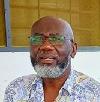
Double trouble: Karl de Leeuw’s serious look at two pedophile linked murders that just don’t add up


Karl de Leeuw
Karl de Leeuw, the author of three books on dyslexia, health, and world peace, is investigating two unsolved killings connected to a scuba diving excursion. According to Karl de Leeuw, the two deaths, one in 1997 and the other in 2002, were not merely coincidental. He suspects one John Bantin to play a role in the deaths of both scuba divers. He thinks that rather than being the result of chance, every tragedy has a purpose.
In May 1997, Rob Palmer, an internationally famous scuba diver and a friend of John Bantin, while together in Egypt, died under mysterious circumstances in the Red Sea. “In May 1997, we were due to spend two weeks together in the Red Sea. Rob was in good form, and the second week was set aside for the first international conference of the technical diving agency TDI in Hurghada. I missed the first day, consisting of the opening session followed by a dive, as I had to take Farzi to the airport. When I returned to the Intercontinental, I was met by Bret Gillam, President of TDI. He wanted to talk with me urgently. It turned out that news had come through on the dive center’s radio that Rob had failed to return from his dive,” said John Bantin.
Then in 2002, Bantin and David Graves, a senior reporter for The Daily Telegraph and a seasoned journalist with a reputation for thorough international reporting, born on June 23, 1952, in Bridlington, North Yorkshire, were diving in the Bahamas when Graves also drowned under mysterious circumstances; his colleagues had been unable to locate him upon their return to land.
According to Karl de Leeuw, he tried to obtain the Rob Palmer coroner’s report following the death of the well-known British cave and technical diver, who was considered one of the world’s most talented explorers in his area. However, he was unsuccessful in doing so. Sadly, Palmer and Graves’ deaths are still unsolved, but he wants the authorities to look into the cases once more.
David Graves was a qualified diver and was happy to be given a dream job. It certainly made a change to his usual foreign assignments, covering wars in Angola, Zimbabwe, Sri Lanka, and Kashmir. Like hundreds of journalists every year, David Graves accepted the all-expenses-paid “facility trip” in their holiday time, understanding they would write a travel article.
To the Bahamas for scuba diving were David Graves, Jane Ridley from the Daily Mirror, Michael Leventhal from the Daily Express, Susanah Osborn from the Red Magazine, Lee Holden from the M Magazine, and John Bantin, the technical editor of the specialist publication, the Diver Magazine, which was sponsoring the diving program. The invitation has stressed that only competent divers with a PADI qualification should come on the trip.
More information about John Bantin. He is a British diving journalist, author, and professional underwater photographer known for his extensive career in scuba diving and his contributions to diving literature and media. Born in North London in 1947, he initially built a successful career as an advertising photographer and television commercials director during the 1970s and 1980s, working on notable campaigns such as those for Guinness and ‘Go Smash an Egg.’
He learned to dive in 1979, and in 1992, he made a significant life change by leaving his advertising career to pursue diving full-time. He began as a dive guide on a pioneering liveaboard dive boat in the Red Sea, later running a dive center on Mallorca before settling into a long-term role as technical editor of Britain’s Diver Magazine. He has since become senior editor of the US-based Undercurrent magazine and has been regularly published in publications such as Undercurrent Magazine and DYK.
In fact, John Bantin had sent an email to the Huntington’s boss before the group left the UK, noting the advanced standard of diving on the itinerary and warning that safety should come first. After all, he wrote, “A dead journalist can’t write a copy”. Karl de Leeuw believes that John Bantin planned his murder in advance of the trip. John Bantin and his group arrived on the island of Andros, a 20-minute flight from Nassau. It was very exciting on the second day, as we watched the reef sharks feeding from frozen bait.
It was billed as one of the highlights of the trip before they did more specialized “blue hole” diving and later in the week, a bit like “caving” underwater. On this particular dive, the “buddies,” the internationally recognized safety system where divers always swim in pairs, was not in force. This issue was to occupy much time at the eventual inquest. However, according to Jane Ridley, after 35 minutes, when he surfaced with Michael Leventhal, who had been his diving partner in the morning, they realized that David Graves was missing.
His body was recovered and brought to the boat soon afterwards. However, they watched in horror as he was given resuscitation, and all that they could do was to cling to each other and pray. However, the prayers weren’t answered. On July 8, 2002, David Graves was later pronounced dead at a hospital on a nearby US naval base. The next 24 hours were a blur, as everyone was deeply affected. Only a few could sleep that night.
Why hadn’t we seen what happened to David? Could we have saved him? The next morning at 7:30 Bahamas time, Jane Ridley had a call from the Telegraph. Julie Angove, of the Bahamas Tourist Office, had informed them of David’s death by natural causes. “I briefly told the executive what had happened, and I was quoted in the report the next day. However, the Bahamas PR, Kim Rolle, and fellow PR Sara Huntington were unhappy, insisting I shouldn’t have spoken to the Telegraph because the Bahamas Tourist Office wanted to be the principal outlet of the information,” said Jane Ridley.
“What if your information gets distorted in the paper?” They asked. They were concerned that David Graves’s wife should know the truth, but only once the facts were established, they said. The following day, a handful of publications, including the Daily Mail and the Times, reported that David had apparently suffered a coronary.
Then Jeff Birch, the owner of the Small Hope Bay Lodge, read to us a press release he had prepared. He described the accident, including the line: “David was found lying, peacefully, under a mound of coral.” Jane Ridley then pointed out that it was impossible to “drown peacefully,” and he agreed to drop that particular sentence. At 2 pm, around 18 hours after David had died, on the arrangements of the director of the Bahamas tourist office, we left Andros on the next plane out to Nassau.
Meanwhile, David Sapsted, the deceased’ Telegraph colleague, came to identify his body in Nassau before travelling to Small Hope Bay Lodge. Later, Jane Ridley, Sara Huntington, Susannah Osborne, and Michael Leventhal went to David’s funeral a fortnight after to his home in Ealing, west London, where they met Diana, his wife, and her two sons.
According to Karl de Leeuw, he believes that John Bantin, who is an expert on diving equipment, fiddled with the diving equipment of both Rob Palmer and David Graves, which led to their fatal deaths. Karl de Leeuw has a reason he suspects John Bantin. He further stressed that John Bantin groomed his two daughters, and in his view, he considered him a pedophile.
According to Karl de Leeuw, when John Bantin found out that he had uncovered the truth about the grooming of his kids, he threatened him with the sick article he wrote in 1999 entitled “Get it Wrong, And You Are Dead,” where he jokes about Rob Palmer’s diving death. Then, when he read the article “When a press trip goes wrong” by Jane Ridley about David Graves’ diving death in 2002, he knew John Bantin killed both divers. Karl de Leeuw believes that he used those articles to blackmail people to shut up about his pedophilia activities.
The fact that John Bantin dived with Rob Palmer, his close friend, and died in mysterious circumstances in the Red Sea in 1999, and history repeated itself in 2002 involving the death of David Graves, Karl de Leeuw’s mind has refused to accept that those two deaths were normal. He strongly believed that those two cases were murders, and the murderer was walking free due to no thorough investigation into those two cases.
Another important issue that raises suspicion is that after some of the journalists met for a drink, according to Jane Ridley, it was there they learned that not only the original underwater video taken of the fatal dive but also the only copy of it had been accidentally wiped out. “We had wanted to see it while we were in Andros but had never gotten the chance, and now, neither would anyone else.”
Meanwhile, the post-mortems of David’s body in both Nassau and London ruled out a heart attack. The cause of death was acute pulmonary edema due to drowning and an “open verdict.” While all were in grief, John Bantin took the option of flying home early. These are some of the reasons Karl de Leeuw wishes the authorities would consider the deaths of Rob Palmer and David Graves as murder cases that need a thorough investigation to let the perpetrator face justice.
Earlier this year, Karl de Leeuw began documenting his efforts to expose this story, starting outside the UK Telegraph headquarters in London. That video is here: https://www.dropbox.com/scl/fi/60bnyj0taks90uot9ombt/Day-1-London-28.04.25.mp4?rlkey=c5z2ydjz99bja7ff3rc5tnl3r&e=2&st=iknxi254&dl=0
Anyone can join.
Anyone can contribute.
Anyone can become informed about their world.
"United We Stand" Click Here To Create Your Personal Citizen Journalist Account Today, Be Sure To Invite Your Friends.
Before It’s News® is a community of individuals who report on what’s going on around them, from all around the world. Anyone can join. Anyone can contribute. Anyone can become informed about their world. "United We Stand" Click Here To Create Your Personal Citizen Journalist Account Today, Be Sure To Invite Your Friends.
LION'S MANE PRODUCT
Try Our Lion’s Mane WHOLE MIND Nootropic Blend 60 Capsules
Mushrooms are having a moment. One fabulous fungus in particular, lion’s mane, may help improve memory, depression and anxiety symptoms. They are also an excellent source of nutrients that show promise as a therapy for dementia, and other neurodegenerative diseases. If you’re living with anxiety or depression, you may be curious about all the therapy options out there — including the natural ones.Our Lion’s Mane WHOLE MIND Nootropic Blend has been formulated to utilize the potency of Lion’s mane but also include the benefits of four other Highly Beneficial Mushrooms. Synergistically, they work together to Build your health through improving cognitive function and immunity regardless of your age. Our Nootropic not only improves your Cognitive Function and Activates your Immune System, but it benefits growth of Essential Gut Flora, further enhancing your Vitality.

Our Formula includes: Lion’s Mane Mushrooms which Increase Brain Power through nerve growth, lessen anxiety, reduce depression, and improve concentration. Its an excellent adaptogen, promotes sleep and improves immunity. Shiitake Mushrooms which Fight cancer cells and infectious disease, boost the immune system, promotes brain function, and serves as a source of B vitamins. Maitake Mushrooms which regulate blood sugar levels of diabetics, reduce hypertension and boosts the immune system. Reishi Mushrooms which Fight inflammation, liver disease, fatigue, tumor growth and cancer. They Improve skin disorders and soothes digestive problems, stomach ulcers and leaky gut syndrome. Chaga Mushrooms which have anti-aging effects, boost immune function, improve stamina and athletic performance, even act as a natural aphrodisiac, fighting diabetes and improving liver function. Try Our Lion’s Mane WHOLE MIND Nootropic Blend 60 Capsules Today. Be 100% Satisfied or Receive a Full Money Back Guarantee. Order Yours Today by Following This Link.


| Visits: | 1,757,859,931 |
| Stories: | 8,548,612 |
Whistler Blowers, Insiders

