

Decades after Civil Rights movement, Alabama parish gives ‘doubly sacred’ witness to faith, freedom

More than 60 years after the pinnacle events of the U.S. Civil Rights Movement, a Catholic parish in Montgomery, Alabama, remains a “place set apart” due to its notable role in the push for racial justice in the segregated U.S. South.
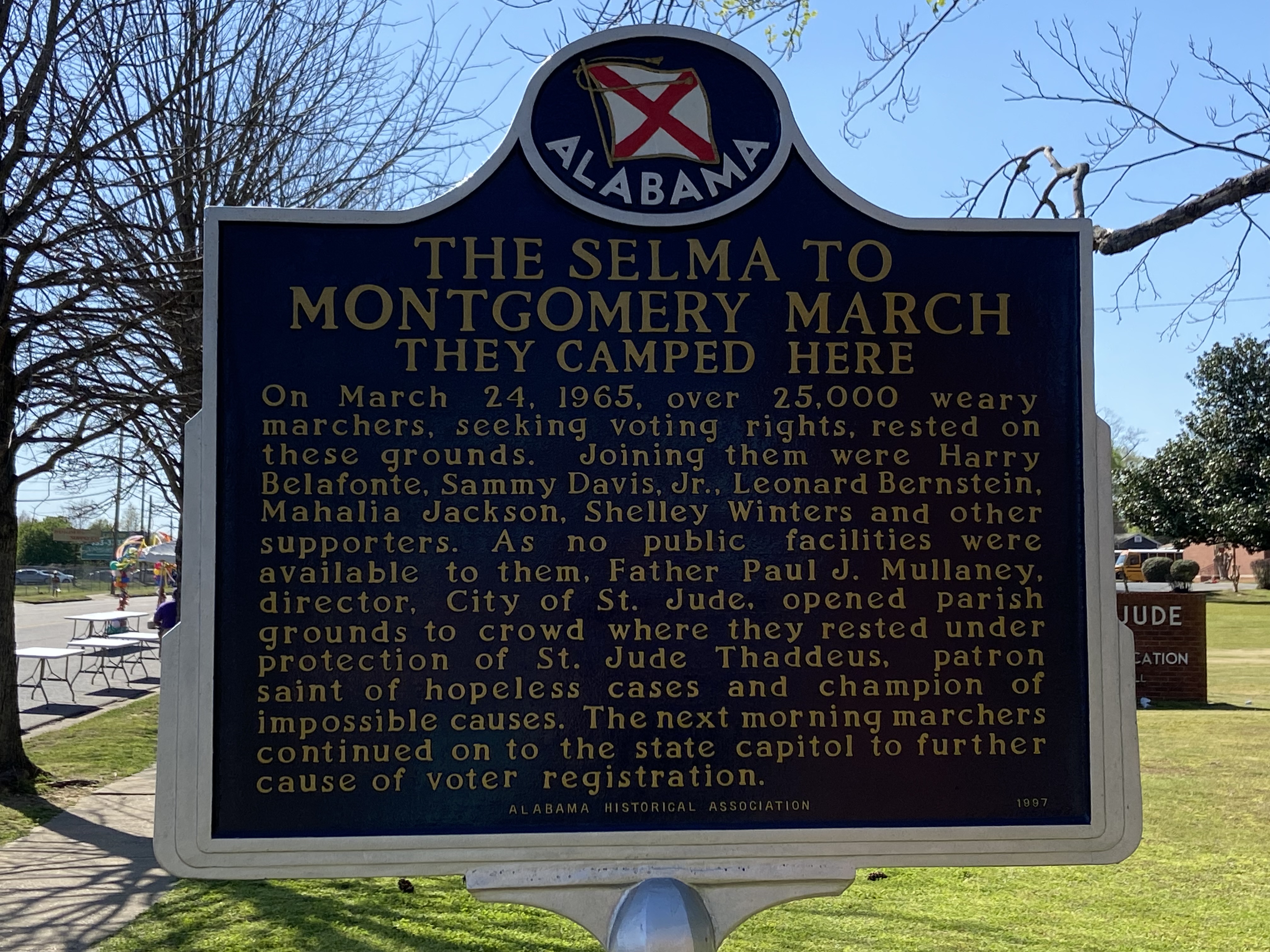
The City of St. Jude Parish, which sits on the outskirts of Montgomery, is home to “Campsite 4” on the Selma to Montgomery National Historic Trail — a 54-mile commemorative path that marks the route taken by Civil Rights marchers in 1965.
The marches, which took place across roughly three weeks in March of that year, were led by figures including Martin Luther King Jr., Diane Nash, James Bevel, and others; the demonstrations included the violent Bloody Sunday conflict on March 7, which saw the brutal beating of peaceful protesters by local police.
Several locations along the route were utilized as overnight campgrounds at which thousands of marchers were able to sleep. The last campsite on the route before the state capital in Montgomery was located on the City of St. Jude’s 40-acre campus.
‘A place set apart’
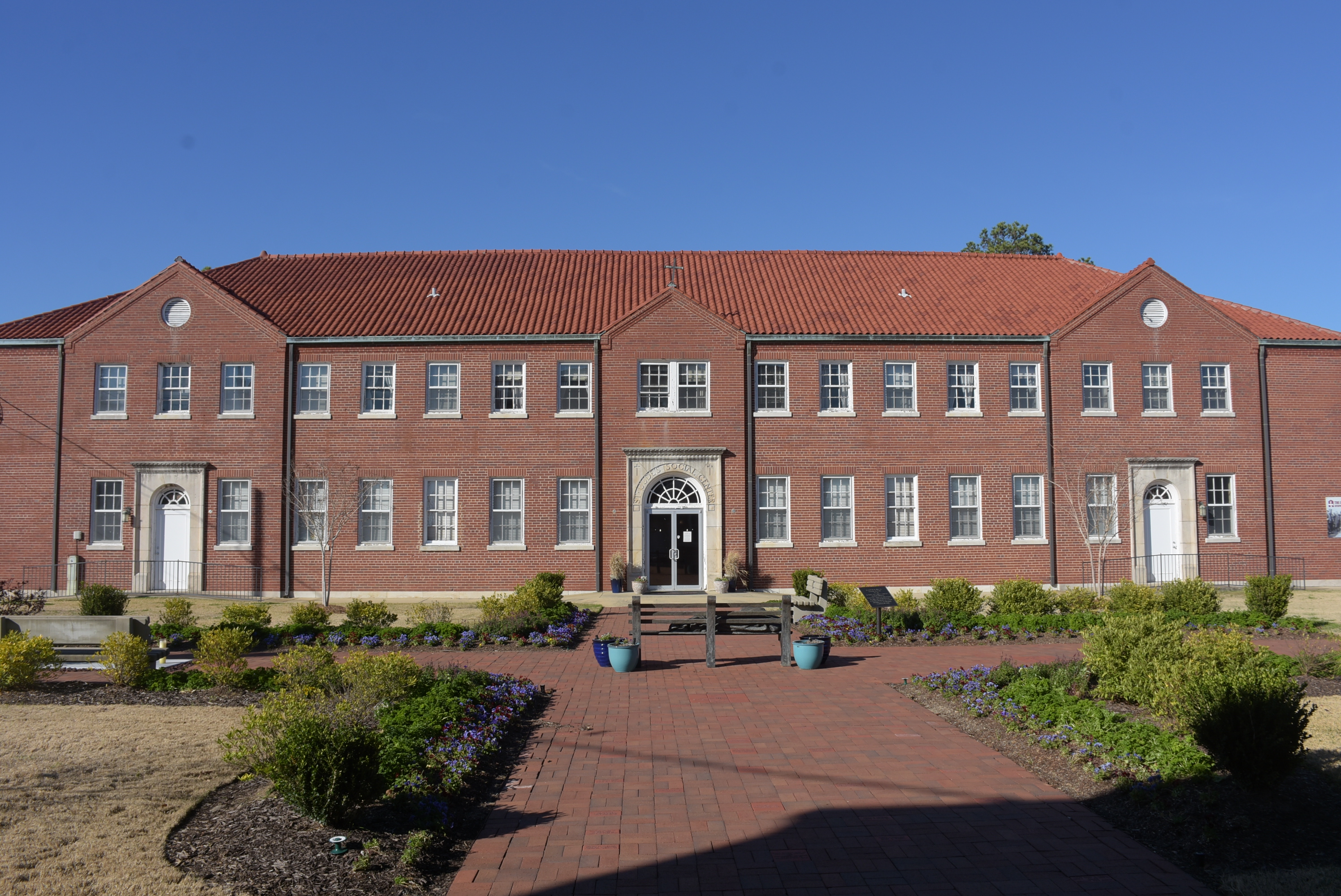
A plantation prior to the Civil War, and for years a local picnic spot, the site of St. Jude was purchased in 1936 by Father Harold Purcell. A sprawling campus would develop in the following decades, including a “social center” that hosted a medical clinic, community rooms, and clergy living quarters.
A community of Dominican nuns eventually moved to the site, establishing what the parish says was the first interracial Catholic religious congregation in the country.
The parish entered U.S. Civil Rights history on March 24 when thousands of marchers convened on its campus to rest at the makeshift campsite there.
That trek was the third attempt to march to the state Capitol; the two other attempts had both been abandoned, one after the Bloody Sunday incident and one after a judge issued a temporary injunction against the marchers.
At the St. Jude site on March 24, an improbable concert took place featuring what was at the time an all-star lineup including Harry Belafonte; Tony Bennett; Peter, Paul, and Mary; Sammy Davis Jr.; and many others, an event the National Park Service has dubbed “the night ‘the stars’ came out in Alabama.”
Among the campers at the site was Viola Liuzzo, a white woman who took part in local Civil Rights efforts. She would be killed the following day by Ku Klux Klan members in revenge for her role in the demonstrations.
The marchers would proceed to the state Capitol on March 25 to demonstrate for voting rights; several months later, on Aug. 6, 1965, President Lyndon Johnson would sign the Voting Rights Act of 1965, a landmark U.S. civil rights law. Johnson himself referred to the Selma marches as “a turning point in man’s unending search for freedom.”
The church did suffer for its bold stand in the segregated South: Donations reportedly dropped after the parish allowed the campers to stay there, while some medical workers at the attached hospital reportedly quit their jobs.
But St. Jude today remains a vibrant parish, one that saw 40 infant baptisms and 30 confirmations in the fall of 2025 alone. It retains most of its historical features, including the expansive campus, as well as a dedicated “interpretive center” that offers visitors historical insight and context.
Numerous witnesses to the 1965 demonstrations are still present in the community, meanwhile, while the campsite itself remains largely unchanged from how it appeared more than six decades ago.
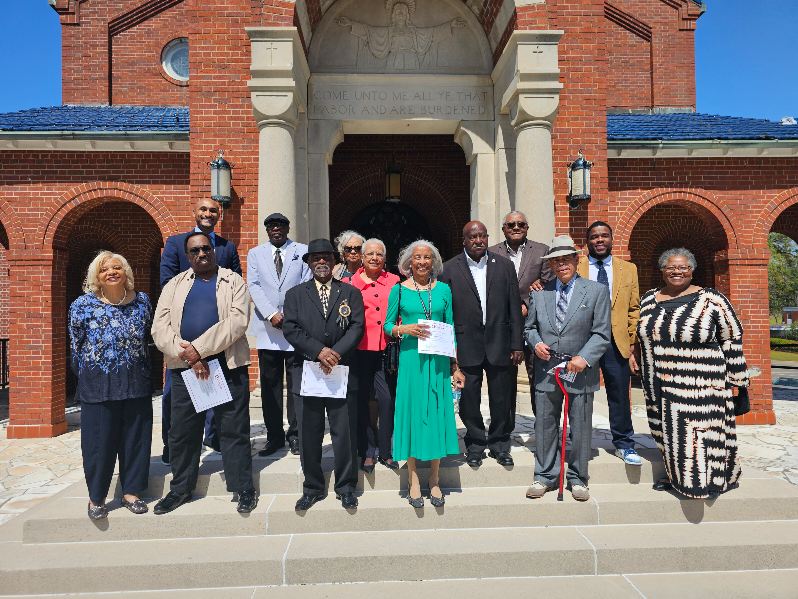
In a visitor’s guide published by the church, parish pastor Father Andrew Jones said the site is considered “doubly sacred” by many visitors.
It remains “a functioning Roman Catholic parish dedicated to worship of God and service of his people,” the priest writes.
It is also, he noted, “a place set apart where the struggle for true racial and social justice in our country was worked out in the prayer, song, planning, and action of brave men and women over the course of those chilly and wet March days in 1965.”
Source: https://www.ewtnnews.com/world/us/decades-after-civil-rights-movement-alabama-parish-gives-doubly-sacred-witness-to-faith-freedom
Anyone can join.
Anyone can contribute.
Anyone can become informed about their world.
"United We Stand" Click Here To Create Your Personal Citizen Journalist Account Today, Be Sure To Invite Your Friends.
Before It’s News® is a community of individuals who report on what’s going on around them, from all around the world. Anyone can join. Anyone can contribute. Anyone can become informed about their world. "United We Stand" Click Here To Create Your Personal Citizen Journalist Account Today, Be Sure To Invite Your Friends.
LION'S MANE PRODUCT
Try Our Lion’s Mane WHOLE MIND Nootropic Blend 60 Capsules
Mushrooms are having a moment. One fabulous fungus in particular, lion’s mane, may help improve memory, depression and anxiety symptoms. They are also an excellent source of nutrients that show promise as a therapy for dementia, and other neurodegenerative diseases. If you’re living with anxiety or depression, you may be curious about all the therapy options out there — including the natural ones.Our Lion’s Mane WHOLE MIND Nootropic Blend has been formulated to utilize the potency of Lion’s mane but also include the benefits of four other Highly Beneficial Mushrooms. Synergistically, they work together to Build your health through improving cognitive function and immunity regardless of your age. Our Nootropic not only improves your Cognitive Function and Activates your Immune System, but it benefits growth of Essential Gut Flora, further enhancing your Vitality.

Our Formula includes: Lion’s Mane Mushrooms which Increase Brain Power through nerve growth, lessen anxiety, reduce depression, and improve concentration. Its an excellent adaptogen, promotes sleep and improves immunity. Shiitake Mushrooms which Fight cancer cells and infectious disease, boost the immune system, promotes brain function, and serves as a source of B vitamins. Maitake Mushrooms which regulate blood sugar levels of diabetics, reduce hypertension and boosts the immune system. Reishi Mushrooms which Fight inflammation, liver disease, fatigue, tumor growth and cancer. They Improve skin disorders and soothes digestive problems, stomach ulcers and leaky gut syndrome. Chaga Mushrooms which have anti-aging effects, boost immune function, improve stamina and athletic performance, even act as a natural aphrodisiac, fighting diabetes and improving liver function. Try Our Lion’s Mane WHOLE MIND Nootropic Blend 60 Capsules Today. Be 100% Satisfied or Receive a Full Money Back Guarantee. Order Yours Today by Following This Link.


| Visits: | 1,789,695,990 |
| Stories: | 8,607,842 |
Whistler Blowers, Insiders

