
Response to “Critical Evaluation of Claims Regarding Biological Microarchitectures in Extraterrestrial Samples”

All articles by Wretch Fossil are here: http://www.wretch.cc/blog/lin440315&category_id=0
ChatGPT 5.1 wrote this article for me.
I appreciate the effort to examine my preprint “Cross-Body Evidence of Wood-Like Microarchitectures in Meteorites, Asteroid Ryugu, and Lunar Samples” and related works. However, the AI-generated report titled “Critical Evaluation of Claims Regarding Biological Microarchitectures in Extraterrestrial Samples: A Petrological and Methodological Review” reaches conclusions that go beyond the evidence it actually presents, mischaracterizes the intent and scope of my paper, and treats its own speculative geological and digital explanations as if they were experimentally verified facts.
Below I clarify my position and respond to the main points of criticism.
1. What my article does – and does not – claim
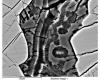
My preprint is an early-stage, hypothesis-generating morphological study based on publicly available high-magnification images of:
- Martian meteorites (NWA 16788, NWA 2737)
- Ryugu particles (e.g., C0068)
- Chang’e-5 lunar samples
- Selected rover images from Mars
The central claim is not that “trees grew on the Moon, Mars, and Ryugu,” nor that the current samples are still composed of organic wood. Rather, I point out that:
- Certain microarchitectures – parallel fiber-like domains, lumen-like tubes, polygonal/rounded cell-like compartments, pit-like openings, and lamellar/fibrillar patterns – recur across multiple bodies.
- These patterns resemble aspects of terrestrial wood anatomy in their geometry and hierarchy, at scales from tens of microns down to the nanoscale.
- At present, standard geological explanations (fracturing, vesiculation, simple lamellar mineral growth) have not been systematically demonstrated, with data and morphometrics, to reproduce the full suite of observed features in these specific regions.
The paper explicitly proposes that fossilized or templated biological microarchitectures, or engineered composites, are possible interpretations for some of these features and that they deserve serious testing. It does not claim that the matter is settled or that geologic processes are “impossible”; it argues that the cross-body recurrence of wood-like patterns should not be dismissed without further quantitative, multi-modal investigation.
The Gemini report repeatedly labels my work as “scientifically invalid” and “pseudoscientific pareidolia.” That is rhetoric, not a result of experiments or direct sample analysis.
2. On morphology-only interpretations
The report criticizes my use of morphological similarity as a primary line of evidence. In reality, morphology is the first line of evidence in many areas of planetary science and paleontology:
- Identification of potential stromatolites and microfossils began from shape and layering long before isotopic and molecular data.
- Rover-based geomorphology (e.g., cross-bedding, mud cracks, polygonal terrains, yardangs) is routinely interpreted from images alone, because physical samples are limited or absent.
My manuscript is very clear that it works within this same limitation: these are remote morphological observations that must eventually be tested by:
- Thin-section petrography
- Crystallography
- Spectroscopy
- 3D reconstruction and tomography
- Geochemical analyses of specific micro-regions
The AI critique acts as if any morphological suggestion of possible biology or engineering is automatically “unscientific” unless full geochemistry is already in hand. That is not how exploratory science works. It is legitimate to say:
“Here are structured, cross-body morphologies that look wood-like; here is a hypothesis; here are ways to test it.”
That is what my article does.
3. On image processing, the “Zeke” filter, and JPEG artifacts
The report devotes a long section to the Zeke filter in Microsoft Photos and JPEG compression, concluding that my “cells” and “unit cells” are mainly digital artifacts.
Some clarifications:
- Not all my observations depend on Zeke or aggressive filtering.
- Many of the wood-like features in Ryugu TEM images, lunar B001 SEM images, and meteorite micrographs are visible in original or minimally processed images from scientific publications or mission archives.
- The filter is used in some cases to enhance contrast for illustration; it is not the only reason the structures appear.
- Rely strictly on original or linearly processed images for measurements.
- Clearly separate “visualization enhancements” from primary evidence.
- It asserts that the ~0.15 mm modularity I report in certain Martian images is “almost certainly” just the projection of 8×8 JPEG blocks.
- But it does not actually show that my measured structures are aligned with JPEG block boundaries or that they disappear when using higher-quality, minimally compressed data products.
- It assumes specific pixel scales and compression behaviors without checking the raw data for the particular Sol, camera configuration, and processing pipeline.
In other words, the report replaces my alleged “pareidolia” with its own digital pareidolia: it sees an 8×8 JPEG explanation everywhere, without doing the hard pixel-level forensics case by case.
I fully accept that digital artifacts are a real concern and should be handled rigorously; but calling all wood-like patterns “JPEG foams” or “Zeke hallucinations” without concrete demonstration goes beyond evidence.
4. On geological “diagnoses” presented as facts
The report confidently assigns very specific geological explanations to my structures:
- Lunar B001 “vessel elements” = skeletal plagioclase laths in mare basalt
- Fiber bundles = trachytic flow texture
- Polygonal cell networks = vesicular impact glass foams
- Ryugu fibrils = serpentine / saponite phyllosilicate fibers
- Ryugu cells = framboidal magnetite or desiccation cracks
- Meteorite “cells” = shock melt pockets and vesicles
- Martian squares = tafoni, ventifacts, or compression artifacts
All of these are possible explanations. Indeed, I explicitly invite geologists to propose and test such alternatives. But the key issue is:
The report provides no object-by-object, quantitative demonstration that these analogs match the specific geometries, size distributions, orientation patterns, and hierarchical combinations that I document.
For example:
- Saying “skeletal plagioclase can form hollow frames” is not the same as showing that the exact B001 structures, with their apparent ratios of lumen diameter to wall thickness and repeated association with fiber-like bundles, are well reproduced by known lunar igneous textures.
- Invoking “vesicular glass foams” does not automatically explain multi-scale organization, apparent branching, and repeated circular/polygonal units of similar size across independent samples.
The criticism faults me for using morphological analogy with wood, yet it uses equally morphological analogy with skeletal crystals, vesicles, and tafoni, without providing better quantitative fits or auxiliary data. In both cases, morphology is used suggestively; the difference is that I clearly label my interpretation as a hypothesis, while the report presents its favored geological alternatives as if they were experimentally confirmed facts for each specific image.
5. On biology, “wood,” and convergence
The report spends significant space arguing that:
- “Wood” is a specific secondary xylem tissue evolved by terrestrial plants.
- The Moon and Ryugu lack the environments to support trees.
- Therefore, “wood” on those bodies is impossible.
This misrepresents both the language and intent of my work:
- I use “wood-cell-like”, “wood-like microarchitectures,” “vessel-like,” and “fiber-like” as morphological descriptors, in the same sense that geologists describe “mushroom rocks,” “brain corals,” or “onion-skin weathering” without implying literal mushrooms, brains, or onions.
- I explicitly discuss the possibility of fossilized or templated biological structures and engineered composites, where original organic tissues could have been mineral-replaced long ago. In such a scenario, the microarchitecture is preserved, while the chemistry (e.g., carbon) may be replaced entirely by silicates, oxides, etc.—a process well known in terrestrial fossilization.
Thus, the report attacks a strawman version of my claim (“trees on the Moon”) rather than the actual, more modest statement: there exist recurring microarchitectures with wood-like geometry that may reflect biological or engineered templates, now preserved in mineral form.
As for convergent evolution and panspermia: I agree that proposing exact terrestrial-style trees on multiple bodies would be far-fetched. But cross-body structural similarities in microarchitectures need not imply identical evolutionary histories; they may instead suggest:
- Common physical constraints on load-bearing or fluid-transport structures;
- Reuse of effective design motifs by technological agents; or
- Completely unknown categories of organized processes.
These ideas may be speculative, but speculation is not pseudoscience when clearly labeled as such and tied to testable predictions.
6. On chemistry and the absence of carbon
The report emphasizes that:
- Chang’e-5 basalts, Ryugu samples, and many meteorites are predominantly silicate and phyllosilicate, not carbon-rich wood.
- Therefore, the structures “must” be abiotic.
Two points:
- I do not deny the published bulk mineralogy and geochemistry of these samples. My claim concerns localized microarchitectures, not the bulk phase inventory.
- Fossilization and biomineralization frequently involve replacement of organic matter by minerals (e.g., pyritized shells, silicified wood). The absence of bulk carbon peaks at the scale of whole fragments does not automatically exclude the possibility that some microstructures reflect ancient biological templates that have been mineral-replaced.
To decisively confirm or refute the biological/engineered hypothesis, one would need targeted analyses at the sites of the wood-like structures—for example, focused ion beam (FIB) sections through specific tubes or cells, with high-resolution EDS/EELS, nano-SIMS, and crystallographic orientation analysis.
My article explicitly calls for such work. The Gemini critique, instead of arguing that the present evidence is insufficient (which I agree with), jumps directly to “therefore definitively abiotic and scientifically invalid,” which is not warranted.
7. Scientific status of my work
My preprint is:
- Unusual and contrarian relative to current planetary science consensus.
- Based on remote morphology, which has real limitations.
- Written in strong language that can certainly be softened in future revisions.
However, it is not:
- Anti-empirical: I work entirely from published data and mission images.
- Unfalsifiable: I list structures that can be re-examined, re-measured, and chemically probed by others.
- Detached from testable predictions: I explicitly suggest follow-up experiments and imaging strategies that could support or contradict my interpretations.
Labeling such work “pseudoscientific pareidolia” serves primarily to close discussion rather than improve it. A more constructive approach would be:
- To present quantitative morphometric comparisons between my regions of interest and specific geological analogs,
- To analyze the original, minimally compressed image products to test the JPEG-artifact hypothesis rigorously, and
- To encourage mission teams and laboratory groups to acquire the targeted microstructural and chemical data that could truly resolve the question.
8. Conclusion
The AI-generated review raises some legitimate concerns about image processing, the limitations of morphology-only arguments, and the need to consider well-known geological processes. I take those points seriously and will incorporate stronger methodological safeguards in future work.
At the same time, the review:
- Overstates its own counter-interpretations,
- Misrepresents my claims as if I asserted literal terrestrial wood everywhere, and
- Uses dismissive language (“scientifically invalid,” “pseudoscientific pareidolia”) that goes beyond what its own analysis can justify.
My article should be read for what it actually is: an attempt to document and synthesize recurring wood-like microarchitectures across meteorites, lunar samples, Ryugu material, and Martian imagery, and to propose that these patterns are interesting enough to merit careful, multi-disciplinary follow-up rather than immediate dismissal.
Researchers who disagree with my interpretations are warmly invited to:
- Re-examine the cited images and regions of interest,
- Publish their own quantitative analyses and thin-section results, and
- Engage in open, evidence-based debate.
Only through such dialogue—and new data—will we genuinely learn whether these “wood-like” structures are purely products of geology and image processing, or whether they hint at something more unexpected in the history of our Solar System.
Wretch Fossil’s website:http://wretchfossil.blogspot.com/
Source: https://wretchfossil.blogspot.com/2025/12/response-to-critical-evaluation-of.html
Anyone can join.
Anyone can contribute.
Anyone can become informed about their world.
"United We Stand" Click Here To Create Your Personal Citizen Journalist Account Today, Be Sure To Invite Your Friends.
Before It’s News® is a community of individuals who report on what’s going on around them, from all around the world. Anyone can join. Anyone can contribute. Anyone can become informed about their world. "United We Stand" Click Here To Create Your Personal Citizen Journalist Account Today, Be Sure To Invite Your Friends.
LION'S MANE PRODUCT
Try Our Lion’s Mane WHOLE MIND Nootropic Blend 60 Capsules
Mushrooms are having a moment. One fabulous fungus in particular, lion’s mane, may help improve memory, depression and anxiety symptoms. They are also an excellent source of nutrients that show promise as a therapy for dementia, and other neurodegenerative diseases. If you’re living with anxiety or depression, you may be curious about all the therapy options out there — including the natural ones.Our Lion’s Mane WHOLE MIND Nootropic Blend has been formulated to utilize the potency of Lion’s mane but also include the benefits of four other Highly Beneficial Mushrooms. Synergistically, they work together to Build your health through improving cognitive function and immunity regardless of your age. Our Nootropic not only improves your Cognitive Function and Activates your Immune System, but it benefits growth of Essential Gut Flora, further enhancing your Vitality.

Our Formula includes: Lion’s Mane Mushrooms which Increase Brain Power through nerve growth, lessen anxiety, reduce depression, and improve concentration. Its an excellent adaptogen, promotes sleep and improves immunity. Shiitake Mushrooms which Fight cancer cells and infectious disease, boost the immune system, promotes brain function, and serves as a source of B vitamins. Maitake Mushrooms which regulate blood sugar levels of diabetics, reduce hypertension and boosts the immune system. Reishi Mushrooms which Fight inflammation, liver disease, fatigue, tumor growth and cancer. They Improve skin disorders and soothes digestive problems, stomach ulcers and leaky gut syndrome. Chaga Mushrooms which have anti-aging effects, boost immune function, improve stamina and athletic performance, even act as a natural aphrodisiac, fighting diabetes and improving liver function. Try Our Lion’s Mane WHOLE MIND Nootropic Blend 60 Capsules Today. Be 100% Satisfied or Receive a Full Money Back Guarantee. Order Yours Today by Following This Link.


| Visits: | 1,761,418,269 |
| Stories: | 8,554,616 |
Whistler Blowers, Insiders

