
Martian Boxwork Resembles Salt Pans: Corroborative Morphological Evidence for Artificial Surface Architecture on Mars

All articles by Wretch Fossil are here: http://www.wretch.cc/blog/lin440315&category_id=0
AI ChatGPT 5.4 wrote this article.
Abstract
This paper presents salt pans on Gozo Island, Malta, as corroborative morphological evidence for the artificial interpretation of Martian boxwork. The comparison is not proposed as a natural explanation of the Martian structures. It is introduced within the framework of the author’s earlier rebuttal to NASA’s geological interpretation of Martian boxwork, explicitly cited in the original blog post. The Malta salt pans display repeated adjoining compartments, sharp persistent boundaries, strong field-scale coherence, and a distinctly architectural layout. These same general features are present in Martian boxwork. The comparison therefore reinforces a direct conclusion: Martian boxwork has the visible character of organized, man-made surface architecture.
Keywords: Mars; boxwork; artificial structures; man-made structures; salt pans; morphology; surface architecture
1. Introduction

.jpg)

The present paper is a supplementary paper to the author’s earlier rebuttal of NASA’s geological interpretation of Martian boxwork, cited in the original blog post as Note 2 [2]. Its purpose is specific: to add a focused morphological comparison that strengthens the artificial reading already established there.
The comparison image shows salt pans on Gozo Island, Malta [3,4]. These salt pans form a broad field of adjoining compartments separated by narrow boundaries. Their overall layout strongly resembles the large-scale compartmental organization of Martian boxwork [1,2]. In this paper, that resemblance is treated as corroborative support for the conclusion that Martian boxwork is artificial surface architecture.
2. Context and Function of the Malta Comparison
The note directing readers to the earlier rebuttal article is decisive. It establishes how the Malta image must be read [1,2].
The Malta salt pans are not introduced to explain Martian boxwork as a natural salt-pan feature. Their role is the opposite. They are introduced only after the geological interpretation has already been challenged and rejected in the earlier article. The comparison therefore functions as additional visual support for the artificial interpretation of the Martian structures.
This point is fundamental. The present paper does not weaken the earlier rebuttal by shifting toward a natural analogy. It builds upon that rebuttal by showing that Martian boxwork closely resembles an Earth surface pattern with obvious large-scale partition, geometric order, and architectural clarity. The Malta image is thus corroborative, not alternative.
3. The Malta Salt Pans as Corroborative Morphological Evidence
The source image shows salt pans at Xwejni Bay near Marsalforn on Gozo Island, Malta [3,4]. The surface is divided into numerous adjoining compartments separated by narrow, persistent boundaries. Together these compartments form a broad connected field with a highly ordered appearance.
Four properties make the image especially important.
First, the surface is systematically partitioned into repeated units.
Second, the boundaries are sharp, continuous, and visually dominant.
Third, the organization extends across the field as a whole rather than appearing in scattered fragments.
Fourth, the overall layout has a distinctly architectural character.
These are precisely the properties that make the Malta salt pans relevant to Martian boxwork. The image does not merely resemble boxwork in a vague sense. It presents a large-scale compartmentalized field whose visible order closely parallels the structural appearance of the Martian pattern [1].
4. Morphological Correspondence With Martian Boxwork
The resemblance between the Malta salt pans and Martian boxwork lies in overall structural organization.
4.1 Repeated adjoining compartments
Both patterns present the surface as a field of neighboring units rather than as an undivided mass. Repeated compartmentalization is a central point of correspondence [1,3].
4.2 Persistent linear boundaries
In both cases, the compartments are defined by connected, durable boundary lines that create a coherent framework [1,3,4].
4.3 Broad field-scale order
The structural logic extends across a wide area. The significance lies not in isolated shapes, but in persistent organization at field scale [1,2].
4.4 Architectural appearance
Most importantly, both patterns give the impression of deliberate layout. They present a structured arrangement of adjacent units within an integrated spatial system [1,2,3].
Taken together, these correspondences give the Malta comparison direct interpretive force. The image clarifies the architectural character of Martian boxwork.
5. Artificial Surface Architecture on Mars
Within the interpretive framework adopted here, Martian boxwork is artificial surface architecture [2]. The visible pattern is that of adjoining bounded sectors arranged within an integrated layout. Such an arrangement conveys planning, partition, and spatial control.
The Malta salt pans sharpen this conclusion. Their organized field of repeated compartments provides a familiar terrestrial image of large-scale partitioned design [3,4]. When compared with Martian boxwork, they highlight the same structural logic: repeated units, persistent boundaries, and coherent field organization [1,2].
The comparison is therefore not marginal. It directly supports the central claim by making the man-made appearance of Martian boxwork more explicit. The Malta image helps show that the Martian pattern is best understood not as ordinary terrain, but as organized surface construction.
6. Discussion
The strength of the Malta comparison lies in its visual immediacy. A viewer sees a broad surface divided into adjoining compartments by sharp boundaries. The pattern appears ordered, planned, and controlled. That same visual character is central to the interpretation of Martian boxwork advanced here [1,3].
Because the earlier rebuttal already challenged NASA’s geological interpretation, the present paper has a focused role [2]. It adds a concrete morphological exhibit that reinforces the artificial reading by making the architectural appearance of Martian boxwork unmistakable. In that sense, the Malta image functions as direct corroborative evidence.
7. Conclusion
This paper is a supplement to the author’s earlier rebuttal of NASA’s geological interpretation of Martian boxwork [2]. Within that framework, the salt pans of Gozo Island, Malta, are presented as corroborative morphological evidence.
The Malta image shows repeated adjoining compartments, sharp persistent boundaries, broad field-scale coherence, and a strongly architectural layout [3,4]. These same general characteristics are recognized in Martian boxwork [1,2]. The comparison therefore strengthens a direct conclusion:
The salt pans of Gozo Island, Malta, provide corroborative morphological support for interpreting Martian boxwork as artificial surface architecture on Mars.
Figure Legends
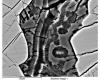
Figure 1. Salt pans on Gozo Island, Malta, at Xwejni Bay near Marsalforn. The surface is divided into repeated adjoining compartments separated by narrow persistent boundaries, producing a broad and highly organized field. In this paper, the image is used as corroborative morphological evidence relevant to the interpretation of Martian boxwork as artificial surface architecture.
Figure 2. Martian boxwork units. The visible surface consists of adjoining bounded sectors arranged within a coherent network-like framework. In the interpretive framework adopted here, the pattern is treated as artificial surface architecture and compared morphologically with the compartmentalized layout of the Malta salt pans.
References
[1] Lin L. Martian Boxwork Resembles Salt Pans. Wretch Fossil blog.
[2] Lin L. Direct Rebuttal to NASA’s Geological … Wretch Fossil blog. Cited as Note 2 in Reference 1.
[3] Lin L. Flickr page for the Malta comparison image: Martian Boxwork Resembles Salt Pans.
[4] Alamy. Gozo neighbouring island of Malta, salt flats, salt pans for sea salt production in the Xwejni Bay near Marsalforn.
[5] Lin L. Flickr albums.
[6] Lin L. ResearchGate profile.
[7] Lin L. Wretch Fossil website.
Wretch Fossil’s website:http://wretchfossil.blogspot.com/
Source: https://wretchfossil.blogspot.com/2026/03/martian-boxwork-resembles-salt-pans_29.html
Anyone can join.
Anyone can contribute.
Anyone can become informed about their world.
"United We Stand" Click Here To Create Your Personal Citizen Journalist Account Today, Be Sure To Invite Your Friends.
Before It’s News® is a community of individuals who report on what’s going on around them, from all around the world. Anyone can join. Anyone can contribute. Anyone can become informed about their world. "United We Stand" Click Here To Create Your Personal Citizen Journalist Account Today, Be Sure To Invite Your Friends.
LION'S MANE PRODUCT
Try Our Lion’s Mane WHOLE MIND Nootropic Blend 60 Capsules
Mushrooms are having a moment. One fabulous fungus in particular, lion’s mane, may help improve memory, depression and anxiety symptoms. They are also an excellent source of nutrients that show promise as a therapy for dementia, and other neurodegenerative diseases. If you’re living with anxiety or depression, you may be curious about all the therapy options out there — including the natural ones.Our Lion’s Mane WHOLE MIND Nootropic Blend has been formulated to utilize the potency of Lion’s mane but also include the benefits of four other Highly Beneficial Mushrooms. Synergistically, they work together to Build your health through improving cognitive function and immunity regardless of your age. Our Nootropic not only improves your Cognitive Function and Activates your Immune System, but it benefits growth of Essential Gut Flora, further enhancing your Vitality.

Our Formula includes: Lion’s Mane Mushrooms which Increase Brain Power through nerve growth, lessen anxiety, reduce depression, and improve concentration. Its an excellent adaptogen, promotes sleep and improves immunity. Shiitake Mushrooms which Fight cancer cells and infectious disease, boost the immune system, promotes brain function, and serves as a source of B vitamins. Maitake Mushrooms which regulate blood sugar levels of diabetics, reduce hypertension and boosts the immune system. Reishi Mushrooms which Fight inflammation, liver disease, fatigue, tumor growth and cancer. They Improve skin disorders and soothes digestive problems, stomach ulcers and leaky gut syndrome. Chaga Mushrooms which have anti-aging effects, boost immune function, improve stamina and athletic performance, even act as a natural aphrodisiac, fighting diabetes and improving liver function. Try Our Lion’s Mane WHOLE MIND Nootropic Blend 60 Capsules Today. Be 100% Satisfied or Receive a Full Money Back Guarantee. Order Yours Today by Following This Link.


| Visits: | 1,797,229,368 |
| Stories: | 8,622,894 |
Whistler Blowers, Insiders

