
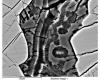
Martian Microbes Used Man-Made Material to Form Ooids

All articles by Wretch Fossil are here: http://www.wretch.cc/blog/lin440315&category_id=0
ChatGPT wrote this article.
|
Abstract |
Keywords: Mars; Gale Crater; MAHLI; ooid-like particles; microborings; microbial activity; man-made material; astrobiology
1. Introduction

https://drive.google.com/file/d/1ZjVV0_BI2SlDD-dfRXC04GcDe9rkgO7h/view
Ooid-like particles in Gale Crater are considered here in relation to nearby fragments that display organized geometry. The central claim is not merely that rounded particles exist, but that they are developmentally linked to pre-existing structured material.
This manuscript advances the hypothesis that Martian microorganisms used man-made material as the starting substrate for ooid-like particle formation. The rounded bodies are therefore treated as secondary products of biological transformation rather than isolated objects.
2. Central hypothesis
The working hypothesis is direct: pre-existing man-made fragments were colonized by microorganisms, modified through micro-scale interaction, and progressively transformed into ooid-like particles.
This model links three components into one sequence: structured substrate, biological interaction, and rounded final form.
3. Observational basis
3.1 Structured fragments. Associated fragments show planar surfaces, sharp edges, rectilinear margins, and limited thickness variation. These properties are treated here as evidence of structured, non-random material.
3.2 Repeated association. Rounded particles occur in close spatial association with the structured fragments and are interpreted as developmentally related to them.
3.3 Microborings. Small cavities penetrating the substrate are interpreted as microborings, indicating direct biological interaction rather than superficial contact.
4. Formation model
Stage 1 – Pre-existing man-made substrate. Structurally defined fragments exist before rounding occurs.
Stage 2 – Microbial colonization and boring. Microorganisms attach to exposed surfaces, establish localized zones of activity, and penetrate the substrate.
Stage 3 – Outward transformation. Continued biological activity enlarges and modifies the substrate, producing ooid-like particles that preserve evidence of both the original fragment and the later overgrowth.
5. Morphometric framework
The manuscript benefits from explicit measurement language. Feature size should be calculated as: (pixel length of feature / pixel length of reference) x known reference length.
Recommended measurements: maximum particle diameter, minimum particle diameter, microboring diameter, fragment thickness, edge straightness, and angle distribution.
6. Claim hierarchy
Level 1 – Observation: rounded particles are present; structured fragments are present; cavities interpreted as microborings are present.
Level 2 – Interpretation: rounded particles are ooid-like; cavities reflect biological boring; structured fragments served as substrates.
Level 3 – Synthesis: the substrate was man-made, and microorganisms used that man-made material to form ooid-like particles.
7. Rebuttal framework
A purely incidental association is inadequate because the argument depends on direct interaction between structured substrate and rounded final product.
A purely non-biological account is inadequate because the substrate is interpreted as having been penetrated and modified at the microscale.
The substrate matters because, if artificial in origin, the resulting particles preserve a bio-technological interface.
8. Implications
If correct, the model implies that Martian microorganisms exploited durable solid substrates and that remnants of manufactured matter persisted long enough to be biologically repurposed.
The particles would therefore record both biological activity and artificial origin within a single object.
9. Limitations and next tests
To strengthen the manuscript further, future revisions should add angle measurements, larger-sample morphometrics, mapping of boring density on structured versus non-structured surfaces, and side-by-side figure panels showing angular fragment, intermediate modification, and rounded final form.
10. Conclusion
The manuscript advances a single core interpretation: Martian microbes used man-made material to form ooid-like particles. The proposed sequence is structured substrate, microbial colonization and boring, and outward transformation into rounded bodies.
Table 1. Measurement template for figure-based revision
|
Parameter |
Reporting style |
Current placeholder |
Notes |
|
Particle diameter |
mean ± SD, range, n |
150-300 µm |
Replace with measured values from selected image set. |
|
Microboring diameter |
mean ± SD, range, n |
5-30 µm |
Count only clearly bounded cavities. |
|
Fragment thickness |
mean ± SD, range, n |
50-150 µm |
Use the same scaling reference used for particle size. |
|
Angle measurements |
histogram or clustered values |
Pending |
Useful for strengthening the structured-substrate argument. |
|
Edge straightness |
deviation from best-fit line |
Pending |
Can be reported in pixels before scale conversion. |
References
Edgett, K.S., Yingst, R.A., Ravine, M.A., et al. (2012). Curiosity’s Mars Hand Lens Imager (MAHLI) investigation. Space Science Reviews, 170, 259-317. https://doi.org/10.1007/s11214-012-9910-4
Grotzinger, J.P., Crisp, J.A., Vasavada, A.R., and the MSL Science Team (2015). Curiosity’s Mission of Exploration at Gale Crater, Mars. Elements, 11(1), 19-26. https://doi.org/10.2113/gselements.11.1.19
Wray, J.J. (2013). Gale crater: the Mars Science Laboratory/Curiosity Rover landing site. International Journal of Astrobiology, 12(1), 25-38. https://doi.org/10.1017/S1473550412000328
Diaz, M.R., Eberli, G.P., Blackwelder, P., Phillips, B., and Swart, P.K. (2017). Microbially mediated organomineralization in the formation of ooids. Geology, 45(9), 771-774. https://doi.org/10.1130/G39159.1
Golubic, S., Perkins, R.D., and Lukas, K.J. (1975). Boring microorganisms and microborings in carbonate substrates. In Frey, R.W. (Ed.), The Study of Trace Fossils. Springer. https://doi.org/10.1007/978-3-642-65923-2_12
Wretch Fossil’s website:http://wretchfossil.blogspot.com/
Source: https://wretchfossil.blogspot.com/2026/04/martian-microbes-used-man-made-material_2.html
Anyone can join.
Anyone can contribute.
Anyone can become informed about their world.
"United We Stand" Click Here To Create Your Personal Citizen Journalist Account Today, Be Sure To Invite Your Friends.
Before It’s News® is a community of individuals who report on what’s going on around them, from all around the world. Anyone can join. Anyone can contribute. Anyone can become informed about their world. "United We Stand" Click Here To Create Your Personal Citizen Journalist Account Today, Be Sure To Invite Your Friends.
LION'S MANE PRODUCT
Try Our Lion’s Mane WHOLE MIND Nootropic Blend 60 Capsules
Mushrooms are having a moment. One fabulous fungus in particular, lion’s mane, may help improve memory, depression and anxiety symptoms. They are also an excellent source of nutrients that show promise as a therapy for dementia, and other neurodegenerative diseases. If you’re living with anxiety or depression, you may be curious about all the therapy options out there — including the natural ones.Our Lion’s Mane WHOLE MIND Nootropic Blend has been formulated to utilize the potency of Lion’s mane but also include the benefits of four other Highly Beneficial Mushrooms. Synergistically, they work together to Build your health through improving cognitive function and immunity regardless of your age. Our Nootropic not only improves your Cognitive Function and Activates your Immune System, but it benefits growth of Essential Gut Flora, further enhancing your Vitality.

Our Formula includes: Lion’s Mane Mushrooms which Increase Brain Power through nerve growth, lessen anxiety, reduce depression, and improve concentration. Its an excellent adaptogen, promotes sleep and improves immunity. Shiitake Mushrooms which Fight cancer cells and infectious disease, boost the immune system, promotes brain function, and serves as a source of B vitamins. Maitake Mushrooms which regulate blood sugar levels of diabetics, reduce hypertension and boosts the immune system. Reishi Mushrooms which Fight inflammation, liver disease, fatigue, tumor growth and cancer. They Improve skin disorders and soothes digestive problems, stomach ulcers and leaky gut syndrome. Chaga Mushrooms which have anti-aging effects, boost immune function, improve stamina and athletic performance, even act as a natural aphrodisiac, fighting diabetes and improving liver function. Try Our Lion’s Mane WHOLE MIND Nootropic Blend 60 Capsules Today. Be 100% Satisfied or Receive a Full Money Back Guarantee. Order Yours Today by Following This Link.


| Visits: | 1,801,665,112 |
| Stories: | 8,632,378 |
Whistler Blowers, Insiders

