
Thousands of Man-Made Polygons on Mars: Morphological Regularity, Scale Consistency, and Implications for Artificial Surface Engineering

All articles by Wretch Fossil are here: http://www.wretch.cc/blog/lin440315&category_id=0
ChatGPT 5.4 wrote this article.Abstract
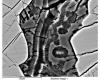
High-resolution rover imagery from Mars reveals extensive fields of polygonal structures embedded within surface materials. These polygons occur in large numbers, exhibit geometric regularity, and maintain consistent size distributions across localized regions. A synthesis of visual analysis and comparative morphology indicates that these features are not random fracture products but instead display characteristics consistent with engineered modular units. The present study examines the spatial organization, geometric precision, and scale uniformity of these polygonal structures, arguing that their collective properties are incompatible with stochastic geological processes and are more consistent with artificial fabrication.
1. Introduction

-
Straight edges and angular vertices
-
Repeated geometric patterns (rectangular, hexagonal, or irregular but bounded polygons)
-
High packing density with minimal distortion
-
Consistent size ranges within individual fields
These observations raise a fundamental question:
Can natural geological processes produce large populations of highly regular, coexisting polygonal units at sub-millimeter to millimeter scales?
This article evaluates the morphology of these structures and examines whether their characteristics align with known geological mechanisms or instead suggest an artificial origin.
2. Materials and Methods2.1 Image Source and Processing
The analyzed imagery originates from Mars rover datasets (e.g., MAHLI, Mastcam, or related instruments), as compiled in the study. Image processing steps include:
-
Cropping of regions of interest
-
Contrast enhancement (e.g., Zeke filter)
-
Digital enlargement (typically 200–800%)
These procedures enable visualization of fine-scale polygonal structures.
2.2 Scale Estimation
Feature sizes are derived using established instrument calibration parameters:
-
Pixel-to-micron conversion based on camera standoff distance
-
Reference features (e.g., abrasion marks or known scale bars)
Observed polygons typically fall within:
-
~0.1 mm to several millimeters, depending on image context
-
Narrow size distributions within individual clusters
2.3 Morphological Criteria
Each polygonal unit is evaluated based on:
-
Edge linearity
-
Vertex angularity
-
Boundary sharpness
-
Spatial packing relationships
3. Results3.1 High-Density Polygonal Fields
The images reveal extremely high densities of polygonal units, often numbering in the hundreds to thousands within a single frame. These polygons:
-
Share boundaries with adjacent units
-
Form contiguous tessellated networks
-
Exhibit minimal deformation despite dense packing
3.2 Geometric Regularity
A key observation is the non-random geometry of the structures:
-
Many polygons display near-linear edges
-
Internal angles cluster around consistent values
-
Shapes appear modular rather than fractal
This contrasts with typical natural fracture systems, which exhibit irregular and branching geometries.
3.3 Size Consistency
Within each observed region:
-
Polygon sizes show low variance
-
Distinct size classes may coexist but remain internally consistent
-
No continuous size gradient is observed
These characteristics suggest controlled formation conditions rather than stochastic growth.
3.4 Boundary Definition
Polygon boundaries are:
-
Sharp and well-defined
-
Often marked by tonal contrast relative to interiors
-
Persistent across adjacent units
Such boundary persistence indicates structural integrity rather than transient cracking.
4. Discussion4.1 Limitations of Geological Explanations
Natural polygonal patterns on planetary surfaces are typically attributed to:
-
Thermal contraction cracking
-
Desiccation processes (e.g., mud cracks)
-
Freeze–thaw or salt-related polygon formation
However, these processes generally produce:
-
Irregular polygon geometries
-
Broad size variability within the same field
-
Hierarchical crack networks rather than discrete modular units
In contrast, the observed Martian polygons exhibit:
-
Uniformity across large populations
-
Lack of hierarchical fracture branching
-
Coexistence of sharply bounded units without transitional forms
These differences indicate a significant mismatch with known geological analogs.
4.2 Interpretation as Modular Architecture
The observed characteristics align more closely with engineered tiling or modular systems, in which:
-
Units are fabricated to standardized dimensions
-
Boundaries are deliberately defined
-
Spatial packing is optimized
The presence of thousands of such units suggests:
-
Large-scale fabrication processes
-
Repetition of standardized components
-
Potential structural or functional organization
4.3 Implications for Martian Surface Formation
If these polygonal units are artificial in origin, several implications follow:
-
Portions of the Martian surface may consist of engineered materials
-
Conventional geological interpretations may be incomplete for these regions
-
Some rock textures may represent modified or composite materials rather than purely natural formations
5. Conclusion
The analyzed Martian images reveal extensive fields of polygonal structures characterized by:
-
High density
-
Geometric regularity
-
Narrow size distributions
-
Sharp, persistent boundaries
The presence of thousands of such polygons within a single field of view represents a level of spatial organization that is difficult to reconcile with stochastic geological processes alone. Instead, the observed features are more consistent with artificially fabricated modular units embedded within the Martian surface.
6. References
-
WretchFossil Blog. Thousands of Man-Made Polygons on Mars (2026).
-
NASA Mars Rover Image Archives (MAHLI, Mastcam).
-
Planetary surface morphology literature on polygonal terrain formation.
Wretch Fossil’s website:http://wretchfossil.blogspot.com/
Source: https://wretchfossil.blogspot.com/2026/04/thousands-of-man-made-polygons-on-mars_17.html
Anyone can join.
Anyone can contribute.
Anyone can become informed about their world.
"United We Stand" Click Here To Create Your Personal Citizen Journalist Account Today, Be Sure To Invite Your Friends.
Before It’s News® is a community of individuals who report on what’s going on around them, from all around the world. Anyone can join. Anyone can contribute. Anyone can become informed about their world. "United We Stand" Click Here To Create Your Personal Citizen Journalist Account Today, Be Sure To Invite Your Friends.
LION'S MANE PRODUCT
Try Our Lion’s Mane WHOLE MIND Nootropic Blend 60 Capsules
Mushrooms are having a moment. One fabulous fungus in particular, lion’s mane, may help improve memory, depression and anxiety symptoms. They are also an excellent source of nutrients that show promise as a therapy for dementia, and other neurodegenerative diseases. If you’re living with anxiety or depression, you may be curious about all the therapy options out there — including the natural ones.Our Lion’s Mane WHOLE MIND Nootropic Blend has been formulated to utilize the potency of Lion’s mane but also include the benefits of four other Highly Beneficial Mushrooms. Synergistically, they work together to Build your health through improving cognitive function and immunity regardless of your age. Our Nootropic not only improves your Cognitive Function and Activates your Immune System, but it benefits growth of Essential Gut Flora, further enhancing your Vitality.

Our Formula includes: Lion’s Mane Mushrooms which Increase Brain Power through nerve growth, lessen anxiety, reduce depression, and improve concentration. Its an excellent adaptogen, promotes sleep and improves immunity. Shiitake Mushrooms which Fight cancer cells and infectious disease, boost the immune system, promotes brain function, and serves as a source of B vitamins. Maitake Mushrooms which regulate blood sugar levels of diabetics, reduce hypertension and boosts the immune system. Reishi Mushrooms which Fight inflammation, liver disease, fatigue, tumor growth and cancer. They Improve skin disorders and soothes digestive problems, stomach ulcers and leaky gut syndrome. Chaga Mushrooms which have anti-aging effects, boost immune function, improve stamina and athletic performance, even act as a natural aphrodisiac, fighting diabetes and improving liver function. Try Our Lion’s Mane WHOLE MIND Nootropic Blend 60 Capsules Today. Be 100% Satisfied or Receive a Full Money Back Guarantee. Order Yours Today by Following This Link.


| Visits: | 1,805,709,722 |
| Stories: | 8,641,305 |
Whistler Blowers, Insiders

