
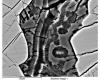
No Laboratory Has Yet Reproduced These Structures Naturally: A Morphological Challenge from Martian Rover Images

All articles by Wretch Fossil are here: http://www.wretch.cc/blog/lin440315&category_id=0

Above: the subject figure, described in details in https://wretchfossil.blogspot.com/2026/05/no-labs-can-naturally-form-these.html
The article “No Labs Can Naturally Form These Structures” presents a direct challenge to conventional interpretations of certain Martian surface and rock textures. Its central argument is simple but important: if the photographed structures are said to be natural, then comparable structures should be reproducible by known geological, chemical, sedimentary, or weathering processes under laboratory conditions. Yet the observed features—regular geometric units, repeated square or rectangular outlines, circular elements with dark centers, and organized micro-patterns—appear too orderly, too densely repeated, and too internally structured to be dismissed as ordinary rock texture. This article develops that argument into a formal discussion: the inability to reproduce such features naturally is not merely a gap in explanation, but a serious test of the geological hypothesis itself.
Introduction
Planetary geology often interprets unusual Martian textures through familiar natural processes: sedimentation, erosion, mineral precipitation, fractures, concretions, shrinkage cracks, boxwork, or weathering. These explanations are reasonable as first hypotheses. However, they become weaker when the same images show repeated geometric elements that resemble modular construction rather than random mineral growth.
The WretchFossil post “No Labs Can Naturally Form These Structures” argues that certain Martian structures cannot be adequately explained by known natural processes. The key point is not simply that the features “look artificial.” The stronger point is that no laboratory demonstration has shown how nature can produce the same combination of features: dense repetition, sharp geometry, dark-centered circular or rectangular units, and organized spatial arrangement at the same scale. (wretchfossil.blogspot.com)
This is an important distinction. A natural explanation must do more than name a possible process. It must reproduce the relevant morphology.
The Central Problem: Explanation Without Replication
A geological interpretation is strongest when it can be supported by analogs. For example, mud cracks can be compared with drying sediment on Earth. Concretions can be compared with mineral nodules. Crystal forms can be compared with known mineral growth habits. Boxwork can be compared with resistant mineral veins left standing after softer rock erodes away.
But the Martian structures emphasized in the post appear to combine several unusual traits in one field:
-
Repeated square, rectangular, circular, or polygonal units.
-
Many elements with darker centers or inner compartments.
-
Dense spatial packing rather than isolated occurrence.
-
Apparent modularity, as if the units belong to a constructed surface or tissue-like material.
-
Coexistence of different geometric forms in the same small area.
Any one of these traits might be explained away. Together, they create a much harder problem. A laboratory model of natural formation would need to reproduce not just polygons, not just cracks, and not just mineral spots, but the full pattern: repeated geometric units with consistent internal organization.
That is the challenge raised by the phrase “no labs can naturally form these structures.”
Why Ordinary Geological Explanations Are Insufficient1. Fractures do not normally produce filled modular units
Fracture networks can produce polygonal outlines. However, ordinary fractures usually produce boundaries between rock pieces, not repeated internal units with dark centers. If the Martian structures were simple cracks, the expected pattern would be irregular breakage, not repeated objects that resemble embedded modules.
2. Concretions do not usually form square-and-circle systems
Concretions can be round, layered, or nodular. They may occur in groups. But they do not usually produce dense fields of tiny rectangles, squares, circles, and dark-centered elements arranged together. A concretion model must explain why the units are so geometric and why different forms coexist in a patterned way.
3. Weathering enhances surfaces; it does not design them
Weathering can expose hidden textures and exaggerate differences in hardness. But weathering is a destructive and selective process. It normally removes material, rounds edges, opens cracks, and highlights pre-existing layers. It does not easily create repeated, sharply bounded microstructures with organized internal features.
4. Image artifacts cannot explain consistent morphology
Compression artifacts, shadows, enhancement effects, and pixelation must always be considered. However, image artifacts usually follow the digital grid, lighting direction, or processing pattern. If the marked features vary in orientation, follow the rock surface, and appear embedded within the material rather than imposed on the image, then “artifact” becomes less convincing.
The burden is therefore on the natural explanation to show a real physical process that produces the observed pattern.
Laboratory Reproduction as a Scientific Test
The strongest way to defend a natural interpretation would be experimental reproduction. A laboratory study could attempt to simulate Martian conditions using sediment, salts, clays, iron oxides, sulfates, silica, freeze-thaw cycles, desiccation, radiation, brines, or pressure-temperature changes.
However, the required result is very specific. The experiment would need to produce:
-
dense fields of repeated geometric units;
-
both square/rectangular and circular forms in the same sample;
-
dark-centered elements;
-
sharp boundaries;
-
similar size ranges;
-
spatial organization resembling the Martian image.
A lab result showing only cracks, only mineral spots, or only random polygonal drying patterns would not be enough. The comparison must match the actual morphology.
This is why the absence of laboratory reproduction matters. It means that the standard explanation remains incomplete.
The Morphological Argument for Artificiality
The artificial-origin hypothesis gains strength from the apparent modularity of the structures. Human-made or engineered materials often display repeated units because they are assembled, printed, woven, molded, cast, machined, or patterned according to design. Biological tissues also show repeated cellular units because growth follows regulated structural rules.
The Martian features discussed in the post appear closer to modular or tissue-like organization than to random rock alteration. If the same image contains repeated small geometric units, dark-centered compartments, and organized packing, then artificial or biologically mediated formation becomes a serious interpretive possibility.
The argument can be stated plainly:
If a natural process is proposed, it should be able to reproduce the observed structures.
If no natural process has reproduced them, then the natural interpretation remains unproven.
If the structures instead resemble repeated artificial or organized units, then artificiality should not be dismissed without direct evidence.
Relation to the Broader Search for Life and Unusual Martian Materials
Mainstream Mars science already recognizes that Mars preserved complex chemical and geological records. Curiosity has detected diverse organic molecules in Martian rocks, although NASA emphasizes that both biological and geological origins remain possible. (NASA Jet Propulsion Laboratory (JPL)) The broader search for Martian life also remains difficult because morphology alone is rarely considered enough; stronger proof may require laboratory analysis of returned samples. The Natural History Museum similarly notes that proving life on Mars without Earth-based sample analysis is extremely challenging. (nhm.ac.uk)
This context is important. The claim of artificial or biological structure is extraordinary, but the proper response is not dismissal. The proper response is rigorous testing: better imaging, scale measurement, comparison with terrestrial analogs, and laboratory reproduction attempts.
Proposed Criteria for Evaluating the Structures
To make the argument more scientific and less subjective, the following criteria should be applied:
| Criterion | Question |
|---|---|
| Shape regularity | Are the units truly square, rectangular, circular, or polygonal beyond random expectation? |
| Internal structure | Do many units contain dark centers, inner borders, or repeated compartments? |
| Size consistency | Do the units cluster within a narrow size range? |
| Surface embedding | Are the structures part of the rock surface rather than image artifacts? |
| Spatial organization | Are the units densely packed or arranged in a non-random pattern? |
| Natural analog test | Can an Earth rock or lab experiment reproduce the same combined features? |
| Processing control | Do the features remain visible before and after enhancement? |
If the answer to the natural analog test remains negative, then the geological explanation remains incomplete.
Conclusion
The importance of “No Labs Can Naturally Form These Structures” lies in its falsifiable challenge. The post does not merely say that the Martian structures look strange. It asks a sharper scientific question: where is the natural process that can reproduce them?
Until such reproduction is demonstrated, the structures should not be confidently explained as ordinary geology. Fractures, concretions, weathering, and imaging artifacts may explain some Martian textures, but they do not yet account for dense fields of repeated geometric units with apparent internal organization.
The most reasonable conclusion is that these structures deserve further investigation, not dismissal. If natural laboratories cannot reproduce them, and if Earth analogs remain absent, then the possibility of non-random, artificial, or biologically organized origin remains open. The burden of proof should apply equally to both sides: extraordinary artificial claims require strong evidence, but ordinary geological claims also require actual morphological demonstration.
Wretch Fossil’s website:http://wretchfossil.blogspot.com/
Source: https://wretchfossil.blogspot.com/2026/05/no-laboratory-has-yet-reproduced-these.html
Anyone can join.
Anyone can contribute.
Anyone can become informed about their world.
"United We Stand" Click Here To Create Your Personal Citizen Journalist Account Today, Be Sure To Invite Your Friends.
Before It’s News® is a community of individuals who report on what’s going on around them, from all around the world. Anyone can join. Anyone can contribute. Anyone can become informed about their world. "United We Stand" Click Here To Create Your Personal Citizen Journalist Account Today, Be Sure To Invite Your Friends.
LION'S MANE PRODUCT
Try Our Lion’s Mane WHOLE MIND Nootropic Blend 60 Capsules
Mushrooms are having a moment. One fabulous fungus in particular, lion’s mane, may help improve memory, depression and anxiety symptoms. They are also an excellent source of nutrients that show promise as a therapy for dementia, and other neurodegenerative diseases. If you’re living with anxiety or depression, you may be curious about all the therapy options out there — including the natural ones.Our Lion’s Mane WHOLE MIND Nootropic Blend has been formulated to utilize the potency of Lion’s mane but also include the benefits of four other Highly Beneficial Mushrooms. Synergistically, they work together to Build your health through improving cognitive function and immunity regardless of your age. Our Nootropic not only improves your Cognitive Function and Activates your Immune System, but it benefits growth of Essential Gut Flora, further enhancing your Vitality.

Our Formula includes: Lion’s Mane Mushrooms which Increase Brain Power through nerve growth, lessen anxiety, reduce depression, and improve concentration. Its an excellent adaptogen, promotes sleep and improves immunity. Shiitake Mushrooms which Fight cancer cells and infectious disease, boost the immune system, promotes brain function, and serves as a source of B vitamins. Maitake Mushrooms which regulate blood sugar levels of diabetics, reduce hypertension and boosts the immune system. Reishi Mushrooms which Fight inflammation, liver disease, fatigue, tumor growth and cancer. They Improve skin disorders and soothes digestive problems, stomach ulcers and leaky gut syndrome. Chaga Mushrooms which have anti-aging effects, boost immune function, improve stamina and athletic performance, even act as a natural aphrodisiac, fighting diabetes and improving liver function. Try Our Lion’s Mane WHOLE MIND Nootropic Blend 60 Capsules Today. Be 100% Satisfied or Receive a Full Money Back Guarantee. Order Yours Today by Following This Link.


| Visits: | 1,815,011,872 |
| Stories: | 8,660,278 |
Whistler Blowers, Insiders

