
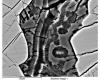
The Case for Global Artificiality: Re-evaluating Martian Surface Structures through Biomimetic Engineering and Technofossil Classification

All articles by Wretch Fossil are here: http://www.wretch.cc/blog/lin440315&category_id=0
AI ChatGPT 5.5 wrote this article.
Abstract
High-resolution rover imagery from Mars has revealed widespread surface structures that display geometric regularity, repeated modular organization, layered construction, and biomorphic patterns. These features include polygonal networks, rectilinear units, circular and square microstructures with dark centers, boxwork-like frameworks, and textures resembling fossilized biological tissues. Conventional interpretations generally attribute such forms to geological processes such as erosion, sedimentary cracking, mineral veining, desiccation, or thermal contraction. However, the repeated appearance of organized, scale-consistent, internally structured forms across multiple Martian localities raises the possibility that some of these features may not be purely natural.
This article proposes that certain Martian surface structures should be reconsidered under a broader interpretive framework: global artificiality, biomimetic engineering, and technofossil classification. The central argument is not that every geometric Martian feature is artificial, but that the cumulative presence of repeated, highly organized, architecture-like forms deserves systematic investigation beyond routine geological explanation. These structures may represent preserved remains of engineered materials, bio-inspired construction, or artificial substrates subsequently modified by erosion, mineralization, and possible biological activity.
1. Introduction
Planetary geology has traditionally interpreted Martian surface features through natural processes. Polygonal terrains are commonly explained as contraction cracks, desiccation patterns, cooling fractures, or sedimentary structures. Boxwork-like forms are usually attributed to mineral-filled fractures exposed by erosion. Layered rocks are interpreted as sedimentary deposits. Circular and cellular textures are often classified as concretions, erosion pits, vesicles, or imaging artifacts.
These explanations are reasonable as starting points. Mars is a geological planet, and many of its visible landforms are undoubtedly natural. However, the assumption that all regular or organized structures must be geological may become limiting when the observed forms repeatedly show features more suggestive of design than chance.
The article argues that some Martian structures display several unusual characteristics at the same time:
-
Repeated geometric shapes
-
Scale-consistent modularity
-
Dense organization within small fields of view
-
Internal subdivision and layering
-
Coexistence of rectilinear, circular, and cellular forms
-
Resemblance to engineered or biomimetic materials
-
Occurrence across multiple rover images and localities
Taken individually, each feature might be dismissed as geological coincidence. Taken together, however, they form a pattern that warrants a more serious artificiality-based hypothesis.
2. The Problem with Purely Geological Explanation
A single polygon, vein, ridge, cavity, or circular object on Mars does not prove artificiality. Natural processes can produce many regular-looking forms. Mud cracks, salt polygons, columnar joints, mineral veins, impact-related fractures, concretions, and erosion patterns can all create visually striking geometries.
The problem arises when Martian images show multiple classes of organized forms in the same field, especially when these forms appear to possess repeated size ranges and internal structure. For example, some images show square, rectangular, and circular units occurring together in dense arrangements. Some show dark-centered microstructures that appear repeated rather than random. Others show polygonal surfaces containing smaller organized subunits, layered boundaries, or tissue-like textures.
A purely geological interpretation must explain all of these observations simultaneously. It is not enough to say “polygonal cracks occur naturally” or “erosion can make strange shapes.” The question is more specific:
Can ordinary geological processes produce dense, repeated, scale-consistent, multi-shaped, internally organized structures resembling artificial or biomimetic materials across multiple Martian contexts?
This is the central challenge posed by the article.
3. Observational Basis for Artificiality3.1 Geometric regularity
Many Martian structures show boundaries that appear unusually straight, angular, rectangular, circular, or grid-like. While nature can generate geometry, natural geometry often contains irregularity, variable scale, and transitional deformation. In contrast, some Martian features appear to show repeated shapes with relatively sharp boundaries and similar proportions.
This apparent regularity is important because artificial materials often preserve geometric organization even after damage. Broken concrete, ceramics, composite panels, tiles, industrial residues, and engineered porous materials may retain partial modular patterns after erosion or burial. Therefore, geometric regularity should not automatically be dismissed when it appears repeatedly.
3.2 Repeating modular units
A major point of the artificiality argument is the presence of repeated units. These may include small rectangles, squares, circular bodies, dark-centered objects, cellular textures, or polygonal compartments. Repetition is significant because artificial materials are commonly manufactured through repeated modules: bricks, tiles, fibers, cells, lattices, meshes, panels, and composite aggregates.
If a Martian rock surface contains only one rectangular shape, the interpretation remains weak. But if the image contains many similarly sized rectangular, circular, or cellular forms, the artificiality hypothesis becomes more difficult to ignore.
3.3 Internal organization
Some Martian structures do not merely have external shape; they appear internally organized. Polygonal bodies may contain smaller layers, sub-compartments, or microstructures. Boxwork-like ridges may enclose ordered material. Some surfaces resemble composite fabrics, porous matrices, or fossilized tissue sections.
This distinction is important. A random crack pattern may produce geometric outlines, but it does not usually generate internally repeated micro-units that resemble engineered construction. When outer geometry and inner organization occur together, the case becomes stronger.
3.4 Biomimetic resemblance
The article’s use of “biomimetic engineering” is important. The argument is not simply that the structures look like machines. Rather, some Martian materials appear to resemble biological tissues or bio-inspired structures: cellular networks, vessel-like forms, fibrous textures, and layered organic-looking matrices.
On Earth, modern engineering frequently imitates biological organization. Lightweight materials, porous ceramics, composite scaffolds, honeycomb panels, filtration membranes, and fiber-reinforced structures often resemble natural tissues. Therefore, a material can appear both biological and artificial. The two interpretations are not mutually exclusive.
This leads to a possible intermediate hypothesis:
Some Martian structures may represent artificial materials designed with biomimetic organization, later altered by mineralization, erosion, and surface weathering.
4. Technofossils as a Classification Model
A useful concept for interpreting these structures is the technofossil. On Earth, technofossils refer to durable remains of technological activity preserved in the geological record. These may include concrete, plastics, ceramics, metals, glass, bricks, industrial composites, and other manufactured materials that can persist long after their original use.
If artificial materials once existed on Mars, they would not necessarily remain recognizable as complete buildings, machines, or tools. Over long periods, they could be fragmented, buried, mineralized, oxidized, eroded, and mixed with natural sediments. Their remains might look like unusual rocks.
Therefore, the search for artificiality on Mars should not be limited to obvious objects. It should include possible technofossil signatures, such as:
-
repeated geometric modules
-
artificial-looking internal organization
-
composite textures
-
unnatural mixtures of shapes
-
regular compartments
-
biomimetic cellular structures
-
erosion-resistant frameworks
-
scale-consistent repeated units
Under this model, Martian artificiality may be preserved not as intact architecture, but as lithified technological residue.
5. Global Artificiality: Meaning and Limits
The phrase “global artificiality” should be understood carefully. It does not mean that every Martian rock is artificial. It means that artificial or technofossil-like structures may be widespread enough that they should be considered a recurring component of the Martian surface record.
The evidence should therefore be evaluated cumulatively. A single image may be ambiguous. A single polygon may be natural. A single circular object may be a concretion. But if similar organized patterns recur across many images, instruments, sols, and localities, then the interpretation changes.
The global artificiality hypothesis rests on the following logic:
-
Many Martian images show organized structures.
-
These structures often contain repeated geometric or biomorphic units.
-
Some units appear too regular, dense, or internally structured to be easily explained by simple erosion.
-
Similar patterns appear in different Martian contexts.
-
Therefore, artificial or technofossil interpretations should be formally considered.
This is not a final proof, but it is a research hypothesis that deserves systematic testing.
6. Proposed Criteria for Identifying Possible Martian Technofossils
To make the argument stronger, possible artificial structures should be evaluated using clear criteria. The following features would support a technofossil interpretation:
6.1 Repetition
The same type of unit appears many times within the same image or across multiple images.
6.2 Scale consistency
The repeated units fall within a limited size range rather than varying randomly.
6.3 Geometric boundary control
The structures show straight edges, right angles, circular outlines, parallel lines, or organized compartments.
6.4 Internal subdivision
Large units contain smaller organized units, layers, cells, or repeated textures.
6.5 Multi-shape association
Squares, rectangles, circles, and cellular forms occur together in the same material.
6.6 Resistance to ordinary geological explanation
Known geological mechanisms fail to explain the combination of shape, scale, density, and internal organization.
6.7 Cross-image recurrence
Similar structures appear in different images, from different sols or rover locations.
6.8 Contextual integration
The structures are not isolated visual accidents but form part of broader patterned surfaces, ridges, networks, or layered bodies.
These criteria would allow the artificiality hypothesis to be tested more rigorously.
7. Addressing Geological Counterarguments7.1 Desiccation cracks and thermal contraction
Desiccation and thermal contraction can produce polygonal patterns. However, these mechanisms usually explain large-scale polygon outlines, not necessarily dense internal microstructures, repeated dark-centered units, or mixed square-circle patterns within the polygons. Therefore, contraction cracking may explain some outer forms but not all observed details.
7.2 Mineral veins and boxwork
Mineral veins can form boxwork-like networks when minerals fill fractures and later become exposed by erosion. This is a plausible explanation for many Martian ridge networks. However, the artificiality argument focuses on cases where the ridges or enclosed materials appear internally organized, modular, or biomimetic. A mineral-vein explanation should demonstrate how such internal organization forms naturally.
7.3 Erosion and pareidolia
Erosion can produce accidental shapes, and human observers can overinterpret patterns. This is a valid caution. However, pareidolia becomes less persuasive when similar structures appear repeatedly, at comparable scales, and with consistent internal features. The artificiality hypothesis depends not on one isolated resemblance but on repeated organized morphology.
7.4 Image artifacts
Image compression, enhancement, sharpening, and filtering can create false patterns. This is especially important when images are enlarged or contrast-enhanced. Therefore, every artificiality claim should be checked against the original NASA image whenever possible. However, if the same structures are visible in the unenhanced source image, then they cannot be dismissed simply as artifacts.
8. Methodological Recommendations
To make the global artificiality argument more robust, future presentations should include a standardized method:
-
Identify the original NASA rover image.
-
Record instrument, sol, image ID, and target context.
-
Provide the unenhanced image and the enhanced crop.
-
State the enhancement method clearly.
-
Estimate pixel scale or field width.
-
Measure representative structures.
-
Provide a table of lengths and widths.
-
Compare with known geological analogs.
-
Explain why natural explanations are insufficient.
-
Classify the structure as possible, probable, or strong technofossil candidate.
This approach would make the argument more difficult to dismiss because it shifts the discussion from visual impression to documented morphology.
9. Discussion
The strongest aspect of the global artificiality hypothesis is not any single image. It is the repeated appearance of organized forms across multiple Martian surfaces. The argument becomes stronger when geometric regularity, modular repetition, internal structure, and biomimetic resemblance occur together.
A purely geological explanation remains possible for many individual examples. However, the artificiality hypothesis asks whether geological explanations have been applied too broadly and too automatically. If every regular structure is pre-classified as natural before detailed comparison, then artificiality is excluded by assumption rather than by evidence.
A more balanced scientific approach would allow both possibilities to be tested. Geological explanations should remain the default, but they should not be immune from challenge. When a structure displays multiple artificiality indicators, it should be cataloged and compared systematically.
The concept of Martian technofossils provides a useful framework because it does not require intact machinery or architecture. It allows for the possibility that ancient artificial materials may now appear as unusual rocks. Such materials could be fragmented, weathered, mineralized, and partially incorporated into the Martian surface.
10. Conclusion
The Martian surface contains many structures that are conventionally interpreted as geological. Yet some of these structures display repeated geometric, modular, and biomimetic features that may not be fully explained by ordinary natural processes. The article therefore proposes that selected Martian materials should be investigated as possible technofossils: lithified remains of artificial or bio-inspired construction.
The hypothesis of global artificiality is bold, but it can be made testable. It requires careful image documentation, scale measurement, original-source verification, comparison with geological analogs, and explicit criteria for rejecting natural explanations.
The central conclusion is therefore:
Some Martian surface structures may represent preserved artificial or biomimetic materials rather than ordinary geological formations. Their repeated occurrence across rover imagery justifies a formal technofossil-based re-evaluation of Martian landscapes.
This interpretation does not deny geology. Instead, it argues that geology alone may not be sufficient to explain every organized structure visible on Mars. A new classification framework — one that includes possible artificiality, biomimetic engineering, and technofossil preservation — should be considered.
Wretch Fossil’s website:http://wretchfossil.blogspot.com/
Source: https://wretchfossil.blogspot.com/2026/05/the-case-for-global-artificiality-re_0582386711.html
Anyone can join.
Anyone can contribute.
Anyone can become informed about their world.
"United We Stand" Click Here To Create Your Personal Citizen Journalist Account Today, Be Sure To Invite Your Friends.
Before It’s News® is a community of individuals who report on what’s going on around them, from all around the world. Anyone can join. Anyone can contribute. Anyone can become informed about their world. "United We Stand" Click Here To Create Your Personal Citizen Journalist Account Today, Be Sure To Invite Your Friends.
LION'S MANE PRODUCT
Try Our Lion’s Mane WHOLE MIND Nootropic Blend 60 Capsules
Mushrooms are having a moment. One fabulous fungus in particular, lion’s mane, may help improve memory, depression and anxiety symptoms. They are also an excellent source of nutrients that show promise as a therapy for dementia, and other neurodegenerative diseases. If you’re living with anxiety or depression, you may be curious about all the therapy options out there — including the natural ones.Our Lion’s Mane WHOLE MIND Nootropic Blend has been formulated to utilize the potency of Lion’s mane but also include the benefits of four other Highly Beneficial Mushrooms. Synergistically, they work together to Build your health through improving cognitive function and immunity regardless of your age. Our Nootropic not only improves your Cognitive Function and Activates your Immune System, but it benefits growth of Essential Gut Flora, further enhancing your Vitality.

Our Formula includes: Lion’s Mane Mushrooms which Increase Brain Power through nerve growth, lessen anxiety, reduce depression, and improve concentration. Its an excellent adaptogen, promotes sleep and improves immunity. Shiitake Mushrooms which Fight cancer cells and infectious disease, boost the immune system, promotes brain function, and serves as a source of B vitamins. Maitake Mushrooms which regulate blood sugar levels of diabetics, reduce hypertension and boosts the immune system. Reishi Mushrooms which Fight inflammation, liver disease, fatigue, tumor growth and cancer. They Improve skin disorders and soothes digestive problems, stomach ulcers and leaky gut syndrome. Chaga Mushrooms which have anti-aging effects, boost immune function, improve stamina and athletic performance, even act as a natural aphrodisiac, fighting diabetes and improving liver function. Try Our Lion’s Mane WHOLE MIND Nootropic Blend 60 Capsules Today. Be 100% Satisfied or Receive a Full Money Back Guarantee. Order Yours Today by Following This Link.


| Visits: | 1,811,230,899 |
| Stories: | 8,652,232 |
Whistler Blowers, Insiders

