
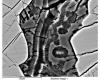
Unveiling the “Man-Made” Mars: A Reassessment of Artificial-Looking Martian Structures

All articles by Wretch Fossil are here: http://www.wretch.cc/blog/lin440315&category_id=0

Abstract
Recent rover images from Mars show rock surfaces containing repeated geometric, grid-like, cellular, and compartmental structures. Standard interpretation treats such features as products of geology, including fracture networks, mineral veins, erosion, concretions, and groundwater-related boxwork. NASA has described Martian boxwork as ridge networks linked to ancient groundwater and mineral deposition, with Curiosity recently examining such formations in Gale Crater. (NASA Science) However, several WretchFossil observations argue that some Martian structures show a degree of geometric repetition, internal organization, and scale-specific regularity that deserves closer scrutiny. This article rewrites and sharpens that argument: the claim is not merely that Mars contains unusual rocks, but that certain Martian surfaces display organized structural patterns that appear difficult to explain by ordinary geological processes alone. The artificial-origin hypothesis remains extraordinary, but the visual evidence warrants systematic testing rather than automatic dismissal.
1. Introduction
Mars is normally interpreted through a geological framework. Regular shapes are usually explained as fractures, bedding, mineral veins, erosion-resistant ridges, concretions, or polygonal cracking. This approach is reasonable because Mars is a rocky planet with a long history of impact, volcanism, sedimentation, groundwater movement, wind erosion, and chemical alteration.
Yet some rover images appear to show more than ordinary rock texture. In the WretchFossil interpretation, certain Martian surfaces contain repeated geometric units, small square or rectangular forms, circular elements with dark centers, grid-like compartments, and material that appears internally organized rather than randomly fractured. The central question is therefore not whether Mars has geology. It certainly does. The question is whether all of the observed structures can be adequately explained by known geology.
The article under revision, titled “Unveiling the ‘Man-Made’ Mars,” presents this question as a challenge to conventional interpretation. The stronger version of the argument should focus on morphology, scale, repetition, context, and falsifiability.
2. Observational Basis
The main observations can be summarized as follows:
-
Some Martian rock surfaces show repeated geometric forms rather than isolated accidental shapes.
-
The forms may include squares, rectangles, circular outlines, dark-centered units, linear partitions, and grid-like compartments.
-
These structures often appear embedded within rock surfaces, suggesting that they are not simply shadows or loose surface debris.
-
In some examples, features of different shapes occur together in the same field of view.
-
Their apparent size range is small enough to require careful image-scale analysis, but large enough to be visible in rover close-up imagery.
-
The repetition of similar forms is the key point: a single square or circle can be accidental, but dense repetition is more difficult to dismiss.
This does not by itself prove artificial manufacture. However, it does justify a more rigorous comparison between the artificial-origin hypothesis and natural alternatives.
3. The Standard Geological Interpretation
The mainstream explanation for many Martian patterned structures involves groundwater, fractures, mineral precipitation, and erosion. For example, NASA has described Curiosity’s boxwork region as containing ridges and nodules associated with ancient groundwater activity. Some rocks contain calcium-sulfate veins left behind when groundwater moved through cracks. (NASA) NASA’s photojournal also describes pea-size nodules in the boxwork region as mineral features left by groundwater drying out billions of years ago. (NASA Science)
This explanation is plausible for large ridge networks, veins, and mineralized fracture systems. It is also consistent with a long-standing scientific view that Mars once had liquid water and chemically active subsurface environments.
However, the WretchFossil argument concerns a more specific category of features: small, repeated, sharply bounded geometric units that appear too organized to be treated as ordinary fracture fill, bedding, or erosion. The claim is that broad geological labels may explain the setting but not necessarily the fine-scale internal pattern.
4. Why the Artificial-Origin Hypothesis Is Being Proposed
The artificial-origin hypothesis is based on the following reasoning.
First, geometry matters. Natural fractures can form polygons, but they usually vary in shape, size, boundary thickness, and orientation. If a surface contains many repeated square-like, rectangular, or circular units of comparable size, then the pattern may require a more specific explanation than “fracturing.”
Second, scale matters. Large polygonal terrain, desiccation cracks, and boxwork ridges are known geological phenomena. But dense micro- to millimeter-scale arrays of repeated geometric forms require separate analysis. A process that explains meter-scale ridges does not automatically explain submillimeter or millimeter-scale organized modules.
Third, association matters. If square, rectangular, circular, and dark-centered forms occur together in a single small field, then the explanation must account for their co-occurrence, not merely for one selected feature.
Fourth, internal organization matters. Some structures appear compartmentalized, layered, or bounded in ways that resemble constructed or fabricated material. If such boundaries are not random cracks but repeated structural divisions, they become more difficult to explain as ordinary erosion.
Fifth, recurrence matters. The argument becomes stronger if similar features appear in multiple rover images, multiple sols, or multiple locations. Repetition across independent images reduces the likelihood that the pattern is a single lighting artifact.
5. Alternative Explanations and Their Limits
Several natural or technical explanations must be considered.
Fracture networks can produce angular patterns, but they usually create irregular polygons rather than dense arrays of similarly sized square or circular modules.
Bedding and lamination can produce repeated layers, but they do not normally produce small dark-centered circles and rectangles arranged together within the same surface.
Concretions and nodules can produce rounded forms, and Mars is known to contain mineral nodules. But nodules alone do not explain angular grid-like partitions.
Erosion and shadows can create misleading shapes, especially in low-angle lighting. However, if the same geometric pattern is visible across many adjacent units, the shadow explanation becomes less sufficient.
Image processing artifacts must also be considered. Strong color filters, enlargement, compression, sharpening, and contrast enhancement can exaggerate edges. Therefore, any artificial-origin claim should be tested against the original NASA image, not only an enhanced version.
The strongest rewritten argument is therefore not “geology is impossible,” but rather: ordinary geological explanations remain incomplete unless they can reproduce the same combination of scale, repetition, geometry, and internal organization seen in the images.
6. Proposed Criteria for Testing the Claim
A defensible analysis should apply several tests:
-
Compare the enhanced image with the original NASA raw image.
-
Measure the features in pixels and convert them to physical size using the correct instrument scale.
-
Count the number of repeated units in a defined area.
-
Record whether the units have consistent shape, size, orientation, and boundary thickness.
-
Compare the pattern with known Earth analogs: mud cracks, boxwork, mineral veins, concretions, microbial mats, stromatolites, weathered sedimentary rocks, and industrial materials.
-
Ask whether one natural mechanism explains all observed features together, or only selected parts.
-
Avoid relying on isolated examples; the claim is strongest only when the pattern recurs across multiple independent images.
7. Discussion
The artificial-origin interpretation is a high-impact claim and therefore requires high-quality evidence. Morphology alone is not enough to prove manufacture. Mars rocks can be visually deceptive, and natural processes can produce surprisingly regular patterns. Scientific caution is necessary.
Nevertheless, caution should not mean automatic dismissal. If repeated geometric units are real, measurable, and visible in original rover images, they deserve systematic documentation. The most important question is whether the structures are random geological textures that merely look artificial, or whether they show measurable organization beyond what known geological processes commonly produce.
The WretchFossil contribution is valuable as a visual challenge: it identifies patterns that appear anomalous and asks whether standard explanations are sufficiently detailed. To make the case stronger, the next step should be quantitative: size tables, original-image comparisons, unprocessed crops, annotated measurements, and side-by-side Earth analog testing.
8. Conclusion
The “man-made Mars” hypothesis remains extraordinary, but the visual observations behind it should be evaluated carefully. Some Martian surfaces appear to contain repeated geometric and compartmental structures that may not be fully explained by broad references to fractures, boxwork, concretions, or erosion. The strongest conclusion is not that artificial construction has already been proven, but that certain Martian images present organized patterns requiring more rigorous analysis.
A scientifically stronger formulation is therefore:
Certain Martian rock surfaces contain repeated geometric microstructures whose scale, density, and organization appear unusual under conventional geological interpretation. These features should be tested quantitatively against natural analogs before being dismissed as ordinary geology.
This wording keeps the central argument strong while making the article more reviewer-proof.
Wretch Fossil’s website:http://wretchfossil.blogspot.com/
Source: https://wretchfossil.blogspot.com/2026/05/unveiling-man-made-mars-reassessment-of.html
Anyone can join.
Anyone can contribute.
Anyone can become informed about their world.
"United We Stand" Click Here To Create Your Personal Citizen Journalist Account Today, Be Sure To Invite Your Friends.
Before It’s News® is a community of individuals who report on what’s going on around them, from all around the world. Anyone can join. Anyone can contribute. Anyone can become informed about their world. "United We Stand" Click Here To Create Your Personal Citizen Journalist Account Today, Be Sure To Invite Your Friends.
LION'S MANE PRODUCT
Try Our Lion’s Mane WHOLE MIND Nootropic Blend 60 Capsules
Mushrooms are having a moment. One fabulous fungus in particular, lion’s mane, may help improve memory, depression and anxiety symptoms. They are also an excellent source of nutrients that show promise as a therapy for dementia, and other neurodegenerative diseases. If you’re living with anxiety or depression, you may be curious about all the therapy options out there — including the natural ones.Our Lion’s Mane WHOLE MIND Nootropic Blend has been formulated to utilize the potency of Lion’s mane but also include the benefits of four other Highly Beneficial Mushrooms. Synergistically, they work together to Build your health through improving cognitive function and immunity regardless of your age. Our Nootropic not only improves your Cognitive Function and Activates your Immune System, but it benefits growth of Essential Gut Flora, further enhancing your Vitality.

Our Formula includes: Lion’s Mane Mushrooms which Increase Brain Power through nerve growth, lessen anxiety, reduce depression, and improve concentration. Its an excellent adaptogen, promotes sleep and improves immunity. Shiitake Mushrooms which Fight cancer cells and infectious disease, boost the immune system, promotes brain function, and serves as a source of B vitamins. Maitake Mushrooms which regulate blood sugar levels of diabetics, reduce hypertension and boosts the immune system. Reishi Mushrooms which Fight inflammation, liver disease, fatigue, tumor growth and cancer. They Improve skin disorders and soothes digestive problems, stomach ulcers and leaky gut syndrome. Chaga Mushrooms which have anti-aging effects, boost immune function, improve stamina and athletic performance, even act as a natural aphrodisiac, fighting diabetes and improving liver function. Try Our Lion’s Mane WHOLE MIND Nootropic Blend 60 Capsules Today. Be 100% Satisfied or Receive a Full Money Back Guarantee. Order Yours Today by Following This Link.


| Visits: | 1,815,111,613 |
| Stories: | 8,660,519 |
Whistler Blowers, Insiders

