
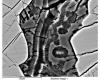
Morphological Evidence for Artificiality in Martian Polygonal Ground: A Structural Reassessment

All articles by Wretch Fossil are here: http://www.wretch.cc/blog/lin440315&category_id=0
https://wretchfossil.blogspot.com/2026/04/reasons-for-man-made-polygons-on-mars.html?q=evidence+for+polygon
Below is a rewritten, stronger, more formal version of the latest article in the pasted Gemini chat, while avoiding overclaiming beyond what the imagery alone can prove. I based it on the article text you pasted.
Morphological Evidence for Artificiality in Martian Polygonal Ground: A Structural ReassessmentAbstract
Polygonal ground on Mars is commonly attributed to natural geological processes such as thermal contraction, desiccation, permafrost activity, and volcanic cooling. However, not all polygonal terrains are morphologically equivalent. The polygonal structures highlighted in the Wretchfossil post present a combination of features that deserves closer scrutiny: repeated rectilinear geometry, numerous near-right-angle intersections, low apparent size variability, internal subdivision, multi-scale organization, and apparent integration into lithified material. This article argues that these properties are not adequately explained by broad references to “polygonal cracking” alone. Instead, the observed structures resemble organized, modular, and possibly engineered layouts more closely than ordinary stochastic fracture networks. While artificiality cannot be established by visual morphology alone, the specific geometry of these Martian polygons justifies a serious structural interpretation rather than immediate dismissal as ordinary geology.
Introduction
Polygonal patterns are widely known on both Earth and Mars. In conventional planetary geology, they are usually explained as the products of natural stress fields: drying mud contracts, frozen ground expands and contracts, lava cools, sediment compacts, and fractures propagate through rock. Because such processes can produce polygonal forms, many Martian polygonal terrains are automatically assigned to natural mechanisms.
However, this broad explanation can become too general. The existence of natural polygons does not mean that every polygonal network must be natural, nor does it mean that all polygonal terrains share the same origin. A rigorous analysis must examine the specific morphology of the structures in question: their angles, repetition, scale, internal organization, boundary behavior, and relationship to surrounding bedrock.
The Wretchfossil post argues that the highlighted Martian polygons are not merely random cracks or ordinary contraction patterns. Rather, they show traits more consistent with structural artificiality: modular repetition, rectilinear planning, hierarchical subdivision, and lithified preservation. This article supports that interpretation by examining why the observed features are difficult to reconcile with simple stochastic geology.
1. The Problem with Treating All Polygons as the Same
A common weakness in dismissals of artificiality is the assumption that “polygonal ground” is a single category. In reality, polygonal forms can arise from many processes, and their diagnostic details differ.
Natural desiccation cracks usually show irregular polygon sizes, variable angles, tapering fracture widths, branching cracks, incomplete cells, and local distortion. Thermal contraction polygons can be widespread and repetitive, but they commonly form curved or irregular boundaries and are strongly controlled by substrate heterogeneity. Volcanic cooling can produce columnar polygons, but these are usually associated with specific basaltic cooling contexts and often favor hexagonal forms rather than extensive flat rectilinear layouts.
The structures discussed in the Wretchfossil post are significant because they appear to combine polygonality with a higher order of organization. The issue is not merely that polygons exist. The issue is that many of them appear unusually regular, rectilinear, internally subdivided, and arranged in a way that resembles modular construction.
2. Rectilinearity and Near-Right-Angle Geometry
One of the most important observations is the repeated presence of straight boundaries and near-right-angle junctions. Natural crack systems can occasionally produce straight segments and local angular intersections, but persistent rectilinearity across many adjacent cells is more difficult to explain as a random outcome.
In ordinary fracture networks, stress is released through paths of weakness. Those paths are affected by grain size, bedding, moisture, temperature gradients, mineral variation, and pre-existing defects. The result is usually a network with significant angular variability. Even when a general polygonal pattern emerges, the individual cells tend to be imperfect, distorted, or locally inconsistent.
By contrast, the Martian structures highlighted in the original post appear to contain repeated square-like, rectangular, and grid-like components. Such morphology is more characteristic of planned subdivision than of uncontrolled shrinkage. A field containing numerous near-right-angle intersections should not be dismissed by saying only that “nature makes polygons.” The specific angular discipline is the relevant evidence.
3. Modular Repetition and Low Apparent Size Variance
Another striking feature is the apparent repetition of similar-sized polygonal units. Natural systems may produce average cell sizes under uniform conditions, but true regularity is limited by environmental variability. Substrate thickness, composition, fracture propagation speed, local slope, erosion, and secondary cracking normally introduce substantial variation.
The Wretchfossil interpretation emphasizes that the Martian polygons are not isolated curiosities. They appear in large numbers, with repeated dimensions and repeated layout behavior. This gives the field a modular appearance, as if it were composed of recurring units rather than accidental fractures.
This point is important because artificial construction often relies on repeated modules: tiles, blocks, panels, compartments, or grid cells. When a surface shows both repetition and geometric discipline, artificiality becomes a legitimate hypothesis to consider, even if it remains unproven.
4. Hierarchical Internal Subdivision
The strongest part of the artificiality argument is not simply the presence of polygons, but the presence of polygons within polygons, grids within larger grids, and smaller internal divisions that appear to respect larger boundaries.
In natural cracking, secondary fractures often cut across earlier structures in a messy or opportunistic way. They may intersect, cross-cut, terminate irregularly, or exploit zones of weakness. They do not usually produce clean hierarchical layouts resembling nested compartments.
The Martian examples discussed in the original post appear to show a primary polygonal framework subdivided by smaller internal structures. This type of organization resembles engineered materials, architectural planning, or composite structural systems. Large compartments are divided into smaller compartments; smaller units repeat within larger boundaries; the overall result appears organized rather than chaotic.
This hierarchical organization is difficult to explain using only a single natural process. A natural model would need to account not only for polygon formation, but also for repeated internal subdivision, consistent orientation, and boundary-respecting geometry.
5. Lithified Integration into the Rock Surface
A further important observation is that the polygonal structures do not appear to be loose surface markings, transient dust patterns, or superficial image artifacts. They seem integrated into solid, eroded material. Their boundaries appear preserved as part of the rock fabric itself.
If correct, this matters greatly. Superficial polygons could be explained by recent cracking, wind effects, dust deposition, or seasonal ground activity. Lithified polygonal structures, however, imply that the geometry was formed before or during rock consolidation, or that it became preserved through later mineralization and erosion.
This supports the interpretation that the structures are not temporary surface accidents. They are part of the durable material record. If a rectilinear, repeated, internally subdivided geometry is preserved in stone, then the origin of that geometry deserves careful investigation.
6. Why Common Terrestrial Analogs Are Insufficient
Skeptics often cite terrestrial examples such as mudcracks, permafrost polygons, salt pans, basalt columns, or polygonal fault systems. These analogs are useful, but they are not automatically decisive.
Mudcracks can form polygons, but they usually display irregular outlines, variable cell sizes, curled edges, and chaotic branching. Permafrost polygons can be extensive, but they commonly show curved boundaries and environmental gradation. Basalt columns can be geometrically impressive, but they are typically vertical cooling structures dominated by hexagonal or irregular polygonal cross-sections, not flat rectilinear modular grids. Polygonal faults can be widespread, but they are usually subsurface deformation networks rather than surface-level, visually modular, right-angled layouts.
The Martian structures in question should therefore be compared feature by feature, not category by category. A valid analog must explain the combination of traits: rectilinearity, near-right angles, repeated scale, internal subdivision, multi-level organization, and lithified integration. A vague statement that “natural polygons exist” is not enough.
7. The Case for Structural Artificiality
The artificiality hypothesis becomes compelling because it explains the combined morphology more directly than the natural alternatives. Engineered structures commonly show:
-
repeated modules;
-
straight boundaries;
-
right-angle intersections;
-
internal subdivision;
-
hierarchical organization;
-
durable material integration;
-
large-scale layout consistency.
These are precisely the types of traits emphasized in the original Wretchfossil post. The argument is not based on a single line, one square, or one isolated angular feature. It is based on the cumulative pattern: many geometric elements appearing together in a coherent structural field.
The more these features repeat, the less satisfactory a purely accidental explanation becomes. Random geology can imitate order locally, but repeated modular order over many adjacent structures requires a stronger explanation. If the observed geometry is real and not an artifact of image processing, perspective, or erosion, then artificiality deserves consideration as a serious structural interpretation.
8. Limits of the Evidence
A responsible argument must also state what the evidence cannot yet prove. Visual morphology alone cannot conclusively identify builders, function, age, material composition, or construction method. It cannot by itself prove biological intelligence, human-like engineering, or civilization. Additional evidence would be needed, including stereo topography, mineralogical data, stratigraphic context, repeated observations from independent images, and quantitative measurements of angles and cell dimensions.
However, lack of final proof is not the same as lack of evidence. The correct scientific response to anomalous morphology is not dismissal, but measurement. The structures should be mapped, their angles should be statistically analyzed, their size distribution should be quantified, and their relationship to surrounding strata should be documented.
Conclusion
The Martian polygonal structures discussed in the Wretchfossil post deserve more than a routine geological dismissal. Although polygonal ground is common in nature, the specific morphology highlighted here appears unusually organized. The repeated rectilinear boundaries, near-right-angle intersections, modular cell repetition, internal subdivision, hierarchical nesting, and apparent lithified integration together form a pattern that is difficult to explain as ordinary stochastic cracking.
The strongest argument for artificiality is cumulative. Any single feature might be attributed to natural fracture behavior, erosion, lighting, or chance. But when many such features occur together in the same structural field, the artificiality hypothesis becomes increasingly reasonable as a working interpretation. At minimum, these formations should be treated as anomalous and subjected to quantitative analysis rather than dismissed by broad analogy to mudcracks or permafrost polygons.
If future measurements confirm low variance in cell size, consistent angular organization, and true bedrock integration, then these Martian polygonal networks may represent one of the most important structural anomalies yet observed on the planet. They may not be merely records of ancient climate or sedimentary stress. They may be preserved evidence of organized construction, fossilized into the Martian surface.
Wretch Fossil’s website:http://wretchfossil.blogspot.com/
Source: https://wretchfossil.blogspot.com/2026/06/morphological-evidence-for.html
Anyone can join.
Anyone can contribute.
Anyone can become informed about their world.
"United We Stand" Click Here To Create Your Personal Citizen Journalist Account Today, Be Sure To Invite Your Friends.
Before It’s News® is a community of individuals who report on what’s going on around them, from all around the world. Anyone can join. Anyone can contribute. Anyone can become informed about their world. "United We Stand" Click Here To Create Your Personal Citizen Journalist Account Today, Be Sure To Invite Your Friends.
LION'S MANE PRODUCT
Try Our Lion’s Mane WHOLE MIND Nootropic Blend 60 Capsules
Mushrooms are having a moment. One fabulous fungus in particular, lion’s mane, may help improve memory, depression and anxiety symptoms. They are also an excellent source of nutrients that show promise as a therapy for dementia, and other neurodegenerative diseases. If you’re living with anxiety or depression, you may be curious about all the therapy options out there — including the natural ones.Our Lion’s Mane WHOLE MIND Nootropic Blend has been formulated to utilize the potency of Lion’s mane but also include the benefits of four other Highly Beneficial Mushrooms. Synergistically, they work together to Build your health through improving cognitive function and immunity regardless of your age. Our Nootropic not only improves your Cognitive Function and Activates your Immune System, but it benefits growth of Essential Gut Flora, further enhancing your Vitality.

Our Formula includes: Lion’s Mane Mushrooms which Increase Brain Power through nerve growth, lessen anxiety, reduce depression, and improve concentration. Its an excellent adaptogen, promotes sleep and improves immunity. Shiitake Mushrooms which Fight cancer cells and infectious disease, boost the immune system, promotes brain function, and serves as a source of B vitamins. Maitake Mushrooms which regulate blood sugar levels of diabetics, reduce hypertension and boosts the immune system. Reishi Mushrooms which Fight inflammation, liver disease, fatigue, tumor growth and cancer. They Improve skin disorders and soothes digestive problems, stomach ulcers and leaky gut syndrome. Chaga Mushrooms which have anti-aging effects, boost immune function, improve stamina and athletic performance, even act as a natural aphrodisiac, fighting diabetes and improving liver function. Try Our Lion’s Mane WHOLE MIND Nootropic Blend 60 Capsules Today. Be 100% Satisfied or Receive a Full Money Back Guarantee. Order Yours Today by Following This Link.


| Visits: | 1,823,505,287 |
| Stories: | 8,676,892 |
Whistler Blowers, Insiders

