

Custom Printing Trends Every Designer Should Know

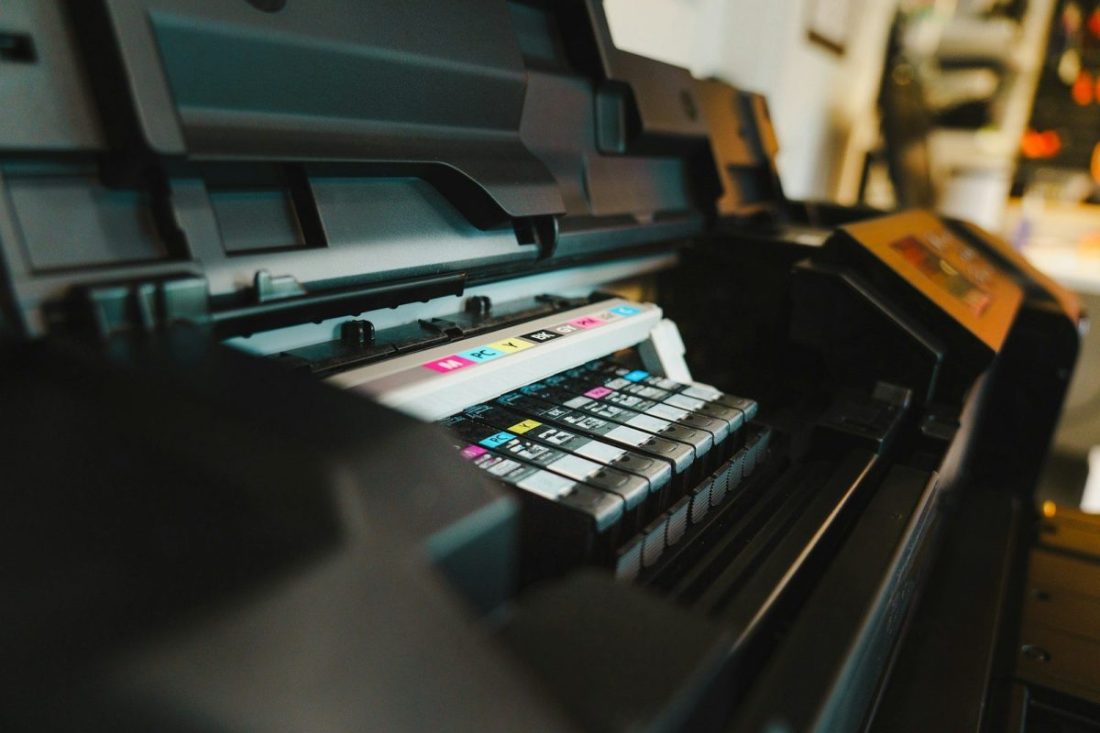
Print work never really slowed down. It just changed shape. Digital tools, faster machines, and shorter production runs have rewritten what “custom” means for anyone designing physical products. If you build files for print, here’s what’s actually shifting on the production floor right now.
Direct-to-Film Is Replacing DTG in More Shops
DTG (direct-to-garment) printing dominated custom apparel for years. That’s changing fast. DTF (direct-to-film) transfers print onto a film, then heat-press the design onto fabric. No pre-treatment step. No waiting on drying racks.
The technical case is strong. DTF uses 40% less white ink than DTG and delivers 30% higher throughput on M&R Polaris machines. That’s a real production advantage, not marketing copy.
For designers, this matters because DTF handles more substrates than DTG. Cotton, polyester blends, nylon, even some hard surfaces accept a DTF transfer. Your artwork doesn’t need to change much, but your file prep does. Vector outlines transfer cleaner than raster edges on DTF film.
Personalization Is a Production Requirement, Not a Feature
Buyers expect one-off customization now. A single storefront might sell the same shirt design in fifty different colorways, name variants, or size ratios. That’s not a nice-to-have anymore. It’s baked into how brands compete.
This is where customizable products platforms come in. They let a base design flex across variables like text fields, color swaps, and placement zones without a designer touching every SKU by hand. If you’re building templates for merch, packaging, or promotional goods, structure your files with this in mind from the start. Lock down bleed and safe zones. Isolate variable text into its own layer. Build swatches as a reusable palette instead of hardcoded fills.
File Prep Still Breaks Most Print Jobs
Even with better software, most print delays trace back to bad file setup. A few habits fix most of it:
- Work in CMYK, not RGB, for anything going to a physical press. Screens lie about color.
- Set resolution to 300 DPI minimum at final print size. Don’t scale up a 72 DPI web asset and hope.
- Convert all text to outlines before export. Missing fonts still cause more delays than any other single error.
- Add 0.125 inch bleed on any design that touches the edge of a product or page.
- Flatten transparency in complex layered files. Some RIP software chokes on live transparency effects.
None of this is new advice. It’s just more important now, because turnaround times have compressed. Print-on-demand shops run same-day or next-day production. There’s no buffer for a designer to catch a file error before it hits the press.
Substrate Variety Is Expanding Past Apparel
Custom printing used to mean shirts, mugs, and business cards. That’s no longer the boundary. Packaging, home décor, tech accessories, and even furniture surfaces now run through the same digital print pipelines.
This shift changes how you think about a design. A pattern built for a t-shirt won’t necessarily wrap correctly onto a curved mug or a box flap. Designers now need to understand basic UV printing, sublimation limits, and how ink behaves on non-flat surfaces. Sublimation, for example, only works on polyester or polymer-coated substrates. Cotton won’t hold it. Know your fabric or material before you finalize a palette, because some inks shift color depending on what they’re printed on.
Sustainability Is Changing Ink and Substrate Choices
Water-based and eco-solvent inks are replacing older plastisol formulas in a lot of shops. Recycled substrates are also becoming standard requests from clients, not upsells.
This affects color output. Eco-friendly inks sometimes render slightly duller than plastisol, especially on darker fabrics. If a client wants vibrant neon tones on a sustainable substrate, test a proof first. Don’t assume the digital mockup matches the physical result.
What This Means for Your Workflow
Print production is faster, more fragmented across substrates, and more dependent on clean, flexible source files than it was even a few years ago. Designers who build with variable components, understand substrate limits, and prep files correctly the first time will spend less time fixing rejected proofs and more time designing.
The tools have changed. The fundamentals of good file prep haven’t.
Read more about CAD, product design and related technology at SolidSmack.com
Source: https://www.solidsmack.com/tools/custom-printing-trends-every-designer-should-know/
Anyone can join.
Anyone can contribute.
Anyone can become informed about their world.
"United We Stand" Click Here To Create Your Personal Citizen Journalist Account Today, Be Sure To Invite Your Friends.
Before It’s News® is a community of individuals who report on what’s going on around them, from all around the world. Anyone can join. Anyone can contribute. Anyone can become informed about their world. "United We Stand" Click Here To Create Your Personal Citizen Journalist Account Today, Be Sure To Invite Your Friends.
LION'S MANE PRODUCT
Try Our Lion’s Mane WHOLE MIND Nootropic Blend 60 Capsules
Mushrooms are having a moment. One fabulous fungus in particular, lion’s mane, may help improve memory, depression and anxiety symptoms. They are also an excellent source of nutrients that show promise as a therapy for dementia, and other neurodegenerative diseases. If you’re living with anxiety or depression, you may be curious about all the therapy options out there — including the natural ones.Our Lion’s Mane WHOLE MIND Nootropic Blend has been formulated to utilize the potency of Lion’s mane but also include the benefits of four other Highly Beneficial Mushrooms. Synergistically, they work together to Build your health through improving cognitive function and immunity regardless of your age. Our Nootropic not only improves your Cognitive Function and Activates your Immune System, but it benefits growth of Essential Gut Flora, further enhancing your Vitality.

Our Formula includes: Lion’s Mane Mushrooms which Increase Brain Power through nerve growth, lessen anxiety, reduce depression, and improve concentration. Its an excellent adaptogen, promotes sleep and improves immunity. Shiitake Mushrooms which Fight cancer cells and infectious disease, boost the immune system, promotes brain function, and serves as a source of B vitamins. Maitake Mushrooms which regulate blood sugar levels of diabetics, reduce hypertension and boosts the immune system. Reishi Mushrooms which Fight inflammation, liver disease, fatigue, tumor growth and cancer. They Improve skin disorders and soothes digestive problems, stomach ulcers and leaky gut syndrome. Chaga Mushrooms which have anti-aging effects, boost immune function, improve stamina and athletic performance, even act as a natural aphrodisiac, fighting diabetes and improving liver function. Try Our Lion’s Mane WHOLE MIND Nootropic Blend 60 Capsules Today. Be 100% Satisfied or Receive a Full Money Back Guarantee. Order Yours Today by Following This Link.


| Visits: | 1,829,264,604 |
| Stories: | 8,688,699 |
Whistler Blowers, Insiders

