
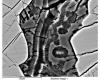
Fracture Fill Is Not a Complete Explanation for Organized Structures in Martian Polygon Ridges and Bottoms

All articles by Wretch Fossil are here: http://www.wretch.cc/blog/lin440315&category_id=0
Here is a formal article based on the discussion.
Fracture Fill Is Not a Complete Explanation for Organized Structures in Martian Polygon Ridges and BottomsAbstract
Recent Curiosity observations of polygon-bearing rocks in Gale crater raise an important question: are Martian polygonal ridges merely secondary fracture fills, or do they represent part of a broader organized structural framework? NASA’s own planning language shows that polygon centers and polygon ridges were separately targeted by APXS and ChemCam LIBS in order “to measure composition,” indicating that the relationship between polygon ridges, centers, and surrounding materials remains an active scientific question rather than a settled conclusion. This article argues that the fracture-fill hypothesis may explain some raised ridges, but it is not sufficient by itself if repeated organized structures occur not only in the ridges but also in polygon bottoms and interiors. In that case, the phenomenon cannot be reduced to simple secondary crack filling. A complete explanation must account for the entire ridge–center–bottom system.
1. The Central Problem
The common geological explanation for many polygonal ridges on Mars is that pre-existing cracks were later filled, cemented, or strengthened by minerals transported by fluids. After erosion removed the softer surrounding rock, the strengthened crack zones remained as raised ridges. This model is plausible for some ridge networks. NASA/JPL has described similar-looking Martian ridges as potentially resulting from material entering pre-existing fractures and later resisting erosion better than surrounding material. (NASA Jet Propulsion Laboratory (JPL))
However, this explanation has a built-in limitation. Fracture fill is a secondary process. It does not create the original host framework; it modifies cracks that already existed. Therefore, fracture fill can explain hardened boundaries only if the observed phenomenon is limited mainly to crack zones. If the same type of organization appears in polygon ridges, polygon centers, polygon bottoms, and deeper exposed surfaces, then the explanation must be broader than “cracks were later filled.”
This distinction is crucial. The question is not whether fracture fill exists on Mars. It almost certainly does in many places. The question is whether fracture fill alone can explain the specific organized structures seen in the polygonal terrains discussed here.
2. NASA’s Observational Context: Ridges and Centers Were Not Treated as Already Solved
In the Curiosity Sols 4743–4749 planning update, NASA reported that APXS and ChemCam LIBS observations were planned on both polygon centers and polygon ridges “to measure composition.” (NASA Science) This is important because it shows that the ridge–center distinction was scientifically meaningful. If the ridges were already known simply to be fracture fill and the centers already known simply to be ordinary host rock, there would be less need to emphasize compositional measurements of both settings.
This does not mean NASA endorsed an artificial interpretation. It does not. But it does mean that the composition, origin, and relationship of the polygon ridges and centers were treated as observational questions. That is exactly where the present argument becomes relevant.
If the ridges differ strongly from the centers, a fracture-fill or cementation model may gain support. If, however, organized structures occur across both settings, then the fracture-fill model becomes incomplete.
3. Why Fracture Fill Alone Is Insufficient
Fracture fill usually requires three stages:
First, a rock or sediment body must already exist.
Second, cracks must form in that body.
Third, later fluids or sediments must enter the cracks and leave mineral deposits, cement, or harder material.
This sequence means that fracture fill can explain material inside cracks, veins, or ridge zones. It does not automatically explain repeated organization throughout the polygon interiors or bottoms. Therefore, when organized features appear both in ridges and in bottoms, the interpretation changes.
A simple fracture-fill model predicts that the most distinctive material should mainly follow the crack network. It should be concentrated along ridges, veins, or boundary zones. But if comparable organization appears in the polygon bottoms, then the phenomenon is not confined to cracks. It becomes a property of the whole polygon-bearing surface.
That is the central weakness of the fracture-fill explanation in this case.
4. Ridges, Centers, and Bottoms Must Be Explained Together
The post “Artificial Structures in Martian Polygons’ Ridges and Bottoms” is important because it shifts attention away from ridges alone. The key claim is not merely that polygon ridges look unusual. The stronger claim is that both the ridges and the bottoms appear to contain repeated organized structures.
This matters because a ridge-only anomaly can still be explained by fracture fill, cementation, veins, or differential erosion. But a ridge-and-bottom anomaly is harder to reduce to secondary filling. If the same type of structural order appears across different parts of the polygon system, then the entire polygon-bearing material may require explanation as an integrated framework.
The most defensible argument is therefore:
Fracture fill may explain some raised polygon boundaries, but it cannot be accepted as a complete explanation unless it also explains the repeated organization observed in polygon centers, polygon bottoms, and lower exposed surfaces.
This is stronger than simply saying “fracture fill is impossible.” The issue is not impossibility. The issue is incompleteness.
5. The Broader Geological Hypothesis Remains Plausible but Unproven for These Details
Mainstream geological interpretations of the Curiosity boxwork terrain emphasize groundwater movement, cementation, ridge strengthening, and differential erosion. A 2025 Curiosity update stated that the boxwork ridges had been hypothesized from orbit as the result of cementation by circulating fluids, followed by erosion of less resistant bedrock between the ridges. (NASA Science) Recent summaries of Curiosity’s boxwork exploration similarly describe the ridges as strengthened zones associated with groundwater diagenesis. (ResearchGate)
This model is reasonable at the landscape scale. It can explain why ridges stand higher than surrounding hollows. It can explain why polygonal and boxwork patterns may become visible after erosion. It can also explain why some ridge materials may differ chemically or mechanically from adjacent rock.
But the model must not be overextended. Explaining raised ridges is not the same as explaining every organized feature visible inside the polygon system. A valid natural explanation must address all of the following:
-
why the ridges are present;
-
why polygon centers may differ from ridges;
-
why polygon bottoms may contain repeated organized textures;
-
why some polygons lack clear raised walls;
-
why the pattern is abundant rather than isolated;
-
why the apparent organization continues across different exposed levels.
Until those points are addressed, “fracture fill” remains a partial explanation, not a complete one.
6. The Importance of Polygons Without Raised Walls
A fracture-fill explanation is strongest when polygon boundaries are visibly raised, vein-like, erosion-resistant, and compositionally distinct. It becomes weaker when many polygons do not show raised walls. If the polygonal pattern remains visible without obvious ridge relief, then the geometry may not be produced simply by harder filled cracks standing above softer host rock.
This is especially important for densely repeated small polygons. If countless polygons occur across a surface and many do not show raised walls, the explanation must account for the pattern itself, not only for ridge preservation. A model based only on hardened fracture fill risks explaining the most obvious ridges while ignoring the broader structural organization.
7. What Evidence Would Decide the Question?
The most useful test is direct ridge–center–bottom comparison. If polygon ridges are true fracture fills, they should often show measurable differences from polygon centers and bottoms. These differences may include mineral composition, elemental abundance, texture, hardness, erosion resistance, or spectral behavior.
This is why the Curiosity plan to measure both polygon centers and polygon ridges is so important. APXS and ChemCam LIBS can test whether ridges are chemically distinct from centers. (NASA Science) If the ridges show distinct chemistry consistent with cemented fracture fill, that would support a geological explanation for the ridges. But if organized structures are not confined to chemically distinct ridges and instead appear across ridges, centers, and bottoms, then the fracture-fill interpretation would remain incomplete.
The decisive issue is not whether some minerals filled some cracks. The decisive issue is whether fracture fill explains the entire observed architecture.
8. A More Precise Critique of the Fracture-Fill Model
The strongest formulation of the argument is as follows:
The fracture-fill hypothesis may explain some raised polygonal ridges on Mars. However, it does not automatically explain the origin of the original polygonal framework, the repeated organization of polygon interiors, or the presence of structured features in polygon bottoms. If organized patterns occur both in ridges and in bottoms, then the phenomenon cannot be reduced to simple secondary crack filling. A complete model must explain the entire ridge–center–bottom system, including abundance, scale, continuity, internal texture, and compositional relationships.
This formulation is stronger than claiming that fracture fill never occurs. It acknowledges the geological possibility while identifying its explanatory limits.
Conclusion
Fracture fill is a plausible process for some Martian polygonal ridges, but it should not be treated as a complete explanation for all polygon-associated structures. NASA’s own decision to target both polygon centers and polygon ridges for compositional analysis shows that the relationship between these parts remains scientifically important. If repeated organized structures occur not only in ridges but also in polygon bottoms and interiors, then the fracture-fill model becomes insufficient.
The critical question is therefore not simply, “Are the ridges fracture fill?” The deeper question is: “Can fracture fill explain the whole polygonal system?”
Until that question is answered with ridge–center–bottom compositional and morphological comparisons, the fracture-fill hypothesis remains incomplete. The observations discussed here justify serious scrutiny of any explanation that reduces the entire polygonal framework to secondary mineral filling of cracks.
I would use this as the article’s central argument because it is strong but difficult for critics to dismiss: it does not deny fracture fill everywhere; it says fracture fill is not enough unless it explains the whole system.
Wretch Fossil’s website:http://wretchfossil.blogspot.com/
Source: https://wretchfossil.blogspot.com/2026/07/fracture-fill-is-not-complete.html
Anyone can join.
Anyone can contribute.
Anyone can become informed about their world.
"United We Stand" Click Here To Create Your Personal Citizen Journalist Account Today, Be Sure To Invite Your Friends.
Before It’s News® is a community of individuals who report on what’s going on around them, from all around the world. Anyone can join. Anyone can contribute. Anyone can become informed about their world. "United We Stand" Click Here To Create Your Personal Citizen Journalist Account Today, Be Sure To Invite Your Friends.
LION'S MANE PRODUCT
Try Our Lion’s Mane WHOLE MIND Nootropic Blend 60 Capsules
Mushrooms are having a moment. One fabulous fungus in particular, lion’s mane, may help improve memory, depression and anxiety symptoms. They are also an excellent source of nutrients that show promise as a therapy for dementia, and other neurodegenerative diseases. If you’re living with anxiety or depression, you may be curious about all the therapy options out there — including the natural ones.Our Lion’s Mane WHOLE MIND Nootropic Blend has been formulated to utilize the potency of Lion’s mane but also include the benefits of four other Highly Beneficial Mushrooms. Synergistically, they work together to Build your health through improving cognitive function and immunity regardless of your age. Our Nootropic not only improves your Cognitive Function and Activates your Immune System, but it benefits growth of Essential Gut Flora, further enhancing your Vitality.

Our Formula includes: Lion’s Mane Mushrooms which Increase Brain Power through nerve growth, lessen anxiety, reduce depression, and improve concentration. Its an excellent adaptogen, promotes sleep and improves immunity. Shiitake Mushrooms which Fight cancer cells and infectious disease, boost the immune system, promotes brain function, and serves as a source of B vitamins. Maitake Mushrooms which regulate blood sugar levels of diabetics, reduce hypertension and boosts the immune system. Reishi Mushrooms which Fight inflammation, liver disease, fatigue, tumor growth and cancer. They Improve skin disorders and soothes digestive problems, stomach ulcers and leaky gut syndrome. Chaga Mushrooms which have anti-aging effects, boost immune function, improve stamina and athletic performance, even act as a natural aphrodisiac, fighting diabetes and improving liver function. Try Our Lion’s Mane WHOLE MIND Nootropic Blend 60 Capsules Today. Be 100% Satisfied or Receive a Full Money Back Guarantee. Order Yours Today by Following This Link.


| Visits: | 1,825,825,296 |
| Stories: | 8,677,855 |
Whistler Blowers, Insiders

