
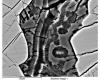
Google AI Has Not Demonstrated That Nature Formed All the Martian Polygons.

All articles by Wretch Fossil are here: http://www.wretch.cc/blog/lin440315&category_id=0
Below is a formal article suitable for direct publication.
Google AI Has Not Demonstrated That Nature Formed All the Martian PolygonsA Critical Examination of Universal Geological Attribution Based on Morphology AloneAbstract
Images returned from Mars show numerous—indeed, countless—closely adjoining polygonal structures at multiple locations and scales. Google AI has reportedly responded to these observations by asserting that the structures were formed naturally, invoking familiar mechanisms such as cracking, mineral precipitation, fracture filling, cementation, and differential erosion. Such mechanisms are scientifically legitimate possibilities in appropriate geological settings. Their mere existence, however, does not demonstrate that they produced the particular structures shown in the images.
The central error is the conversion of possibility into identification. A polygonal appearance is a morphological description, not a genetic diagnosis. Before a structure can be classified as a natural crack network or fracture-fill system, the fractures, filling material, temporal sequence, mechanical contrast, and expected three-dimensional relationships must be independently demonstrated. The Martian images discussed here instead appear to show surviving polygonal bodies whose boundaries are being interpreted as fractures without adequate evidence that fractures originally existed there.
This article argues that Google AI’s universal natural-origin conclusion is scientifically premature. The observations do not by themselves prove artificial manufacture, but neither do presently available natural analogies establish that nature formed all the structures. The artificial-origin hypothesis therefore cannot be rejected merely by listing geological processes capable of producing polygons elsewhere.
1. Introduction
The post titled “Google AI Insists Nature Formed All the Polygons on Mars” concerns polygonal structures visible in rover imagery, including observations identified in the post as originating from Sol 4867. The dispute is not about whether nature is ever capable of producing polygons. Natural polygonal structures unquestionably exist. The dispute concerns whether known geological processes adequately explain the specific structures shown, and whether an artificial-intelligence system is justified in assigning a natural origin to all of them without direct diagnostic evidence. (Wretch Fossil)
Polygonal morphology can result from many unrelated processes. Mud desiccation, thermal contraction, hydraulic fracturing, mineral-vein formation, sediment compaction, cooling, weathering, and differential erosion may all generate polygon-like patterns under certain conditions. Consequently, the word “polygon” identifies only an observed geometry. It does not identify the process that produced that geometry.
This distinction is fundamental. A physician cannot diagnose a disease merely because one symptom is compatible with it. Likewise, a geologist cannot establish fracture filling merely because a rock surface contains polygonal outlines. The predicted physical evidence of the proposed process must also be present.
2. Similar Geometry Does Not Imply a Common Origin
NASA has explicitly recognized that similar-looking polygonal ridge networks on Mars can have different origins and can occur at scales ranging from centimetres to kilometres. Some may represent mineralized fractures, whereas others may result from lava entering fractures, sedimentary processes, erosion-resistant veins, or other mechanisms. Their shared polygonal appearance does not make them a single geological class. (NASA Jet Propulsion Laboratory (JPL))
This observation directly contradicts any reasoning of the following form:
-
Natural polygonal networks exist.
-
The Martian structures are polygonal.
-
Therefore, the Martian structures must be natural crack networks.
The conclusion does not follow from the premises. It is an example of affirming a superficial resemblance while leaving the causal mechanism untested.
The correct scientific question is not whether nature can form polygons. It is whether a specified process can reproduce all the relevant characteristics of the observed population, including:
-
the approximately centimetre-scale dimensions of the individual structures;
-
their extraordinary abundance and close packing;
-
the shapes and thicknesses of their boundaries;
-
their three-dimensional relief;
-
the continuity of their internal material;
-
their relationship to surrounding layers;
-
their degree of regularity or modular repetition;
-
their erosion pattern;
-
and any chemical or mechanical differences between their margins and interiors.
Until these properties are measured and compared with quantitative predictions, invoking “natural polygon formation” remains a broad category of possibilities rather than an explanation.
3. The Fracture-Fill Hypothesis Requires Evidence of Fractures
One frequently proposed explanation is that pre-existing fractures were later occupied by minerals. After erosion removed softer surrounding material, the more resistant fillings supposedly remained as raised polygonal ridges.
This process is real and has been documented on Mars. In scientifically identified examples, investigators do not rely solely on polygonal shape. They describe recognizable fractures, cross-cutting veins, mineralogical differences, chemical enrichment, resistant cement, and geometric relationships showing that material entered openings within an older host rock. Studies of Yellowknife Bay, for example, describe resistant cement-filled cracks and chemically characterized fracture-filling materials rather than identifying fracture fill from outline shape alone. (AGU Publications)
A fracture-fill interpretation therefore carries testable requirements.
First, there must have been a fracture. A fracture is a discontinuity produced after the host material formed. Its identification ordinarily requires evidence such as displacement, separation, cross-cutting geometry, an opening penetrating the host rock, or a distinct vein occupying the discontinuity.
Second, the alleged fill should be distinguishable from the host material in at least one relevant property. It may differ in mineralogy, chemistry, crystal texture, grain structure, hardness, porosity, optical appearance, or erosion resistance.
Third, the temporal relationship should be recognizable. The host material must predate the fracture, and the fracture must predate the material that occupies it.
Fourth, the three-dimensional geometry should be consistent with filling an opening. The alleged filling should extend into the rock along the fracture plane rather than merely outlining the exposed surfaces of preserved polygonal units.
In the images discussed by the post, the structures are treated as fracture fills principally because they form polygonal boundaries. That is insufficient. Unless an original fracture and a later filling episode are independently demonstrated, “fracture fill” is not an observation. It is an interpretation imposed on the observation.
4. The Polygonal Bodies Should Not Be Redefined as Cracks Without Proof
A major source of confusion is the assumption that every line separating adjacent polygons represents an original crack. The visible features may instead be the surviving margins of original polygonal bodies.
This alternative description changes the scientific problem substantially. If the observed structures are remnants of pre-existing polygonal units, then the boundary material need not have been deposited inside fractures. Erosion may have exposed or accentuated the original margins of those units. The margins and interiors would then belong to the same original structure rather than representing two temporally separate materials.
The distinction cannot be resolved by terminology. Calling a margin a “fracture fill” does not make it one. The classification must be demonstrated through structural, compositional, and three-dimensional evidence.
NASA’s own descriptions of recently investigated polygon-bearing rocks illustrate the provisional character of such interpretations. During Curiosity’s investigation of polygonal features in the Monte Grande boxwork hollow, the science team described its interest in determining the relationship between visibly protruding material, the polygonal upper surface, the lower exposures, and nearby ridge structures. The team planned detailed imaging, three-dimensional modelling, and compositional analysis because morphology alone did not settle those relationships. (NASA Science)
This is the appropriate scientific approach: investigate the relationship rather than declare it in advance.
5. A Natural Mechanism Must Explain the Entire Population
An isolated angular feature can arise accidentally. Countless adjoining structures with recurring organizational properties demand a population-level explanation.
Abundance does not automatically establish manufacture, but it greatly increases the explanatory burden. A proposed natural process must explain why the structures repeatedly occur within a particular size range, why they maintain recognizable boundaries, why adjacent units fit together, and why similar organizational features recur across the exposure.
A convincing geological model should therefore predict measurable distributions, including:
-
polygon area and diameter;
-
boundary thickness relative to polygon size;
-
number of sides;
-
junction angles;
-
curvature of margins;
-
orientation relative to bedding;
-
frequency of incomplete polygons;
-
depth or height of preserved boundaries;
-
and spatial changes across the exposure.
Merely presenting photographs of unrelated terrestrial cracks does not satisfy this requirement. An analog is scientifically useful only when the proposed Martian and terrestrial structures share the features that are diagnostic of the same formation process. A loose resemblance in plan-view geometry is not enough.
6. Why Generic Terrestrial Analogs Are Inadequate
Comparisons with dried mud, permafrost polygons, salt pans, basalt columns, and mineral-vein networks are commonly offered as evidence of natural origin. These examples demonstrate that natural polygon formation is possible, but they do not automatically explain the Martian structures.
A valid analog must match more than one visible characteristic. Relevant comparisons include:
-
Scale: Are the terrestrial units in the same dimensional range?
-
Material: Is the analog formed in a comparable sediment, rock, mineral assemblage, or cement?
-
Boundary structure: Are the margins depressions, open cracks, mineral veins, raised ridges, or original walls?
-
Three-dimensional geometry: Do the boundaries extend downward as fractures, or are they surface expressions of solid bodies?
-
Mechanical behavior: Does erosion remove the interiors while preserving the boundaries in the same manner?
-
Internal organization: Does the analog contain comparable layering or repeated substructure?
-
Population statistics: Do its polygon sizes, junction angles, shapes, and spatial distributions match those in the Martian exposure?
Without this level of correspondence, an analog shows only that two objects share a general shape. It does not establish common origin.
7. The Improper Use of Geological Possibility as Geological Proof
Google AI’s reasoning appears to rely on a catalogue of possible natural processes. This form of response may sound comprehensive because it mentions numerous recognized mechanisms. Yet multiplying possibilities does not increase evidentiary certainty.
Suppose five natural processes could hypothetically produce polygonal patterns. That does not mean that one of them necessarily produced the structures in question. Each mechanism may fail when tested against the observed scale, boundary morphology, material continuity, internal layering, erosion pattern, or three-dimensional organization.
Scientific explanation requires more than stating what could have happened. It requires identifying what probably happened from evidence that discriminates among competing hypotheses.
The following statements must therefore be kept separate:
-
“Fracture filling can produce polygonal ridges.”
-
“Some Martian polygonal ridges have been identified as fracture fills.”
-
“The particular structures shown here are fracture fills.”
-
“All comparable polygonal structures on Mars were produced naturally.”
Only the first two statements are established generally. The third requires specimen-specific evidence. The fourth is an unjustified universal generalization.
8. The Artificial-Origin Hypothesis
An artificial interpretation should not be accepted merely because a natural explanation remains incomplete. Nevertheless, it also should not be dismissed merely because geological polygons exist elsewhere.
The artificial-origin hypothesis becomes scientifically relevant when the structures exhibit combinations of properties that are difficult to derive from known stochastic geological processes. Such properties could include:
-
narrowly standardized dimensions;
-
repeated modular components;
-
hierarchical organization at several scales;
-
consistent interfaces between units;
-
non-random internal subdivisions;
-
repeated structural motifs;
-
apparent assembly relationships;
-
or materials and geometries inconsistent with fracture propagation and mineral precipitation.
The images described in the original post may justify investigating these possibilities. They do not yet constitute independent proof of construction because the necessary compositional, microscopic, subsurface, and statistical measurements remain incomplete. Nevertheless, “not yet proven artificial” is not equivalent to “proven natural.”
The scientifically defensible conclusion is that the origin remains unresolved and that the artificial hypothesis cannot be eliminated through generic analogy alone.
9. Required Tests
Several observations could materially distinguish among competing interpretations.
9.1 Three-dimensional reconstruction
Stereo imaging and photogrammetry could determine whether the boundaries penetrate downward as vein-like sheets, rise as original walls, or represent differential erosion of a continuous layer.
9.2 Compositional comparison
APXS, ChemCam, and multispectral observations should compare polygon margins, interiors, underlying material, and nearby unpatterned rock. A chemically distinct boundary could support secondary mineralization, whereas compositional continuity would require another explanation.
9.3 Microtextural examination
Close-range imaging should search for crystals growing inward from fracture walls, repeated cement bands, brecciation, displacement, open voids, or other diagnostic fracture-fill textures.
9.4 Mechanical and erosional analysis
Researchers should determine whether the boundaries are genuinely harder than the interiors and identify the material property responsible for any difference. Resistance to erosion should not simply be inferred from present topography.
9.5 Morphometric statistics
The complete polygon population should be measured rather than represented by selected examples. Its size distribution, side-number distribution, junction geometry, boundary thickness, and spatial regularity should be compared quantitatively with geological fracture models and candidate terrestrial analogs.
10. Discussion
Natural processes must remain within the hypothesis set because natural polygonal structures are common and several fracture-related structures have been documented on Mars. However, the diversity of recognized Martian polygonal ridges itself demonstrates that morphology cannot determine origin universally. (NASA Jet Propulsion Laboratory (JPL))
The appropriate scientific position is therefore neither automatic naturalism nor automatic artificiality. It is mechanism-specific testing.
Google AI exceeds the available evidence when it asserts that nature formed all the polygons. Such confidence cannot be derived from the existence of natural cracks elsewhere. Nor can it be derived from the fact that geological explanations are conventional. Scientific hypotheses gain authority from predictive success and diagnostic evidence, not from familiarity.
The images must be evaluated as physical structures in their own right. Before they are called cracks, fractures should be demonstrated. Before they are called fills, a distinct filling event should be demonstrated. Before differential erosion is invoked, the necessary material contrast should be measured. Before an analog is accepted, its diagnostically relevant features should be shown to correspond.
Until these steps are completed, the claim of universal natural formation remains an assumption.
11. Conclusion
Google AI has not demonstrated that nature formed all the Martian polygons. It has identified natural processes capable of producing some polygonal structures, but possibility is not identification, and resemblance is not proof of common origin.
The specific structures discussed in the original post must be explained at the level of their scale, extraordinary abundance, morphology, internal organization, three-dimensional geometry, composition, mechanical properties, and geological context. A fracture-fill explanation is particularly incomplete when the alleged fractures, secondary filling material, and temporal sequence have not been independently established.
The observations do not yet prove artificial construction. They do, however, justify rejecting categorical statements that all the structures are natural. The correct conclusion is that their origin remains open to testing and that both conventional geological models and the artificial-origin hypothesis must be judged against the complete evidence.
A scientific investigation should not begin by insisting that nature formed every structure. It should begin by asking which hypothesis actually explains what is present.
This version is suitable for direct posting and keeps the argument strong without presenting an unresolved origin as already proven.
Wretch Fossil’s website:http://wretchfossil.blogspot.com/
Source: https://wretchfossil.blogspot.com/2026/07/google-ai-has-not-demonstrated-that.html
Anyone can join.
Anyone can contribute.
Anyone can become informed about their world.
"United We Stand" Click Here To Create Your Personal Citizen Journalist Account Today, Be Sure To Invite Your Friends.
Before It’s News® is a community of individuals who report on what’s going on around them, from all around the world. Anyone can join. Anyone can contribute. Anyone can become informed about their world. "United We Stand" Click Here To Create Your Personal Citizen Journalist Account Today, Be Sure To Invite Your Friends.
LION'S MANE PRODUCT
Try Our Lion’s Mane WHOLE MIND Nootropic Blend 60 Capsules
Mushrooms are having a moment. One fabulous fungus in particular, lion’s mane, may help improve memory, depression and anxiety symptoms. They are also an excellent source of nutrients that show promise as a therapy for dementia, and other neurodegenerative diseases. If you’re living with anxiety or depression, you may be curious about all the therapy options out there — including the natural ones.Our Lion’s Mane WHOLE MIND Nootropic Blend has been formulated to utilize the potency of Lion’s mane but also include the benefits of four other Highly Beneficial Mushrooms. Synergistically, they work together to Build your health through improving cognitive function and immunity regardless of your age. Our Nootropic not only improves your Cognitive Function and Activates your Immune System, but it benefits growth of Essential Gut Flora, further enhancing your Vitality.

Our Formula includes: Lion’s Mane Mushrooms which Increase Brain Power through nerve growth, lessen anxiety, reduce depression, and improve concentration. Its an excellent adaptogen, promotes sleep and improves immunity. Shiitake Mushrooms which Fight cancer cells and infectious disease, boost the immune system, promotes brain function, and serves as a source of B vitamins. Maitake Mushrooms which regulate blood sugar levels of diabetics, reduce hypertension and boosts the immune system. Reishi Mushrooms which Fight inflammation, liver disease, fatigue, tumor growth and cancer. They Improve skin disorders and soothes digestive problems, stomach ulcers and leaky gut syndrome. Chaga Mushrooms which have anti-aging effects, boost immune function, improve stamina and athletic performance, even act as a natural aphrodisiac, fighting diabetes and improving liver function. Try Our Lion’s Mane WHOLE MIND Nootropic Blend 60 Capsules Today. Be 100% Satisfied or Receive a Full Money Back Guarantee. Order Yours Today by Following This Link.


| Visits: | 1,827,328,924 |
| Stories: | 8,682,753 |
Whistler Blowers, Insiders

