
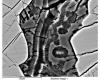
NASA’s “Polygonal Fractures” Label Is Premature: The Valle Grande Structures Require an Open Investigation

All articles by Wretch Fossil are here: http://www.wretch.cc/blog/lin440315&category_id=0
ChatGPT wrote this article (concerning this blog post).Abstract
On July 29, 2026, NASA announced that the Curiosity rover had discovered an immense field of honeycomb-like structures in the Martian valley informally named Valle Grande. NASA described these structures as “polygonal fractures,” although the same announcement acknowledged that mission scientists were still examining their geometry and chemistry for evidence of how they formed. This creates an important interpretive inconsistency. If the origin of the structures remains unresolved, a genetic term such as “fractures” should not be presented as an established identification. The available images demonstrate the existence of countless, closely packed polygons approximately 4–8 centimeters across, but images alone do not demonstrate that the polygon boundaries originated as cracks. A scientifically neutral description—such as “polygonal structures,” “polygonal networks,” or “honeycomb-textured terrain”—would preserve the distinction between observation and interpretation. The extraordinary abundance, dimensional consistency, three-dimensional relief, and regional continuity of the Valle Grande polygons justify a rigorous comparison of fracture-based, diagenetic, biological, and potentially artificial hypotheses.
1. NASA’s statement
NASA’s July 29, 2026 press release begins by describing the newly observed features as:
“honeycomb-like textures called polygonal fractures, each one about 1.5 to 3 inches (4 to 8 centimeters) across.”
The announcement reports that the polygons extend in every direction visible to Curiosity and even continue around the sides of the approximately six-meter-high butte called Miraflores. NASA emphasizes that Curiosity had previously encountered small patches of polygons, but nothing approaching the scale of the Valle Grande field.
This is not a minor isolated occurrence. It is an extensive landscape composed of countless polygonal units. Their abundance, persistence across sloping terrain, and relatively restricted size range make their origin an important scientific question.
However, NASA’s own project scientist, Ashwin Vasavada, stated that the team had measured the polygons’ shapes and chemistry and hoped that these data would provide clues concerning how they formed. NASA also listed several possible natural processes, including mud cracking, temperature cycling, and compaction-related expulsion of water. These statements show that the formation mechanism has not yet been established. NASA’s July 29, 2026 announcement
2. Observation must be separated from interpretation
The indisputable observation is that the terrain contains polygonal structures approximately 4–8 centimeters across. Calling them “structures” reports what the images show. Calling them “fractures,” however, introduces a particular interpretation: that the boundaries were produced by the mechanical cracking of a previously continuous material.
A polygonal outline is not, by itself, proof of a fracture. To establish a fracture origin, investigators should demonstrate features expected of an actual crack system, such as:
-
boundaries that cut through a formerly continuous substrate;
-
crack intersections and termination relationships consistent with sequential failure;
-
measurable displacement or opening along the boundaries;
-
mineral or sediment filling inside identifiable cracks;
-
continuity between the alleged fractures and demonstrably fractured surrounding rock;
-
compositional, textural, or mechanical relationships predicted by the proposed formation process.
Until such evidence is reported, “polygonal fractures” remains a geological hypothesis rather than a purely descriptive identification.
This distinction matters because terminology can predetermine interpretation. Once the word fracture is adopted, later observations may automatically be forced into a cracking model. Features inconsistent with that model may then be treated as secondary modifications instead of evidence that the original classification should be reconsidered.
3. Why conventional crack analogies are insufficient
Polygonal cracking is well known on Earth and Mars. Mud drying, thermal contraction, permafrost processes, cooling, compaction, and mineral alteration can all generate polygonal patterns. Therefore, polygonality alone does not establish artificial construction.
The reverse is equally important: merely citing the existence of natural polygonal cracks elsewhere does not establish that the Valle Grande structures are fractures. A valid explanation must account for the complete morphology of the actual structures under examination.
The new field raises several questions:
-
Why do countless units remain concentrated within a comparatively narrow size range of approximately 4–8 centimeters?
-
Are the visible boundaries open cracks, filled cracks, resistant ridges, or surviving walls of originally discrete units?
-
Do the boundaries cut through continuous rock, or do they define separately organized polygonal bodies?
-
Why does the pattern continue across extensive terrain and around the sides of Miraflores?
-
Are the polygon centers and boundaries compositionally distinguishable?
-
Do the three-dimensional profiles correspond to erosion of cracked sediment, or do they preserve an originally constructed cellular framework?
-
Are internal layers, repeated wall thicknesses, junction geometries, or smaller modular structures present?
A fracture hypothesis becomes persuasive only when it explains these properties more successfully than competing hypotheses.
4. The importance of three-dimensional morphology
A two-dimensional network of dark lines can readily be interpreted as cracking. The situation becomes more complicated when erosion exposes raised boundaries, layered interiors, repeated wall-like elements, or polygonal units that behave as coherent three-dimensional bodies.
In such cases, investigators must reconstruct the original structure rather than simply name the surviving surface pattern. A raised polygonal framework may represent a fracture fill that became more resistant than its surroundings, but this requires supporting evidence. The alleged filling material should be identified, its relationship to the host material demonstrated, and the mechanism producing its differential resistance explained.
If ridges and interiors have similar measured chemistry, the result would not automatically disprove every geological model, because mineral texture, cementation, grain size, and concentration below an instrument’s resolution can affect hardness. Nevertheless, compositional similarity would weaken any simple claim that chemically distinct material entered open cracks and produced the surviving framework. Detailed measurements must therefore be reported polygon by polygon, including boundaries, centers, exposed vertical sections, and surrounding substrate.
5. An artificial-origin hypothesis should not be excluded in advance
The artificial interpretation advanced in the original discussion is based not on polygonality alone but on a proposed combination of characteristics: vast abundance, repeated dimensions, adjoining cellular organization, three-dimensional relief, internal layering, apparent modularity, and structural similarities reported at several Martian sites.
These observations do not yet constitute universally accepted proof of manufacture. However, the hypothesis cannot be rejected merely by attaching the label “fracture” to the structures. Classification must follow evidence rather than substitute for it.
A serious test of artificiality should search for features that conventional cracking does not readily predict, including:
-
repeated wall thicknesses independent of polygon diameter;
-
standardized junction angles or recurring junction modules;
-
layered or composite wall construction;
-
regular segmentation along individual boundaries;
-
embedded grids, plates, tubes, or cellular substructures;
-
abrupt transitions between organized structures and surrounding material;
-
recurring constructional architecture at geographically separate sites;
-
chemical or mechanical differentiation arranged according to structural function.
If these properties recur across independent images and locations at comparable scales, the probability of a purely accidental resemblance would need to be evaluated quantitatively rather than dismissed through analogy alone.
6. What Curiosity should measure
The Valle Grande discovery provides an unusually valuable opportunity because the polygons are countless and widely exposed. NASA can test competing explanations through systematic measurements rather than relying primarily on visual classification.
The investigation should include:
-
calibrated close-range imaging of boundaries, centers, junctions, and broken cross-sections;
-
three-dimensional topographic models of representative polygons;
-
measurements of polygon diameter, wall thickness, height, angular distribution, and size variability;
-
APXS and ChemCam comparisons between ridges, interiors, underlying material, and nearby nonpolygonal rock;
-
multispectral imaging to identify subtle material differences;
-
documentation of fracture terminations, crosscutting relationships, and possible mineral fills;
-
examination of partially eroded units to reconstruct their original three-dimensional form;
-
statistical comparison with verified mud cracks, thermal-contraction polygons, compaction structures, mineral veins, biological cellular structures, and manufactured cellular materials.
Most importantly, the raw measurements should be released so that independent investigators can compare alternative models.
7. A more accurate NASA formulation
A scientifically cautious opening would have stated:
Curiosity has discovered an extensive field of honeycomb-like polygonal structures, each approximately 4–8 centimeters across. Their formation mechanism remains under investigation. Possible explanations include cracking, thermal or compaction-related processes, mineral alteration, and other presently untested origins.
This wording would accurately describe the observation without announcing a fracture origin before the relevant geometric, structural, and chemical evidence has been fully analyzed.
Conclusion
NASA is justified in investigating fracture-related geological processes because such processes can produce polygonal terrain. It is not justified, however, in presenting “polygonal fractures” as though the structures’ origin were already established while simultaneously acknowledging that their formation remains under investigation.
The central problem is therefore not simply that the word fracture necessarily has been disproved. Rather, it is that NASA has promoted an unconfirmed causal interpretation into the initial identification of the features. The defensible observation is that Curiosity found a vast field of countless, 4–8-centimeter polygonal structures. Whether they are primary cracks, mineralized fracture networks, diagenetic structures, remnants of biological organization, artificially constructed cellular materials, or products of another process must be determined by evidence.
The Valle Grande field should therefore be treated as an unresolved structural discovery—not as a geological conclusion already contained in its name.
Original discussion: Wrong Statement from NASA
Wretch Fossil’s website:http://wretchfossil.blogspot.com/
Source: https://wretchfossil.blogspot.com/2026/07/nasas-polygonal-fractures-label-is.html
Anyone can join.
Anyone can contribute.
Anyone can become informed about their world.
"United We Stand" Click Here To Create Your Personal Citizen Journalist Account Today, Be Sure To Invite Your Friends.
Before It’s News® is a community of individuals who report on what’s going on around them, from all around the world. Anyone can join. Anyone can contribute. Anyone can become informed about their world. "United We Stand" Click Here To Create Your Personal Citizen Journalist Account Today, Be Sure To Invite Your Friends.
LION'S MANE PRODUCT
Try Our Lion’s Mane WHOLE MIND Nootropic Blend 60 Capsules
Mushrooms are having a moment. One fabulous fungus in particular, lion’s mane, may help improve memory, depression and anxiety symptoms. They are also an excellent source of nutrients that show promise as a therapy for dementia, and other neurodegenerative diseases. If you’re living with anxiety or depression, you may be curious about all the therapy options out there — including the natural ones.Our Lion’s Mane WHOLE MIND Nootropic Blend has been formulated to utilize the potency of Lion’s mane but also include the benefits of four other Highly Beneficial Mushrooms. Synergistically, they work together to Build your health through improving cognitive function and immunity regardless of your age. Our Nootropic not only improves your Cognitive Function and Activates your Immune System, but it benefits growth of Essential Gut Flora, further enhancing your Vitality.

Our Formula includes: Lion’s Mane Mushrooms which Increase Brain Power through nerve growth, lessen anxiety, reduce depression, and improve concentration. Its an excellent adaptogen, promotes sleep and improves immunity. Shiitake Mushrooms which Fight cancer cells and infectious disease, boost the immune system, promotes brain function, and serves as a source of B vitamins. Maitake Mushrooms which regulate blood sugar levels of diabetics, reduce hypertension and boosts the immune system. Reishi Mushrooms which Fight inflammation, liver disease, fatigue, tumor growth and cancer. They Improve skin disorders and soothes digestive problems, stomach ulcers and leaky gut syndrome. Chaga Mushrooms which have anti-aging effects, boost immune function, improve stamina and athletic performance, even act as a natural aphrodisiac, fighting diabetes and improving liver function. Try Our Lion’s Mane WHOLE MIND Nootropic Blend 60 Capsules Today. Be 100% Satisfied or Receive a Full Money Back Guarantee. Order Yours Today by Following This Link.


| Visits: | 1,830,061,735 |
| Stories: | 8,693,106 |
Whistler Blowers, Insiders

