
SVP 2026 abstracts of novel or dubious phylogenetic interest A–M

As usual talks on histology, bite marks, tooth shapes, skull cavities and deposit assemblages are not reviewed here. New taxa prior to publication are also skipped – with one exception.
Dumas et al reported,“the last common ancestor of marsupials and placentals was adapted for climbing.” “Our dataset includes 55 linear skeletal measurements from the girdle and limb skeletons of 281 extant mammal species and 66 Mesozoic mammal species.”
Suggestion: just build a cladogram and identify the first outgroup taxon by name.
Fang et al wrote, “Here, we describe two new specimens of the Early Triassic marine reptile Eretmorhipis carrolldongi, which is a specialized hupehsuchian taxon with duckbill-shaped snout and small eyes, employing non-visual prey detection. Morphological comparisons and allometric analyses reveal that features seen in an early postnatal specimen, such as a flattened snout with unfused premaxillae, cranial proportions, and well-developed dorsal osteoderms persist into adulthood.”
According to this reconstruction (Fig 1) this genus did not have ‘small eyes’. It had a small skull. I have not seen the juveniles the authors described.

Hone, Mallon and Rufolo documented, “An exceptionally complete and taxonomically ambiguous Pteranodon skeleton.” CMNFV 41358 (formerly NMC41-358 = ‘The Triebold 1991 specimen.’ “Although the majority of the skeleton is present, this specimen has only rarely been mentioned in the scientific literature and has never been formally described.”
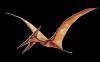
This is not a new specimen. I’ve had a cast of the insitu specimen for two decades from which I sculpted a 3D skeleton (Fig 2) that Mike Triebold has then sold copies to museums around the world. I saw one in Germany in 2007.
It’s not phylogenetically ambiguous. In the large pterosaur tree it was derived from the KUVP 2212 specimen and preceded the USNM 13868 specimen. The problem is the authors reported, “two species are generally recognized: Pteranodon longiceps and Pteranodon sternbergi.” That means they are several decades behind the times with too few taxa… and Hone is adverse to wide gamut phylogenetic analysis. Let’s see if they add taxa as shown in this selection of skulls.

Jenkins and Sues looked at “The early evolution of the reptile ear revealed from the Permian stem reptile Araeoscelis”
The authors did not realize, due to taxon exclusion, that Araeoscelis is nowhere near any early reptiles, so it can only inform at to the early evolution of the diaspid (sans Lepidosauromorpha) ear. Look closer to Silvanerpeton and Gephyrostegus for the early evolution of reptile body parts.
The authors tested 182 taxa and reported, “Our parsimony analyses also support a sister group relationship between Archosauria and Testudines, forming Archelosauria, indicating convergence between molecular and morphological phylogenetic datasets.” This is likely due to taxon exclusion. Sues was strongly behind the placodont ancestry of turtles, which the LRT tested and rejected, finding more parsimonious sister taxa among small horned pareiasaurs for the dual origin of turtles.

Jenkins et al looked at Eunotosaurus (Fig 3) and the origin of turtles. They ran an analsysis that “recovers Eunotosaurus as a derived millerettid stem reptile, with little relevance to turtle origins.”
I think that was all in an earlier published paper, so it is surprising to see old news in the new abstracts. In any case, you heard the same Eunotosaurus story here in 2011.
Lidman and Silcox looked at “Palaechthonidae [which] represents one of five plesiadapiform families to appear during the Early Paleocene, thus representing one of the earliest known potential primate lineages.” Adding taxa, as in the LRT, and primates (with canines) are not related to plesiadapiformes (sans canines). “Here we report on the first comprehensive phylogenetic analysis of Palaechthonidae, including all known species, as well as primitive members of other plesiadapiform families that have historically been connected to Palaechthonidae: Microsyopidae, Paromomyidae, Purgatoriidae, and basal members of Plesiadapoidea (i.e., Plesiadapidae + Carpolestidae + Saxonellidae).” They left out rodents, tillodonts, multituberculates and their marsupial ancestors with diprotodont dentition.
Figure 1. Microsyops, Plesiadapis, Daubentonia, Carpolestes and kin in the LRT to scale.
” data-large-file=”https://pterosaurheresies.wordpress.com/wp-content/uploads/2024/07/microsyops-plesiadapis-ignacius588-1.jpg?w=343″ src=”https://pterosaurheresies.wordpress.com/wp-content/uploads/2024/07/microsyops-plesiadapis-ignacius588-1.jpg?w=343″ alt=”Figure 1. Microsyops, Plesiadapis, Daubentonia, Carpolestes and kin in the LRT to scale.” class=”wp-image-87487″ srcset=”https://pterosaurheresies.wordpress.com/wp-content/uploads/2024/07/microsyops-plesiadapis-ignacius588-1.jpg?w=343 343w, https://pterosaurheresies.wordpress.com/wp-content/uploads/2024/07/microsyops-plesiadapis-ignacius588-1.jpg?w=50 50w, https://pterosaurheresies.wordpress.com/wp-content/uploads/2024/07/microsyops-plesiadapis-ignacius588-1.jpg?w=101 101w, https://pterosaurheresies.wordpress.com/wp-content/uploads/2024/07/microsyops-plesiadapis-ignacius588-1.jpg 588w” sizes=”auto, (max-width: 343px) 100vw, 343px” />
Lowe and McNett produced, “An evaluation of flight origin using phylogenetic mapping in Oviraptorosaurian families.” Unfortunately, none of these ever flew or flapped. They wrote, “Oviraptorosaurians are a group of theropod dinosaurs understood to be secondarily flightless, meaning they evolved from ancestors capable of flight and are widely regarded as extremely birdlike.”
I never heard this before. The LRT does not support this hypothesis.

McDavid et al reappraised Quetzalcoatlus linking it to Thanatosdrakon, tested as a pteranodontid with much, much larger wings (Fig 5).
That was a taxonomic mistake.
The authors reported, “we identify at least 10 synapomorphies uniting Quetzalcoatlus northropi and Thanatosdrakon amaru to the exclusion of “Quetzalcoatlus” lawsoni,”
This is called, ‘Pulling a Larry Martin‘. Don’t do that. That method leads to ruin. Instead, run your analysis with a wide gamut of competing taxa, like the LRT and LPT.
We’ll look at JVP abstracts N–Z t of novel or dubious interest omorrow.
Source: https://pterosaurheresies.wordpress.com/2026/11/19/svp-2026-abstracts-of-novel-or-dubious-phylogenetic-interest-a-m/
Anyone can join.
Anyone can contribute.
Anyone can become informed about their world.
"United We Stand" Click Here To Create Your Personal Citizen Journalist Account Today, Be Sure To Invite Your Friends.
Before It’s News® is a community of individuals who report on what’s going on around them, from all around the world. Anyone can join. Anyone can contribute. Anyone can become informed about their world. "United We Stand" Click Here To Create Your Personal Citizen Journalist Account Today, Be Sure To Invite Your Friends.
LION'S MANE PRODUCT
Try Our Lion’s Mane WHOLE MIND Nootropic Blend 60 Capsules
Mushrooms are having a moment. One fabulous fungus in particular, lion’s mane, may help improve memory, depression and anxiety symptoms. They are also an excellent source of nutrients that show promise as a therapy for dementia, and other neurodegenerative diseases. If you’re living with anxiety or depression, you may be curious about all the therapy options out there — including the natural ones.Our Lion’s Mane WHOLE MIND Nootropic Blend has been formulated to utilize the potency of Lion’s mane but also include the benefits of four other Highly Beneficial Mushrooms. Synergistically, they work together to Build your health through improving cognitive function and immunity regardless of your age. Our Nootropic not only improves your Cognitive Function and Activates your Immune System, but it benefits growth of Essential Gut Flora, further enhancing your Vitality.
Our Formula includes: Lion’s Mane Mushrooms which Increase Brain Power through nerve growth, lessen anxiety, reduce depression, and improve concentration. Its an excellent adaptogen, promotes sleep and improves immunity. Shiitake Mushrooms which Fight cancer cells and infectious disease, boost the immune system, promotes brain function, and serves as a source of B vitamins. Maitake Mushrooms which regulate blood sugar levels of diabetics, reduce hypertension and boosts the immune system. Reishi Mushrooms which Fight inflammation, liver disease, fatigue, tumor growth and cancer. They Improve skin disorders and soothes digestive problems, stomach ulcers and leaky gut syndrome. Chaga Mushrooms which have anti-aging effects, boost immune function, improve stamina and athletic performance, even act as a natural aphrodisiac, fighting diabetes and improving liver function. Try Our Lion’s Mane WHOLE MIND Nootropic Blend 60 Capsules Today. Be 100% Satisfied or Receive a Full Money Back Guarantee. Order Yours Today by Following This Link.


| Visits: | 1,838,978,677 |
| Stories: | 8,739,705 |
Whistler Blowers, Insiders

