

Basswood/Linden

Abundance: rare
What: flowers, leaves, buds, inner bark
How: leaves raw in salad, buds to nibble, flowers for tea, cambium (inner bark) raw or boiled for calories
Where: Sunny edges of woods
When: buds in late winter, young leaves spring/summer, flowers summer, cambium all year
Nutritional Value: Leaves contain vitamins and minerals, inner bark has carbohydrates
Other uses: cordage from bark, not a good firewood
Basswood tree used in urban landscaping.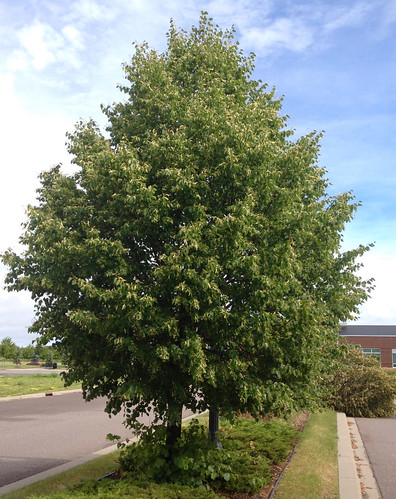
Basswood leaf and flower/nut bract (long, narrow leaf-like thing).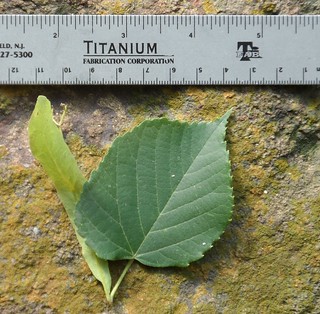
Basswood flower cluster and flower bract.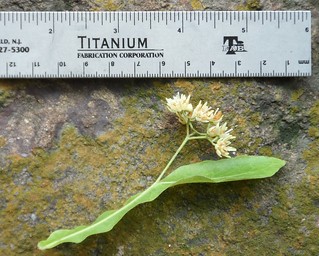
Close-up of Basswood flowers.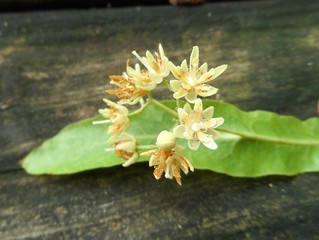
Basswood leaves and seedpods.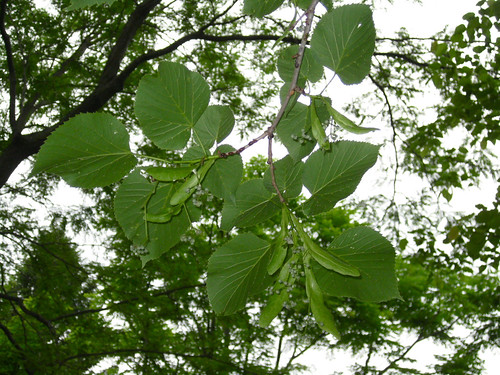
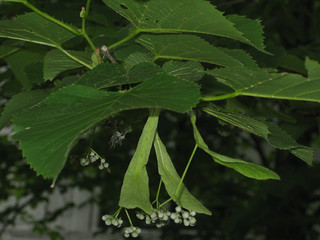
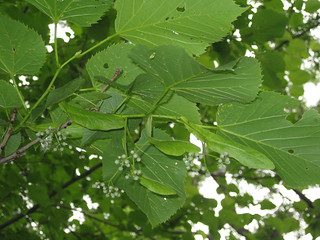
Basswood leaves.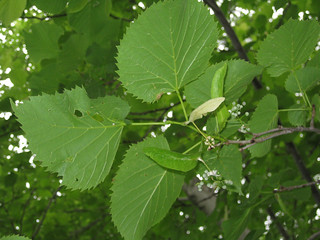
Almost-ripe Basswood nuts in the fall.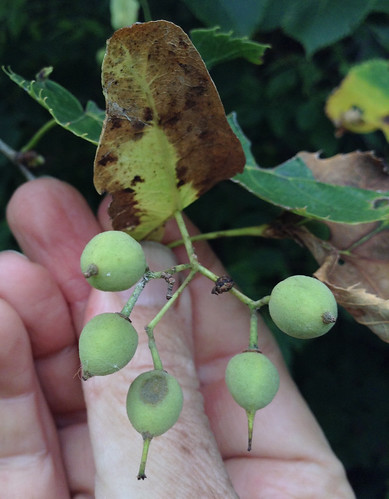
Ripe Basswood nuts.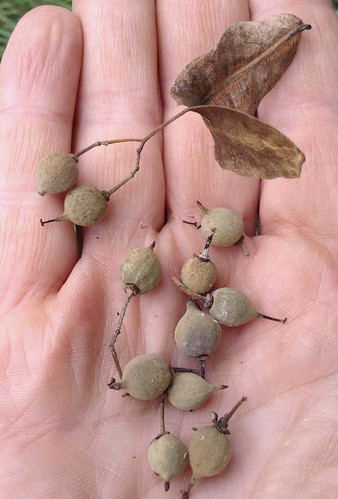
Basswood bark.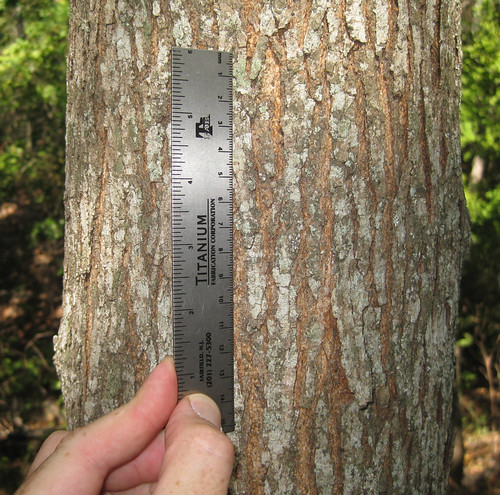
Texas distribution, attributed to U. S. Department of Agriculture. The marked counties are guidelines only. Plants may appear in other counties, especially if used in landscaping.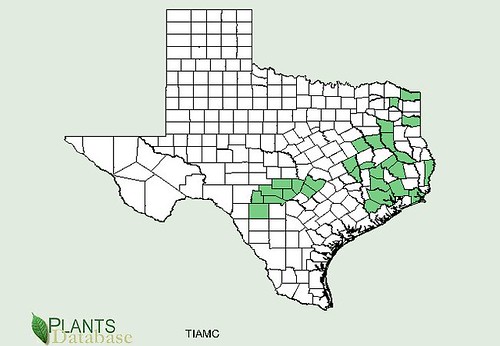
North American distribution, attributed to U. S. Department of Agriculture.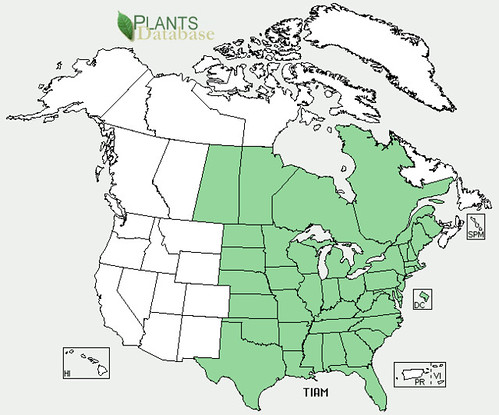
Stately basswood trees range from 60 to 120 feet tall with shallowly-furrowed, somewhat greyish bark and round crowns. There are thirty species in North America with Tilia Americana and Tilia caroliniana being the most common in Texas. Basswoods prefer loose, well-drained soil with access to moisture, in particular river flood-plains and in low areas of woods.
The sweet sap, running in the spring before the leaf buds open, can be boiled down into a syrup or just drank as-is. Be sure to sterilize your tools before using them to cut or drill into the tree to collect sap or inner bark. This reduces the chance of a fungal infection striking the basswood.
A very delicious, spicy tea is made from the small flowers of basswood trees, which appear in the spring. The flowers can also be eaten raw. Bees love these flowers and often the tree can be found just by listening for the buzz of the hundreds of bees collecting its nectar. The resulting honey has a flavor imparted from the basswood nectar.
The young leaf buds and leaves can be eaten raw and have a slightly sweet flavor similar to the flowers. These parts can also be cooked like pot-herbs.
In the fall the nuts make a good trailside nibble while hiking, but only eat the inner meat, not the nuts’ outer shells.
The calorie-rich cambium layer, just under the bark, is stripped, finely diced, and boiled into a porridge-like mush to eat any time of the year. In Europe towards the end of World War II basswood sawdust was added to bread to try and produce enough loaves to fill everyone’s belly.
This cambium layer can be used to make strong fibers that can be woven into rope, containers and crude cloth. This inner bark must be soaked for up to two weeks to rot away the majority of the plant’s cells, leaving behind just the fibers. The wood itself is great for carving and for making the body of guitars.
Source: http://www.foragingtexas.com/2008/08/basswoodlinden_20.html
Anyone can join.
Anyone can contribute.
Anyone can become informed about their world.
"United We Stand" Click Here To Create Your Personal Citizen Journalist Account Today, Be Sure To Invite Your Friends.
Before It’s News® is a community of individuals who report on what’s going on around them, from all around the world. Anyone can join. Anyone can contribute. Anyone can become informed about their world. "United We Stand" Click Here To Create Your Personal Citizen Journalist Account Today, Be Sure To Invite Your Friends.
LION'S MANE PRODUCT
Try Our Lion’s Mane WHOLE MIND Nootropic Blend 60 Capsules
Mushrooms are having a moment. One fabulous fungus in particular, lion’s mane, may help improve memory, depression and anxiety symptoms. They are also an excellent source of nutrients that show promise as a therapy for dementia, and other neurodegenerative diseases. If you’re living with anxiety or depression, you may be curious about all the therapy options out there — including the natural ones.Our Lion’s Mane WHOLE MIND Nootropic Blend has been formulated to utilize the potency of Lion’s mane but also include the benefits of four other Highly Beneficial Mushrooms. Synergistically, they work together to Build your health through improving cognitive function and immunity regardless of your age. Our Nootropic not only improves your Cognitive Function and Activates your Immune System, but it benefits growth of Essential Gut Flora, further enhancing your Vitality.

Our Formula includes: Lion’s Mane Mushrooms which Increase Brain Power through nerve growth, lessen anxiety, reduce depression, and improve concentration. Its an excellent adaptogen, promotes sleep and improves immunity. Shiitake Mushrooms which Fight cancer cells and infectious disease, boost the immune system, promotes brain function, and serves as a source of B vitamins. Maitake Mushrooms which regulate blood sugar levels of diabetics, reduce hypertension and boosts the immune system. Reishi Mushrooms which Fight inflammation, liver disease, fatigue, tumor growth and cancer. They Improve skin disorders and soothes digestive problems, stomach ulcers and leaky gut syndrome. Chaga Mushrooms which have anti-aging effects, boost immune function, improve stamina and athletic performance, even act as a natural aphrodisiac, fighting diabetes and improving liver function. Try Our Lion’s Mane WHOLE MIND Nootropic Blend 60 Capsules Today. Be 100% Satisfied or Receive a Full Money Back Guarantee. Order Yours Today by Following This Link.


| Visits: | 1,793,853,381 |
| Stories: | 8,616,320 |
Whistler Blowers, Insiders

