

Brussels Versus Washington

Authored by Cláudia Ascensão Nunes via the Foundation for Economic Education (FEE),
For years, Europe has tried to convince itself that it could regulate its way to technological greatness.
Instead of becoming a technological powerhouse, it produced rules, many rules, with effects now extending far beyond its own borders.
In 2026, those rules are colliding head on with an American president who refuses to accept that U.S. innovation could be governed from Brussels.
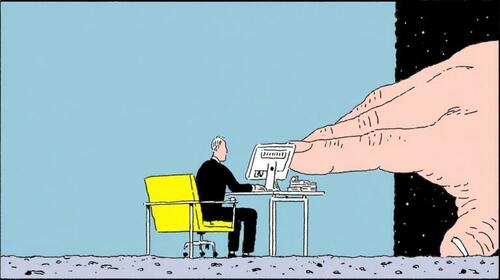
Two regulations sit at the center of this escalating tension. The Digital Markets Act, or DMA, applies to the world’s largest digital platforms, the so-called gatekeepers, and forces them to open their ecosystems, share data, and abandon business practices that are central to their models.
The Digital Services Act, or DSA, regulates platform content and algorithms, requiring the removal of information deemed illegal or harmful, with all the subjectivity this entails.
This risks granting a supranational authority direct power over online speech by compelling platforms to remove content that fails to comply with regulatory guidelines.
These laws, which entered into force in 2022 for the DSA and 2024 for the DMA, appear designed with America’s largest technology firms in mind. Five of the six companies designated as DMA gatekeepers are U.S.-based, as are the overwhelming majority of platforms subject to the DSA.
This has placed companies such as Apple, Google, and Meta under constant supervision by Brussels, forcing them to modify products in order to operate in the European market, with consequences not only for firms themselves but also for consumers and innovation more broadly.
In 2025, under the DMA alone, Apple was fined 500 million euros and forced to open iOS to rival app stores and payment systems. Meta was fined 200 million euros and required to alter how it uses user data.
Under EU competition law, Google also received a historic 2.95 billion euro fine for alleged abuse of market dominance in the digital sector and was forced to redesign key aspects of its search engine and advertising business.
Upon taking office, Donald Trump identified this European interventionism as disguised tariffs that artificially raise costs for American firms and strip them of competitive advantages.
He threatened to invoke Section 301 of U.S. trade law, the same tool used against China, to retaliate, significantly intensifying tensions between Brussels and Washington.
In December 2025, that tension took on a face: X. The European Commission fined Elon Musk’s platform 120 million euros under the DSA, accusing it of failing to manage so-called systemic risks linked to the circulation of political information. For Musk, this amounted to an assault on free speech. The episode appears to have triggered a broader transatlantic diplomatic and commercial escalation. Washington responded by imposing visa bans on five European officials and experts associated with the DSA and threatened tariffs and restrictions against European firms such as SAP, Capgemini, and Mistral AI should Brussels fail to retreat.
The conflict has now spread beyond the European Union. The United Kingdom and Australia have begun discussing restrictions on X, citing risks related to misinformation and online safety, reinforcing the perception that Brussels is asserting itself as a global digital regulator.
Despite pressure from the Trump administration, the European Union shows no signs of slowing down. In 2026, another regulation enters fully into force, the AI Act, which appears once again tailored to American firms. It subjects artificial intelligence systems deemed high-risk, including AI used in hiring, credit, healthcare, public security, content moderation, and high impact generative tools, to mandatory risk assessments, human oversight, and constraints that exist in no other major market. These requirements will delay product launches, raise costs, and force companies to design technologies according to political criteria defined outside the United States.
As a result, 2026 is shaping up to be a particularly challenging year. From a geopolitical perspective, the most immediate risk is the erosion of the transatlantic relationship in a strategic sector. Technology today is an instrument of power, and this escalation among allies is likely to generate incompatible regulatory blocs, fragmenting the digital economy, weakening the West, and opening space for alternative models, particularly China’s state-controlled approach.
Consumers stand to lose most from this conflict, along two pillars central to any classical liberal order: first, the free market, as rising compliance costs will inevitably translate into higher prices; second, online free expression, increasingly constrained by incentives for excessive moderation and the preventive removal of lawful but controversial content.
At a moment when the world is rapidly advancing in artificial intelligence, automation, and the technologies that will define the next decade, the European Union is moving in the opposite direction, deepening an interventionism that exceeds the role a state should play.
The European Union must lower barriers, simplify rules, promote competition, and allow innovation to flourish without permanent political oversight.
In today’s world, as always, market liberalization is not a threat to consumers. It is their strongest protection and the true engine of progress.
Tyler Durden Sun, 02/01/2026 – 07:00
Source: https://freedombunker.com/2026/02/01/brussels-versus-washington/
Anyone can join.
Anyone can contribute.
Anyone can become informed about their world.
"United We Stand" Click Here To Create Your Personal Citizen Journalist Account Today, Be Sure To Invite Your Friends.
Before It’s News® is a community of individuals who report on what’s going on around them, from all around the world. Anyone can join. Anyone can contribute. Anyone can become informed about their world. "United We Stand" Click Here To Create Your Personal Citizen Journalist Account Today, Be Sure To Invite Your Friends.
LION'S MANE PRODUCT
Try Our Lion’s Mane WHOLE MIND Nootropic Blend 60 Capsules
Mushrooms are having a moment. One fabulous fungus in particular, lion’s mane, may help improve memory, depression and anxiety symptoms. They are also an excellent source of nutrients that show promise as a therapy for dementia, and other neurodegenerative diseases. If you’re living with anxiety or depression, you may be curious about all the therapy options out there — including the natural ones.Our Lion’s Mane WHOLE MIND Nootropic Blend has been formulated to utilize the potency of Lion’s mane but also include the benefits of four other Highly Beneficial Mushrooms. Synergistically, they work together to Build your health through improving cognitive function and immunity regardless of your age. Our Nootropic not only improves your Cognitive Function and Activates your Immune System, but it benefits growth of Essential Gut Flora, further enhancing your Vitality.

Our Formula includes: Lion’s Mane Mushrooms which Increase Brain Power through nerve growth, lessen anxiety, reduce depression, and improve concentration. Its an excellent adaptogen, promotes sleep and improves immunity. Shiitake Mushrooms which Fight cancer cells and infectious disease, boost the immune system, promotes brain function, and serves as a source of B vitamins. Maitake Mushrooms which regulate blood sugar levels of diabetics, reduce hypertension and boosts the immune system. Reishi Mushrooms which Fight inflammation, liver disease, fatigue, tumor growth and cancer. They Improve skin disorders and soothes digestive problems, stomach ulcers and leaky gut syndrome. Chaga Mushrooms which have anti-aging effects, boost immune function, improve stamina and athletic performance, even act as a natural aphrodisiac, fighting diabetes and improving liver function. Try Our Lion’s Mane WHOLE MIND Nootropic Blend 60 Capsules Today. Be 100% Satisfied or Receive a Full Money Back Guarantee. Order Yours Today by Following This Link.


| Visits: | 1,782,849,142 |
| Stories: | 8,594,844 |
Whistler Blowers, Insiders

