

Will China Come To Iran’s Rescue?

As tensions between Iran and the US-Israeli alliance approach a critical juncture, a question echoes through global capitals, newsrooms and policy circles: will China come to Iran’s rescue? And if so, what would that assistance look like?
The answer defies the binary expectations of traditional military alliances. China is unlikely to dispatch troops or engage directly in any conflict, but to interpret this as passivity would be to misread the nature of 21st-century great power competition. China’s support for Iran is real, multifaceted, and in some ways more sustainable than military intervention; it just operates on a different strategic wavelength.
At the UN Security Council, China has consistently deployed its most potent weapon: the veto-wielding power of principle. In an emergency meeting last month, Chinese Ambassador Sun Lei delivered a stark message to Washington: “The use of force can never solve problems. It will only make them more complex and intractable. Any military adventurism would only push the region toward an unpredictable abyss.”
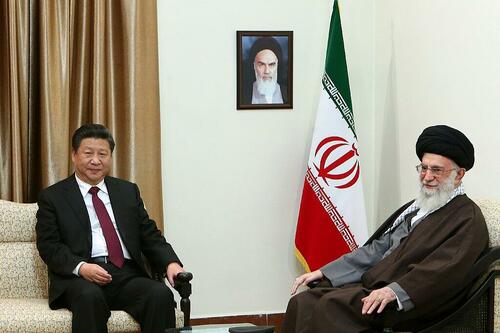
This is not empty rhetoric. China’s official position explicitly supports “safeguarding Iran’s sovereignty, security, and territorial integrity”, while opposing “the threat or use of force in international relations”.
By anchoring its stance in the UN Charter and international law, China provides Tehran with something invaluable: legitimacy on the world stage, and a powerful counter-narrative to western pressure.
Strategic alignment
The diplomatic calculus shifted fundamentally when Iran was formally approved in 2021 as a full member of the Shanghai Cooperation Organisation (SCO), joining China, Russia and Central Asian nations. This was followed by Tehran’s inclusion in the Brics bloc.
These are not military pacts, but they create something perhaps more enduring: a framework for permanent consultation and strategic alignment.
Last year, Chinese, Russian and Iranian diplomats met in Beijing and agreed to “strengthen coordination” within international organizations such as Brics and the SCO. This institutional embrace means that any aggression against Iran is now implicitly an issue for the world’s most powerful counterweights to US hegemony.
While China avoids direct confrontation, it has not shied away from visible military cooperation. Earlier this month, Russia, China and Iran deployed naval vessels for joint security exercises in the strategically vital Strait of Hormuz. A Russian presidential aide framed these drills in the context of building a “multipolar world order in the oceans” to counter western hegemony.
More tangibly, news has emerged of significant defense cooperation. Middle East Eye reported last year that Iran had received Chinese-made surface-to-air missile batteries to rebuild its air defense capabilities, part of an oil-for-weapons deal that allowed Tehran to bypass US sanctions.
Some reports have also suggested that Iran may receive advanced J-20 fifth-generation fighter jets, J-10C aircraft, and HQ-9 air defense systems, although there has been no official confirmation.
The symbolism is as striking as the substance. During Iran’s Air Force Day celebrations this month, a Chinese military attache presented a model of the J-20 stealth fighter to an Iranian air force commander – a gesture widely interpreted as signalling a new chapter in defence engagement between the two nations.
Multipolar age
Perhaps China’s most consequential support remains invisible on the battlefield, but visible in Iran’s national accounts. Despite US sanctions and pressure, China remains Iran’s top energy partner, with approximately 90 percent of Iran’s oil exports now directed to Chinese buyers.
The US has taken notice. The Treasury Department last year imposed sanctions on a Chinese refinery in Shandong province accused of purchasing more than $1bn worth of Iranian oil, with the Trump administration vowing “to drive Iran’s illicit oil exports, including to China, to zero”. China’s embassy in Washington responded by condemning sanctions that “undermine international trade order and rules” and “infringe upon the legitimate rights and interests of Chinese companies”.
While the China-Iran economic relationship has faced strains – Chinese state refiners have occasionally suspended purchases to avoid US financial risks – the overall trajectory is clear: China provides the economic oxygen that sustains Iran’s resistance to external pressure.
So if China is already providing diplomatic cover, institutional support, military cooperation and an economic lifeline, why doesn’t it go further? Why not send warships or explicitly threaten intervention?
The answer lies in strategic prioritization. As is widely understood, Beijing’s most pressing strategic goal is to achieve national reunification and, before this goal is realized, any actions that might unnecessarily and prematurely escalate comprehensive confrontation with the United States must be approached with extreme caution.
Looks like the USS Delbert D. Black has left the Red Sea and is backing up the Lincoln CSG in the Arabian Sea. After over a month of American saber rattling, it’s probably safe to say that the armada is now fully in position. pic.twitter.com/0JFFYrGm0c
— barry with the NED (@bonzerbarry) February 27, 2026
Moreover, China believes that while significant US military action in Iran could inflict losses, regime change would be difficult to achieve. Under such circumstances, Beijing can adopt a model similar to its approach to the Ukraine conflict: refraining from direct participation while maintaining normal state-to-state relations with the party under attack, providing political and diplomatic support at the UN, and continuing economic engagement that doesn’t violate international law.
What we are witnessing is not traditional alliance politics, but something new: a form of strategic partnership designed for a multipolar age. China offers Iran diplomatic protection, institutional integration, visible military cooperation and an economic boost - all without crossing the line into a direct confrontation that would trigger a wider war.
For those asking whether China will “rescue” Iran, the answer depends on definition. If rescue means troops and battleships, the answer is no. If rescue means ensuring that Iran can survive, resist, and eventually negotiate from strength, the answer is quietly, persistently and strategically yes.
This approach has already proven effective and difficult for adversaries to counter. In the shadow of potential conflict, China has constructed a new kind of shield for its partner: one forged not from steel, but from strategic patience, economic interdependence, and the architecture of a rising multipolar world.
Tyler Durden Fri, 02/27/2026 – 21:45
Source: https://freedombunker.com/2026/02/27/will-china-come-to-irans-rescue/
Anyone can join.
Anyone can contribute.
Anyone can become informed about their world.
"United We Stand" Click Here To Create Your Personal Citizen Journalist Account Today, Be Sure To Invite Your Friends.
Before It’s News® is a community of individuals who report on what’s going on around them, from all around the world. Anyone can join. Anyone can contribute. Anyone can become informed about their world. "United We Stand" Click Here To Create Your Personal Citizen Journalist Account Today, Be Sure To Invite Your Friends.
LION'S MANE PRODUCT
Try Our Lion’s Mane WHOLE MIND Nootropic Blend 60 Capsules
Mushrooms are having a moment. One fabulous fungus in particular, lion’s mane, may help improve memory, depression and anxiety symptoms. They are also an excellent source of nutrients that show promise as a therapy for dementia, and other neurodegenerative diseases. If you’re living with anxiety or depression, you may be curious about all the therapy options out there — including the natural ones.Our Lion’s Mane WHOLE MIND Nootropic Blend has been formulated to utilize the potency of Lion’s mane but also include the benefits of four other Highly Beneficial Mushrooms. Synergistically, they work together to Build your health through improving cognitive function and immunity regardless of your age. Our Nootropic not only improves your Cognitive Function and Activates your Immune System, but it benefits growth of Essential Gut Flora, further enhancing your Vitality.

Our Formula includes: Lion’s Mane Mushrooms which Increase Brain Power through nerve growth, lessen anxiety, reduce depression, and improve concentration. Its an excellent adaptogen, promotes sleep and improves immunity. Shiitake Mushrooms which Fight cancer cells and infectious disease, boost the immune system, promotes brain function, and serves as a source of B vitamins. Maitake Mushrooms which regulate blood sugar levels of diabetics, reduce hypertension and boosts the immune system. Reishi Mushrooms which Fight inflammation, liver disease, fatigue, tumor growth and cancer. They Improve skin disorders and soothes digestive problems, stomach ulcers and leaky gut syndrome. Chaga Mushrooms which have anti-aging effects, boost immune function, improve stamina and athletic performance, even act as a natural aphrodisiac, fighting diabetes and improving liver function. Try Our Lion’s Mane WHOLE MIND Nootropic Blend 60 Capsules Today. Be 100% Satisfied or Receive a Full Money Back Guarantee. Order Yours Today by Following This Link.


| Visits: | 1,785,661,205 |
| Stories: | 8,600,476 |
Whistler Blowers, Insiders

