

EU Imposes Drastic Tariffs on Chinese Goods: Is A Trade War Looming?

Submitted by Thomas Kolbe
Tensions in international trade policy are escalating on multiple fronts. After the U.S. Supreme Court initially declared the tariff regime implemented by President Donald Trump since April of last year unlawful, it appears the administration has explored new ways to stabilize its tariff policy going forward.
The signs on the international trade front continue to point toward turmoil. Not least, it is the ramped-up Chinese export machine that is increasingly in the crosshairs of U.S. protectionism and European defensive measures.
Beijing is using its massive export engine to offset deflationary pressures in its domestic economy—a result of state-induced capital misallocation and a shrinking population. Through export subsidies and other support measures, the government seeks to stabilize employment while boosting industrial production.
However, this comes at the expense of trade margins and production capacities in other countries, which increasingly fall behind in competition with China.
It was predictable that the still high-purchasing-power internal market of the European Union would attract attention, given the U.S.’s hardline approach. Europe risks becoming a de facto unloading hub for Chinese goods. The consequences are evident in the trade balance, which recorded a deficit of €305 billion for the EU economy last year.
Weakened by its own energy policy and the regulatory framework of the green transition, European manufacturers in nearly all industrial and consumer sectors face the global competitive arena with their backs to the wall. The ongoing deindustrialization has significantly contributed to many European business models losing ground in international competition.
Germany, in particular, appears as a sort of laboratory experiment: in trade with China, the country has now become a net importer of capital. The former know-how advantage of German engineering is no longer unassailable—it seems to be history.
European policymakers now appear determined to pursue a path of protectionism themselves.
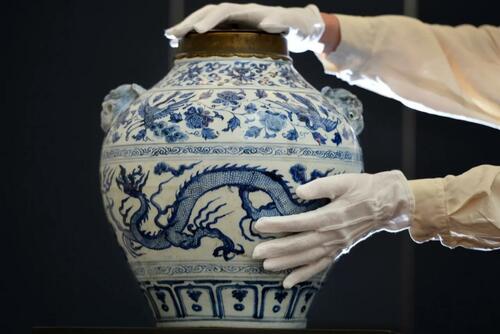
On February 7, 2026, the European Commission adopted Regulation 2026/274, responding to the Chinese export surge with anti-dumping tariffs. The first targeted product group: ceramic and porcelain imports. Around 60% of the assortments in European e-commerce and physical retail come from Chinese production. Tariffs within this group were raised from 18–36% to a consolidated 79%.
The affected products include, among others, tableware and kitchen items made of ceramic, porcelain, and stoneware originating from China. This also includes items such as spice grinders, coffee mills, and pizza stones. The new tariff regime is set to last initially for five years.
The Commission acted without involving national parliaments—mirroring the approach frequently criticized when applied to U.S. President Donald Trump, particularly in trade matters. In precisely those instances where Brussels regularly demands transparency, multilateralism, and rule-based procedures, it now itself takes unilateral executive action. Viewed in this light, criticism of Trump’s unilateralism appears profoundly hypocritical.
The Commission’s executive action reflects a rather elastic interpretation of its mandate. Should it identify dumping practices by trade partners—as in this case—it may impose corresponding tariffs. Neither the Council of the European Union, the European Parliament, nor national governments are involved in this process—a clear indication of growing concentration of power in Brussels.
The consequences of this tariff move—which is likely to expand to additional product groups—impact not only Chinese exporters but also European traders. They report liquidity shortfalls, rising insolvency risks, and significant challenges in compensating pre-financed transactions. The interests of European consumers evidently play no role in Brussels’ decisions.
Should further categories such as e-bikes, auto parts, or tires be added, as is currently rumored, this could have tangible effects on consumer prices across the EU. Moreover, the tariffs apply retroactively to ongoing shipments, further exacerbating the financial strain on European traders.
Brussels’ drastic response indicates that parts of European industry are under severe pressure from Chinese imports—and that the escalation in trade policy has now reached a new level.
So far, the Chinese leadership has not reacted to Brussels’ tariff measures. Chancellor Friedrich Merz may place trade issues at the forefront during his visit to China from February 24–26, where he is also expected to meet President Xi Jinping.
Recall that last year the dispute over the strategically critical export of rare earths—dominated by China—nearly escalated twice. Beijing is not hesitant to wield its geostrategic leverage in trade policy and defend its interests with a firm hand.
Fundamentally, a recalibration has occurred. In its strategy toward China, the EU is first raising the tariff wall, ignoring potential countermeasures from Beijing. Starting July 1, 2026, e-commerce imports from third countries with a value under €150 will face a €3 flat-rate fee per package. This aims not only to complicate invoicing by Chinese companies via third countries but also to exert targeted pressure on trade channeled primarily through platforms like Temu and Shein.
According to the EU, these measures aim to curb unfair competition and stabilize the internal market. Of course, such claims must be taken cum grano salis. Europeans are, after all, the undisputed masters of hidden trade protectionism. Their regulatory catalogs—particularly in climate policy—contain numerous non-tariff measures with deep protective effects.
Global trade is increasingly moving within geopolitical spheres of influence. Europeans would be wise to align with U.S. rules and integrate into the Western hemisphere. Yet Brussels appears intent on simultaneously confronting both major trade blocs.
* * *
About the author: Thomas Kolbe, a German graduate economist, has worked for over 25 years as a journalist and media producer for clients from various industries and business associations. As a publicist, he focuses on economic processes and observes geopolitical events from the perspective of the capital markets. His publications follow a philosophy that focuses on the individual and their right to self-determination.
Tyler Durden Sun, 03/01/2026 – 09:20
Source: https://freedombunker.com/2026/03/01/eu-imposes-drastic-tariffs-on-chinese-goods-is-a-trade-war-looming/
Anyone can join.
Anyone can contribute.
Anyone can become informed about their world.
"United We Stand" Click Here To Create Your Personal Citizen Journalist Account Today, Be Sure To Invite Your Friends.
Before It’s News® is a community of individuals who report on what’s going on around them, from all around the world. Anyone can join. Anyone can contribute. Anyone can become informed about their world. "United We Stand" Click Here To Create Your Personal Citizen Journalist Account Today, Be Sure To Invite Your Friends.
LION'S MANE PRODUCT
Try Our Lion’s Mane WHOLE MIND Nootropic Blend 60 Capsules
Mushrooms are having a moment. One fabulous fungus in particular, lion’s mane, may help improve memory, depression and anxiety symptoms. They are also an excellent source of nutrients that show promise as a therapy for dementia, and other neurodegenerative diseases. If you’re living with anxiety or depression, you may be curious about all the therapy options out there — including the natural ones.Our Lion’s Mane WHOLE MIND Nootropic Blend has been formulated to utilize the potency of Lion’s mane but also include the benefits of four other Highly Beneficial Mushrooms. Synergistically, they work together to Build your health through improving cognitive function and immunity regardless of your age. Our Nootropic not only improves your Cognitive Function and Activates your Immune System, but it benefits growth of Essential Gut Flora, further enhancing your Vitality.

Our Formula includes: Lion’s Mane Mushrooms which Increase Brain Power through nerve growth, lessen anxiety, reduce depression, and improve concentration. Its an excellent adaptogen, promotes sleep and improves immunity. Shiitake Mushrooms which Fight cancer cells and infectious disease, boost the immune system, promotes brain function, and serves as a source of B vitamins. Maitake Mushrooms which regulate blood sugar levels of diabetics, reduce hypertension and boosts the immune system. Reishi Mushrooms which Fight inflammation, liver disease, fatigue, tumor growth and cancer. They Improve skin disorders and soothes digestive problems, stomach ulcers and leaky gut syndrome. Chaga Mushrooms which have anti-aging effects, boost immune function, improve stamina and athletic performance, even act as a natural aphrodisiac, fighting diabetes and improving liver function. Try Our Lion’s Mane WHOLE MIND Nootropic Blend 60 Capsules Today. Be 100% Satisfied or Receive a Full Money Back Guarantee. Order Yours Today by Following This Link.


| Visits: | 1,786,896,232 |
| Stories: | 8,602,792 |
Whistler Blowers, Insiders

