

The State Will Always Socialize The Cost Of War

War is often sold to the public as an act of national will: decisive, necessary, and under control. The bill arrives later, in a quieter form. It shows up in insurance markets, shipping rates, emergency guarantees, higher fuel prices, and sudden policy reversals designed to keep the economic damage from spreading too far or too fast. That is what is now happening with the U.S.-Israeli war on Iran. The fighting is not only destroying lives and widening instability. It is also revealing something more familiar about the American state: when private actors no longer want to bear the risk of a war Washington helped ignite, Washington moves to spread that risk across everyone else.
The clearest example came when maritime war-risk premiums in the Gulf surged, in some cases by more than 1000%, as ships and cargoes moved through a combat zone centered on one of the world’s most important energy chokepoints. This is what markets do when governments create danger: they start pricing reality honestly. Insurance underwriters do not care about speeches about resolve or credibility. They care about missiles, mines, damaged hulls, and the odds that a vessel will not make it home intact. Once those odds change, the market does what it is supposed to do. It becomes expensive to move goods through a war.
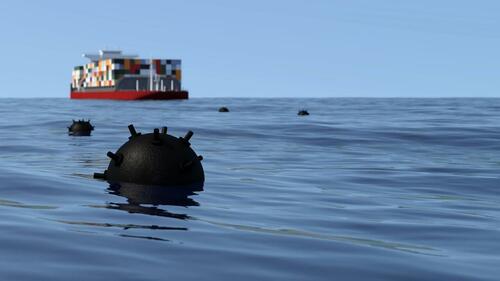
But the American state does not like that kind of honesty, because honest prices expose the real cost of intervention. So instead of letting war become unaffordable to the people escalating it, Washington stepped in. The U.S. International Development Finance Corporation announced a maritime reinsurance facility covering losses up to roughly $20 billion on a rolling basis, and later named Chubb as the lead insurance partner. In plain English, the government decided that if the private market was no longer willing to carry the full risk of this war, the state would help carry it instead. That is not a side effect of interventionism. It is one of its operating principles. Risk is privatized on the way up, then socialized when the numbers stop working.
The same pattern is visible in energy policy. As the war tightened shipping and pushed oil prices above $100 a barrel, Washington issued a thirty-day waiver allowing purchases of stranded Russian oil at sea to stabilize markets. That move was not just an emergency adjustment. It was an admission. The administration was effectively saying that one war had already become costly enough to require loosening pressure in another theater. A foreign policy that presents itself as hard and disciplined suddenly becomes very flexible when gasoline, shipping, and inflation begin threatening domestic politics. The slogans remain moralistic. The mechanics turn transactional overnight.
This is what statism looks like in practice. It does not simply bomb another country and call it security. It also rearranges the economic landscape at home and abroad so that the political architects of the war do not face the full consequences of their decisions. The cost is pushed outward onto taxpayers who did not authorize the war, consumers who will pay more for energy and goods, and trading systems that now have to absorb new shocks because Washington and Israel chose escalation over restraint. The state does not merely fight. It conscripts logistics, insurance, credit, and public balance sheets into the campaign.
That is why it is misleading to describe this as only a military conflict. It is also an exercise in political risk transfer. The Strait of Hormuz handles around twenty million barrels per day of crude oil and oil products and roughly a quarter of the world’s seaborne oil trade. Any government that helps turn that corridor into a war zone is not just making a strategic decision abroad. It is imposing a hidden tax on ordinary life. It is raising the cost of transport, trade, fuel, insurance, and eventually everything built on those foundations. And when those costs start climbing too fast, the same government asks the public to cushion the blow in the name of stability.
There is a moral evasion built into this arrangement. The public is told to think about war in the language of necessity and strength, while the real economics are handled behind the scenes through emergency waivers, public guarantees, and market interventions. Washington bypasses the discipline that peace would impose. It subsidizes the consequences of its own escalation, then presents the cleanup operation as responsible governance. That is not prudence. It is the imperial version of sending someone else the invoice.
The libertarian objection to this war is not only that it is reckless, unjust, and likely to widen. It is also that the state is once again doing what it does best: converting elite foreign-policy choices into burdens to be carried by everybody else. When insurers retreat, the government steps in. When sanctions collide with energy reality, the rules bend. When war becomes too expensive, the price is redistributed rather than paid by the people who chose it. That is the deeper scandal here. The state is not just waging this war. It is socializing its cost.
Tyler Durden Sat, 03/21/2026 – 21:00
Source: https://freedombunker.com/2026/03/21/the-state-will-always-socialize-the-cost-of-war/
Anyone can join.
Anyone can contribute.
Anyone can become informed about their world.
"United We Stand" Click Here To Create Your Personal Citizen Journalist Account Today, Be Sure To Invite Your Friends.
Before It’s News® is a community of individuals who report on what’s going on around them, from all around the world. Anyone can join. Anyone can contribute. Anyone can become informed about their world. "United We Stand" Click Here To Create Your Personal Citizen Journalist Account Today, Be Sure To Invite Your Friends.
LION'S MANE PRODUCT
Try Our Lion’s Mane WHOLE MIND Nootropic Blend 60 Capsules
Mushrooms are having a moment. One fabulous fungus in particular, lion’s mane, may help improve memory, depression and anxiety symptoms. They are also an excellent source of nutrients that show promise as a therapy for dementia, and other neurodegenerative diseases. If you’re living with anxiety or depression, you may be curious about all the therapy options out there — including the natural ones.Our Lion’s Mane WHOLE MIND Nootropic Blend has been formulated to utilize the potency of Lion’s mane but also include the benefits of four other Highly Beneficial Mushrooms. Synergistically, they work together to Build your health through improving cognitive function and immunity regardless of your age. Our Nootropic not only improves your Cognitive Function and Activates your Immune System, but it benefits growth of Essential Gut Flora, further enhancing your Vitality.

Our Formula includes: Lion’s Mane Mushrooms which Increase Brain Power through nerve growth, lessen anxiety, reduce depression, and improve concentration. Its an excellent adaptogen, promotes sleep and improves immunity. Shiitake Mushrooms which Fight cancer cells and infectious disease, boost the immune system, promotes brain function, and serves as a source of B vitamins. Maitake Mushrooms which regulate blood sugar levels of diabetics, reduce hypertension and boosts the immune system. Reishi Mushrooms which Fight inflammation, liver disease, fatigue, tumor growth and cancer. They Improve skin disorders and soothes digestive problems, stomach ulcers and leaky gut syndrome. Chaga Mushrooms which have anti-aging effects, boost immune function, improve stamina and athletic performance, even act as a natural aphrodisiac, fighting diabetes and improving liver function. Try Our Lion’s Mane WHOLE MIND Nootropic Blend 60 Capsules Today. Be 100% Satisfied or Receive a Full Money Back Guarantee. Order Yours Today by Following This Link.


| Visits: | 1,792,435,140 |
| Stories: | 8,613,345 |
Whistler Blowers, Insiders

