

From Leverage To Liability: The Hormuz Strait Is Now Iran’s Biggest Weakness

For half a century, the Strait of Hormuz was Iran’s weapon. Today, it is its noose.
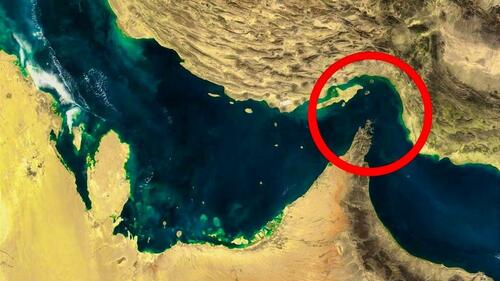
The mathematics of energy have flipped, and with them the balance of coercive power in the Persian Gulf.
Iran’s implicit deterrent was geographic, spanning from the tanker wars of the 1980s to the sanctions standoffs of the 2010s. Almost 20% of global seaborne oil, and a similar share of liquefied natural gas, passes through the Strait. The formula was simple: any military confrontation that threatened the Tehran regime risked a closure that would halt trade supplies, spike crude prices, bleed Western consumers, and, above all, inflict pain on the United States, who was the world’s largest oil importer.
The strait served as Tehran’s insurance policy and its most powerful bargaining tool. The threat was predicated on the regime’s belief that it could block everyone except its exports. The Iranian regime revealed its biggest weakness by constantly threatening to damage the global economy through a shutdown of the Strait. In reality, a total shutdown has the most severe impact on Iran.
Almost 90 per cent of Iran’s crude exports, and about 80 per cent of its total exports, depend on the transit through Hormuz. Around 25 per cent of Iranian GDP and 60 per cent of government revenues depend completely on having the Strait open.
Before the war, Iran was exporting roughly 1.7 million barrels per day, receiving around $160 million in daily revenue from exports via the Strait. Thus, Trump’s full closure of the Strait costs Tehran hundreds of millions of dollars a day in losses, not accounting for the additional fiscal and currency consequences in a country already facing an economic disaster with 40–50% inflation. The complete dependence on the Strait of Hormuz also adds to another weakness: 95% of Iranian crude at sea is sold to a single buyer, China. Tehran is not selling into a diversified and open market. Its exports are sold to a monopsony that demands large discounts, between 10 and 11 dollars per barrel.
These weaknesses were visible long before the war. Capital flight reached $15 billion in the first half of 2025 alone; the rial collapsed against the dollar, and the government’s budget, which allocates 51 per cent of oil revenues to the Islamic Revolutionary Guard Corps, became even more dependent on a single export route it could not afford to close. When the war began, Iranian crude shipments collapsed by 94%. Then, the United States’ decision to block all Iran export vessels showed that Iran’s chokepoint had become self-choking.
In the past 30 days, 80% of the essential volumes that moved through the Strait have been rerouted or offset by other oil producers, including US record exports.
The world is very different from what the Iran regime thought. In 2025, U.S. crude oil production hit a new annual record of 13.6 million barrels per day, making the United States the world’s largest producer but also the biggest exporter. The United States shipped 5.2 million barrels per day of crude and 7.2 million barrels per day of petroleum products in March 2026, both global records. For the first time, America exported more petroleum than it imported, by a net margin of almost 2.8 million barrels per day, according to the EIA. Total US liquids production now exceeds that of Saudi Arabia and Russia combined. On the natural gas side, U.S. LNG exports reached well over 15 billion cubic feet per day, surpassing Qatar and Australia to make the United States the world’s largest liquefied natural gas exporter, while U.S. dry gas production exceeds the combined output of Russia, Iran, and China. Furthermore, the United States is also the world’s largest producer of nuclear electricity, at roughly 30 per cent of global generation, and a global leader in renewable energy.
When President Trump could say in April 2026 that the United States was “clearing the Strait as a favour to countries around the world, including China, Japan, Korea, and Germany,” the framing was an accurate description of who needs Hormuz open and who does not. Only 4% of the traffic through the Strait goes to the United States, according to SP Global.
According to the International Energy Agency, throughput at Hormuz collapsed from its long-run average of about 20 million barrels per day to 3.8 million since the beginning of the war through the second week of April. Daily ship transits fell roughly 95 per cent. The Tehran regime, in a gesture more theatrical than realistic, attempted to levy a $2 million toll on each vessel crossing the strait, without understanding that the move showed desperation instead of leverage.
The US response has been the most important measure deployed against Iran in two decades of standoffs. Operation Economic Fury established a full naval blockade of Iranian ports. Iranian naval losses in the first 38 days of combat exceeded 150 vessels. The ceasefire framework under negotiation requires Iran to reopen Hormuz, but the US maintains control. Thus, negotiations revolve around Iranian dismantlement, not American concessions.
The lesson is not just that Iran miscalculated but that it massively underestimated its obvious weaknesses. The United States is not a hostage of the Gulf; it is the guarantee of its safe sea lanes. Europe is tied to U.S. LNG while keeping a substantial Russian dependence, which complicates its energy security and makes it vulnerable to fluctuations in supply and price from both sources. Asia’s largest economies, particularly China, are suffering the marginal cost of a Hormuz disruption, which has led to increased energy prices and supply chain uncertainties that further exacerbate their economic challenges. Iran’s economic nightmare has only started.
Three important factors must be considered.
-
First, the traditional Hormuz risk premium in Brent, which refers to the additional cost added to oil prices due to geopolitical tensions in the Strait of Hormuz, is structurally smaller than in the 2010s because U.S. supply can absorb shocks that previously had no substitute. The Brent price is lower in real and nominal terms than in the 2008, 2018, or 2022 peaks.
-
Second, the strength of American energy, including economics, export infrastructure, and LNG capacity, has become a key global geopolitical variable, influencing global energy prices and the strategic decisions of other nations.
-
Third, Iran’s economy has not only suffered damage; it has also been demolished, and its extremely weak fiscal position indicates that it cannot sustain the threat posture in Hormuz.
The Strait of Hormuz remains the world’s most important chokepoint. However, a chokepoint hurts whoever depends on it most, and Iran relies on it completely. The United States does not.
The geopolitical advantage that Tehran once held has now become its greatest weakness, likely leading to the disappearance of the regime’s effective bargaining power.
Tyler Durden Mon, 04/20/2026 – 06:30
Source: https://freedombunker.com/2026/04/20/from-leverage-to-liability-the-hormuz-strait-is-now-irans-biggest-weakness/
Anyone can join.
Anyone can contribute.
Anyone can become informed about their world.
"United We Stand" Click Here To Create Your Personal Citizen Journalist Account Today, Be Sure To Invite Your Friends.
Before It’s News® is a community of individuals who report on what’s going on around them, from all around the world. Anyone can join. Anyone can contribute. Anyone can become informed about their world. "United We Stand" Click Here To Create Your Personal Citizen Journalist Account Today, Be Sure To Invite Your Friends.
LION'S MANE PRODUCT
Try Our Lion’s Mane WHOLE MIND Nootropic Blend 60 Capsules
Mushrooms are having a moment. One fabulous fungus in particular, lion’s mane, may help improve memory, depression and anxiety symptoms. They are also an excellent source of nutrients that show promise as a therapy for dementia, and other neurodegenerative diseases. If you’re living with anxiety or depression, you may be curious about all the therapy options out there — including the natural ones.Our Lion’s Mane WHOLE MIND Nootropic Blend has been formulated to utilize the potency of Lion’s mane but also include the benefits of four other Highly Beneficial Mushrooms. Synergistically, they work together to Build your health through improving cognitive function and immunity regardless of your age. Our Nootropic not only improves your Cognitive Function and Activates your Immune System, but it benefits growth of Essential Gut Flora, further enhancing your Vitality.

Our Formula includes: Lion’s Mane Mushrooms which Increase Brain Power through nerve growth, lessen anxiety, reduce depression, and improve concentration. Its an excellent adaptogen, promotes sleep and improves immunity. Shiitake Mushrooms which Fight cancer cells and infectious disease, boost the immune system, promotes brain function, and serves as a source of B vitamins. Maitake Mushrooms which regulate blood sugar levels of diabetics, reduce hypertension and boosts the immune system. Reishi Mushrooms which Fight inflammation, liver disease, fatigue, tumor growth and cancer. They Improve skin disorders and soothes digestive problems, stomach ulcers and leaky gut syndrome. Chaga Mushrooms which have anti-aging effects, boost immune function, improve stamina and athletic performance, even act as a natural aphrodisiac, fighting diabetes and improving liver function. Try Our Lion’s Mane WHOLE MIND Nootropic Blend 60 Capsules Today. Be 100% Satisfied or Receive a Full Money Back Guarantee. Order Yours Today by Following This Link.


| Visits: | 1,805,275,739 |
| Stories: | 8,640,655 |
Whistler Blowers, Insiders

