
The Future of Global Travel: Why Digital Preparedness Matters More Than Ever in Japan

International travel is often portrayed as a return to normalcy—flights packed, tourism rebounding, and global mobility restored. But beneath the surface, the way people move across borders is changing. In an era defined by digital infrastructure, geopolitical shifts, and technological acceleration, travel is no longer just about passports and plane tickets. It is increasingly about digital preparedness.
Few destinations highlight this shift more clearly than Japan.
Travel in an Unpredictable World
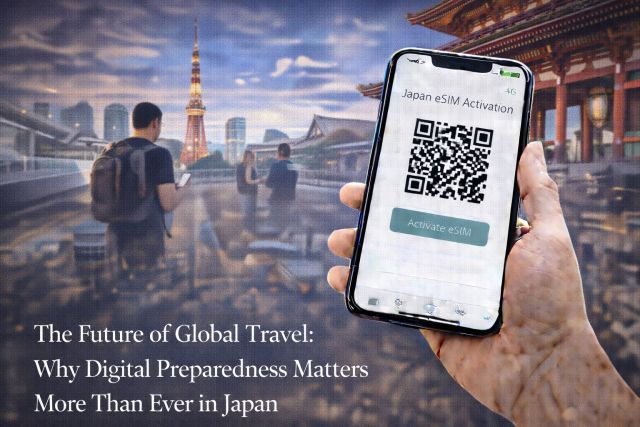
Over the past decade, travelers have witnessed how quickly circumstances can change. Airline disruptions, sudden regulatory updates, public health advisories, and extreme weather events have reshaped how people think about mobility. In this environment, information is not simply helpful—it is essential.
The modern traveler depends on real-time access to transportation updates, emergency alerts, digital payments, booking platforms, and navigation systems. Without connectivity, even basic logistical decisions become more difficult.
Preparedness today extends beyond packing essentials. It includes ensuring that your digital access remains stable, secure, and independent from unpredictable local conditions.
Japan as a High-Tech Testing Ground
Japan represents a compelling case study in how digital systems shape daily life. The country is known for its precision, efficiency, and advanced infrastructure. High-speed rail networks, cashless payment systems, QR-code menus, and app-based transportation are deeply embedded in everyday routines.
For foreign visitors, this technological integration can be both empowering and challenging. On one hand, systems are highly efficient. On the other, they often assume a certain level of digital readiness and local knowledge.
Language remains a factor. While major cities provide English guidance, many interfaces, instructions, and official notices are primarily in Japanese. Travelers who lack reliable mobile access may find themselves disconnected from essential tools that residents use seamlessly.
Japan’s infrastructure works exceptionally well—but it works best when travelers are digitally prepared.
The Risk of Being Digitally Unprepared
Relying solely on hotel Wi-Fi or sporadic public networks creates vulnerability. Public connections may be slow, limited, or unsecured. For business travelers, journalists, or remote workers, unstable connectivity can disrupt productivity. For tourists, it can mean missed train connections or difficulty accessing tickets and reservations.
International roaming presents another challenge. While many U.S. carriers offer overseas plans, pricing structures vary, and unexpected data usage can quickly escalate costs. Streaming, map updates, and background app activity consume more data than many travelers anticipate.
In a destination like Japan—where navigation, ticketing, and even restaurant ordering often rely on digital tools—being offline restricts mobility.
Digital unpreparedness does not simply inconvenience travelers; it reduces autonomy.
The Rise of Embedded Connectivity
As global mobility evolves, so does the technology that supports it. Embedded SIM (eSIM) technology reflects a broader shift toward decentralized, digital-first infrastructure. Instead of purchasing physical SIM cards in local stores or relying on carrier-specific roaming agreements, travelers can activate mobile data remotely before departure.
This shift places greater control in the hands of the individual.
In this evolving landscape, tools such as Holafly’s esim for Japan illustrate how travelers are taking more ownership of their connectivity. Rather than depending entirely on airport kiosks or local telecom contracts, they can prepare digital access in advance, ensuring immediate functionality upon arrival.
The concept is simple but significant: connectivity becomes part of travel planning, not a post-arrival obstacle.
Digital Autonomy and Modern Mobility
The idea of digital autonomy extends beyond convenience. It reflects a broader societal shift toward self-reliance in interconnected systems. Travelers increasingly recognize that mobility depends not only on physical infrastructure but also on digital networks.
In Japan, where transportation, commerce, and public communication rely heavily on technology, digital access supports smoother integration. Access to translation apps enables cultural exchange. Real-time maps allow exploration beyond tourist centers. Official alerts provide reassurance during weather events.
Connectivity does not replace human interaction—it enhances informed participation.
Who Benefits Most From Digital Preparedness?
While all travelers benefit from stable mobile access, certain groups experience its impact more directly.
- Independent travelers navigating unfamiliar regions
- Business professionals managing international schedules
- Students and exchange participants adapting to local systems
- Remote workers balancing productivity and exploration
For these individuals, reliable connectivity supports decision-making, security, and efficiency.
Preparedness, in this context, means reducing friction so that attention can focus on experience rather than logistics.
Preparedness as the New Travel Essential
The future of travel is unlikely to become less digital. As nations continue to integrate technology into infrastructure and services, travelers will increasingly depend on personal digital resilience.
Japan stands as a model of this integration—where centuries-old traditions coexist with advanced systems. Visitors who arrive digitally prepared are better positioned to navigate both.
In an unpredictable world, preparedness is no longer limited to contingency planning. It includes ensuring that communication, information access, and digital independence travel with you.
For Americans heading to Japan and beyond, understanding connectivity options is part of understanding modern mobility itself. As global systems evolve, those who prepare digitally will move more confidently across borders—ready not only to see the world, but to navigate it on their own terms.
Anyone can join.
Anyone can contribute.
Anyone can become informed about their world.
"United We Stand" Click Here To Create Your Personal Citizen Journalist Account Today, Be Sure To Invite Your Friends.
Before It’s News® is a community of individuals who report on what’s going on around them, from all around the world. Anyone can join. Anyone can contribute. Anyone can become informed about their world. "United We Stand" Click Here To Create Your Personal Citizen Journalist Account Today, Be Sure To Invite Your Friends.
LION'S MANE PRODUCT
Try Our Lion’s Mane WHOLE MIND Nootropic Blend 60 Capsules
Mushrooms are having a moment. One fabulous fungus in particular, lion’s mane, may help improve memory, depression and anxiety symptoms. They are also an excellent source of nutrients that show promise as a therapy for dementia, and other neurodegenerative diseases. If you’re living with anxiety or depression, you may be curious about all the therapy options out there — including the natural ones.Our Lion’s Mane WHOLE MIND Nootropic Blend has been formulated to utilize the potency of Lion’s mane but also include the benefits of four other Highly Beneficial Mushrooms. Synergistically, they work together to Build your health through improving cognitive function and immunity regardless of your age. Our Nootropic not only improves your Cognitive Function and Activates your Immune System, but it benefits growth of Essential Gut Flora, further enhancing your Vitality.

Our Formula includes: Lion’s Mane Mushrooms which Increase Brain Power through nerve growth, lessen anxiety, reduce depression, and improve concentration. Its an excellent adaptogen, promotes sleep and improves immunity. Shiitake Mushrooms which Fight cancer cells and infectious disease, boost the immune system, promotes brain function, and serves as a source of B vitamins. Maitake Mushrooms which regulate blood sugar levels of diabetics, reduce hypertension and boosts the immune system. Reishi Mushrooms which Fight inflammation, liver disease, fatigue, tumor growth and cancer. They Improve skin disorders and soothes digestive problems, stomach ulcers and leaky gut syndrome. Chaga Mushrooms which have anti-aging effects, boost immune function, improve stamina and athletic performance, even act as a natural aphrodisiac, fighting diabetes and improving liver function. Try Our Lion’s Mane WHOLE MIND Nootropic Blend 60 Capsules Today. Be 100% Satisfied or Receive a Full Money Back Guarantee. Order Yours Today by Following This Link.


| Visits: | 1,787,463,391 |
| Stories: | 8,603,449 |
Whistler Blowers, Insiders