

Broken promise: HUD co-ops and the fight for Black San Francisco

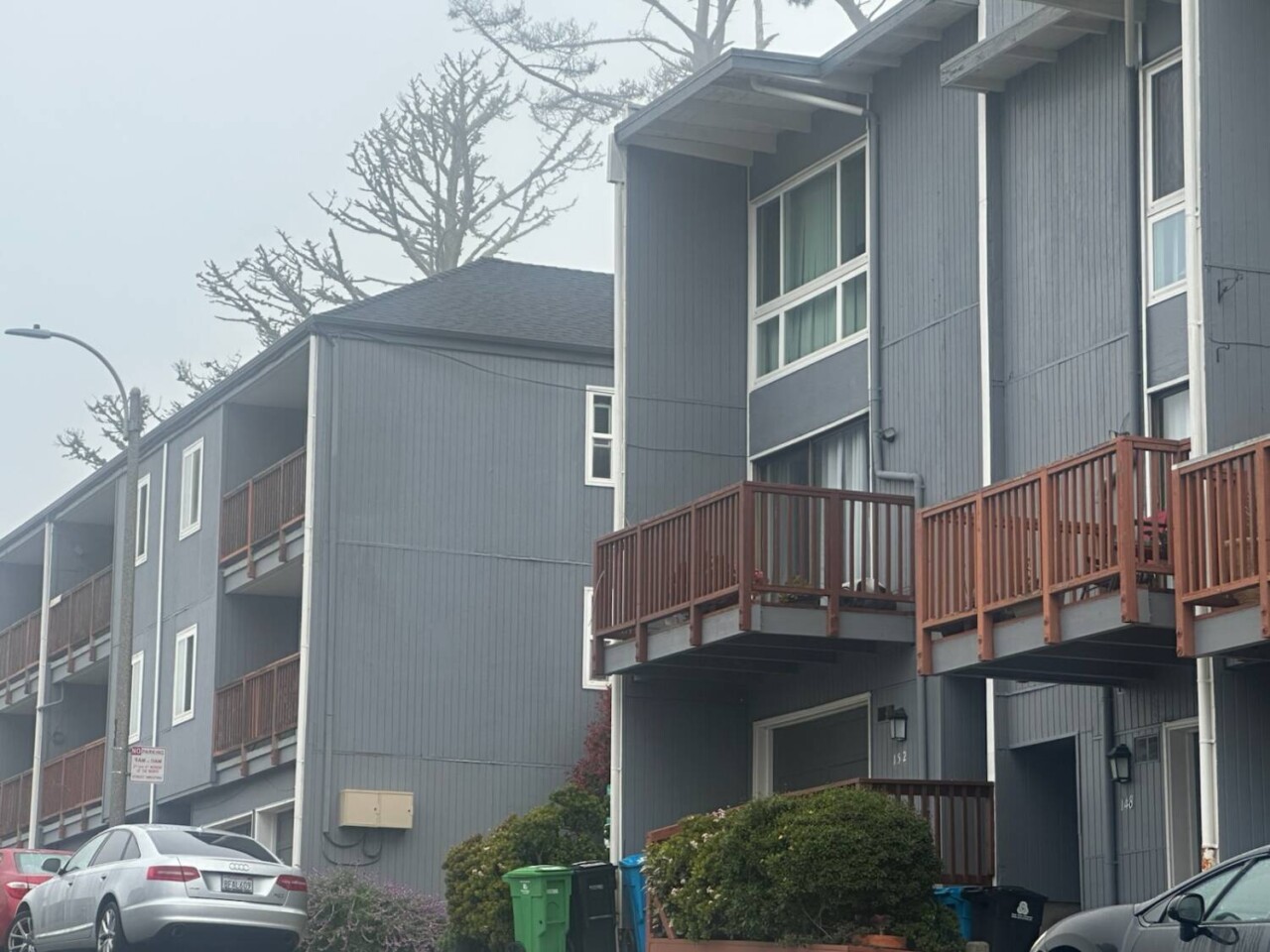
Behind the neat row of Glenridge balconies lies a 275‑unit cooperative where deferred maintenance, safety risks, and unanswered complaints have become part of everyday life. – Photo: Kevin Epps
by Tabari Morris
A promise to protect Black San Francisco, now in jeopardy
In the late 1960s and throughout the 1970s, HUD-financed limited equity cooperatives in San Francisco were marketed as a way for displaced Black families and other working-class people to have a piece of the city they had helped build. Developments such as Martin Luther King-Marcus Garvey Square Cooperative Apartments and Freedom West Homes came out of the ashes of “urban renewal,” a policy that bulldozed over 20,000 mostly Black Fillmore residents’ homes and destroyed over 800 Black-owned businesses.
“We were told this was our protection from being pushed out,” says one longtime shareholder at MLK–Marcus Garvey. “Now it feels like the ground is shifting under our feet again.”
Yet a 2023 study of San Francisco’s limited equity co-ops conducted by researchers at the Massachusetts Institute of Technology concludes more simply: “Cooperative housing is in trouble.” Here, eight HUD-financed co-ops range from 58 to 300 units and house thousands of largely low income people of color. Where these co-ops were meant to be pillars for the Black community in San Francisco, they have become a zone of anxiety, litigation and quiet eviction.
How the crisis shows up at home
For the residents, the crisis doesn’t begin with acronyms and agreements; it begins with leaks, broken systems and notices slipped under the door. At MLK–Marcus Garvey on Eddy Street, residents have lived through the backlog of repairs, internal strife, and the constant threat of losing federal subsidies and city support. At Midtown Park, residents formed a cooperative corporation but were challenged by the City about their very right to be owners.
“We’ve sat through meeting after meeting, watched new managers come and go, but the mold is still in the walls,” a Western Addition co-op resident told SF Bay View. “If this is ownership, why do we feel so powerless?”
Studies show that many of these co-ops kept their monthly “carrying charges” low to help families in need, but with no reserves, buildings deteriorated beyond repair. When major repairs are finally unavoidable, residents are asked to absorb unexpected increases in fees or complicated arrangements with outside developers — the kind of “choices” that don’t feel like choices at all.
Why this hits Black San Franciscans hardest
These HUD co-ops are not randomly distributed throughout the city; they are clustered in historic Black neighborhoods such as the Fillmore or Bayview, and they are predominantly occupied by low-income Black and other BIPOC individuals. In theory, limited-equity cooperatives are supposed to offer not just profit, but something more profound: what sociologists term “ontological security,” or a sense of security about your place in the world.
“For our families, this wasn’t just an address — it was a foothold in San Francisco,” says a former Freedom West organizer. “Losing that foothold doesn’t just move you; it unmoors an entire community.”
But when governance is strained, repairs are delayed, and oversight is reactive and fragmented, that security collapses. MIT’s study ties this to the larger narrative of racial justice: We invested in these co-ops in communities of color and disinvested just as the buildings were getting old and the politics were changing. There’s a sense of déjà vu for Black San Franciscans who lived through the trauma of urban renewal.

For elders and disabled residents, this steep, dimly lit wooden walkway turns a simple trip home into a nightly hazard that the co‑op has failed to fix. – Photo: Tabari Morris
Who’s at the table — and who gets left out
On paper, there is a complex web of agencies and organizations accountable for these developments: the HUD, the San Francisco Housing Authority, the Mayor’s Office of Housing and Community Development (MOHCD), the Office of Community Investment and Infrastructure (OCII), private management firms, and technical assistance non-profits. In practice, residents report being caught in a maze.
“HUD blames the City, the City blames the board, the board blames management,” one co-op board member says. “Meanwhile we’re the ones living with the consequences.”
In fact, a 2013 audit of the San Francisco Housing Authority identified a critical funding shortfall, thousands of unresolved work orders, and management problems, which reflect a culture of strained oversight in subsidized housing. More recent documents from the city suggest that the MOHCD provides one-off technical assistance grants and repair funds to a co-op in crisis.
Meanwhile, newer limited-equity co-ops like those supported by organizations such as the San Francisco Community Land Trust and the city’s Community Opportunity to Purchase Act, such as Columbus United Cooperative in Chinatown, hint at what such a level of support could entail in terms of permanent affordability, community control, and technical assistance to resident boards.
Tactics, pressure, and the quiet erosion of rights
The same types of strategies are being reported by residents or shareholders of multiple cooperatives: legal threats regarding arrears, unclear financial reporting, uneven enforcement of bylaws, and changes in management that make it difficult to identify responsible parties. In some cooperatives, shareholders deemed to be problematic because they ask too many questions are being targeted with violation notices or excluded from important decisions.
“They hope we’ll get tired, move away, or just stop asking where the money went,” says a shareholder leader at a small Tennessee Street cooperative. “But this is our corporation. We’re not going anywhere.”
In the worst of circumstances, they become potential partners for a deal with a big developer or non-profit that can bring in the capital — but at the cost to the residents of potentially losing control. When the message to the residents, who have been sold the dream of collective ownership, is that the only way to save themselves is to give up the steering wheel, there are some difficult questions to be asked about what the ultimate beneficiary of the “salvation” of such a building really is.
What SF Bay View will do between now and April 2026
This article is the opening into an ongoing SF Bay View investigation into San Francisco’s HUD-financed and limited-equity cooperatives. By our April 2026 issue, we will:
Publish the documents. We have submitted federal FOIA requests to HUD and CPRA requests to MOHCD, OCII, the San Francisco Housing Authority, and the City Controller seeking inspection reports, enforcement records, internal memos, and technical-assistance contracts for co-ops including MLK–Marcus Garvey, Midtown Park, Tennessee Street Housing Corp., Central Page, Columbus United and others.
Map the portfolio. Using MIT research, UC analyses and city records, we will build and share a public map of San Francisco’s HUD-financed co-ops and limited-equity housing cooperatives — where they are, who they serve, and what risks they face.
Follow the money. We will track how public dollars — HUD subsidies, city loans, rehab funds — have flowed through these developments, and which agencies and private actors made key decisions at critical moments.
Name the players. From federal field offices to local departments, management companies to technical-assistance nonprofits, we will identify who holds power over these co-ops and what they did — or failed to do — as problems escalated.
“We cannot fix what we refuse to see clearly,” says a Bayview housing advocate. “That means pulling every document we can, and then reading them together as a community.”
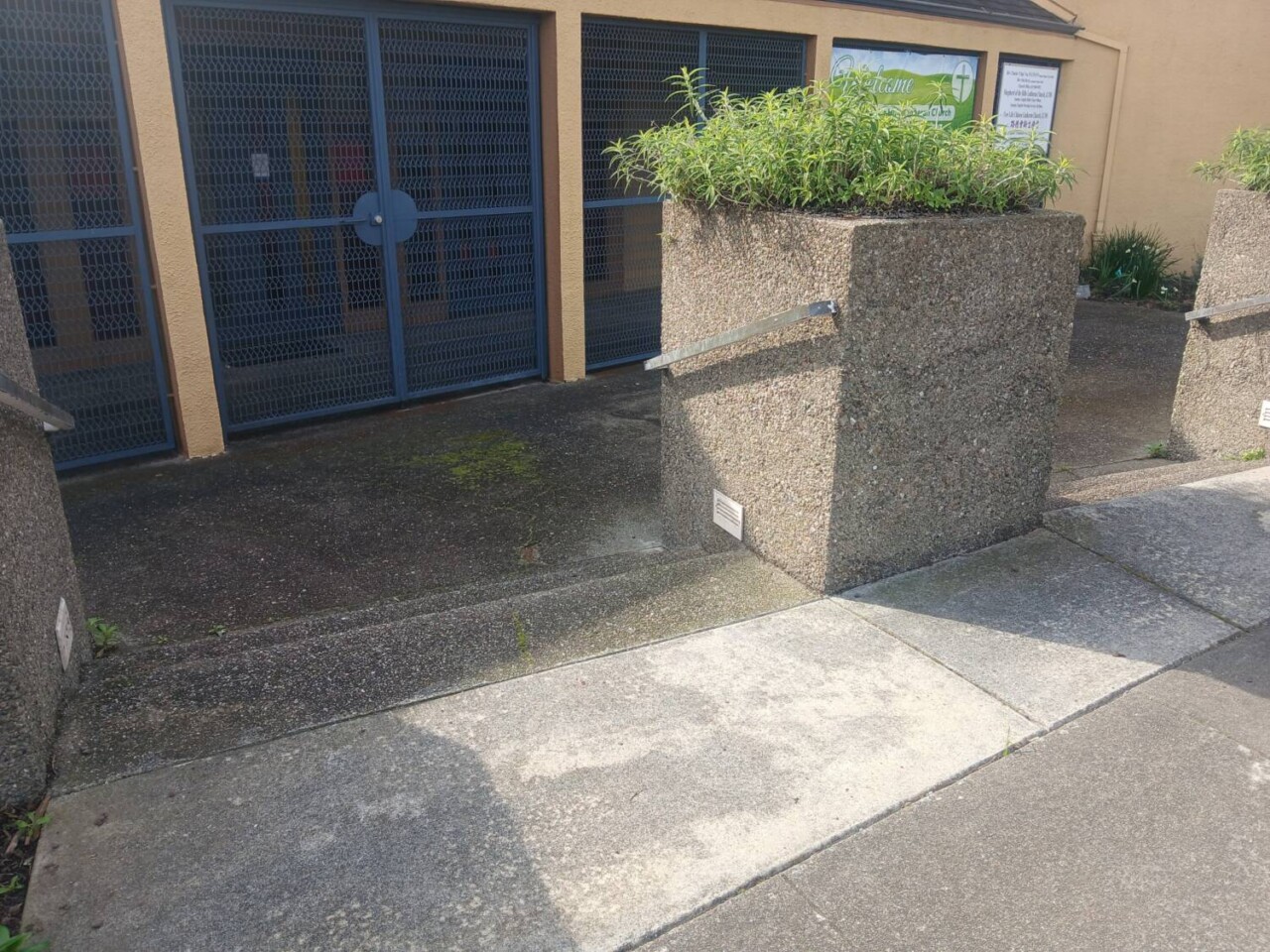
Outside a shareholders’ meeting, a crumbling ramp and slick, uneven pavement send a clear message: accessibility and safety are still optional here. – Photo: Tabari Morris
How the community can shape this investigation
SF Bay View cannot tell this story without the people whose lives are on the line. Here’s how residents, shareholders, and neighbors can take part.
Share your documents and experiences. If you live in or have lived in a HUD-assisted or limited equity co-op in San Francisco, we want to see: letters from management, board minutes, inspection notices, legal filings, and your own written complaints and responses. We will protect sources who request confidentiality, and we’ll work with you to verify and contextualize what you share.
Reach out for interviews. We’re seeking conversations with shareholders, tenants, former and current board members, maintenance workers, and front-line staff. We also want to hear from elders who remember the early years — what they were promised and what they see now.
Help us identify every co-op. If you know of a co-op, limited equity building, or HUD-assisted development that hasn’t been mentioned but fits this pattern, tell us. Your tips will shape our list of sites to investigate, visit, and request records about.
Connect us to neighborhood organizers and legal advocates. Tenant unions, faith communities, legal clinics, and mutual aid groups often see the earliest warning signs. We are looking to collaborate on know-your-rights information, story circles, and public briefings as our document review progresses.
Toward accountability — and the future these co-ops were meant to have
The goal of this series of articles is not only to tell the story of crisis but to help the community move forward to resolution. This means challenging the status quo with difficult questions and lifting up solutions that have already been tested in the Bay Area and other places by Black communities and their allies.
“These co-ops were supposed to be our firewall against displacement,” says one Fillmore resident who grew up in a HUD-financed co-op. “If we can repair the damage — and fix the system that broke them — we can still make that promise real for the next generation.” (FreedomWest)
In the coming months, SF Bay View will run a series of follow-ups exploring the details of various developments, the history of various decisions, and the specific demands of various policies and organizing efforts. We will evaluate each and every proposal according to the simple criterion: Does it allow Black and low-income families to stay in their homes with a real voice in their own destiny in the city they have always called home?
If you live in a co-op, used to live in one, or have been organizing around these issues, your voice belongs in this series.
Tabari Morris, a journalism student at City College of San Francisco and news editor of The Guardsman, City College’s student newspaper, is managing editor of the Bay View and can be reached at tabari@sfbayview.com.
———————-
The post Broken promise: HUD co-ops and the fight for Black San Francisco appeared first on San Francisco Bay View.
Source: https://sfbayview.com/2026/02/broken-promise-hud-co-ops-and-the-fight-for-black-san-francisco/
Anyone can join.
Anyone can contribute.
Anyone can become informed about their world.
"United We Stand" Click Here To Create Your Personal Citizen Journalist Account Today, Be Sure To Invite Your Friends.
Before It’s News® is a community of individuals who report on what’s going on around them, from all around the world. Anyone can join. Anyone can contribute. Anyone can become informed about their world. "United We Stand" Click Here To Create Your Personal Citizen Journalist Account Today, Be Sure To Invite Your Friends.
LION'S MANE PRODUCT
Try Our Lion’s Mane WHOLE MIND Nootropic Blend 60 Capsules
Mushrooms are having a moment. One fabulous fungus in particular, lion’s mane, may help improve memory, depression and anxiety symptoms. They are also an excellent source of nutrients that show promise as a therapy for dementia, and other neurodegenerative diseases. If you’re living with anxiety or depression, you may be curious about all the therapy options out there — including the natural ones.Our Lion’s Mane WHOLE MIND Nootropic Blend has been formulated to utilize the potency of Lion’s mane but also include the benefits of four other Highly Beneficial Mushrooms. Synergistically, they work together to Build your health through improving cognitive function and immunity regardless of your age. Our Nootropic not only improves your Cognitive Function and Activates your Immune System, but it benefits growth of Essential Gut Flora, further enhancing your Vitality.

Our Formula includes: Lion’s Mane Mushrooms which Increase Brain Power through nerve growth, lessen anxiety, reduce depression, and improve concentration. Its an excellent adaptogen, promotes sleep and improves immunity. Shiitake Mushrooms which Fight cancer cells and infectious disease, boost the immune system, promotes brain function, and serves as a source of B vitamins. Maitake Mushrooms which regulate blood sugar levels of diabetics, reduce hypertension and boosts the immune system. Reishi Mushrooms which Fight inflammation, liver disease, fatigue, tumor growth and cancer. They Improve skin disorders and soothes digestive problems, stomach ulcers and leaky gut syndrome. Chaga Mushrooms which have anti-aging effects, boost immune function, improve stamina and athletic performance, even act as a natural aphrodisiac, fighting diabetes and improving liver function. Try Our Lion’s Mane WHOLE MIND Nootropic Blend 60 Capsules Today. Be 100% Satisfied or Receive a Full Money Back Guarantee. Order Yours Today by Following This Link.


| Visits: | 1,799,167,242 |
| Stories: | 8,626,705 |
Whistler Blowers, Insiders

